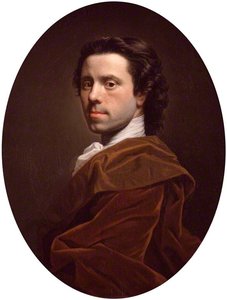
George III (1738–1820)
Oil On Canvas
WallArt
Neoclassicism
214.0 x 150.0 cm
Royal Hospital Chelsea
Handgefertigte Ölreproduktion
Handgemaltes Ölgemälde auf Leinwand in Ihrer Wunschgröße und mit Rahmen, auf Bestellung von unseren Künstlern angefertigt. ( Zum Druck wechseln
Zum digitalen Bild wechseln)
P118B €10
P118H €10
P118W €10
P438Z €10
P508JH €12
P508YH €12
P805H €10
P805Z €10
P919BZ €10
P919G €10
P919XJ €10
P959ZH €10
P968JZ €12
W106C €8
W218G €10
W218JH €8
W218Y €10
W307PJ €10
W316G €10
W316PJ €8
W316Y €10
W398PJ €8
W4111J €10
W500HY €15
W500JH €15
W692G €12
W849H €8
W940BG €15
W953PJ €8
Wählen Sie aus unseren vordefinierten Formaten, die den ursprünglichen Proportionen des Kunstwerks entsprechen.
Geben Sie die Breite und die Höhe an, die Sie für Ihren Rahmen oder Ihre Wand benötigen. Da dieses Werk handgemalt ist, kann der Künstler bei einer anderen Form etwas mehr um das Bild herum malen oder etwas abschneiden – Sie entscheiden. Wir senden Ihnen ein digitales Mockup zur Freigabe, bevor mit dem Malen begonnen wird. Das auf dieser Seite gezeigte Bild stellt nicht das tatsächliche Ergebnis dar – dies tut nur das Mockup.
Nach der Bestellung wird das OriginalUniqueArt.com-Team dem Kunden Anweisungen per E-Mail zusenden und eine Mockup-Vorschau bereitstellen.
Weltweiter Versand () in nur 3 bis 4 Wochen statt der üblichen 5 Wochen. (28 Oktober). Keine Kompromisse bei der Qualität.
Kostenloser weltweiter Expressversand
Hochwertige Leinenleinwand
Umfassender Versicherungsschutz beim Versand
Zollgebühren-Rückerstattungsgarantie
Garantie für exakte Farbtreue
100 Tage Rückgaberecht (nur bei Mängeln)
100% Geld-zurück-Garantie
Mengenrabatt verfügbar
George III (1738–1820)
Art der Reproduktion
Format der Reproduktion
-
Endpreis
€ 264
A Regal Portrait: Allan Ramsay’s George III
Allan Ramsay's portrait of King George III, completed around 1761-2, is more than just a likeness; it’s a carefully constructed embodiment of power, authority, and the nascent complexities of the British monarchy. This masterful work, rendered in oil on canvas, transcends mere representation to become a window into the era's political climate and artistic sensibilities – specifically, the rise of Neoclassicism within portraiture. The painting immediately commands attention with its dramatic lighting, a key element that draws the viewer’s eye directly to the King’s face, imbuing him with an almost palpable sense of presence.
Ramsay, a leading figure in 18th-century Scottish art, expertly employs linear perspective to create a sense of depth and spatial arrangement. The throne, rendered as a robust square, anchors the composition while the draped fabric behind George III flows into a dark, indistinct background – a deliberate choice that serves to highlight the subject’s importance and elevate his status. The use of geometric shapes—squares for the throne, rectangles for the robes—contrasts with the more organic curves of the King's face, suggesting a balance between rigid formality and human warmth.
A Study in Neoclassical Detail
Examining the brushwork reveals Ramsay’s meticulous technique. Layered glazes build up color depth and luminosity, particularly noticeable in the rich textures of the royal robes – a testament to his ability to capture the sheen of velvet and the weight of heavy fabrics. The artist skillfully renders skin tones with subtle variations, avoiding overly smooth surfaces; instead, he introduces a slight roughness that lends a sense of realism and immediacy. The careful attention to detail extends to the rendering of the King’s attire: the intricate embroidery, the gleaming gold accents, and the precise folds of his garments all speak to the immense wealth and power associated with the monarchy.
The painting's palette is restrained yet sophisticated, dominated by deep reds, blues, and browns – colors traditionally linked with royalty and authority. The lighting, originating from a strong left-hand source, casts dramatic shadows that sculpt George III’s features, emphasizing his brow, cheekbones, and the solemnity of his expression. This chiaroscuro effect not only adds visual interest but also contributes to the overall sense of gravitas and dignity.
Symbolism and Historical Context
George III reigned from 1760 until his death in 1820, a period marked by significant political and military upheaval. The portrait itself is deeply symbolic, reflecting the King’s role as head of state during a time of considerable change. The crown, prominently displayed, represents sovereignty and divine right – concepts that were increasingly challenged during George III's reign. The robes, rich in color and ornamentation, symbolize his wealth and status, while the scepter and orb further reinforce his authority.
Ramsay’s work was commissioned during a pivotal moment in British history—the early years of George III’s rule. The King's reign coincided with the Seven Years’ War and the subsequent American Revolution, events that profoundly shaped the course of British history. The portrait, therefore, can be interpreted as an attempt to project an image of stability and strength at a time of considerable uncertainty. It is also important to note that this particular painting was one of many commissioned by the King, reflecting his desire to solidify his position and assert his authority.
A Legacy of Elegance
Allan Ramsay’s portrait of George III stands as a remarkable achievement of Neoclassical portraiture. It is a testament to the artist's technical skill, his understanding of symbolism, and his ability to capture the essence of a historical figure. Reproductions of this iconic image continue to resonate with viewers today, offering a glimpse into the grandeur and complexities of 18th-century Britain. The painting’s enduring appeal lies not only in its aesthetic beauty but also in its ability to evoke a sense of history, power, and timeless elegance.
Fragen & Antworten
Was stellt "George III (1738–1820)" von Allen Ramsay dar?
Die Themen in "George III (1738–1820)" von Allen Ramsay umfassen royal portraiture, 18th century britain, george iii, king, neoclassical art, scottish nobility, portrait painting, regal authority und fassen gemeinsam den Gegenstand des Kunstwerks zusammen.

Für welche Verwendung und welchen Raum wird "George III (1738–1820)" von Allen Ramsay empfohlen?
"George III (1738–1820)" von Allen Ramsay wird für Statement empfohlen, idealerweise in einem Living Room. Die Verwendung und die Raumgestaltung geben gemeinsam Aufschluss darüber, wo eine Reproduktion am besten zur Geltung kommt.
Welche Gemeinsamkeiten weist "George III (1738–1820)" mit dem restlichen Werk von Allen Ramsay auf?
Innerhalb des Gesamtwerks von Allen Ramsay steht „George III (1738–1820)“ im Stil der Neoclassicism und greift die Themen classical ideals, roman influence, royal power, british identity, political authority, monarchy, ramsay's aristocratic portraits, scottish nobility depiction auf.
Künstlerbiografie
Allan Ramsay: Ein Leben der Eleganz und Kunstfertigkeit
Frühes Leben und Ausbildung
Geboren in Edinburgh, Schottland am 13. Oktober 1713, etablierte sich Allan Ramsay als ein bedeutender schottischer Porträtmaler, dessen Werke die Eleganz und Raffinesse seiner Zeit einfingen. Seine künstlerische Reise begann mit dem Alter von zwanzig Jahren, als er nach London reiste, um unter dem schwedischen Maler Hans Hysing zu studieren, gefolgt von Unterricht an der St. Martin's Lane Academy. Diese grundlegende Ausbildung vermittelte ihm eine solide Basis in Technik und Komposition.
Italienische Einflüsse & Künstlerische Entwicklung
Ramsays künstlerische Entwicklung erfuhr mit seinen Reisen nach Rom und Neapel einen bedeutenden Wendepunkt, wo er drei Jahre (1736-1738) unter der Anleitung von Francesco Solimena und Imperiali (Francesco Fernandi) arbeitete. Diese italienischen Meister beeinflussten seinen Stil nachhaltig und förderten ein tieferes Verständnis klassischer Prinzipien sowie die Verbesserung seiner Fähigkeiten, Mimik und Charakter zu erfassen. Er nahm den vorherrschenden Rokoko-Ästhetik auf und entwickelte gleichzeitig eine Wertschätzung für neoklassische Ideale.
Eine Blühende Karriere & Bemerkenswerte Werke
Nach seiner Rückkehr nach Großbritannien im Jahr 1738 etablierte sich Ramsay schnell als erfolgreicher Porträtist. Seine Fähigkeit, seine Sujets sowohl genau als auch anmutig darzustellen, brachte ihm bald einen angesehenen Kundenstamm ein. Einige seiner bemerkenswertesten Werke sind:
- Queen Charlotte (1744-1818) mit ihren beiden ältesten Söhnen (Königliche Sammlung, London): Eine königliche Darstellung, die das mütterliche Ansehen der Königin hervorhebt.
- Mary Degg, Lady Robert Manners (Schottische Nationalgalerie, Edinburgh): Ein elegantes Porträt, das Ramsays Können demonstriert, seine Sujets aristokratischer Schönheit zu erfassen.
- Kopf von Duncan Forbes of Culloden: Dieses frühe Werk brachte ihn in den Blick des Herzogs von Argyll und wurde später auf der Banknoten der Royal Bank of Scotland abgebildet.
Königliche Ernennung & Höhepunkte
Ein entscheidender Moment in Ramsays Karriere kam im Jahr 1761 mit seiner Ernennung als Principal Painter in Ordinary to George III zustande. Diese prestigeträchtige Position festigte seinen Status unter den Kunsteliten und sichere ihm einen stetigen Zustrom von Aufträgen aus der königlichen Familie und dem höheren Zirkels. Er wurde *der* Porträtist des Georgian-Zeitalters.
Spätere Jahre & Vermächtnis
Ramsays spätere Jahre waren geprägt von einer Verschiebung hin zu literarischen Unternehmungen, die seine breiten intellektuellen Interessen widerspiegeln. Persönliche Tragödien – eine zufällige Dislokation seines rechten Arms und der Tod seiner zweiten Frau im Jahr 1782 – beeinträchtigten seine Gesundheit und Produktivität. Er starb im Jahr 1784.
Trotz dieser Herausforderungen hinterließ Ramsay ein bleibendes Vermächtnis als einer der gefeiertsten Porträtmaler Schottlands. Wie Samuel Johnson bemerkte, „Ich liebe Ramsay. Sie werden keinen Mann finden, dessen Gespräch mehr Anleitung, Information und Eleganz bietet als in Ramsays.“ Seine Werke werden weiterhin für ihre technische Meisterschaft, ihr verfeinertes ästhetisches Erscheinungsbild und ihre aufschlussreichen Darstellungen der schottischen Gesellschaft im 18. Jahrhundert bewundert.
Historische Bedeutung
Ramsays Beitrag erstreckt sich über sein künstlerisches Talent hinaus. Er spielte eine entscheidende Rolle bei der Gestaltung der visuellen Kultur Schottlands während einer Periode bedeutender sozialer und politischer Veränderungen. Seine Porträts bieten wertvolle Einblicke in das Leben, die Mode und die Werte des schottischen Adels und Bürgertums. Seine Werke sind an Orten wie dem Ayr Town Hall und der Scottish National Portrait Gallery zu finden.
Allen Ramsay
1713 - 1784 , United Kingdom
Kurzinfos
- Artistic Movement Or Style: Rokoko und Neoklassik
- Artists Or Movements Influenced By This Artist: ['Francesco Solimena']
- Artists Who Influenced This Artist: ['Hans Hysing']
- Date Of Birth: 1713-10-13
- Date Of Death: 1784
- Full Name: Allan Ramsay
- Nationality: Schottisch
- Notable Artworks:
- Queen Charlotte mit ihren zwei ältesten Söhnen
- Mary Degg, Lady Robert Manners
- Kopf von Duncan Forbes
- Place Of Birth: Edinburgh

Die Glasoption ist nur für Größen unter 110 cm verfügbar.