

 Versenden als Grußkarte
 Teilen
 Details anzeigen
 Leitfaden öffnen

 Herunterladen
 Ähnliche Objekte
 Diashow
 Besucherstatistiken
The Steerage
 Photogravure
- Photo
- Modernism
 1907
1907 33.0 x 27.0 cm
 Amon Carter Museum of American Art
 Mehr anzeigen
Giclée / Kunstdruck
Giclée- oder Leinwanddruck in Museumsqualität mit schneller Produktion und flexiblen Veredelungsoptionen. ( Handgemalte Reproduktion kaufen Zum digitalen Bild wechseln)




































Wählen Sie aus unseren vordefinierten Formaten, die den ursprünglichen Proportionen des Kunstwerks entsprechen.

Sie können Ihre eigenen Maße eingeben, um ein bestimmtes Format oder einen speziellen Platz einzupassen. Wenn das von Ihnen gewählte Format nicht den Proportionen des Originalbildes entspricht, werden wir das Kunstwerk entweder beschneiden oder das Bild mit einem gespiegelten oder einfarbigen Rand erweitern. Ein digitaler Entwurf wird Ihnen zur Genehmigung zugesandt, bevor die Produktion beginnt.
Bitte beachten Sie, dass die Vorschau auf dem Bildschirm nicht den tatsächlichen Zuschnitt oder die Erweiterung widerspiegelt. Nur der Entwurf zeigt die endgültige Komposition präzise an.
Obwohl Sondermaße verfügbar sind, empfehlen wir die Auswahl eines Maßes aus der vordefinierten Liste, um die ursprünglichen Proportionen zu bewahren.
Weltweiter Versand () innerhalb von 2 Wochen statt der üblichen 4/5 Wochen. (26 September)

Kostenloser weltweiter Expressversand

Hochwertige Leinenleinwand

Vollständiger Versicherungsschutz beim Versand

Zollgebühren-Rückerstattungsgarantie

Garantie für exakte Farbtreue

100-tägiges Rückgaberecht (nur bei Mängeln)

100% Geld-zurück-Garantie

Angebot für Mengenrabatt
 Die Glasoption ist nur für Größen unter 110 cm verfügbar.

The Steerage
Giclée / Kunstdruck
Format der Reproduktion
-


Gesamtpreis
$ 80
A Frozen Moment of Transit: Alfred Stieglitz’s “The Steerage”
Alfred Stieglitz's "The Steerage," captured in 1907, isn’t merely a photograph; it’s a distilled essence of human experience – a poignant tableau of migration, uncertainty, and the quiet dignity of countless souls adrift on the vastness of the Atlantic. More than a century after its creation, this iconic image continues to resonate with viewers, prompting reflection on themes of displacement, hope, and the enduring spirit of humanity. Stieglitz, already a pioneering figure in photography’s ascent from craft to art, deliberately eschewed romanticism or grand narrative, opting instead for a brutally honest depiction of life aboard a ship's steerage – the lowest class accommodation – offering a rare glimpse into the realities faced by immigrants and travelers alike.
The photograph’s power lies not in its technical brilliance (though Stieglitz’s mastery is undeniable), but in its ability to evoke profound emotion. The composition, deliberately chaotic yet strangely balanced, draws the eye across a densely packed scene of faces – young and old, weary and hopeful – all united by their shared journey. Diagonal lines created by railings, ladders, and the ship's architecture generate a sense of movement and dynamism, mirroring the restless energy of those aboard. The central figure, a man in a straw hat gazing out at the passing sea, becomes an emblem of contemplation amidst the throng, inviting us to consider our own place within this larger human drama.
Pictorialism and the Language of Form
“The Steerage” is a quintessential example of Pictorialism, a movement that sought to elevate photography to the level of fine art by emphasizing aesthetic qualities traditionally associated with painting. Stieglitz, along with other Pictorialist photographers, meticulously controlled lighting, composition, and tonal values to create images that resembled carefully crafted works on paper. The grayscale palette – ranging from deep blacks to stark whites – strips away distracting color, forcing us to focus entirely on the interplay of form, texture, and shadow. The grainy quality of the print, a characteristic of early photographic processes, adds an element of authenticity and historical weight, suggesting that this is not a staged portrait but a genuine moment captured in time.
Stieglitz’s technique involved careful framing and exposure to achieve a visually compelling image with a documentary feel. He utilized the camera's ability to capture subtle details – the worn fabric of clothing, the weathered faces of passengers, the intricate patterns of the ship’s structure – transforming everyday scenes into works of art. The deliberate use of diagonals creates a sense of depth and movement, while the carefully positioned figures contribute to the overall composition.
A Window into a World in Transition
The historical context surrounding “The Steerage” is crucial to understanding its significance. Captured during a period of significant immigration to America – particularly from Europe – the photograph offers a rare and intimate portrayal of the lives of those seeking new beginnings. It’s important to note that Stieglitz wasn't documenting immigrants arriving at Ellis Island; instead, he captured passengers embarking on transatlantic voyages, many of whom were skilled workers traveling to fulfill contracts in the burgeoning American economy. The image subtly hints at the challenges and uncertainties faced by these travelers – their displacement, their hopes for a better future, and the potential for both opportunity and hardship.
Despite its seemingly simple subject matter, “The Steerage” is rich with symbolic meaning. The crowded conditions evoke feelings of anonymity and transience, while the gaze of the central figure suggests a quiet contemplation amidst the chaos. It’s a powerful reminder of the human cost of migration – the sacrifices made, the dreams pursued, and the enduring resilience of the human spirit.
Reproductions and Legacy
Today, “The Steerage” remains one of Alfred Stieglitz's most celebrated works, admired for its artistic merit and historical importance. High-quality reproductions capture the photograph’s evocative atmosphere and nuanced details, making it a compelling addition to any art collection or interior space. When selecting a reproduction, consider the archival quality of the materials used – ensuring that the colors and tones faithfully represent Stieglitz's original vision. This iconic image continues to inspire artists, designers, and viewers alike, serving as a timeless testament to the power of photography to capture the essence of human experience.
Biografie des Künstlers
Frühes Leben und Ausbildung
Alfred Stieglitz, ein renommierter amerikanischer Fotograf, wurde am 1. Januar 1864 in Hoboken, New Jersey, geboren. Seine Familie jüdischer Abstammung aus Deutschland bot ihm eine intellektuell anregende Umgebung. Stieglitz' frühe Schulbildung erhielt er am Charlier Institute und am City College of New York.Fotografische Karriere
Das Interesse von Stieglitz an der Fotografie begann während seines Studiums in Berlin, wo er mit den Werken von Hermann Wilhelm Vogel bekannt wurde. Diese Begegnung entfachte seine Leidenschaft für die Fotografie, was ihn dazu veranlasste, seine erste Kamera zu kaufen und die europäische Landschaft festzuhalten. Seine Fotografien, die durch ihren Piktorialismus gekennzeichnet sind, erlangten bald Anerkennung.Wichtige Werke und Ausstellungen
- Study of Georgia Engelhard with Dolls (Fotografie, Piktorialismus): Ein bemerkenswertes Beispiel für Stieglitz' Arbeit, das seinen einzigartigen Ansatz in der Porträtfotografie zeigt.
- The Steerage (33 x 27 cm, Amon Carter Museum of American Art, Fort Worth, Vereinigte Staaten, Photogravur): Demonstriert Stieglitz' Fähigkeit, das Wesen des täglichen Lebens einzufangen.
Einfluss und Vermächtnis
Stieglitz' Beiträge zur amerikanischen Fotografie sind unbestreitbar. Seine Hingabe an die Förderung der Fotografie als Kunstform hat Generationen von Fotografen inspiriert. Durch seine Arbeit hat er eine bleibende Spur in der Welt der Fotografie hinterlassen. Er war nicht nur ein bedeutender Fotograf, sondern auch ein wichtiger Förderer moderner Kunst und Kultur in Amerika. Sein Einfluss auf die Entwicklung der Fotografie als anerkannte Kunstform ist immens.- Betrachten Sie Alfred Stieglitz' Werke auf OriginalUniqueArt
- Erkunden Sie das Frances Lehman Loeb Art Center auf OriginalUniqueArt
- Entdecken Sie die Staedtische Galerie im Lenbachhaus auf OriginalUniqueArt
- Alfred Stieglitz auf Wikipedia: https://wikipedia.org/wiki/alfred_stieglitz
- Das Metropolitan Museum of Art: Piktorialismus in Amerika
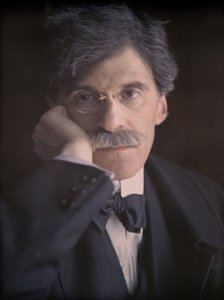
Alfred Stieglitz
1864 - 1946 , Vereinigte Staaten von Amerika
Eckdaten zum Künstler
- Beeinflusste Künstler: ['Hermann Wilhelm Vogel']
- Bemerkenswerte Werke:
- Study of Georgia Engelhard
- The Steerage
- Geburtsdatum: 1. Januar 1864
- Geburtsort: Hoboken, USA
- Künstlerische Richtung: Pictorialismus, Modernismus
- Nationalität: Amerikanisch
- Sterbedatum: 1946
- Vollständiger Name: Alfred Stieglitz
- Von Künstlern Beeinflusst: ['Generationen von Fotografen']
Verwandte Artikel
Meisterwerke der Dunkelheit: 10 berühmte Gemälde im Lampenschwarzton |
Entdecken Sie 10 berühmte Gemälde, die von Lampenschwarz und düsterer Schönheit geprägt sind. Von Rembrandt bis Caravaggio – erleben Sie Kunstgeschichte neu! Hochwertige Reproduktionen & Inspiration für Ihr Zuhause auf .

Die Top 10 berühmter Gemälde im Reich der dunklen Töne |
Entdecken Sie die Top 10 berühmter Gemälde, beherrscht von dunklen Tönen! Von Caravaggio bis Manet – erfahren Sie die Geschichten hinter Meisterwerken der Kunstgeschichte. Finden Sie Ihre perfekte Reproduktion auf .
Die Top 10 Gemälde der Kunstgeschichte – Dominiert von tiefem Schwarz
Entdecken Sie die Top 10 Gemälde, die von tiefem Schwarz und dramatischer Atmosphäre geprägt sind. Von Caravaggio bis Manet – Kunstgeschichte erleben & hochwertige Reproduktionen auf finden! Jetzt entdecken.
Meisterwerke in Schwarz: Die 10 berühmtesten Gemälde mit Elfenbeinsschattierungen |
Entdecken Sie die düsteren Schönheiten der Kunst! Unsere Top 10 Gemälde dominieren durch Elfenbeinschwarz – von Rembrandt bis Goya. Erfahren Sie mehr über Künstler, Techniken & Bedeutung. Hochwertige Reproduktionen auf

Sir Alfred James Munnings: Die 25 Meisterwerke des Pferdebildes | OriginalUniqueArt
Entdecken Sie die 25 Meisterwerke von Sir Alfred James Munnings! Erleben Sie seine beeindruckenden Pferdebilder, geprägt vom Impressionismus und Realismus. Hochwertige Kunstdrucke & Reproduktionen auf OriginalUniqueArt.com – für elegante Wandkunst & stilvolles Interieurdesign.

