

 In echtem Maßstab anzeigen
 Versenden als Grußkarte
 Teilen
 Details anzeigen
 Leitfaden öffnen

 Herunterladen
 Ähnliche Objekte
 Röntgenaufnahme
 Diashow
 Besucherstatistiken
Autumn Flowers


 Mehr anzeigen
Handgefertigte Ölreproduktion
Handgemaltes Ölgemälde auf Leinwand in Ihrer Wunschgröße und mit Rahmen, auf Bestellung von unseren Künstlern angefertigt. ( Zum Druck wechseln Zum digitalen Bild wechseln)




P118B €10

P118H €10

P118W €10

P438Z €10

P508JH €12

P508YH €12

P805H €10

P805Z €10

P919BZ €10

P919G €10

P919XJ €10

P959ZH €10

P968JZ €12

W106C €8

W218G €10

W218JH €8

W218Y €10

W307PJ €10

W316G €10

W316PJ €8

W316Y €10

W398PJ €8

W4111J €10

W500HY €15

W500JH €15

W692G €12

W849H €8

W940BG €15

W953PJ €8




Wählen Sie aus unseren vordefinierten Formaten, die den ursprünglichen Proportionen des Kunstwerks entsprechen.

Sie können Ihre eigenen Maße eingeben, um einen bestimmten Rahmen oder Platz auszufüllen. Wenn die gewählte Größe nicht den Proportionen des Originalbildes entspricht, werden wir das Kunstwerk entweder beschneiden oder das Gemälde durch zusätzliche, handgemalte Elemente erweitern. Ein digitales Mockup wird Ihnen zur Genehmigung zugesandt, bevor die Produktion beginnt.
Bitte beachten Sie, dass die Bildschirmvorschau nicht die tatsächliche Beschneidung oder Erweiterung widerspiegelt. Nur das Mockup zeigt die endgültige Komposition exakt an.
Obwohl Sondermaße verfügbar sind, empfehlen wir, eine Größe aus der vordefinierten Liste zu wählen, um die ursprünglichen Proportionen beizubehalten.
Nach der Bestellung wird das OriginalUniqueArt.com-Team dem Kunden Anweisungen per E-Mail zusenden und eine Mockup-Vorschau bereitstellen.
Weltweiter Versand () in nur 3 bis 4 Wochen statt der üblichen 5 Wochen. (3 Oktober). Keine Kompromisse bei der Qualität.

Kostenloser weltweiter Expressversand

Hochwertige Leinenleinwand

Vollständiger Versicherungsschutz beim Versand

Zollgebühren-Rückerstattungsgarantie

Garantie für exakte Farbtreue

100-tägiges Rückgaberecht (nur bei Mängeln)

100% Geld-zurück-Garantie

Angebot für Mengenrabatt
 Die Glasoption ist nur für Größen unter 110 cm verfügbar.

Autumn Flowers
Reproduktionsmedium
Format der Reproduktion
-


Gesamtpreis
€ 258
A Portrait of a Moment: The Enigmatic Beauty of *Autumn Flowers*
Alfred Stevens’s *Autumn Flowers*, painted in 1867, isn't merely a depiction of a woman amidst flowers; it’s an exquisitely crafted meditation on stillness, light, and the subtle poetry of everyday life. At first glance, the painting presents a seemingly simple arrangement: a seated lady, her posture suggesting quiet contemplation, surrounded by a still-life tableau of fabrics, blossoms, and a delicately rendered table. Yet, beneath this surface lies a profound exploration of form, color, and the very essence of observation – a hallmark of Stevens’s unique artistic vision.
Stevens, a pivotal figure in 19th-century Belgian art, deliberately eschewed the prevailing trends of his time. Rejecting the fleeting effects of Impressionism's vibrant light and atmosphere, he instead focused on capturing an immutable quality – the frozen gesture, the fixed expression, the enduring presence of the subject. This deliberate choice is powerfully evident in *Autumn Flowers*. The woman’s hand, poised as if about to touch a flower, isn’t caught in motion; it's suspended, imbued with a sense of timelessness. Her gaze, directed slightly off-canvas, invites us into her private world, suggesting an inner life beyond the immediate scene.
The Language of Color and Texture: Stevens’s Masterful Technique
What immediately draws the eye is Stevens's extraordinary command of color and texture. He employs a remarkably restrained palette – primarily shades of grey, black, and muted browns – punctuated by flashes of pastel pink, chestnut brown, and the glossy sheen of the table cover. This deliberate limitation isn’t a sign of restraint but rather a strategic choice to emphasize form and light. The artist masterfully utilizes chiaroscuro, creating dramatic contrasts between light and shadow that sculpt the figures and objects with remarkable precision. Notice how the highlights on the woman's chignon and the delicate folds of her dress draw our attention while simultaneously deepening the shadows around her face, lending a sense of mystery and depth.
Stevens’s technique is equally noteworthy for its meticulous detail. He employs a smooth, almost polished surface – reminiscent of 17th-century Dutch masters like Rembrandt and Vermeer – achieved through careful layering of paint and the use of a knife to blend colors seamlessly. This creates an illusion of tactile reality, inviting us to reach out and touch the fabrics, feel the texture of the flowers, and appreciate the subtle variations in color and tone. The artist’s attention to detail extends beyond mere representation; it's a deliberate attempt to capture the *essence* of each element within the composition.
Symbolism and the Portrait of Modernity
Beyond its technical brilliance, *Autumn Flowers* is rich in symbolic meaning. The woman herself represents a type of modern femininity – poised, elegant, and seemingly detached from the bustle of Parisian life. Her attire, with its jet frills and flounces, speaks to the fashionable trends of the era while simultaneously conveying a sense of quiet dignity. The surrounding still-life elements—the fabrics, flowers, and table—are not merely decorative; they function as a carefully constructed visual language, hinting at themes of luxury, domesticity, and the fleeting beauty of life.
Stevens’s comparison to Gustave Vanzype – that the painting is a still life composed of the fabrics in which she is dressed and the things around her – reveals a deeper intention. He wasn't simply depicting a woman; he was creating a miniature world, a carefully orchestrated tableau that captures a specific moment in time and reflects the values and aesthetics of his era. The reference to Whistler’s ambition to “use colours to compete with the musician who uses sounds” underscores Stevens’s own desire to elevate color from mere decoration to an expressive element within the painting.
A Legacy of Stillness: Stevens's Enduring Appeal
*Autumn Flowers* stands as a testament to Alfred Stevens’s singular artistic vision. It is a painting that rewards careful observation, inviting us to linger and contemplate its subtle nuances. Its enduring appeal lies not in dramatic gestures or fleeting effects but in its quiet beauty, its masterful technique, and its profound exploration of the human condition. Reproductions of this captivating work offer a window into a bygone era, capturing the elegance and sophistication of 19th-century Parisian life while simultaneously reminding us of the timeless power of stillness and observation.
Fragen & Antworten
Kann ich "Autumn Flowers" von Alfred Stevens vor dem Kauf in meiner eigenen Wand sehen?
„Autumn Flowers“ verfügt über eine Augmented-Reality-Vorschau: Die AR-Vorschau-Seite des Kunstwerks zeigt es auf einem kompatiblen Gerät in Ihrem eigenen Raum.
Wie alt war Alfred Stevens, als „Autumn Flowers“ im Jahr 1867 geschaffen wurde?
Alfred Stevens war 44 Jahre alt, als Autumn Flowers im Jahr 1867 geschaffen wurde. Das Alter berechnet sich aus dem Geburtsjahr des Künstlers, 1823.
Wie schafft "Autumn Flowers" das Gleichgewicht zwischen Hell und Dunkel?
"Autumn Flowers" von Alfred Stevens weist eine Helligkeit von deep_shadow mit einer Luminanz von Dark auf.
Wer ist der Künstler hinter "Autumn Flowers"?
Der Künstler hinter „Autumn Flowers“ ist Alfred Stevens. Das Werk ist unter dem Namen von Alfred Stevens katalogisiert.
In welchem Jahr wurde "Autumn Flowers" von Alfred Stevens geschaffen?
"Autumn Flowers" von Alfred Stevens entstand im Jahr 1867.
Ist "Autumn Flowers" von Alfred Stevens eine Porträt-, Landschafts- oder Quadratkomposition?
"Autumn Flowers" von Alfred Stevens ist eine Komposition im Portrait-Format. Die Proportionen sollten vor der Wahl der Druckgröße überprüft werden.
Gibt es Werke, die "Autumn Flowers" ähneln?
Werke, die "Autumn Flowers" ähneln, sind auf der Ähnliche Werke-Seite des Kunstwerks aufgelistet.
Biografie des Künstlers
Frühes Leben und Ausbildung
Alfred Émile Léopold Stevens, ein renommierter belgischer Maler, wurde am 11. Mai 1823 in Brüssel geboren. Seine Familie war tief in der bildenden Kunst verwurzelt: Sein älterer Bruder Joseph (1816–1892) und sein Sohn Léopold (1866–1935) waren selbst als Maler tätig, während ein weiterer Bruder, Arthur (1825–99), als Kunsthändler und Kritiker wirkte.Künstlerische Laufbahn
Stevens begann seine künstlerische Reise an der Académie Royale des Beaux-Arts in Brüssel, wo er unter der Anleitung von François Navez lernte, einem bedeutenden Vertreter des Neoklassizismus. Im Jahr 1843 zog er nach Paris, um sich seinem Bruder Joseph anzuschließen, und wurde an die École des Beaux-als aufgenommen. Obwohl darüber debattiert wird, ob er tatsächlich ein Schüler von Jean Auguste Dominique Ingres war, zeugen Stevens' frühe Werke – wie etwa The Pardon or Absolution (Eremitage, St. Petersburg), signiert und datiert auf 1849 – von seiner Meisterschaft im konventionellen naturalistischen Stil, der stark von der niederländischen Genremalerei des 17. Jahrhunderts beeinflusst war.Aufstieg zum Ruhm
Die Arbeiten von Stevens wurden erstmals 1851 auf dem Brüsseler Salon öffentlich präsentiert, was ihm 1853 eine Medaille der dritten Klasse auf dem Pariser Salon und 1855 eine Medaille der zweiten Klasse auf der Weltausstellung in Paris einbrachte. Sein Gemälde Ce qu'on appelle le vagabondage (Musée d'Orsay, Paris) erregte sogar die Aufmerksamkeit von Napoleon III. und trug maßgeblich zu einem bedeutenden Wandel im Umgang mit der armen Bevölkerung bei.Bedeutende Werke und Vermächtnis
- La Dame en Rose oder Die Frau in Rosa (Musées Royaux des Beaux-Arts de Belgique, Brüssel), gemalt im Jahr 1866, ist ein Paradebeispiel für Stevens' Schaffen in dieser Epoche; es vereint die Darstellung einer modisch gekleideten Frau mit einer detailreichen Untersuchung japanischer Objekte.
- Stevens wurde 1863 von der französischen Regierung zum Ritter des Élysée-Ordens (Légion d'honneur) ernannt und 1867 zum Offizier der Ehrenlegion befördert.

Alfred Stevens
1823 - 1906 , Belgien
Eckdaten zum Künstler
- Artistic Movement Or Style: Akademische Realismus
- Artists Or Movements Influenced By This Artist: ['Dutch Genre Malerei']
- Artists Who Influenced This Artist:
- Jean Auguste Dominique Ingres
- Niederländische Meister
- Date Of Birth: Mai 11, 1823
- Date Of Death: Augusztus 24, 1906
- Full Name: Alfred Émile Léopold Joseph Victor Stevens
- Nationality: Belgier
- Notable Artworks:
- La Dame en Rose
- Besuch zum Atelier
- Vorstudie zum Panorama des Jahrhunderts
- Place Of Birth: Brüssel, Belgien
Verwandte Artikel

Sir Alfred James Munnings: Die 25 Meisterwerke des Pferdebildes | OriginalUniqueArt
Entdecken Sie die 25 Meisterwerke von Sir Alfred James Munnings! Erleben Sie seine beeindruckenden Pferdebilder, geprägt vom Impressionismus und Realismus. Hochwertige Kunstdrucke & Reproduktionen auf OriginalUniqueArt.com – für elegante Wandkunst & stilvolles Interieurdesign.

Alfred Stevens: Capturing Parisian Life with Intimate Realism & Symbolist Flair
Explore the captivating world of Alfred Stevens, a pioneer of intimate realism & Symbolist painting. Discover his elegant portraits of Parisian women and learn about his Dutch influences & lasting legacy. Art history insights at OriginalUniqueArt.
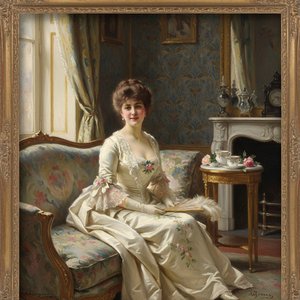
Alfred Stevens: Capturing Parisian Elegance & Fin-de-Siècle Intimacy
Discover the captivating world of Alfred Stevens, master of Parisian elegance & intimate portraiture. Explore his techniques, influences, and legacy – a prized collection for discerning art enthusiasts.

10 Meisterwerke des Romantischen Realismus: Wenn Emotion auf Wahrheit trifft
Entdecken Sie 10 Meisterwerke des Romantischen Realismus. Erleben Sie die emotionale Tiefe von Künstlern wie Constable und Friedrich – perfekt als Inspiration für Ihre Kunstsammlung oder Wandgestaltung. Finden Sie museale Reproduktionen auf OriginalUniqueArt.com.
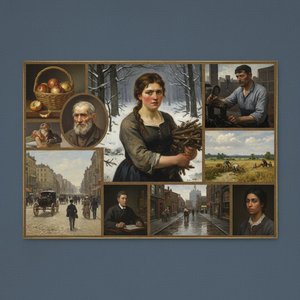
Realismus in der Kunst: Die 10 bedeutendsten Meisterwerke für Ihr Zuhause
Entdecken Sie die 10 bedeutendsten Meisterwerke des Realismus! Von Courbet bis Millet – erfahren Sie die Geschichten hinter ikonischen Gemälden und lassen Sie sich von der Detailtreue & emotionalen Tiefe inspirieren. Hochwertige Art Reproduktionen auf OriginalUniqueArt.com