

 Vorschau anzeigen
 Versenden
 Teilen
 Details anzeigen

 Herunterladen
 Ähnliche Objekte
 Röntgenaufnahme
 Diashow
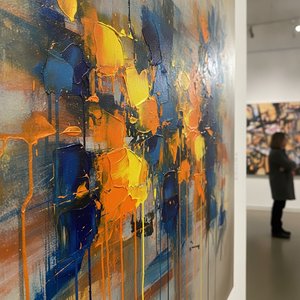
Untitled (660)

 Weiterlesen
Giclée / Kunstdruck
Giclée- oder Leinwanddruck in Museumsqualität mit schneller Produktion und flexiblen Veredelungsoptionen. ( Handgemalte Reproduktion bestellen Bild kaufen)




































Wählen Sie aus unseren vordefinierten Formaten, die den ursprünglichen Proportionen des Kunstwerks entsprechen.

Sie können Ihre eigenen Maße eingeben, um ein bestimmtes Format oder einen speziellen Platz einzupassen. Wenn das von Ihnen gewählte Format nicht den Proportionen des Originalbildes entspricht, werden wir das Kunstwerk entweder beschneiden oder das Bild mit einem gespiegelten oder einfarbigen Rand erweitern. Ein digitaler Entwurf wird Ihnen zur Genehmigung zugesandt, bevor die Produktion beginnt.
Bitte beachten Sie, dass die Vorschau auf dem Bildschirm nicht den tatsächlichen Zuschnitt oder die Erweiterung widerspiegelt. Nur der Entwurf zeigt die endgültige Komposition präzise an.
Obwohl Sondermaße verfügbar sind, empfehlen wir die Auswahl eines Maßes aus der vordefinierten Liste, um die ursprünglichen Proportionen zu bewahren.
Weltweiter Versand () innerhalb von 2 Wochen statt der üblichen 4/5 Wochen. (22 August)

Kostenloser weltweiter Expressversand

Hochwertige Leinenleinwand

Umfassender Versicherungsschutz beim Versand

Zollgebühren-Rückerstattungsgarantie

Garantie für exakte Farbtreue

60 Tage Rückgaberecht (nur bei Mängeln)

100% Geld-zurück-Garantie

Mengenrabatt verfügbar
 Die Glasoption ist nur für Größen unter 110 cm verfügbar.

Untitled (660)
Giclée / Kunstdruck
Format der Reproduktion
-


Gesamtpreis
$ 80
Über den Künstler
Early Life and Artistic Beginnings
Alfonso Fraile, born in the Andalusian town of Marchena, Spain, in 1930, emerged as a significant voice within the Spanish art scene during a period of profound social and political transition. His formative years were steeped in the traditions of rural Spain, an environment that would later subtly inform his artistic vision despite his eventual embrace of more avant-garde styles. Relocating to Madrid to pursue formal training at the Escuela Superior de Bellas Artes, Fraile embarked on a journey that saw him initially drawn to the complexities of Cubism and Art Informel. These early explorations laid the groundwork for a career characterized by constant evolution and a willingness to challenge conventional artistic boundaries. While details surrounding his personal life remain somewhat elusive, it’s clear that Madrid's vibrant cultural landscape proved pivotal in shaping his aesthetic sensibilities and fostering a spirit of experimentation.The Nuevo Espacialismo and a Shift Towards Figuration
By the mid-1960s, Spain was experiencing a burgeoning artistic shift away from the dominance of Informalism. Fraile found himself at the forefront of this movement, co-founding the group “Nuevo Espacialismo” alongside José Vento Ruiz, Ángel Medina, and Julio Martín-Caro. This collective sought to reintroduce figuration into Spanish art, but not as a simple return to representational painting. Inspired by artists like Willem de Kooning, they aimed for a dynamic interplay between abstraction and recognizable forms, imbued with a distinctly ironic edge. The group’s work was characterized by gestural brushwork, spatial dynamism, and a deliberate rejection of prevailing European trends in favor of a uniquely Spanish artistic identity. Fraile's early engagement with Nuevo Espacialismo marked a crucial turning point, setting the stage for his later development of what would become known as Neo-Figuration. He also expressed interest in the unflinching realism of Goya, which influenced his narrative approach.Mature Style: Grotesque Portraits and Symbolic Isolation
Fraile’s mature style, emerging in the 1970s, is perhaps best described as a compelling blend of whimsy, grotesque imagery, and profound psychological depth. He began translating his earlier drawings—often characterized by distorted faces and unsettling figures—into large-scale paintings. These compositions initially featured multiple characters floating within ambiguous spaces, resonating with the work of artists like Jean Dubuffet in their raw energy and unconventional aesthetic. Over time, Fraile’s focus shifted towards isolated portraits and tableaux depicting single figures, each imbued with a sense of alienation and introspection. His palette became increasingly refined, employing neutral backgrounds and clear colors to accentuate the emotional weight of his subjects. The resulting works are not merely depictions of individuals but rather explorations of the human condition—fragile, vulnerable, and often marginalized.Themes and Symbolism in Fraile’s Oeuvre
A recurring theme throughout Fraile's career is the exploration of isolation and the objectification of subjective experience. His figures, often rendered with a cartoonish quality that belies their underlying emotional complexity, seem trapped within their own internal worlds. The use of broad swatches of color and energetic brushwork further emphasizes this sense of confinement, creating a visual tension between form and space. Fraile’s paintings are rarely overtly narrative; instead, they rely on symbolic imagery and unsettling juxtapositions to evoke a range of emotions—from sarcasm and anxiety to melancholy and despair. He often revisited compositions multiple times, exploring variations in palette and texture to refine the psychological impact of his work. This serial approach underscores his commitment to capturing the nuances of human emotion and the complexities of the inner life.Legacy and Historical Significance
Alfonso Fraile’s contributions to Spanish contemporary art were widely recognized during his lifetime, culminating in several prestigious awards including the National Painting Prize (1962), the Ateneo de Madrid Critique Award (1963), and the National Visual Arts Prize (1983). His paintings are showcased at the Museo de Arte Contemporáneo in Madrid. A major retrospective exhibition held at the Museo Nacional Centro de Arte Reina Sofía in 1998-99 solidified his place as a pivotal figure in postwar Spanish art. Fraile’s work continues to resonate with audiences today, offering a powerful and unsettling commentary on the human condition. His ability to blend abstraction, figuration, and symbolism created a unique visual language that challenged conventional artistic boundaries and paved the way for future generations of Spanish artists. He left behind a body of work that is both deeply personal and universally relevant—a testament to his enduring vision and unwavering commitment to exploring the complexities of the human experience.
alfonso fraile
1930 - 1988 , Spain
Kurzinfos
- Artistic Movement Or Style: Surrealism, Abstract Expressionism
- Artists Who Influenced This Artist:
- Willem de Kooning
- Goya
- Date Of Birth: 1930
- Date Of Death: 1988
- Full Name: Alfonso Fraile
- Nationality: Spanish
- Notable Artworks:
- Untitled (121)
- Untitled (991)
- Untitled (610)
- Place Of Birth: Madrid, Spain
Ähnliche Artikel

Geometrische Abstraktion: Die 10 Meisterwerke, die Kunstgeschichte prägten | OriginalUniqueArt.com
Entdecken Sie die 10 Meisterwerke der geometrischen Abstraktion! Von Kandinsky bis Mondrian – erleben Sie die Geschichte, Farben & Formen dieser revolutionären Kunstrichtung. Hochwertige Kunstreproduktionen auf OriginalUniqueArt.com

Abstrakter Expressionismus: Die 10 Meisterwerke, die eine Kunstbewegung prägten |
Entdecken Sie die 10 Meisterwerke des Abstrakten Expressionismus! Von Jackson Pollock bis Mark Rothko – erfahren Sie die Geschichten hinter ikonischen Gemälde und finden Sie hochwertige Reproduktionen für Ihr Zuhause. Jetzt bei entdecken!

Jean Dominique Antony Metzinger: Pioneering Cubism & the Evolution of Abstract Form
Explore the life & work of Jean Metzinger, a pivotal Cubist painter and theorist. Discover his innovations in proto-Cubism, 'Du Cubisme,' and Crystal Cubism – a journey through modern art's evolution.

Expressionist Abstraction: A Procurement Guide to Bold Colors and Emotional Impact for Modern Hotel Interiors
Elevate hospitality spaces with Expressionist Abstraction. A professional procurement guide for hotel designers on sourcing bold, large-scale abstract oil paintings to create impactful, high-end modern interiors through reliable bulk-order art solutions.
Beyond the Lines: Mastering the High-Impact World of Contemporary Abstraction
Master the high-impact world of contemporary abstraction. Discover how bold colors, textures, and modern movements like Abstract Expressionism can transform your space with premium, high-energy art curated for the design-conscious professional.

