
 Vorschau anzeigen
 Versenden
 Teilen
 Details anzeigen
 Leitfaden

 Herunterladen
 Ähnliche Objekte
 Röntgenaufnahme
 Diashow
 Fragen & Antworten
 Statistiken
Evening


 Weiterlesen
Giclée / Kunstdruck
Giclée- oder Leinwanddruck in Museumsqualität mit schneller Produktion und flexiblen Veredelungsoptionen. ( Handgemalte Reproduktion bestellen Zum digitalen Bild wechseln)




P118B €10

P118H €10

P118W €10

P438Z €10

P508JH €12

P508YH €12

P805H €10

P805Z €10

P919BZ €10

P919G €10

P919XJ €10

P959ZH €10

P968JZ €12

W106C €8

W218G €10

W218JH €8

W218Y €10

W307PJ €10

W316G €10

W316PJ €8

W316Y €10

W398PJ €8

W4111J €10

W500HY €15

W500JH €15

W692G €12

W849H €8

W940BG €15

W953PJ €8




Wählen Sie aus unseren vordefinierten Formaten, die den ursprünglichen Proportionen des Kunstwerks entsprechen.

Geben Sie die benötigte Breite und Höhe an, damit der Druck perfekt in Ihren Rahmen oder an Ihre Wand passt. Ein Druck kann nur beschnitten, aber niemals größer als das Originalbild angefertigt werden; daher verliert ein Format mit anderen Proportionen einen Teil des Bildes. Wir senden Ihnen ein digitales Mockup zur Freigabe, bevor wir den Druck ausführen. Das auf dieser Seite gezeigte Bild zeigt nicht den tatsächlichen Beschnitt – dies ist nur im Mockup ersichtlich.
Weltweiter Versand () innerhalb von 2 Wochen statt der üblichen 4/5 Wochen. (10 November)

Kostenloser weltweiter Expressversand

Hochwertige Leinenleinwand

Umfassender Versicherungsschutz beim Versand

Zollgebühren-Rückerstattungsgarantie

Garantie für exakte Farbtreue

100 Tage Rückgaberecht (nur bei Mängeln)

100% Geld-zurück-Garantie

Mengenrabatt verfügbar
 Die Glasoption ist nur für Größen unter 110 cm verfügbar.

Evening
Giclée / Kunstdruck
Format der Reproduktion
-


Endpreis
€ 72
Künstlerbiografie
Alexei Stepanov: A Pioneer of Impressionist Landscape Painting
Alexei Stepanovich Stepanov (1858 – 1923) stands as a significant figure in late nineteenth and early twentieth-century Russian art, particularly recognized for his contribution to the Peredvizhniki movement and his role as a formative teacher. Born into a noble family whose officers served valiantly during the Crimean War, Stepanov’s upbringing instilled within him a deep appreciation for observation and detail—qualities that would profoundly shape his artistic vision. Tragically orphaned at the tender age of six when his parents succumbed to illness, he was entrusted to the Moscow Orphanage for Children from Military Families, an institution founded by Count Razumovsky, providing him with a stable environment amidst challenging circumstances. His academic pursuits continued at Konstantin Surveying Institute where he honed his technical skills and secured a position as an official surveyor in 1879—a profession that would later inform his meticulous approach to landscape painting. From 1880 to 1883, Stepanov immersed himself in the teachings of Ilya Repin and Evgraf Sorokin at Moscow School of Painting, Sculpture and Architecture, fostering connections with fellow artists who would become lifelong collaborators. Notably, he befriended Leonid Sabaneyev, whose literary magazine Природа и охота showcased Stepanov’s artistic talent through over a hundred drawings between 1883 and 1895—a period marked by considerable stylistic experimentation. The pivotal moment in Stepanov's artistic trajectory arrived in 1888 when he joined the Peredvizhniki group, spearheaded by Repin and Vasily Surikov. This association propelled him into a vibrant artistic community dedicated to depicting Russian life with unflinching realism and capturing the beauty of the natural world. His painting “Moose Herd,” completed in that year, swiftly gained acclaim from Pavel Tretyakov—a testament to his ability to convey emotion through careful observation and masterful brushwork. Subsequently, Stepanov accepted an invitation to lecture at Moscow School of Fine Arts established by Anatoly Gunst, furthering his commitment to artistic education and nurturing the talents of future generations. He remained a professor until 1918, shaping the careers of artists like Sergey Gerasimov, Boris Ioganson, Pavel Korin, and Leonard Turzhansky—artists who would carry forward Stepanov’s legacy. A transformative journey to Europe in 1903 alongside Nikolai Medyntsev and his family exposed Stepanov to the influence of Impressionist painters such as Claude Monet and Pierre-Auguste Renoir. This experience solidified his stylistic preferences, emphasizing luminous color palettes and fleeting moments of light—characteristics that define many of his landscapes. His marriage to Medyntsev’s daughter, Lyudmila, provided him with a supportive home life allowing him to continue his artistic endeavors. Stepanov's enduring contribution to Russian art lies in his ability to synthesize realism with Impressionist aesthetics, resulting in evocative depictions of rural Russia that resonate with timeless beauty and convey profound emotional depth. He remains an important figure in the history of landscape painting and a symbol of Peredvizhniki’s dedication to portraying authentic life experiences.
Alexei Stepanov
1858 - 1923
Kurzinfos
- Artistic Movement Or Style: Peredvizhniki; Impressionism
- Artists Or Movements Influenced By This Artist: ['Impressionists']
- Artists Who Influenced This Artist:
- Illarion Pryanishnikov
- Evgraf Sorokin
- Date Of Birth: 1858
- Date Of Death: 1923
- Full Name: Alexei Stepanovich Stepanov
- Nationality: Russian
- Notable Artworks:
- Moose herd
- Morning greeti
- Place Of Birth: Moscow, Russia
Ähnliche Artikel

Impressionistische Landschaften: Die 10 Meisterwerke, die eine Kunstrichtung prägten | OriginalUniqueArt
Entdecken Sie die 10 Meisterwerke des Impressionismus! Von Monet bis Van Gogh – erleben Sie die Geschichten hinter berühmten Landschaftsbildern. Hochwertige Kunst Reproduktionen für Ihr Zuhause auf OriginalUniqueArt.com.

Impressionistische Landschaften: Die 10 Meisterwerke, die eine Epoche prägten | OriginalUniqueArt
Entdecken Sie die 10 Meisterwerke des Impressionismus! Von Monet bis Renoir – erleben Sie die Geschichte, Technik und zeitlose Schönheit ikonischer Landschaftsbilder. Hochwertige Kunstdrucke auf OriginalUniqueArt.com. Jetzt entdecken!

Die 25 besten Kunstwerke von John Constable: Meisterwerke der Natur
Entdecken Sie die 25 besten Werke von John Constable. Erleben Sie die Romantik der Stour Valley. Jetzt Meisterwerke auf OriginalUniqueArt.com entdecken!
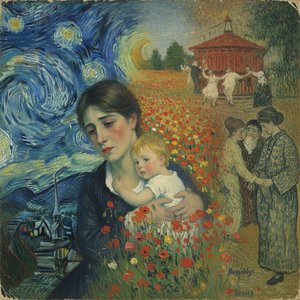
Capturing the Soul: The Most Emotionally Moving Impressionist and Post-Impressionist Masterpieces
Discover the profound emotional depth of Impressionist and Post-Impressionist masterpieces. Explore how legends like Monet, Van Gogh, and Gauguin captured light and soul through evocative landscapes and vibrant brushwork for a timeless connection to art history.

Cultivating Visions: A Historical Journey Through Rural Landscapes in Art
Explore the rich history of rural landscape painting with OriginalUniqueArt. Discover Impressionist masterpieces, key artists & movements. Find your perfect serene artwork and bring nature's beauty home.