 Vorschau anzeigen
 Versenden
 Teilen
 Details anzeigen
 Leitfaden

 Herunterladen
 Ähnliche Objekte
 Röntgenaufnahme
 Diashow
 Q&A
Q&A Statistiken
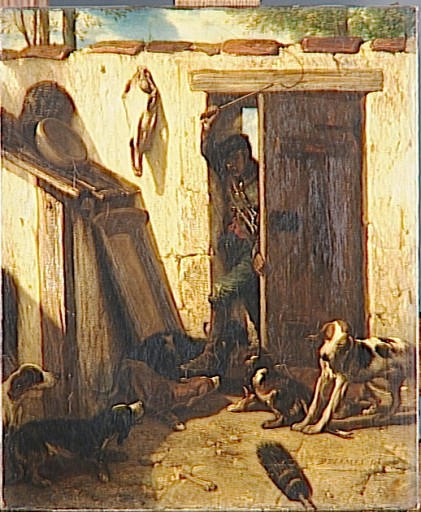
Chenil. Valet de chiens


 Weiterlesen
Handgefertigte Ölreproduktion
Handgemaltes Ölgemälde auf Leinwand in Ihrer Wunschgröße und mit Rahmen, auf Bestellung von unseren Künstlern angefertigt. ( Zum Druck wechseln Zum digitalen Bild wechseln)




P118B €10

P118H €10

P118W €10

P438Z €10

P508JH €12

P508YH €12

P805H €10

P805Z €10

P919BZ €10

P919G €10

P919XJ €10

P959ZH €10

P968JZ €12

W106C €8

W218G €10

W218JH €8

W218Y €10

W307PJ €10

W316G €10

W316PJ €8

W316Y €10

W398PJ €8

W4111J €10

W500HY €15

W500JH €15

W692G €12

W849H €8

W940BG €15

W953PJ €8




Wählen Sie aus unseren vordefinierten Formaten, die den ursprünglichen Proportionen des Kunstwerks entsprechen.

Geben Sie die Breite und die Höhe an, die Sie für Ihren Rahmen oder Ihre Wand benötigen. Da dieses Werk handgemalt ist, kann der Künstler bei einer anderen Form etwas mehr um das Bild herum malen oder etwas abschneiden – Sie entscheiden. Wir senden Ihnen ein digitales Mockup zur Freigabe, bevor mit dem Malen begonnen wird. Das auf dieser Seite gezeigte Bild stellt nicht das tatsächliche Ergebnis dar – dies tut nur das Mockup.
Nach der Bestellung wird das OriginalUniqueArt.com-Team dem Kunden Anweisungen per E-Mail zusenden und eine Mockup-Vorschau bereitstellen.
Weltweiter Versand () in nur 3 bis 4 Wochen statt der üblichen 5 Wochen. (29 Oktober). Keine Kompromisse bei der Qualität.

Kostenloser weltweiter Expressversand

Hochwertige Leinenleinwand

Umfassender Versicherungsschutz beim Versand

Zollgebühren-Rückerstattungsgarantie

Garantie für exakte Farbtreue

100 Tage Rückgaberecht (nur bei Mängeln)

100% Geld-zurück-Garantie

Mengenrabatt verfügbar
 Die Glasoption ist nur für Größen unter 110 cm verfügbar.

Chenil. Valet de chiens
Art der Reproduktion
Format der Reproduktion
-


Endpreis
€ 264
Das stille Echo des Bauernlebens: Chenil. Valet de chiens von Alexandre Gabriel Decamps
Alexandre Gabriel Decamps’ Gemälde "Chenil. Valet de chiens" – eine Szene, die sich wie ein stiller Moment aus dem Leben eines französischen Bauernlands entfaltet – ist weit mehr als nur eine Darstellung einer Arbeitssituation. Es ist ein Fenster in eine vergangene Zeit, ein Ausdruck von Ehrfurcht vor der Natur und eine subtile Meditation über die Bindung zwischen Mensch und Tier. Decamps, ein Pionier des Orientalismus, der sich jedoch hauptsächlich mit dem Leben in seiner Heimat Frankreich beschäftigte, fängt hier eine authentische Atmosphäre ein, die sowohl die Einfachheit als auch die Würde des bäuerlichen Lebens widerspiegelt.
Das Bild zeigt einen Mann, den "Valet de chiens" – einen Hundewachter oder Halter – inmitten eines bescheidenen Steinhauses. Um ihn herum liegen und stehen mehrere Hunde in unterschiedlichen Zuständen: einige ruhen sich aus, andere sind aufmerksam und scheinen dem Mann zuzuhören. Die Farbpalette ist geprägt von erdigen Tönen – gedämpften Brauntönen, Grautönen und sanften Grüntönen, die an das Land und die Sonne erinnern. Die Verwendung von Licht ist besonders bemerkenswert: ein diffuses, natürliches Licht scheint durch den offenen Türrahmen zu dringen und eine warme, gleichmäßige Beleuchtung auf die Szene zu werfen. Die subtilen Schatten unterstreichen die Textur der Steinwände und verleihen dem Bild Tiefe.
Ein Hauch von Romantik und Realismus
Decamps’ Stil ist eine faszinierende Mischung aus 19. Jahrhundert Realismus und romantischen Einflüssen. Er verzichtet auf detaillierte, präzise Darstellungen, stattdessen konzentriert er sich darauf, die Essenz der Szene einzufangen – das Gefühl von Ruhe, die Verbindung zur Natur und die stille Würde des Arbeitens. Die lockeren Pinselstriche tragen zu diesem Eindruck bei, als ob Decamps den Moment mit schnellen, spontanen Strichen festgehalten hätte. Die Formen sind organisch und unregelmäßig, was die natürlichen Formen der Hunde, der Steinstruktur und der Umgebung widerspiegelt.
Das Bild ist nicht einfach eine Darstellung von Arbeit; es vermittelt ein Gefühl von Harmonie und Vertrautheit. Die Beziehung zwischen dem Mann und seinen Hunden scheint tiefgründig und liebevoll zu sein. Die Hunde wirken loyal, aufmerksam und vertrauen dem Mann – ein Spiegelbild der menschlichen Beziehungen, die Decamps so meisterhaft einfangen konnte.
Technik und historische Bedeutung
Die Technik von "Chenil. Valet de chiens" ist charakteristisch für Decamps’ Werk: eine Kombination aus sichtbaren Pinselstrichen und einer relativ lockeren Malweise. Er verzichtet auf eine detaillierte Wiedergabe der einzelnen Elemente, stattdessen konzentriert er sich darauf, die Atmosphäre und das Gefühl der Szene einzufangen. Die Verwendung von Ölfarbe auf Leinwand ist typisch für die Epoche und trägt zur reichen Textur des Gemäldes bei.
Alexandre Gabriel Decamps war ein wichtiger Wegbereiter des Orientalismus, obwohl seine Arbeit sich hauptsächlich mit dem Leben in Frankreich befasste. Er erkannte früh das Potenzial der Malerei, um die Realität authentisch und emotional darzustellen. Seine Werke, wie "Chenil. Valet de chiens", sind Zeugnisse seiner einzigartigen Vision und seines Könsters. Die Tatsache, dass er 1855 mit dem Grand Médaille beim Pariser Salon ausgezeichnet wurde, ist ein Beweis für seinen Einfluss und seine Anerkennung in der Kunstwelt seiner Zeit.
Ein Stück Geschichte für Ihr Zuhause
OriginalUniqueArt bietet hochwertige Reproduktionen von "Chenil. Valet de chiens" an, die Ihnen ermöglichen, dieses faszinierende Werk von Alexandre Gabriel Decamps in Ihrem eigenen Zuhause zu genießen. Die handgemalten Reproduktionen spiegeln die Originaldetails und die Atmosphäre des Gemäldes authentisch wider – ein wunderschönes Stück Kunstgeschichte für Sammler und Liebhaber der französischen Malerei.
Fragen & Antworten
Warum ist der Urheberrechtsstatus von "Chenil. Valet de chiens" so, wie er ist?
Der Urheberrechtsstatus von "Chenil. Valet de chiens" – gemeinfrei – das Urheberrecht ist abgelaufen – ergibt sich aus dem Todesjahr des Künstlers im Jahr 1860.
Für welchen Ort und welchen Zweck wird "Chenil. Valet de chiens" empfohlen?
"Chenil. Valet de chiens" von Alexandre Gabriel Decamps wird für Statement-Piece empfohlen, idealerweise in einem Wohnbereich. Die Verwendung und die Raumgestaltung geben gemeinsam Aufschluss darüber, wo eine Reproduktion am besten zur Geltung kommt.
Zählt "Chenil. Valet de chiens" von Alexandre Gabriel Decamps zu den begehrten Kunstwerken der 19th Century Realism-Epoche?
"Chenil. Valet de chiens" wird im Katalog als Anerkannt unter den Werken der 19th Century Realism geführt.
Künstlerbiografie
Alexandre Gabriel Decamps (1803–1860): A Pioneer of Orientalist Visions
Alexandre Gabriel Decamps, a name resonating with the vibrant hues of exotic landscapes and the dramatic flair of Romanticism, emerged as a pivotal figure in 19th-century French painting. Born in Paris on March 3, 1803, his artistic journey was one of bold innovation, challenging academic conventions and forging a path toward what would become known as Orientalism. While contemporaries like Delacroix and Ingres also held prominent positions within the French art world, Decamps distinguished himself through an intensely personal style—a blend of meticulous observation, dramatic composition, and a captivating narrative quality that drew viewers into worlds both familiar and utterly foreign. His early recognition as a talented artist foreshadowed a career marked by critical acclaim, culminating in the grand or council medal at the Paris Exhibition of 1855, a testament to his exceptional skill and unique vision. Beyond the canvas, Decamps was a man deeply connected to nature, finding solace and inspiration in the countryside surrounding Paris, where he indulged his passion for animals and field sports—a fondness that would subtly permeate much of his artistic output.- Early Life and Artistic Training: Decamps’ formative years were spent honing his skills under the tutelage of Étienne Bouhot, a respected architect, before transitioning to Alexandre Abel de Pujol’s atelier, where he absorbed the tenets of academic painting. However, Decamps quickly recognized that strict adherence to tradition stifled creativity, prompting him to pursue an independent artistic path characterized by a fascination with capturing the essence of nature.
- Travels and Inspiration: A pivotal moment in Decamps’ artistic development arrived with his expeditions to Switzerland and Italy. These journeys fueled his imagination and instilled in him a profound appreciation for landscape painting, influencing his stylistic choices and establishing a cornerstone of his oeuvre. Notably, he meticulously documented the flora and fauna of these regions, preparing detailed sketches that served as invaluable references for his future paintings.
- Orientalism Takes Root: Decamps’ groundbreaking Salon exhibition of 1831 irrevocably altered the trajectory of French art history. His depiction of Smyrna—a bustling port city in Ottoman Turkey—challenged prevailing stereotypes and presented a remarkably honest portrayal of daily life, capturing the atmosphere, light, and textures with unprecedented realism. This pioneering approach resonated deeply with fellow artists and writers, sparking a fervent interest in Oriental themes that would dominate the artistic landscape for decades to come.
The Evolution of an Artistic Style: From Biblical Narratives to Desert Landscapes
Initially drawn to historical and biblical scenes—particularly depictions of Joshua’s victory over the Ammonites—Decamps skillfully grounded these narratives in authentic local settings, rejecting idealized representations favored by his contemporaries. This commitment to verisimilitude stemmed from his extensive travels to the East, where he immersed himself in observing cultural traditions and capturing the nuances of human experience. Joseph Sold by His Brethren, for example, is not merely an illustration of a biblical tale but a vivid portrayal of a specific time and place, imbued with emotional depth and psychological insight—a hallmark of Decamps’ distinctive artistic vision. He didn't simply depict what he saw; he conveyed a feeling for the atmosphere, the light, and the very essence of these distant lands.- Biblical Drama: Decamps’ early works showcased his mastery of dramatic composition and theatrical lighting—techniques honed during his formative years under Pujol. His meticulous attention to detail ensured that biblical narratives resonated with palpable emotion, transporting viewers into the heart of the depicted events.
- Historical Grandeur: Decamps' ambition extended beyond individual scenes; he tackled monumental historical canvases like The Defeat of the Cimbri, capturing the chaos and brutality of battle with dynamic energy and masterful brushwork. His ability to convey scale and movement cemented his reputation as a leading exponent of Romantic painting.
- The Desert’s Embrace: However, Decamps' true genius lay in his exploration of Oriental life—scenes rendered with remarkable fidelity that initially confounded critics accustomed to romanticized portrayals. He presented everyday vignettes—markets, schools, domestic interiors—with an unwavering dedication to capturing the subtleties of cultural traditions and conveying a profound understanding of human psychology.
A Founding Father of Orientalism: Influence and Legacy
Decamps is rightfully considered the founding father of Orientalism in French painting. Before him, depictions of the East were often filtered through fantasy and exoticism—a stylistic convention that Decamps decisively rejected. He championed a more objective approach, prioritizing direct observation and genuine curiosity as guiding principles for artistic endeavor.- Maximilian Liebermann’s Praise: Maximilian Liebermann famously dubbed Decamps “Christopher Columbus of the Orient,” recognizing his pioneering role in opening up this unexplored artistic territory. His stylistic innovations—characterized by bold brushstrokes, striking contrasts of light and shadow, and a palpable sense of atmosphere—became a benchmark for generations of painters.
- Notable Works: Among Decamps’ most celebrated paintings are Incendie d'un village italien (1853), depicting a dramatic fire scene with masterful impasto; A Bedouin and a Camel Resting in a Desert (1860), capturing the tranquility of desert life with exquisite detail; The Monkey Connoisseurs (1854), a satirical commentary on the Académie des Beaux-Arts’ jury; and Albanian Dancer (1831), showcasing vibrant colors and energetic movement.
- Enduring Recognition: Decamps' legacy continues to inspire artists today. His works reside in prestigious institutions such as the Musée du Louvre, ensuring that his vision persists—a testament to his enduring contribution to French art history.
A Tragic End and An Unforgettable Artistic Vision
Tragically, Decamps’ life was cut short on August 22, 1860, following a hunting accident near Fontainebleau. Despite his untimely demise, Alexandre Gabriel Decamps' artistic output remains profoundly influential—a beacon of innovation and authenticity that transcends time.
Alexandre Gabriel Decamps
1803 - 1860 , Frankreich
Kurzinfos
- Artistic Movement Or Style: Orientalismus
- Artists Or Movements Influenced By This Artist: ['Orientalismus']
- Artists Who Influenced This Artist: ['Eugène Delacroix']
- Date Of Birth: 3. März 1803
- Full Name: Alexandre Gabriel Decamps
- Nationality: Französisch
- Notable Artworks:
- CHIENS BRIFAUTS
- LA COUR DE FERME
- L’École Turque
- Paysage Turc
- Place Of Birth: Paris, Frankreich
Ähnliche Artikel

Über uns
Entdecken Sie unsere Geschichte! Wir bringen Weltklasse-Kunst in Ihr Leben durch fachkundige Auswahl, individuelle Kreationen und kostenlose Vorschauen. Seit dem Jahr 2000 von Privatpersonen und Unternehmen geschätzt.

Goya: Die 25 Meisterwerke des spanischen Genies – Kunst für Ihr Zuhause | OriginalUniqueArt
Entdecken Sie die 25 Meisterwerke von Francisco Goya! Tauchen Sie ein in die düstere Romantik spanischer Malerei, Porträts & Historienbilder. Hochwertige Kunstdrucke auf OriginalUniqueArt.com – für Kunstliebhaber und stilvolles Wohnen.
Georges de La Tour: Licht, Spiritualität und Realismus im Barock – Eine Neubewertung
Entdecken Sie Georges de La Tour, den vergessenen Meister des Barocks! Erfahren Sie mehr über sein einzigartiges Lichtkonzept, seine spirituelle Malerei und seinen Einfluss auf die Kunstgeschichte. Expertenanalyse & Hintergrundinformationen.
Pierre Puvis de Chavannes: Symbolismus, Wandmalerei und die Suche nach idealer Schönheit
Entdecken Sie das Werk von Pierre Puvis de Chavannes, einem Pionier des Symbolismus und Meister der Wandmalerei. Erfahren Sie mehr über seinen Stil, seine wichtigsten Werke und seinen Einfluss auf die moderne Kunstgeschichte.

10 Meisterwerke des Romantischen Realismus: Wenn Emotion auf Wahrheit trifft
Entdecken Sie 10 Meisterwerke des Romantischen Realismus. Erleben Sie die emotionale Tiefe von Künstlern wie Constable und Friedrich – perfekt als Inspiration für Ihre Kunstsammlung oder Wandgestaltung. Finden Sie museale Reproduktionen auf OriginalUniqueArt.com.