 Vorschau anzeigen
 Versenden
 Teilen
 Details anzeigen
 Leitfaden

 Herunterladen
 Ähnliche Objekte
 Röntgenaufnahme
 Diashow
 Q&A
Q&A Statistiken
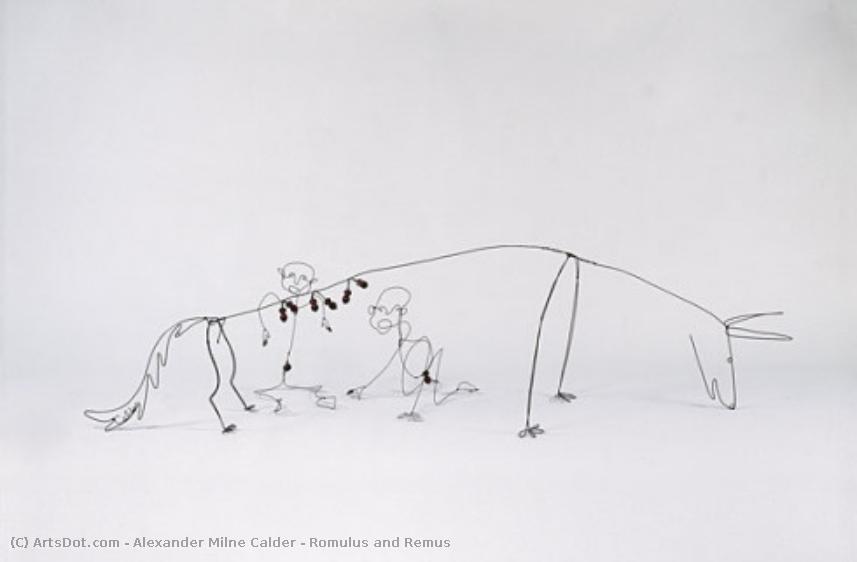
Romulus and Remus


 Weiterlesen
Die auf dieser Seite dargestellten Kunstwerke sind urheberrechtlich geschützt, was bedeutet, dass wir keine identische Reproduktion rechtmäßig erstellen oder verkaufen dürfen. Dieser Schutz wird durch internationale Abkommen wie die Berner Übereinkunft und durch nationale Gesetze, einschließlich derer, die von den US-Urheberrecht – Titel 17.
Diese Methode entspricht vollumfänglich den Urheberrechtsbestimmungen, da sie keine Kopie oder Vervielfältigung des geschützten Kunstwerks darstellt. Stattdessen handelt es sich um eine kreative Neuinterpretation – ein neues Gemälde, das vom Original inspiriert, aber nicht identisch mit ihm ist.
Giclée / Kunstdruck
Giclée- oder Leinwanddruck in Museumsqualität mit schneller Produktion und flexiblen Veredelungsoptionen. ( Handgemalte Reproduktion bestellen Zum digitalen Bild wechseln)




P118B €10

P118H €10

P118W €10

P438Z €10

P508JH €12

P508YH €12

P805H €10

P805Z €10

P919BZ €10

P919G €10

P919XJ €10

P959ZH €10

P968JZ €12

W106C €8

W218G €10

W218JH €8

W218Y €10

W307PJ €10

W316G €10

W316PJ €8

W316Y €10

W398PJ €8

W4111J €10

W500HY €15

W500JH €15

W692G €12

W849H €8

W940BG €15

W953PJ €8




Wählen Sie aus unseren vordefinierten Formaten, die den ursprünglichen Proportionen des Kunstwerks entsprechen.

Geben Sie die benötigte Breite und Höhe an, damit der Druck perfekt in Ihren Rahmen oder an Ihre Wand passt. Ein Druck kann nur beschnitten, aber niemals größer als das Originalbild angefertigt werden; daher verliert ein Format mit anderen Proportionen einen Teil des Bildes. Wir senden Ihnen ein digitales Mockup zur Freigabe, bevor wir den Druck ausführen. Das auf dieser Seite gezeigte Bild zeigt nicht den tatsächlichen Beschnitt – dies ist nur im Mockup ersichtlich.
Weltweiter Versand () innerhalb von 2 Wochen statt der üblichen 4/5 Wochen. (3 November)

Kostenloser weltweiter Expressversand

Hochwertige Leinenleinwand

Umfassender Versicherungsschutz beim Versand

Zollgebühren-Rückerstattungsgarantie

Garantie für exakte Farbtreue

100 Tage Rückgaberecht (nur bei Mängeln)

100% Geld-zurück-Garantie

Mengenrabatt verfügbar
 Die Glasoption ist nur für Größen unter 110 cm verfügbar.

Romulus and Remus
Giclée / Kunstdruck
Format der Reproduktion
-


Endpreis
€ 71
A Moment Frozen in Steel: Exploring Calder’s “Romulus and Remus”
Alexander Milne Calder's "Romulus and Remus," crafted in 1928, isn’t merely a sculpture; it’s a distilled essence of myth rendered in delicate wire. This piece, a testament to the artist’s pioneering approach to three-dimensional form, transcends its subject matter – the legendary founders of Rome – to become a profound meditation on beginnings, brotherhood, and the very act of creation itself. Calder, deeply influenced by Constructivism and early Modernism, sought to liberate sculpture from the constraints of traditional materials, embracing the inherent qualities of industrial wire as both medium and metaphor.
The sculpture’s stark simplicity is its most arresting feature. Two figures, rendered with astonishing grace despite their skeletal construction, stand beneath a subtly arching structure that evokes a horizon line or perhaps a stylized landscape. The color palette – a resolute black and white punctuated by subtle grays – amplifies the work's austerity, forcing the viewer to focus entirely on form and movement. The lines themselves are paramount; thin, almost impossibly delicate wires define every contour, creating an illusion of both fragility and strength. This deliberate reductionist approach mirrors Calder’s broader philosophy: to strip away the superfluous and reveal the fundamental elements of a subject.
The Poetics of Chance and Kinetic Form
Calder's work in this period – particularly his “Cirque Calder” series – exemplifies his fascination with chance and spontaneity. He didn’t meticulously plan every curve or angle; instead, he allowed the wire to guide him, embracing the unpredictable nature of the material. This process is vividly captured in "Romulus and Remus," where the figures appear to be caught mid-action, poised on the precipice of a narrative yet undefined. The slight wobble inherent in the sculpture’s construction – a subtle consequence of its wire composition – hints at a kinetic energy, suggesting that even stillness can hold a dynamic potential.
The technique itself is deceptively complex. Calder skillfully bent and assembled hundreds of individual wires, creating a surprisingly robust structure despite its delicate appearance. The varying thicknesses of the wire contribute to the sculpture’s textural richness, offering subtle shifts in sheen as light catches the metal. This careful manipulation of material speaks to Calder's mastery of his chosen medium – a testament to his ability to transform industrial components into objects of profound beauty and intellectual resonance.
Myth, Brotherhood, and the Dawn of Rome
The subject matter—the story of Romulus and Remus—is deeply rooted in Roman mythology. The legend of the twins suckled by a she-wolf is an enduring symbol of resilience, survival, and the founding of civilization. Calder’s sculpture doesn't simply depict this narrative; it captures its essence – the primal struggle for existence, the bond between brothers, and the birth of a new order. The wire itself can be interpreted as representing the threads that connect us to our past, shaping our present and influencing our future.
Created in 1928, “Romulus and Remus” stands as a pivotal work in Calder’s oeuvre, marking a significant shift towards abstraction while retaining a powerful connection to his artistic roots. It's a sculpture that invites contemplation, prompting viewers to consider the interplay of form, material, and narrative – a timeless meditation on the foundations of human experience.
Fragen & Antworten
Befindet sich "Romulus and Remus" von Alexander Milne Calder im Heimatland des Künstlers?
Nein – das Kunstwerk wird im Ausland aufbewahrt. Alexander Milne Calder wurde in Vereinigtes Königreich geboren, während sich das Museum, das das Original von „Romulus and Remus“ beherbergt, in Vereinigte Staaten von Amerika befindet.
Wer ist der Urheber von "Romulus and Remus" und aus welchem Jahr stammt das Werk?
„Romulus and Remus“ stammt von Alexander Milne Calder und wird auf 1928 datiert.
Wo finde ich Statistiken zu "Romulus and Remus" von Alexander Milne Calder?
Die Seite Besucherzahlen von "Romulus and Remus" von Alexander Milne Calder präsentiert öffentliche Besucherstatistiken: die monatlichen Aufrufe dieses Kunstwerks, einen Vergleich mit den meistbesuchten Werken des Künstlers sowie die Herkunft der Besucher.
Künstlerbiografie
Einführung in Alexander Milne Calder
Alexander Milne Calder war ein schottisch-amerikanischer Bildhauer, geboren 1846 in Aberdeen, Schottland. Er ist vor allem bekannt für seine architektonischen Skulpturen am Philadelphia City Hall und sowohl sein Sohn, Alexander Stirling Calder als auch sein Enkel, Alexander 'Sandy' Calder wurden im 20. Jahrhundert bedeutende Bildhauer.Frühes Leben und Karriere
Alexander Milne Calder begann seine Karriere in Schottland, wo er für den Bildhauer John Rhind arbeitete und gleichzeitig die Royal Academy in Edinburgh besuchte. Er zog nach London und arbeitete am Albert Memorial. Calder wanderte 1868 in die Vereinigten Staaten aus und ließ sich in Philadelphia nieder, wo er bei Joseph A. Bailly studierte und Kurse bei Thomas Eakins an der Pennsylvania Academy of Fine Arts besuchte.Bemerkenswerte Werke
Einige der bemerkenswertesten Werke von Alexander Milne Calder umfassen:- Philadelphia City Hall: Ein Auftrag, der mehr als 250 Teile aus Marmor und Bronze umfasste und Calder 20 Jahre dauerte.
- William Penn: Eine kolossale Bronzestatue, die den Turm des Rathauses krönen sollte.
- Indian Figure: Eine Skulptur vor ihrer Installation am Rathaus.
- Südtor und Westtor: Beleuchtet mit farbigen Lichtern, die Calders Liebe zum Detail zeigen.
Einflüsse und Entwicklung
Calder wurde von der Tradition des akademischen Bildhauens beeinflusst, insbesondere durch seine Studien bei Rhind und Eakins. Seine frühen Arbeiten zeigten einen klassischen Stil, aber sein Engagement für den Auftrag am Philadelphia City Hall ermöglichte es ihm, eine einzigartige Mischung aus architektonischer Dekoration und persönlichem künstlerischem Ausdruck zu entwickeln. Die Arbeit an der Stadtverwaltung war ein entscheidender Faktor in seiner Entwicklung als Künstler, da sie seine Fähigkeit demonstrierte, im großen Maßstab zu arbeiten und komplexe Designs umzusetzen.Vermächtnis
Das Vermächtnis von Alexander Milne Calder reicht über seine eigenen Werke hinaus, da sowohl sein Sohn als auch sein Enkel zu bedeutenden Bildhauern wurden. Seine Beiträge zur Kunstwelt sind in verschiedenen Museen zu sehen, darunter das Smithsonian American Art Museum und die Galleria Civica di Arte Moderna e Contemporanea Torino. Um mehr über Alexander Milne Calder und seine Arbeit zu erfahren, besuchen Sie https://OriginalUniqueArt.com/@/alexander-milne-calder oder erkunden Sie die Wahoo Art Timeline für einen detaillierten Überblick über die Kunstgeschichte. Es ist wichtig zu beachten, dass Calders Arbeit von Kunstliebhabern und Gelehrten gleichermaßen anerkannt und geschätzt wurde, was ihn zu einer bedeutenden Figur in der Welt der Kunst macht. Seine Beiträge werden weiterhin gefeiert und studiert.
Alexander Milne Calder
1898 - 1976 , Vereinigtes Königreich
Kurzinfos
- Beeinflusste Künstler:
- Alexander Stirling Calder
- Alexander 'Sandy' Calder
- Bekannte Werke:
- Philadelphia City Hall
- William Penn Statue
- Indian Figure Skulptur
- Südportal und Westportal
- Geburtsdatum: 23. August 1846
- Geburtsort: Aberdeen, Vereinigtes Königreich
- Künstlerische Einflüsse:
- John Rhind
- Thomas Eakins
- Nationalität: Schottisch-Amerikanisch
- Todatum: 14. Juni 1923
- Vollständiger Name: Alexander Milne Calder
Ähnliche Artikel

Die 10 legendärsten Bronzestatuen: Meisterwerke, die Kunstgeschichte schrieben | OriginalUniqueArt
Entdecken Sie die 10 legendärsten Bronzestatuen der Kunstgeschichte! Von Rodin bis Michelangelo – erfahren Sie die Geschichten hinter ikonischen Skulpturen und finden Sie hochwertige Reproduktionen für Ihr Zuhause. Jetzt bei OriginalUniqueArt entdecken!
Alexander Calder: Kinetische Skulptur und die Poetik des Zufalls – Eine Meistererklärung
Entdecken Sie die faszinierende Welt von Alexander Calder! Unsere Expertenanalyse beleuchtet seine kinetische Kunst, Mobiles und sein Vermächtnis. Wertvolle Einblicke für Sammler & Kunstliebhaber.

The Enduring Form: Exploring Themes & Techniques in Sculpture Across Historical Periods
Explore the rich history of sculpture from ancient masterpieces to contemporary innovations. Discover key techniques, influential artists & investment potential for discerning art collectors.

Die Essenz der Materie: Ein Leitfaden zur Meisterschaft und Technik der Bildhauerei
Erfahren Sie alles über die Meisterschaft der Bildhauerei und Materialkunde. Entdecken Sie die Kunst der Form jetzt!

Bronze-Meisterwerke: Die 10 Skulpturen, die Kunstgeschichte schrieben | OriginalUniqueArt
Entdecken Sie die 10 legendärsten Bronze Skulpturen der Kunstgeschichte! Von Michelangelo bis Rodin – erfahren Sie die Geschichten hinter den Meisterwerken und lassen Sie sich von Wanddeko-Ideen inspirieren. Hochwertige Kunstdrucke auf OriginalUniqueArt.com.


