

 In echtem Maßstab anzeigen
 Versenden als Grußkarte
 Teilen
 Details anzeigen
 Leitfaden öffnen

 Herunterladen
 Ähnliche Objekte
 Röntgenaufnahme
 Diashow
 Besucherstatistiken
Nemo


 Mehr anzeigen
Die auf dieser Seite dargestellten Kunstwerke sind urheberrechtlich geschützt, was bedeutet, dass wir keine identische Reproduktion rechtmäßig erstellen oder verkaufen dürfen. Dieser Schutz wird durch internationale Abkommen wie die Berner Übereinkunft und durch nationale Gesetze, einschließlich derer, die von den ... festgelegt wurden US-Urheberrecht – Titel 17.
Diese Methode entspricht vollumfänglich den Urheberrechtsbestimmungen, da sie keine Kopie oder Vervielfältigung des geschützten Kunstwerks darstellt. Stattdessen handelt es sich um eine kreative Neuinterpretation – ein neues Gemälde, das vom Original inspiriert, aber nicht identisch mit ihm ist.
Giclée / Kunstdruck
Giclée- oder Leinwanddruck in Museumsqualität mit schneller Produktion und flexiblen Veredelungsoptionen. ( Handgemalte Reproduktion kaufen Zum digitalen Bild wechseln)




P118B €10

P118H €10

P118W €10

P438Z €10

P508JH €12

P508YH €12

P805H €10

P805Z €10

P919BZ €10

P919G €10

P919XJ €10

P959ZH €10

P968JZ €12

W106C €8

W218G €10

W218JH €8

W218Y €10

W307PJ €10

W316G €10

W316PJ €8

W316Y €10

W398PJ €8

W4111J €10

W500HY €15

W500JH €15

W692G €12

W849H €8

W940BG €15

W953PJ €8




Wählen Sie aus unseren vordefinierten Formaten, die den ursprünglichen Proportionen des Kunstwerks entsprechen.

Geben Sie die Breite und die Höhe an, die Sie benötigen, damit der Druck perfekt in Ihren Rahmen oder an Ihre Wand passt. Ein Druck kann nur beschnitten werden und niemals größer als das Originalbild gemacht werden; daher verliert ein Format mit einer anderen Proportion einen Teil des Bildes. Wir senden Ihnen ein digitales Mockup zur Freigabe, bevor wir den Druck ausführen. Das auf dieser Seite gezeigte Bild zeigt nicht den tatsächlichen Beschnitt – dies ist nur im Mockup ersichtlich.
Weltweiter Versand () innerhalb von 2 Wochen statt der üblichen 4/5 Wochen. (22 Oktober)

Kostenloser weltweiter Expressversand

Hochwertige Leinenleinwand

Vollständiger Versicherungsschutz beim Versand

Zollgebühren-Rückerstattungsgarantie

Garantie für exakte Farbtreue

100-tägiges Rückgaberecht (nur bei Mängeln)

100% Geld-zurück-Garantie

Angebot für Mengenrabatt
 Die Glasoption ist nur für Größen unter 110 cm verfügbar.

Nemo
Giclée / Kunstdruck
Format der Reproduktion
-


Gesamtpreis
€ 70
Nemo – A Symphony of Geometric Form and Chance
Alexander Milne Calder’s “Nemo” stands as a testament to the enduring fascination with abstraction—a captivating exploration of color, shape, and movement that transcends mere visual representation. Created in 1947, this striking piece embodies Calder's signature approach: eschewing realism for a deliberate embrace of spontaneity and serendipity, mirroring the very essence of his celebrated mobiles.
The Visual Language of Equilibrium
Dominating the canvas is an intricate composition featuring overlapping circles and squares—a bold declaration of geometric principles. The palette bursts with vibrant hues—primarily reds, yellows, and blues—that harmonize to create a dynamic visual experience. Calder meticulously crafted these shapes using a flat painting technique, prioritizing form over texture; there’s no visible brushwork, reflecting his unwavering commitment to precision and control despite the illusion of movement.
A Reflection of Constructivism's Legacy
“Nemo” firmly roots itself within the influential Constructivist movement of the early 20th century. Like its contemporaries—artists who sought to liberate art from traditional conventions—Calder aimed to convey emotion and ideas through simplified geometric forms, rejecting decorative embellishments in favor of intellectual rigor. This stylistic choice underscores Calder’s belief that art should communicate directly with the viewer's intellect as well as their senses.
Symbolism Embedded in Motionless Form
Despite its apparent stillness, “Nemo” pulsates with an underlying sense of dynamism—a subtle suggestion of movement achieved through the careful arrangement of shapes and colors. Calder’s genius lies in transforming static form into a conduit for conveying emotion; the overlapping circles and squares evoke feelings of balance, harmony, and perhaps even controlled chaos. The artist deliberately avoided explicit symbolism, allowing viewers to interpret the artwork's impact on their own emotional landscape.
A Monumental Contribution to Modern Art
Alexander Milne Calder’s “Nemo” represents more than just a beautiful painting—it embodies a pivotal moment in artistic history. His pioneering exploration of kinetic sculpture and his unwavering dedication to geometric abstraction paved the way for subsequent generations of artists, establishing him as one of the most influential sculptors of the 20th century. This artwork continues to inspire admiration for its elegance, innovation, and profound engagement with fundamental principles of visual art.
Fragen & Antworten
Welcher Strömung und welcher Epoche ist "Nemo" von Alexander Milne Calder zuzuordnen?
In "Nemo" von Alexander Milne Calder trifft die Modernism-Strömung auf die Ära der Moderne.
Wie stark ist der Kontrast in "Nemo" von Alexander Milne Calder?
Der Kontrastwert von "Nemo" von Alexander Milne Calder ist Statement.
In welchem Museum befindet sich das Original von „Nemo“?
Das Originalwerk „Nemo“ können Sie im Biennale Internazionale dell'Antiquariato di Firenze, Florenz, Italien bewundern.
Biografie des Künstlers
Einführung in Alexander Milne Calder
Alexander Milne Calder war ein schottisch-amerikanischer Bildhauer, geboren 1846 in Aberdeen, Schottland. Er ist vor allem bekannt für seine architektonischen Skulpturen am Philadelphia City Hall und sowohl sein Sohn, Alexander Stirling Calder als auch sein Enkel, Alexander 'Sandy' Calder wurden im 20. Jahrhundert bedeutende Bildhauer.Frühes Leben und Karriere
Alexander Milne Calder begann seine Karriere in Schottland, wo er für den Bildhauer John Rhind arbeitete und gleichzeitig die Royal Academy in Edinburgh besuchte. Er zog nach London und arbeitete am Albert Memorial. Calder wanderte 1868 in die Vereinigten Staaten aus und ließ sich in Philadelphia nieder, wo er bei Joseph A. Bailly studierte und Kurse bei Thomas Eakins an der Pennsylvania Academy of Fine Arts besuchte.Bemerkenswerte Werke
Einige der bemerkenswertesten Werke von Alexander Milne Calder umfassen:- Philadelphia City Hall: Ein Auftrag, der mehr als 250 Teile aus Marmor und Bronze umfasste und Calder 20 Jahre dauerte.
- William Penn: Eine kolossale Bronzestatue, die den Turm des Rathauses krönen sollte.
- Indian Figure: Eine Skulptur vor ihrer Installation am Rathaus.
- Südtor und Westtor: Beleuchtet mit farbigen Lichtern, die Calders Liebe zum Detail zeigen.
Einflüsse und Entwicklung
Calder wurde von der Tradition des akademischen Bildhauens beeinflusst, insbesondere durch seine Studien bei Rhind und Eakins. Seine frühen Arbeiten zeigten einen klassischen Stil, aber sein Engagement für den Auftrag am Philadelphia City Hall ermöglichte es ihm, eine einzigartige Mischung aus architektonischer Dekoration und persönlichem künstlerischem Ausdruck zu entwickeln. Die Arbeit an der Stadtverwaltung war ein entscheidender Faktor in seiner Entwicklung als Künstler, da sie seine Fähigkeit demonstrierte, im großen Maßstab zu arbeiten und komplexe Designs umzusetzen.Vermächtnis
Das Vermächtnis von Alexander Milne Calder reicht über seine eigenen Werke hinaus, da sowohl sein Sohn als auch sein Enkel zu bedeutenden Bildhauern wurden. Seine Beiträge zur Kunstwelt sind in verschiedenen Museen zu sehen, darunter das Smithsonian American Art Museum und die Galleria Civica di Arte Moderna e Contemporanea Torino. Um mehr über Alexander Milne Calder und seine Arbeit zu erfahren, besuchen Sie https://OriginalUniqueArt.com/@/alexander-milne-calder oder erkunden Sie die Wahoo Art Timeline für einen detaillierten Überblick über die Kunstgeschichte. Es ist wichtig zu beachten, dass Calders Arbeit von Kunstliebhabern und Gelehrten gleichermaßen anerkannt und geschätzt wurde, was ihn zu einer bedeutenden Figur in der Welt der Kunst macht. Seine Beiträge werden weiterhin gefeiert und studiert.
Alexander Milne Calder
1898 - 1976 , Vereinigtes Königreich
Eckdaten zum Künstler
- Beeinflusste Künstler:
- Alexander Stirling Calder
- Alexander 'Sandy' Calder
- Bekannte Werke:
- Philadelphia City Hall
- William Penn Statue
- Indian Figure Skulptur
- Südportal und Westportal
- Geburtsdatum: 23. August 1846
- Geburtsort: Aberdeen, Vereinigtes Königreich
- Künstlerische Einflüsse:
- John Rhind
- Thomas Eakins
- Nationalität: Schottisch-Amerikanisch
- Todatum: 14. Juni 1923
- Vollständiger Name: Alexander Milne Calder
Verwandte Artikel

Beyond Form & Color: Geometric Abstraction's Evolution in 20th/21st Century Art
Explore the evolution of geometric abstraction from Cubism to contemporary art. Discover key artists like Malevich & Mondrian, investment insights, and expert collecting advice at OriginalUniqueArt.

Neo-Abstract Art: The High-Impact Evolution of Modern Visual Energy and Geometric Sophistication
Discover the power of Neo-Abstract art. Explore how bold geometric forms and high-impact visual energy are redefining modern design. Learn to curate sophisticated, high-energy spaces with the latest trends in contemporary abstraction and structural color.
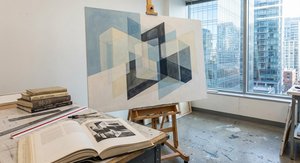
Beyond Form & Color: Geometric Abstraction's Enduring Legacy in Art History
Explore the captivating world of geometric abstraction! Discover its origins, key artists like Malevich & Mondrian, and why this movement remains highly valued by art collectors today. Expert insights at OriginalUniqueArt.

Kandinsky: Die 25 Meisterwerke des Abstrakten – Kunst für Ihr Zuhause | OriginalUniqueArt
Entdecken Sie die 25 bedeutendsten Gemälde von Wassily Kandinsky! Tauchen Sie ein in die Welt der abstrakten Kunst, des Expressionismus und der Farbkomposition. Hochwertige Kunstdrucke & Inspiration für Ihr Zuhause auf OriginalUniqueArt.com.

Geometrische Abstraktion: Die 10 Meisterwerke, die Kunstgeschichte prägten | OriginalUniqueArt.com
Entdecken Sie die 10 Meisterwerke der geometrischen Abstraktion! Von Kandinsky bis Mondrian – erleben Sie die Geschichte, Farben & Formen dieser revolutionären Kunstrichtung. Hochwertige Kunstreproduktionen auf OriginalUniqueArt.com

