
 Vorschau anzeigen
 Versenden
 Teilen
 Details anzeigen
 Leitfaden

 Herunterladen
 Ähnliche Objekte
 Röntgenaufnahme
 Diashow
 Fragen & Antworten
 Statistiken
Lobster Trap and Fish Tail


 Weiterlesen
Die auf dieser Seite dargestellten Kunstwerke sind urheberrechtlich geschützt, was bedeutet, dass wir keine identische Reproduktion rechtmäßig erstellen oder verkaufen dürfen. Dieser Schutz wird durch internationale Abkommen wie die Berner Übereinkunft und durch nationale Gesetze, einschließlich derer, die von den US-Urheberrecht – Titel 17.
Diese Methode entspricht vollumfänglich den Urheberrechtsbestimmungen, da sie keine Kopie oder Vervielfältigung des geschützten Kunstwerks darstellt. Stattdessen handelt es sich um eine kreative Neuinterpretation – ein neues Gemälde, das vom Original inspiriert, aber nicht identisch mit ihm ist.
Giclée / Kunstdruck
Giclée- oder Leinwanddruck in Museumsqualität mit schneller Produktion und flexiblen Veredelungsoptionen. ( Handgemalte Reproduktion bestellen Zum digitalen Bild wechseln)




P118B €10

P118H €10

P118W €10

P438Z €10

P508JH €12

P508YH €12

P805H €10

P805Z €10

P919BZ €10

P919G €10

P919XJ €10

P959ZH €10

P968JZ €12

W106C €8

W218G €10

W218JH €8

W218Y €10

W307PJ €10

W316G €10

W316PJ €8

W316Y €10

W398PJ €8

W4111J €10

W500HY €15

W500JH €15

W692G €12

W849H €8

W940BG €15

W953PJ €8




Wählen Sie aus unseren vordefinierten Formaten, die den ursprünglichen Proportionen des Kunstwerks entsprechen.

Geben Sie die benötigte Breite und Höhe an, damit der Druck perfekt in Ihren Rahmen oder an Ihre Wand passt. Ein Druck kann nur beschnitten, aber niemals größer als das Originalbild angefertigt werden; daher verliert ein Format mit anderen Proportionen einen Teil des Bildes. Wir senden Ihnen ein digitales Mockup zur Freigabe, bevor wir den Druck ausführen. Das auf dieser Seite gezeigte Bild zeigt nicht den tatsächlichen Beschnitt – dies ist nur im Mockup ersichtlich.
Weltweiter Versand () innerhalb von 2 Wochen statt der üblichen 4/5 Wochen. (8 November)

Kostenloser weltweiter Expressversand

Hochwertige Leinenleinwand

Umfassender Versicherungsschutz beim Versand

Zollgebühren-Rückerstattungsgarantie

Garantie für exakte Farbtreue

100 Tage Rückgaberecht (nur bei Mängeln)

100% Geld-zurück-Garantie

Mengenrabatt verfügbar
 Die Glasoption ist nur für Größen unter 110 cm verfügbar.

Lobster Trap and Fish Tail
Giclée / Kunstdruck
Format der Reproduktion
-


Endpreis
€ 72
Alexander Milne Calder’s Minimalist Dance of the Deep
Alexander Milne Calder's "Lobster Trap and Fish Tail," created in 1939, isn’t merely a depiction of marine life; it’s an embodiment of movement captured within a strikingly reductive aesthetic. This captivating abstract composition, rendered in the restrained palette of black, white, and varying shades of grey against a subtly lit expanse of pale gray, immediately draws the eye into its dynamic arrangement. The artwork speaks to a profound sense of fluidity and grace, achieved through the elongated, curving forms that dominate the canvas – stylized fish tails intertwined with what appears to be a lobster trap, creating an intriguing visual dialogue.
Calder’s approach leans heavily towards geometric abstraction, prioritizing line and form over realistic representation. The technique employed suggests a deliberate fusion of digital painting and illustration, resulting in a remarkably clean and precise execution. Notice the careful delineation of shapes – ovals morphing into elongated teardrops, culminating in simplified fins—each element contributing to the overall sense of controlled motion. Texture is subtly implied through variations in line weight and shading, rather than relying on literal surface detail, adding depth without sacrificing the artwork’s inherent minimalism.
A Reflection of Calder's Artistic Evolution
Understanding "Lobster Trap and Fish Tail" requires a brief journey into the life and work of Alexander Milne Calder. Born in Aberdeen, Scotland, in 1846, Calder initially trained as a sculptor under John Rhind, honing his skills at the Royal Academy in Edinburgh before migrating to London and working on the Albert Memorial. His subsequent move to Philadelphia in 1868 marked a pivotal moment, where he studied with Joseph A. Bailly and Thomas Eakins at the Pennsylvania Academy of Fine Arts. This period saw him gain recognition for monumental works like the Philadelphia City Hall sculpture – a complex undertaking involving over 250 individual pieces—and the colossal bronze statue of William Penn. Calder’s later career embraced kinetic art, experimenting with mobiles that responded to air currents and gravity, pushing the boundaries of sculptural form.
Interestingly, his grandson, Alexander “Sandy” Calder, continued this legacy, further developing the principles of chance and movement within sculpture. The influence of Joan Miró's biomorphic surrealism and Martha Graham’s choreography is palpable in Calder’s approach to motion – a deliberate harnessing of mechanical forces to evoke a sense of organic fluidity.
Symbolic Currents and Spatial Dynamics
Beyond its formal qualities, "Lobster Trap and Fish Tail" invites contemplation on deeper symbolic meanings. The arrangement of the fish tails, diagonally intersecting with a central mobile element, creates a powerful visual rhythm, suggesting an ongoing, almost perpetual movement. The lobster trap itself adds a layer of complexity, hinting at themes of capture, vulnerability, and perhaps even the precariousness of existence within the vastness of the ocean. The predominantly light gray background serves as a crucial anchor, emphasizing the shapes and contributing to the artwork’s serene yet dynamic mood.
Calder's masterful use of negative space—the expansive light gray field—is integral to the composition’s balance and overall impact. It allows the abstracted forms to breathe, preventing the piece from feeling cluttered or overwhelming. The flattened perspective, typical of abstract art, further enhances this sense of spaciousness, inviting viewers to lose themselves within the sculpture's graceful dance.
A Timeless Piece for Interior Spaces
"Lobster Trap and Fish Tail" is more than just a beautiful artwork; it’s a testament to Calder’s innovative spirit and his ability to capture the essence of movement. A hand-painted reproduction offers an exceptional opportunity to bring this captivating piece into your home or office, adding a touch of sophisticated serenity and visual intrigue. Its minimalist design complements a wide range of interior styles, while its subtle dynamism injects a sense of life and energy into any space. Consider it not just as decoration, but as a thoughtful meditation on form, motion, and the enduring beauty of the natural world.
Fragen & Antworten
Welcher Raum eignet sich aufgrund der Farben von "Lobster Trap and Fish Tail" von Alexander Milne Calder am besten?
Die Neutrals-Farben von "Lobster Trap and Fish Tail" von Alexander Milne Calder passen perfekt zum empfohlenen Raum: einem Living Room.
Ist "Lobster Trap and Fish Tail" von Alexander Milne Calder ein bekanntes Kunstwerk?
"Lobster Trap and Fish Tail" von Alexander Milne Calder weist ein Recognized Popularitätsniveau auf. Diese Klassifizierung spiegelt die weite Verbreitung und Bekanntheit des Werkes wider.
Wie verbinden sich Medium und Bewegung in "Lobster Trap and Fish Tail"?
In "Lobster Trap and Fish Tail" trifft die Acrylic On Canvas-Technik auf die Geometric Abstraction-Strömung.
Künstlerbiografie
Einführung in Alexander Milne Calder
Alexander Milne Calder war ein schottisch-amerikanischer Bildhauer, geboren 1846 in Aberdeen, Schottland. Er ist vor allem bekannt für seine architektonischen Skulpturen am Philadelphia City Hall und sowohl sein Sohn, Alexander Stirling Calder als auch sein Enkel, Alexander 'Sandy' Calder wurden im 20. Jahrhundert bedeutende Bildhauer.Frühes Leben und Karriere
Alexander Milne Calder begann seine Karriere in Schottland, wo er für den Bildhauer John Rhind arbeitete und gleichzeitig die Royal Academy in Edinburgh besuchte. Er zog nach London und arbeitete am Albert Memorial. Calder wanderte 1868 in die Vereinigten Staaten aus und ließ sich in Philadelphia nieder, wo er bei Joseph A. Bailly studierte und Kurse bei Thomas Eakins an der Pennsylvania Academy of Fine Arts besuchte.Bemerkenswerte Werke
Einige der bemerkenswertesten Werke von Alexander Milne Calder umfassen:- Philadelphia City Hall: Ein Auftrag, der mehr als 250 Teile aus Marmor und Bronze umfasste und Calder 20 Jahre dauerte.
- William Penn: Eine kolossale Bronzestatue, die den Turm des Rathauses krönen sollte.
- Indian Figure: Eine Skulptur vor ihrer Installation am Rathaus.
- Südtor und Westtor: Beleuchtet mit farbigen Lichtern, die Calders Liebe zum Detail zeigen.
Einflüsse und Entwicklung
Calder wurde von der Tradition des akademischen Bildhauens beeinflusst, insbesondere durch seine Studien bei Rhind und Eakins. Seine frühen Arbeiten zeigten einen klassischen Stil, aber sein Engagement für den Auftrag am Philadelphia City Hall ermöglichte es ihm, eine einzigartige Mischung aus architektonischer Dekoration und persönlichem künstlerischem Ausdruck zu entwickeln. Die Arbeit an der Stadtverwaltung war ein entscheidender Faktor in seiner Entwicklung als Künstler, da sie seine Fähigkeit demonstrierte, im großen Maßstab zu arbeiten und komplexe Designs umzusetzen.Vermächtnis
Das Vermächtnis von Alexander Milne Calder reicht über seine eigenen Werke hinaus, da sowohl sein Sohn als auch sein Enkel zu bedeutenden Bildhauern wurden. Seine Beiträge zur Kunstwelt sind in verschiedenen Museen zu sehen, darunter das Smithsonian American Art Museum und die Galleria Civica di Arte Moderna e Contemporanea Torino. Um mehr über Alexander Milne Calder und seine Arbeit zu erfahren, besuchen Sie https://OriginalUniqueArt.com/@/alexander-milne-calder oder erkunden Sie die Wahoo Art Timeline für einen detaillierten Überblick über die Kunstgeschichte. Es ist wichtig zu beachten, dass Calders Arbeit von Kunstliebhabern und Gelehrten gleichermaßen anerkannt und geschätzt wurde, was ihn zu einer bedeutenden Figur in der Welt der Kunst macht. Seine Beiträge werden weiterhin gefeiert und studiert.
Alexander Milne Calder
1898 - 1976 , Vereinigtes Königreich
Kurzinfos
- Beeinflusste Künstler:
- Alexander Stirling Calder
- Alexander 'Sandy' Calder
- Bekannte Werke:
- Philadelphia City Hall
- William Penn Statue
- Indian Figure Skulptur
- Südportal und Westportal
- Geburtsdatum: 23. August 1846
- Geburtsort: Aberdeen, Vereinigtes Königreich
- Künstlerische Einflüsse:
- John Rhind
- Thomas Eakins
- Nationalität: Schottisch-Amerikanisch
- Todatum: 14. Juni 1923
- Vollständiger Name: Alexander Milne Calder
Ähnliche Artikel
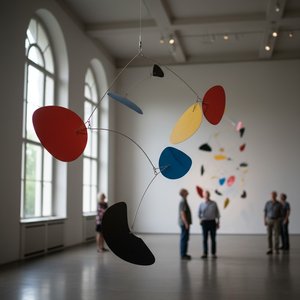
Alexander Calder: Kinetische Skulptur und die Poetik des Zufalls – Eine Meistererklärung
Entdecken Sie die faszinierende Welt von Alexander Calder! Unsere Expertenanalyse beleuchtet seine kinetische Kunst, Mobiles und sein Vermächtnis. Wertvolle Einblicke für Sammler & Kunstliebhaber.

Geometrische Abstraktion: Die 10 Meisterwerke, die Kunstgeschichte prägten | OriginalUniqueArt.com
Entdecken Sie die 10 Meisterwerke der geometrischen Abstraktion! Von Kandinsky bis Mondrian – erleben Sie die Geschichte, Farben & Formen dieser revolutionären Kunstrichtung. Hochwertige Kunstreproduktionen auf OriginalUniqueArt.com

Neo-Abstract Art: The High-Impact Evolution of Modern Visual Energy and Geometric Sophistication
Discover the power of Neo-Abstract art. Explore how bold geometric forms and high-impact visual energy are redefining modern design. Learn to curate sophisticated, high-energy spaces with the latest trends in contemporary abstraction and structural color.

Bronze-Meisterwerke: Die 10 Skulpturen, die Kunstgeschichte schrieben | OriginalUniqueArt
Entdecken Sie die 10 legendärsten Bronze Skulpturen der Kunstgeschichte! Von Michelangelo bis Rodin – erfahren Sie die Geschichten hinter den Meisterwerken und lassen Sie sich von Wanddeko-Ideen inspirieren. Hochwertige Kunstdrucke auf OriginalUniqueArt.com.

Beyond Form & Color: Geometric Abstraction's Evolution in 20th/21st Century Art
Explore the evolution of geometric abstraction from Cubism to contemporary art. Discover key artists like Malevich & Mondrian, investment insights, and expert collecting advice at OriginalUniqueArt.


