

 Vorschau anzeigen
 Versenden
 Teilen
 Details anzeigen

 Herunterladen
 Ähnliche Objekte
 Röntgenaufnahme
 Diashow
 Stats
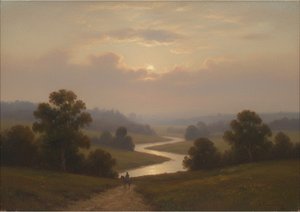
StatsMisty Moonlight
 Oil On Canvas
- WallArt
- Tonalism & Symbolism
 1885
1885- 19th Century
 28.0 x 29.0 cm
 Crystal Bridges Museum of American Art
 Weiterlesen
Giclée / Kunstdruck
Giclée- oder Leinwanddruck in Museumsqualität mit schneller Produktion und flexiblen Veredelungsoptionen. ( Handgemalte Reproduktion bestellen Switch to Digital Image)




P118B $10

P118H $10

P118W $10

P438Z $10

P508JH $12

P508YH $12

P805H $10

P805Z $10

P919BZ $10

P919G $10

P919XJ $10

P959ZH $10

P968JZ $12

W106C $8

W218G $10

W218JH $8

W218Y $10

W307PJ $10

W316G $10

W316PJ $8

W316Y $10

W398PJ $8

W4111J $10

W500HY $15

W500JH $15

W692G $12

W849H $8

W940BG $15

W953PJ $8




Wählen Sie aus unseren vordefinierten Formaten, die den ursprünglichen Proportionen des Kunstwerks entsprechen.

Sie können Ihre eigenen Maße eingeben, um ein bestimmtes Format oder einen speziellen Platz einzupassen. Wenn das von Ihnen gewählte Format nicht den Proportionen des Originalbildes entspricht, werden wir das Kunstwerk entweder beschneiden oder das Bild mit einem gespiegelten oder einfarbigen Rand erweitern. Ein digitaler Entwurf wird Ihnen zur Genehmigung zugesandt, bevor die Produktion beginnt.
Bitte beachten Sie, dass die Vorschau auf dem Bildschirm nicht den tatsächlichen Zuschnitt oder die Erweiterung widerspiegelt. Nur der Entwurf zeigt die endgültige Komposition präzise an.
Obwohl Sondermaße verfügbar sind, empfehlen wir die Auswahl eines Maßes aus der vordefinierten Liste, um die ursprünglichen Proportionen zu bewahren.
Weltweiter Versand () innerhalb von 2 Wochen statt der üblichen 4/5 Wochen. (8 September)

Kostenloser weltweiter Expressversand

Hochwertige Leinenleinwand

Umfassender Versicherungsschutz beim Versand

Zollgebühren-Rückerstattungsgarantie

Garantie für exakte Farbtreue

100-Tage-Rückgaberecht (nur bei Mängeln)

100% Geld-zurück-Garantie

Mengenrabatt verfügbar
 Die Glasoption ist nur für Größen unter 110 cm verfügbar.

Misty Moonlight
Giclée / Kunstdruck
Format der Reproduktion
-


Gesamtpreis
$ 80
A Nocturne of Shadows and Light
In the quietude of the late nineteenth century, few artists captured the ephemeral essence of the American night as profoundly as Albert Pinkham Ryder. His masterpiece, Misty Moonlight (1885), serves as a hauntingly beautiful window into the soul of Tonalism, offering much more than a mere depiction of a seascape. The painting presents a serene yet melancholic vision of a nocturnal world, where a solitary sailing ship drifts through a sea of deep blacks and greenish grays. A luminous crescent moon hangs suspended in the hazy atmosphere, casting a soft, ethereal glow that seems to dissolve the boundaries between the water and the sky. This is not a scene of action, but one of profound stillness, inviting the viewer into a state of meditative contemplation.
The emotional resonance of this work lies in its ability to evoke a sense of mystery and longing. The sparse composition—a delicate dance of geometric forms including the rectangular expanse of the sea, the triangular silhouette of the vessel, and the circular moon—prevents any specific narrative from taking hold. Instead, the viewer is left to wander through the artist's dreamscape, feeling the weight of the heavy, damp air and the rhythmic, silent pulse of the tide. For the collector or interior designer, this piece offers a sophisticated anchor for a room, providing a focal point that commands attention through subtlety rather than spectacle.
The Alchemy of Unconventional Technique
To understand the mesmerizing texture of Misty Moonlight, one must look closely at Ryder’s radical approach to the medium. Eschewing the polished, academic precision favored by his contemporaries, Ryder embraced a method of deliberate instability. He was known for applying successive layers of oil paint while the underlying coats were still wet, a technique that allowed colors to bleed and merge in unpredictable ways. This process created the "gauzy" and atmospheric quality that defines his most celebrated works.
This layering does more than just create visual depth; it imbues the canvas with a physical materiality that feels alive. The resulting surface is often thick and textured, capturing light in a way that mimics the shifting mists of a coastal night. This mastery of atmosphere—achieved through what some might call "controlled chaos"—is precisely what makes a high-quality reproduction of this work so captivating. When rendered with care, the interplay of dark tones and soft highlights can transform a modern living space into a sanctuary of historical depth and artistic intrigue.
A Legacy of Symbolism and Inspiration
Ryder’s inspiration was deeply rooted in his formative years in New Bedford, Massachusetts, a bustling whaling port where the sea was an ever-present character in daily life. The maritime motifs found in Misty Moonlight are not merely decorative; they are echoes of a childhood spent amidst salt spray and moonlight. This connection to the American coast lends the painting an authentic, grounded spirit, even as it drifts into the realms of Symbolism.
As a pioneer of American Symbolism, Ryder used the landscape to represent internal emotional states. The ship, often a recurring motif in his oeuvre, can be seen as a symbol of the human journey through the unknown, navigating the murky waters of existence under the watchful eye of a distant, celestial light. For those seeking to decorate with purpose, incorporating such a piece allows for the introduction of profound storytelling into an environment. It is an invitation to look beyond the surface and find beauty in the shadows, making it an enduring choice for any curated collection of fine art.
Über den Künstler
Frühes Leben und Ausbildung
Albert Pinkham Ryder, ein amerikanischer Maler, wurde am 19. März 1847 in New Bedford, Massachusetts, geboren. Sein frühes Leben ist etwas mysteriös, da wenig über seine Kindheit bekannt ist. Es wird jedoch dokumentiert, dass er bereits in New Bedford Landschaften malte. Im Jahr 1867 oder 1868 zog die Ryder-Familie nach New York City, wo Alberts Bruder das Hotel Albert, ein Wahrzeichen im Greenwich Village, leitete.Künstlerische Entwicklung und Einflüsse
Ryders erste künstlerische Ausbildung erhielt er beim Maler William Edgar Marshall in New York. Von 1870 bis 1873 und erneut von 1874 bis 1875 studierte er an der National Academy of Design, wo er 1873 seine erste Ausstellung hatte und den Künstler Julian Alden Weir kennenlernte, der sein lebenslanger Freund wurde. Im Jahr 1877 unternahm Ryder die erste seiner vier Reisen nach Europa, wo er die französische Barbizon-Schule und die niederländische Haager Schule studierte, was seinen Stil maßgeblich beeinflusste.Künstlerischer Stil und bedeutende Werke
Ryders charakteristischer Stil zeichnet sich durch breite, manchmal undeutlich definierte Formen oder stilisierte Figuren in einer traumähnlichen Landschaft oder Seebild aus. Seine Szenen werden oft von schwachem Sonnenlicht oder leuchtendem Mondlicht erhellt, das durch unheimliche Wolken scheint. Bemerkenswerte Werke sind Misty Moonlight (Crystal Bridges Museum of American Art, Bentonville, Vereinigte Staaten), das auf Erinnerungen an seine Kindheit in der Küstenstadt New Bedford, Massachusetts, basiert.Späte Jahre und Vermächtnis
Nach 1900 ließ Ryders Kreativität dramatisch nach. Er verbrachte den Rest seines Lebens damit, bestehende Gemälde zu überarbeiten, und starb am 28. März 1917. Eine Gedenkausstellung seiner Werke fand 1918 im Metropolitan Museum of Art in New York statt. Trotz der Zeit hat sich Ryders künstlerischer Ruf aufgrund seines einzigartigen und zukunftsweisenden Stils erhalten.- Betrachten Sie Albert Pinkham Ryders Werke auf OriginalUniqueArt
- Kaufen Sie Museumskunst-Reproduktionen berühmter Gemälde
- Erkunden Sie die Cape Ann Historical Association (Vereinigte Staaten) und ihre Kunstsammlung auf OriginalUniqueArt

Albert Pinkham Ryder
1847 - 1917 , Vereinigte Staaten von Amerika
Kurzinfos
- Beeinflusste Künstler: ['Jackson Pollock']
- Bemerkenswerte Werke: ['Misty Moonlight']
- Geburtsdatum: 19. März 1847
- Geburtsort: New Bedford, USA
- Künstlerische Richtung: Tonalismus & Symbolismus
- Nationalität: Amerikanisch
- Sterbedatum: 28. März 1917
- Vollständiger Name: Albert Pinkham Ryder
- Von Künstlern Beeinflusst:
- Barbizon Schule
- Hague Schule
Ähnliche Artikel

Grant Wood und der amerikanische Regionalismus: Identität, Mythos und die ländliche Landschaft
Entdecken Sie Grant Wood und den amerikanischen Regionalismus! Erfahren Sie mehr über 'American Gothic', Woods Leben, Einflüsse und sein Vermächtnis in der Kunstgeschichte. Expertenwissen & hochwertige Reproduktionen.

Albert Bierstadt: Lichtmalerei der amerikanischen Landschaft und die Idealisierung des Westens
Entdecken Sie die beeindruckende Welt von Albert Bierstadt und der Hudson River School! Erfahren Sie mehr über Lichtmalerei, Idealisierung des Westens und den Einfluss dieser Künstler auf die amerikanische Kunstgeschichte. Jetzt lesen!
Atmospheric Visions: Exploring Tonalism in American Painting
Explore the captivating world of American Tonalism! Discover its history, key artists like Whistler & Inness, techniques, and lasting influence on art. Expert insights for collectors & enthusiasts.

Amerikanischer Realismus: Die 10 Meisterwerke, die eine Ära prägten | OriginalUniqueArt
Entdecken Sie die 10 Meisterwerke des Amerikanischen Realismus! Von Edward Hopper bis Winslow Homer – erleben Sie die Geschichten, Techniken & zeitlose Schönheit. Hochwertige Kunstdrucke auf OriginalUniqueArt.com.

American Regionalism: A Crucible of Identity – Exploring Themes of Place, Labor & Social Commentary
Explore American Regionalism's powerful depiction of the American heartland during the Great Depression. Discover Grant Wood, Thomas Hart Benton & more. Expert analysis & high-quality art reproductions at OriginalUniqueArt.


