

 Versenden
 Teilen
 Details anzeigen

 Herunterladen
 Ähnliche Objekte
 Diashow starten
Torchère


 Mehr anzeigen
Giclée / Kunstdruck
Giclée- oder Leinwanddruck in Museumsqualität mit schneller Produktion und flexiblen Veredelungsoptionen. ( Zur handgemalten Reproduktion wechseln Zum Bild wechseln)




































Wählen Sie aus unseren vordefinierten Formaten, die den ursprünglichen Proportionen des Kunstwerks entsprechen.

Sie können Ihre eigenen Maße eingeben, um ein bestimmtes Format oder einen speziellen Platz einzupassen. Wenn das von Ihnen gewählte Format nicht den Proportionen des Originalbildes entspricht, werden wir das Kunstwerk entweder beschneiden oder das Bild mit einem gespiegelten oder einfarbigen Rand erweitern. Ein digitaler Entwurf wird Ihnen zur Genehmigung zugesandt, bevor die Produktion beginnt.
Bitte beachten Sie, dass die Vorschau auf dem Bildschirm nicht den tatsächlichen Zuschnitt oder die Erweiterung widerspiegelt. Nur der Entwurf zeigt die endgültige Komposition präzise an.
Obwohl Sondermaße verfügbar sind, empfehlen wir die Auswahl eines Maßes aus der vordefinierten Liste, um die ursprünglichen Proportionen zu bewahren.
Weltweiter Versand () innerhalb von 2 Wochen statt der üblichen 4/5 Wochen. (5 August)

Kostenloser weltweiter Expressversand

Hochwertige Leinenleinwand

Vollumfänglicher Versicherungsschutz beim Versand

Zollgebühren-Rückerstattungsgarantie

Garantie für exakte Farbtreue

60 Tage Rückgaberecht (nur bei Mängeln)

100% Geld-zurück-Garantie

Angebot für Mengenrabatt
 Die Glasoption ist nur in Größen unter 110 cm verfügbar.

Torchère
Giclée / Kunstdruck
Format der Reproduktion
-


Gesamtpreis
$ 80
Objektbeschreibung
The Dramatic Dance of Light and Shadow: Exploring Albert-Ernest Carrier Belleuse’s “Torchère”
Albert-Ernest Carrier Belleuse's "Torchère," a captivating black and white photograph capturing the original marble sculpture, is more than just a depiction of figures; it’s a study in dynamic tension, theatrical drama, and the masterful manipulation of light and shadow. Created in 1873, this work embodies the spirit of Academic Neoclassicism while subtly hinting at the burgeoning Romanticism that would soon dominate the artistic landscape. The sculpture itself, housed within the Palais Garnier opera house in Paris, immediately commands attention with its arresting composition – a powerful male figure supporting a graceful female form, bathed in an ethereal glow.
At first glance, the scene appears to be one of quiet contemplation. The woman, poised and elegant, holds aloft what could be interpreted as a torch, though its precise form is obscured by drapery. Her posture suggests both strength and vulnerability, while her downward gaze hints at an offering or perhaps even a plea for assistance. Beneath her, the male figure is rendered with a striking physicality – his body contorted in a dramatic pose that speaks to struggle and support. This interplay of opposing forces—grace versus power, supplication versus strength—creates a compelling narrative tension that anchors the entire composition.
A Masterclass in Sculptural Technique
Carrier Belleuse was renowned for his technical prowess, particularly his ability to evoke movement and emotion through meticulously crafted marble. “Torchère” exemplifies this skill perfectly. The artist’s attention to anatomical detail is evident in the musculature of the male figure, while the flowing drapery of the woman’s gown demonstrates a deep understanding of fabric texture and form. The use of light and shadow is particularly noteworthy; it's not merely decorative but integral to conveying the sculpture’s narrative. Deep shadows accentuate the contours of the figures, emphasizing their weight and solidity, while strategically placed highlights draw attention to key details – the curve of her hand, the tension in her muscles, the subtle shift in her gaze.
Interestingly, Carrier Belleuse's approach was influenced by his time working with industrial processes. He experimented with electro-chemical techniques, such as galvanoplasty, to create intricate surface finishes and textures. This innovative spirit is reflected in the polished sheen of the marble, which catches and reflects light in a way that enhances the sculpture’s overall impact. The photograph itself captures this brilliance, showcasing the remarkable quality of the original work.
Historical Context and Artistic Influences
“Torchère” was created during a period of significant artistic transition. Following the Romantic era's emphasis on emotion and individualism, artists were increasingly drawn to the principles of Neoclassicism – a return to classical ideals of order, balance, and harmony. Carrier Belleuse skillfully blended these influences, creating a work that is both formally sophisticated and emotionally resonant. The sculpture’s narrative echoes themes found in classical mythology, particularly those involving heroic figures and divine assistance.
Furthermore, the commission for “Torchère” was part of a larger project to decorate the opulent Palais Garnier opera house. Carrier Belleuse collaborated with other prominent artists, including Auguste Rodin, creating a cohesive ensemble of sculptures and architectural elements that transformed the building into a masterpiece of artistic expression. The photograph provides a valuable glimpse into this collaborative environment, revealing the interplay of styles and techniques employed by these diverse talents.
Symbolism and Emotional Resonance
Beyond its technical brilliance, “Torchère” is rich in symbolic meaning. The sculpture can be interpreted as an allegory for human relationships – the dynamic between strength and vulnerability, support and dependence. The woman’s outstretched arm suggests a willingness to offer assistance, while the man's contorted pose hints at the challenges of navigating life’s complexities. The torch itself may represent enlightenment, guidance, or even hope in the face of adversity.
Ultimately, “Torchère” is a powerfully evocative work that transcends its literal subject matter. It invites viewers to contemplate themes of human connection, struggle, and resilience. The photograph serves as a testament to Carrier Belleuse’s artistic vision and his ability to capture the essence of sculpture in a single, unforgettable image. Reproductions of this iconic piece offer a chance to bring this dramatic narrative into any space, adding a touch of timeless elegance and intellectual depth.
Künstlerbiografie
Albert Ernest Carrier Belleuse: Bridging Rococo Grace and Naturalistic Realism
Albert Ernest Carrier Belleuse (1824–1887) stands as a pivotal figure in 19th-century French sculpture, an artist whose career spanned stylistic innovation and collaborative partnerships that profoundly shaped the artistic landscape of his time. Born in Anizy-le-Château, Aisne, France, he began his artistic journey humbly as a goldsmith’s apprentice, honing foundational skills before pursuing formal training at the École des Beaux-Arts under David D'Angers – a formative experience that instilled him with an appreciation for classical ideals and anatomical precision. Carrier Belleuse’s artistic trajectory was marked by remarkable versatility. Initially influenced by neoclassical principles, he swiftly embraced the burgeoning Romantic movement, experimenting with expressive forms and dramatic narratives. His early works showcased a refined elegance reminiscent of Rococo ornamentation, reflecting the stylistic currents prevalent in Parisian society during his formative years. However, Carrier Belleuse wasn't merely content to adhere to established traditions; he actively sought new horizons through expeditions abroad – notably England between 1850 and 1855 where he collaborated with Minton’s porcelain manufactory—and later, a significant period in Brussels around 1871. This international exposure broadened his artistic perspective and fostered connections with fellow artists like Auguste Rodin, whom he mentored for several years. Their collaborative project on the Brussels Stock Exchange exemplifies Carrier Belleuse's ability to synthesize disparate styles into a cohesive vision. A defining moment in Carrier Belleuse’s career arrived in 1862 when he joined the Société Nationale des Beaux-Arts and was honored with the Légion d’honneur – an accolade recognizing his contributions to French culture. From this point onward, his signature evolved from “carrier” or “a. carrier” to “carrier-belleuse,” signifying a commitment to artistic integrity and stylistic consistency. His oeuvre encompassed a breathtaking range of subjects—from monumental sculptures celebrating historical figures like Mihai Viteazul (the equestrian statue in Bucharest) to intimate portraits capturing the nuances of human emotion—and materials, demonstrating his mastery across terracotta, bronze, and marble. Carrier Belleuse’s distinctive style blended Rococo grace with naturalistic realism, a duality that characterized much of his artistic output. He skillfully captured both idealized beauty and palpable emotional depth, achieving an unparalleled level of expressive power. His meticulous anatomical studies—a hallmark of his training at the École des Beaux-Arts—provided him with the technical foundation for executing breathtakingly detailed sculptures. His most celebrated achievement undoubtedly resides in his partnership with Auguste Rodin. Their collaboration began in 1864 and lasted until Rodin’s departure for Brussels in 1870, during which time Carrier Belleuse served as Rodin's assistant and mentor. This formative relationship profoundly influenced Rodin’s artistic development, shaping his sculptural vision and establishing him as one of the foremost sculptors of his era. Together they undertook ambitious projects like “The Thinker” and “The Kiss,” masterpieces that continue to captivate audiences worldwide and solidify Carrier Belleuse's role as a catalyst for artistic innovation. Carrier Belleuse’s legacy extends beyond his individual works; he served as Artistic Director at the Manufacture Nationale de Sèvres from 1876, overseeing the production of exquisite porcelain pieces that upheld the highest standards of craftsmanship and aesthetic excellence. He instilled in his sons, Louis-Robert Carrier Belleuse and Pierre Carrier Belleuse, a passion for artistic pursuits—a testament to his enduring commitment to nurturing talent and fostering creativity within the next generation of sculptors. Albert Ernest Carrier Belleuse passed away peacefully in Sèvres on June 4th, 1887, leaving behind an impressive body of work that continues to inspire admiration and scholarly study.
Albert Ernest Carrier-Belleuse
1824 - 1887 , Frankreich
Eckdaten zum Künstler
- Artistic Movement Or Style: Neoklassizismus & Realismus
- Artists Or Movements Influenced By This Artist: Auguste Rodin
- Artists Who Influenced This Artist: David D’Angers
- Date Of Birth: 12 Juni 1824
- Date Of Death: 4 Juni 1887
- Full Name: Albert Ernest Carrier Belleuse
- Nationality: Französisch
- Notable Artworks:
- Der Denker
- Die Liebe
- Place Of Birth: Anizy-le-Château, Frankreich
Verwandte Artikel

Thomas Stothard: Bridging Neoclassical Ideals with Romantic Sensibility – A Reassessment
Explore the life & art of Thomas Stothard (1755-1834), a pivotal figure bridging Neoclassicism and Romanticism. Discover his exquisite book illustrations, iconic paintings like 'The Canterbury Pilgrims,' and lasting influence on British art.

The Enduring Legacy of Bronze Sculpture: Technique, Symbolism & Cultural Impact
Explore the rich history & enduring appeal of bronze sculpture with expert insights for collectors. Learn about casting techniques, iconic artists, collecting tips & contemporary interpretations at OriginalUniqueArt.
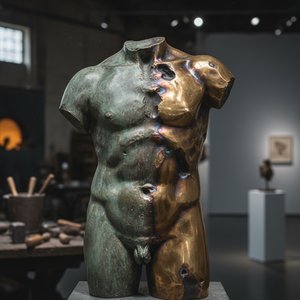
Das bleibende Erbe der Bronzeskulptur: Geschichte, Techniken und zeitgenössische Interpretationen
Entdecken Sie die faszinierende Geschichte der Bronzeskulptur – von den Anfängen bis zur modernen Kunst. Expertenwissen, Techniken & Tipps für Sammler.
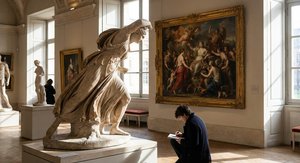
The Eloquent Body: A Historical & Artistic Exploration of Figures in Painting & Sculpture
Explore the rich history of figure painting & sculpture! Discover classical masterpieces, modern interpretations, and expert insights for art lovers & collectors. OriginalUniqueArt offers museum-quality reproductions.

The Enduring Legacy of Bronze: A Historical & Artistic Exploration for the Collector
Explore the rich history & enduring appeal of bronze sculpture with expert insights for collectors at OriginalUniqueArt. Learn about casting techniques, iconic artists, collecting tips & contemporary interpretations.


