In echtem Maßstab anzeigen
 Versenden als Grußkarte
 Teilen
 Details anzeigen
 Leitfaden öffnen

 Herunterladen
 Ähnliche Objekte
 Röntgenaufnahme
 Diashow
 Besucherstatistiken
St. Bartholomew


 Mehr anzeigen
Handgefertigte Ölreproduktion
Handgemaltes Ölgemälde auf Leinwand in Ihrer Wunschgröße und mit Rahmen, auf Bestellung von unseren Künstlern angefertigt. ( Zum Druck wechseln Zum digitalen Bild wechseln)




P118B €10

P118H €10

P118W €10

P438Z €10

P508JH €12

P508YH €12

P805H €10

P805Z €10

P919BZ €10

P919G €10

P919XJ €10

P959ZH €10

P968JZ €12

W106C €8

W218G €10

W218JH €8

W218Y €10

W307PJ €10

W316G €10

W316PJ €8

W316Y €10

W398PJ €8

W4111J €10

W500HY €15

W500JH €15

W692G €12

W849H €8

W940BG €15

W953PJ €8




Wählen Sie aus unseren vordefinierten Formaten, die den ursprünglichen Proportionen des Kunstwerks entsprechen.

Geben Sie die Breite und die Höhe an, die Sie für Ihren Rahmen oder Ihre Wand benötigen. Da dieses Werk handgemalt ist, kann der Künstler bei einer anderen Form etwas mehr um das Bild herum malen oder etwas abschneiden – Sie entscheiden. Wir senden Ihnen ein digitales Mockup zur Freigabe, bevor mit dem Malen begonnen wird. Das auf dieser Seite gezeigte Bild stellt nicht das tatsächliche Ergebnis dar – dies tut nur das Mockup.
Nach der Bestellung wird das OriginalUniqueArt.com-Team dem Kunden Anweisungen per E-Mail zusenden und eine Mockup-Vorschau bereitstellen.
Weltweiter Versand () in nur 3 bis 4 Wochen statt der üblichen 5 Wochen. (25 Oktober). Keine Kompromisse bei der Qualität.

Kostenloser weltweiter Expressversand

Hochwertige Leinenleinwand

Vollständiger Versicherungsschutz beim Versand

Zollgebühren-Rückerstattungsgarantie

Garantie für exakte Farbtreue

100-tägiges Rückgaberecht (nur bei Mängeln)

100% Geld-zurück-Garantie

Angebot für Mengenrabatt
 Die Glasoption ist nur für Größen unter 110 cm verfügbar.

St. Bartholomew
Reproduktionsmedium
Format der Reproduktion
-


Gesamtpreis
€ 263
A Study in Suffering: Bronzino’s St. Bartholomew
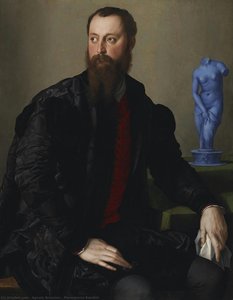
Agnolo Bronzino's "St. Bartholomew," a haunting oil on wood painting dating from the 16th century, offers a profoundly unsettling glimpse into religious martyrdom and the meticulous observation of human anatomy that defined the artist’s legacy. Sold to the Accademia di San Luca in 1821 after decades of misattribution, this work – alongside its counterpart depicting St. Andrew – represents a pivotal moment in art historical understanding. Initially linked to the hands of Alessandro Allori or his master, Bronzino himself is now recognized as the true author, thanks to meticulous conservation efforts undertaken between 1985 and 1987 that revealed the painting’s exquisite detail and technical mastery.
- Subject Matter: The scene depicts St. Bartholomew, a disciple of Christ, enduring his brutal flaying alive – a common motif in early Christian art representing faith and sacrifice.
- Technical Brilliance: Bronzino’s skill is immediately apparent in the shockingly realistic depiction of Bartholomew's musculature. This anatomical precision owes a significant debt to Andreas Vesalius’s groundbreaking “De Humani Corporis Fabrica,” published in 1543, demonstrating Bronzino’s commitment to scientific accuracy within his artistic practice.
- Composition & Figures: The composition is deliberately stark and dramatic, focusing entirely on the suffering of the saint. Secondary figures – a man on the left and another near the upper right corner, along with a third at the bottom right – add layers of complexity, perhaps representing witnesses or participants in this agonizing event.
The Mannerist Aesthetic: Coolness and Detail
Bronzino was a key figure within the Mannerist movement, a style that emerged as a reaction against the High Renaissance’s emphasis on balance and harmony. Unlike the idealized forms of Leonardo or Raphael, Bronzino favored a more restrained, intellectual approach to beauty. His work is characterized by a cool composure, precise detail, and an almost unsettling stillness – qualities perfectly embodied in “St. Bartholomew.” This deliberate lack of emotional exuberance was a hallmark of Mannerism, prioritizing observation and technical skill over passionate expression.
Born in Florence in 1503, Bronzino’s early training under Raffaellino del Garbo and Jacopo da Pontormo laid the groundwork for his distinctive style. While influenced by Pontormo's innovative approach, Bronzino ultimately developed a voice defined by refined detail and a detached observation of the human form – a characteristic that would solidify his reputation as “the Florentine Master of Reserved Elegance.”
Symbolism and Historical Context
The flaying of St. Bartholomew carries profound symbolic weight within Christian iconography. It represents unwavering faith in the face of unimaginable suffering, mirroring Christ’s own sacrifice. The scene's stark realism reflects a shift in artistic sensibilities during the Renaissance, where artists increasingly sought to represent the world with scientific accuracy and emotional depth. Bronzino’s meticulous rendering of Bartholomew’s agony speaks to this desire for both visual truth and spiritual contemplation.
The painting’s eventual attribution to Bronzino after centuries of uncertainty underscores the importance of careful historical research and conservation in art appreciation. The 1985-1987 cleaning revealed the full extent of Bronzino's genius, solidifying his place as one of the most significant artists of the Florentine Renaissance.
A Timeless Masterpiece – Perfect for Display
"St. Bartholomew" is more than just a historical artwork; it’s a powerful meditation on faith, suffering, and the human condition. Its dramatic composition, technical brilliance, and profound symbolism make it a compelling subject for art lovers and collectors alike. A hand-painted reproduction of this iconic piece offers an unparalleled opportunity to bring this masterpiece into your home or office – a testament to Bronzino’s enduring legacy and a captivating addition to any discerning collection.
Fragen & Antworten
Wie sehen die Reproduktionsrechte für „St. Bartholomew“ im Accademia di San Luca aus?
Das Original "St. Bartholomew" befindet sich im Accademia di San Luca, und das Werk ist gemeinfrei – das Urheberrecht ist abgelaufen.
Darf die Abbildung von "St. Bartholomew" von Agnolo Bronzino frei reproduziert werden?
Die urheberrechtliche Situation für "St. Bartholomew" von Agnolo Bronzino: Das Werk ist gemeinfrei – das Urheberrecht ist abgelaufen. Dies bestimmt, ob Reproduktionen des Bildes frei erstellt werden dürfen.
Welche Atmosphäre vermittelt "St. Bartholomew"?
"St. Bartholomew" hat eine Elegant Atmosphäre.
Biografie des Künstlers
Frühes Leben und Ausbildung
Agnolo di Cosimo, bekannt als Bronzino, wurde am 17. November 1503 in Florenz, Italien, geboren. Er war der Sohn eines Metzgenders und begann seine künstlerische Ausbildung bei Raffaellino del Garbo, gefolgt von einer Lehrzeit bei Pontormo, einem bedeutenden Manieristenmaler.Künstlerischer Stil und Einflüsse
Bronzinos Stil ist durch elegante, ruhige und zurückhaltende Figuren gekennzeichnet, denen oft die Aufregung und Emotionen fehlen, die in den Werken seines Lehrmeisters Pontormo zu finden sind. Seine Porträts, insbesondere von der florentinischen Elite, sind für ihre winzige Detailgenauigkeit bekannt und haben die europäische Hofporträtmalerei über Jahrhunderte hinweg beeinflusst.Hauptwerke
- Venus, Amor, Trivialität und Zeit (ca. 1544-45), jetzt in der National Gallery, London
- Porträts von Cosimo I. de’ Medici und seiner Frau Eleonora di Toledo, die Bronzinos Meisterschaft in der Manieristenporträtmalerei zeigen
- Idealisiert Porträts der Dichter Dante (ca. 1530, jetzt in Washington, D.C.) und Petrarch
Wirken am Hof und Späteres Leben
Bronzino wurde zum offiziellen Hofmaler des Herzogs von Toskana ernannt und blieb den größten Teil seiner Karriere in dieser Position tätig. Er war Gründungsmitglied der florentinischen Accademia delle Arti del Disegno im Jahr 1563. Bronzino verstarb am 23. November 1572 in Florenz.- Weitere Werke von Agnolo Bronzino finden Sie unter https://OriginalUniqueArt.com/@/agnolo_bronzino
- Erkunden Sie die florentinische Barock-Kunstbewegung und ihren Einfluss auf die westliche Kunst unter https://OriginalUniqueArt.com/@@/a@d3cpvx
- Entdecken Sie mehr über die italienische Renaissance-Kunstbewegung und ihre Auswirkungen auf die westliche Kunst unter /de/art/show/art-d3cpud-de/
- 17. November 1503: Geburt in Florenz, Italien
- 1539: Erhielt Medici-Schutzherrschaft für die Hochzeit von Cosimo I. de’ Medici mit Eleonora di Toledo
- 23. November 1572: Verstarb in Florenz

Agnolo Bronzino
1503 - 1572 , Italien
Eckdaten zum Künstler
- Beeinflusste Künstler:
- Raffaellino del Garbo
- Jacopo Pontormo
- Bemerkenswerte Werke:
- Venus, Amor und Zeit
- Porträts der Medici-Familie
- Geburtsdatum: 17. November 1503
- Geburtsort: Florenz, Italien
- Künstlerischer Stil: Mannerismus
- Nationalität: Italiener
- Todatum: 23. November 1572
- Vollständiger Name: Agnolo Bronzino
- Von Künstlern Beeinflusst:
- Michelangelo
- Raphael
Verwandte Artikel

The Enduring Legacy of Oil on Canvas: Technique, History & Aesthetic Impact
Explore the rich history & techniques of oil painting – from Renaissance masters to Impressionism. Discover pigments, layering methods, and why this timeless medium endures. Expert insights for artists & art enthusiasts.

Oil on Board: A Historical Survey of Technique, Aesthetic Qualities & Enduring Appeal
Explore the rich history of oil on board painting! Discover techniques, aesthetic qualities & enduring appeal from early masters to modern practice. Expert insights for collectors and art enthusiasts.

Öl auf Leinwand: Eine historische und technische Erkundung eines zeitlosen künstlerischen Mediums
Entdecken Sie die faszinierende Welt der Ölmalerei! Von historischen Techniken bis zur modernen Anwendung – wir bieten Expertenwissen, Restaurierungstipps und hochwertige Reproduktionen. Jetzt informieren!

The Enduring Power of Painting: A Historical & Contemporary Exploration of Form and Emotion
Explore the rich history & enduring techniques of oil painting with OriginalUniqueArt. Discover masterpieces, learn about art collecting, and find authentic handmade reproductions crafted by skilled artists.

The Timeless Charm of Oil on Board: Reimagining Texture and Light through the Impressionist Lens
Discover the profound intimacy of oil on panel. Explore how Impressionist masters used rigid supports to capture light, texture, and impasto depth through exquisite, handmade oil reproductions for discerning collectors.