
 Vorschau anzeigen
 Versenden
 Teilen
 Details anzeigen

 Herunterladen
 Ähnliche Objekte
 Röntgenaufnahme
 Diashow
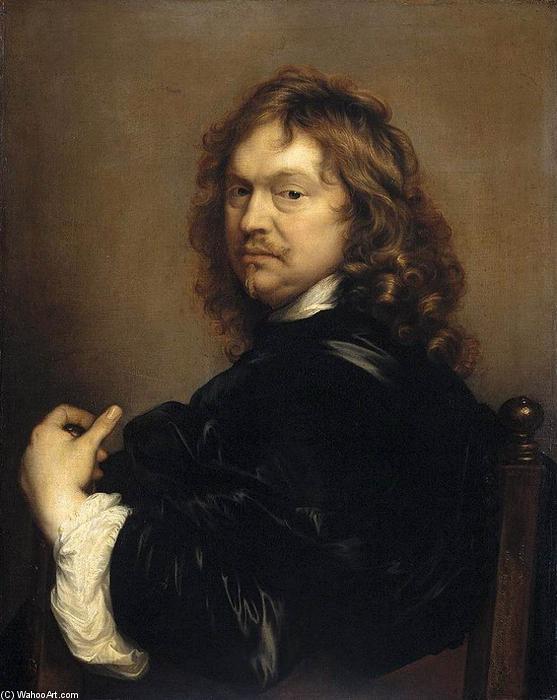
Self-Portrait


 Weiterlesen
Erwerben Sie ein hochauflösendes, optimiertes digitales Bild, das der Online-Vorschau weit überlegen ist.
Jede Datei wird von unseren hauseigenen Spezialisten mit modernsten Werkzeugen und fachmännischer manueller Retusche sorgfältig vorbereitet. Wir stellen sicher, dass jedes Bild eine außergewöhnliche Klarheit, präzise Farbgenauigkeit und feinste Details aufweist.
Die endgültige Datei wird innerhalb von 72 Stunden per E-Mail zugestellt und ist für den sofortigen Einsatz in professionellen, redaktionellen und Druckumgebungen optimiert. Es handelt sich um dieselbe Qualität, der führende Designstudios, Verlage und Galerien vertrauen.
Digitales Bild
Laden Sie eine hochauflösende Datei für die persönliche Präsentation, den Druck und kreative Projekte herunter. ( Zum Druck wechseln Zur handgemalten Reproduktion wechseln)
In jeder Bestellung digitaler Bilder enthalten
Professionelle digitale Bereitstellung, garantiert
Wenn Sie sich für OriginalUniqueArt.com entscheiden, erhalten Sie nicht nur ein Bild – Sie erhalten ein professionell aufbereitetes digitales Kunstwerk, das mit höchster Präzision erstellt und durch eine Zufriedenheitsgarantie abgesichert wird. Hier ist alles, was automatisch mit Ihrer Bestellung geliefert wird:

Schnelle E-Mail-Zustellung
Ihre hochauflösende digitale Bilddatei wird Ihnen innerhalb von 72 Stunden nach der Bestellung per E-Mail zugestellt – bereit zur sofortigen Verwendung.

KI-optimierte digitale Datei
Ihre Kunstwerke werden professionell mithilfe fortschrittlicher KI-Tools und manueller Bearbeitung optimiert, um maximale Detailtreue, Klarheit und Farbgenauigkeit zu gewährleisten.

Lebenslanger kostenloser Neudruckservice
Datei versehentlich gelöscht oder verloren? Keine Sorge – wir senden sie Ihnen jederzeit kostenlos erneut zu.

Keine Einfuhrgebühren – jemals
Genießen Sie Ihr Kunstwerk sofort ohne Zollgebühren, Einfuhrabgaben oder Versandkosten – digitale Downloads sind immer steuerfrei.

Garantierte Farbtreue
Wir garantieren, dass Ihr digitales Bild mithilfe professioneller Werkzeuge und Farbmanagement die Originalfarben so präzise wie möglich wiedergibt.

60-Tage-Zufriedenheitsgarantie
Sollten Sie mit Ihrem digitalen Bild nicht zufrieden sein, werden wir es überarbeiten oder Ihnen innerhalb von 60 Tagen 100% erstatten – ohne Wenn und Aber.

100% Geld-zurück-Garantie
Nicht zufrieden? Erhalten Sie innerhalb von 60 Tagen nach Erhalt Ihrer digitalen Datei eine vollständige Rückerstattung – ohne Angabe von Gründen.

Rabatte bei Großbestellungen
3 Bilder kaufen, 10% sparen – 5 Bilder kaufen, 15% sparen – Ab 10 Bildern 20% sparen. Ideal für kreative Projekte, Galerien und Agenturen.
Details zum Sammlerstück
A Window into the Seventeenth Century: Adriaen Hanneman’s Self-Portrait
Adriaen Hanneman's 1656 self-portrait offers a remarkably intimate glimpse into the world of a Dutch Golden Age artist, revealing not just his likeness but also the social and intellectual currents of his time. This painting transcends a simple depiction of an individual; it’s a carefully constructed statement about identity, status, and the burgeoning artistic conventions of the era. The work immediately draws the eye with its restrained elegance – a deliberate choice that speaks volumes about Hanneman's considered approach to portraiture.
- The Figure: Seated in a comfortable chair, likely of considerable quality given the detail, the subject presents himself as a man of means and standing. His posture is upright, suggesting confidence and self-awareness. The dark coat, adorned with a crisp white collar – a hallmark of 17th-century Dutch attire – immediately establishes his social position.
- The Face: Hanneman’s face is the focal point, rendered with meticulous realism. The subtle lines etched around his eyes and mouth hint at experience and perhaps contemplation. His mustache and beard are carefully executed, adding to the authenticity of the portrait and reflecting prevailing male beauty standards. Crucially, his expression isn't overtly cheerful or dramatic; it’s a quiet seriousness, suggesting an intellectual bent – a man accustomed to thought and observation.
- Background & Composition: The stark simplicity of the background—a plain wall—is a masterstroke. It serves to isolate the subject entirely, amplifying his importance within the frame and directing all attention towards his personality and bearing. This technique was common in portraiture during this period, prioritizing the individual over elaborate settings.
A Masterclass in Dutch Portrait Technique
Hanneman’s skill lies not just in capturing likeness but also in employing a sophisticated understanding of light, shadow, and texture. The painting is executed with a realistic style, demonstrating a deep knowledge of anatomy and the effects of light on form. Notice how he uses subtle gradations of tone to create a sense of volume and depth – particularly evident in the rendering of the clothing and the folds of his hair. This masterful use of chiaroscuro (the contrast between light and dark) lends the portrait a three-dimensional quality, making it feel remarkably lifelike.
- Brushwork: The brushstrokes are generally smooth and controlled, reflecting Hanneman’s training under Jan Antonisz. van Ravesteyn the Younger. Van Ravesteyn instilled in him a precise, sculptural approach to rendering form – a legacy that is clearly visible in the carefully modeled features of the face and the detailed fabric of the coat.
- Color Palette: The muted tones—primarily blacks, whites, and browns—are typical of Dutch portraiture during this period. These restrained colors allowed Hanneman to focus on capturing subtle nuances of expression and texture rather than relying on vibrant hues.
Historical Context & Artistic Influences
Created in 1656, this self-portrait is firmly rooted within the Dutch Golden Age – a period of unprecedented artistic flourishing fueled by wealth, trade, and intellectual curiosity. Hanneman’s work reflects the influence of his contemporary, Anthony van Dyck, whose elegant and dynamic portraits were immensely popular throughout Europe. Hanneman's early years in England further shaped his style, exposing him to new trends and broadening his artistic horizons. His time with Constantijn Huygens, a prominent poet and composer, also suggests an engagement with the intellectual life of the court.
Interestingly, Hanneman’s background as a Catholic in a predominantly Protestant Netherlands subtly informed his career trajectory, potentially influencing his subject matter and patronage networks.Symbolism & Emotional Resonance
Beyond its technical brilliance, the self-portrait carries a subtle symbolic weight. The serious expression on Hanneman's face suggests an introspective nature – perhaps reflecting his role as an artist grappling with questions of identity and representation. The formality of his attire speaks to his social standing, while the quiet dignity of his pose conveys a sense of self-assuredness. Ultimately, this painting is not merely a likeness; it’s a carefully constructed portrait of a man, a time, and an artistic sensibility – inviting us to contemplate the complexities of human experience within the context of 17th-century Dutch society.
Biografie des Künstlers
Frühes Leben und Ausbildung
- Adriaen Hanneman wurde um 1603 oder 1604 in Den Haag, Niederlande, in eine wohlhabende katholische Patrizierfamilie geboren.
- Er begann seine künstlerische Ausbildung im Jahr 1619 als Schüler von Jan Antonisz. van Ravesteyn dem Jüngeren, einem prominenten Haager Porträtmaler.
- Van Ravesteyn vermittelte Hanneman eine Grundlage in der Porträtkunst und einen prägnanten, skulpturalen Stil, der viele seiner frühen Werke kennzeichnete.
Karriere in England und Einflüsse
- Im Jahr 1626 zog Hanneman nach England, wo er etwa sechzehn Jahre blieb.
- In dieser Zeit wurde er maßgeblich von den Werken von Anthony van Dyck beeinflusst, der 1632 als Hofmaler von Karl I. nach London gekommen war.
- Hanneman arbeitete möglicherweise sogar in Van Dycks Atelier und absorbierte dessen eleganten Stil, lebendige Palette und dynamische Pinselarbeit.
- Er begegnete auch anderen bedeutenden Künstlern wie Cornelis Janssens van Ceulen und Daniel Mytens und wurde von ihnen beeinflusst.
- Hanneman genoss die Schirmherrschaft von Constantijn Huygens, der ihn dem englischen Hof vorstellte und seinen beruflichen Aufstieg förderte.
Rückkehr nach Den Haag und künstlerische Entwicklung
- Um 1638 kehrte Hanneman nach Den Haag zurück und heiratete Maria van Ravesteyn, die Tochter seines ehemaligen Lehrers.
- Er wurde 1645 Diakon der Lukasgilde und spielte später eine Rolle in der Confrerie Pictura, einer Künstlergesellschaft, die er mit leitete.
- Hanneman malte weiterhin Porträts, imitierte hauptsächlich den Stil von Van Dyck und bediente niederländische Adlige sowie Mitglieder des exilierten englischen Hofes, die nach dem Englischen Bürgerkrieg in Den Haag Zuflucht suchten.
- Zu seinen Sujets gehörten prominente Persönlichkeiten wie Constantijn Huygens, Karl II. (als Prinz von Wales) und Wilhelm III., Prinz von Oranien.
Späteres Leben, Vermächtnis und Hauptwerke
- Hanneman hatte in seinen späteren Jahren mit finanziellen Schwierigkeiten zu kämpfen, insbesondere während des „Rampjaar“ (Katastrophenjahr) von 1672, einer Zeit des Krieges und der wirtschaftlichen Not für die Niederländische Republik.
- Er starb 1671 in Den Haag und hinterließ seine Zeichnungen und Stiche seinem Schüler Simon du Parcq.
- Hannemans Nachlass war trotz seines früheren Erfolgs überraschend bescheiden, was die schwierige wirtschaftliche Lage der Zeit widerspiegelte.
- Zu seinen bemerkenswerten Werken gehören Porträts von Heinrich, Herzog von Gloucester (National Gallery of Art, Washington D.C.), Wilhelm III. als junger Prinz (Rijksmuseum, Amsterdam) und ein posthumes Porträt von Maria I. Stuart (Mauritshuis, Niederlande).
- Er wird für seine eleganten Hofporträts in Erinnerung behalten, die das Aussehen und den Status seiner aristokratischen Modelle gekonnt einfingen.
- Hannemans Einfluss reichte bis zu anderen Malern, darunter Govert Flinck, was seinen Einfluss auf die niederländische Porträtkunst während des Goldenen Zeitalters demonstriert.

Adriaen Hanneman
1603 - 1671 , Niederlande
Kurzinfos
- Artistic Movement Or Style: Goldenes Zeitalter
- Artists Or Movements Influenced By This Artist: ['Govert Flinck']
- Artists Who Influenced This Artist:
- Anthony van Dyck
- Cornelis Janssens
- Date Of Birth: um 1603
- Date Of Death: 1671
- Full Name: Adriaen Hanneman
- Nationality: Niederländisch
- Notable Artworks:
- Herzog von Gloucester
- William III als Kind
- Maria I Stuart Porträt
- Place Of Birth: Den Haag, Niederlande

