

 Vorschau anzeigen
 Versenden
 Teilen
 Details anzeigen

 Herunterladen
 Ähnliche Objekte
 Röntgenaufnahme
 Diashow
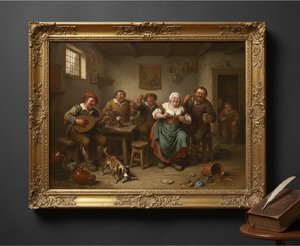
Peasants Fighting
 Oil On Canvas
- WallArt
- Baroque Genre Painting
 1631
1631- Early Modern
 33.0 x 49.0 cm
 Alte Pinakothek
 Weiterlesen
Giclée / Kunstdruck
Giclée- oder Leinwanddruck in Museumsqualität mit schneller Produktion und flexiblen Veredelungsoptionen. ( Handgemalte Reproduktion bestellen Bild kaufen)




P118B $10

P118H $10

P118W $10

P438Z $10

P508JH $12

P508YH $12

P805H $10

P805Z $10

P919BZ $10

P919G $10

P919XJ $10

P959ZH $10

P968JZ $12

W106C $8

W218G $10

W218JH $8

W218Y $10

W307PJ $10

W316G $10

W316PJ $8

W316Y $10

W398PJ $8

W4111J $10

W500HY $15

W500JH $15

W692G $12

W849H $8

W940BG $15

W953PJ $8




Wählen Sie aus unseren vordefinierten Formaten, die den ursprünglichen Proportionen des Kunstwerks entsprechen.

Sie können Ihre eigenen Maße eingeben, um ein bestimmtes Format oder einen speziellen Platz einzupassen. Wenn das von Ihnen gewählte Format nicht den Proportionen des Originalbildes entspricht, werden wir das Kunstwerk entweder beschneiden oder das Bild mit einem gespiegelten oder einfarbigen Rand erweitern. Ein digitaler Entwurf wird Ihnen zur Genehmigung zugesandt, bevor die Produktion beginnt.
Bitte beachten Sie, dass die Vorschau auf dem Bildschirm nicht den tatsächlichen Zuschnitt oder die Erweiterung widerspiegelt. Nur der Entwurf zeigt die endgültige Komposition präzise an.
Obwohl Sondermaße verfügbar sind, empfehlen wir die Auswahl eines Maßes aus der vordefinierten Liste, um die ursprünglichen Proportionen zu bewahren.
Weltweiter Versand () innerhalb von 2 Wochen statt der üblichen 4/5 Wochen. (22 August)

Kostenloser weltweiter Expressversand

Hochwertige Leinenleinwand

Umfassender Versicherungsschutz beim Versand

Zollgebühren-Rückerstattungsgarantie

Garantie für exakte Farbtreue

60 Tage Rückgaberecht (nur bei Mängeln)

100% Geld-zurück-Garantie

Mengenrabatt verfügbar
 Die Glasoption ist nur für Größen unter 110 cm verfügbar.

Peasants Fighting
Giclée / Kunstdruck
Format der Reproduktion
-


Gesamtpreis
$ 80
Sammlerstück-Beschreibung
A Moment Frozen in Chaos: The Raw Energy of Adriaen Brouwer
In the quiet halls of the Alte Pinakothek in Munich, there exists a window into a much louder, more turbulent era. Adriaen Brouwer’s 1631 masterpiece, Peasants Fighting, serves as a visceral time capsule, capturing the unvarnating grit of 17th-century Flemish life. Unlike the polished, idealized portraits favored by many of his contemporaries, Brouwer turned his gaze toward the shadows of the tavern and the rustic corners of the countryside. This oil on canvas work does not merely depict a brawl; it invites the viewer into a sensory experience of tension, movement, and the raw human instinct for conflict.
The composition is a masterclass in controlled chaos. At the heart of the narrative, two men are locked in a physical struggle that feels immediate and dangerously real. One figure sits precariously on a stool, his posture vulnerable and defensive, while his adversary looms over him with a raised hand, poised to strike. The kinetic energy of this moment is balanced by the presence of observers in the background—figures who stand as silent witnesses to the unfolding violence. Through this arrangement, Brouwer creates a circularity of focus that keeps the eye moving between the central struggle and the watchful, perhaps even indifferent, eyes of the onlookers.
The Artistry of Light and TextureTechnically, Peasants Fighting is a triumph of the Flemish genre tradition. Brouwer utilizes a sophisticated interplay of light and shadow, often referred to as chiaroscuro, to sculpt the figures out of the murky, rustic interior. The dim light filtering through what appears to be a humble dwelling catches the folds of coarse clothing and the rugged textures of wooden beams, lending an incredible sense of three-dimensionality to the scene. Every brushstroke contributes to the atmosphere; the artist’s ability to render the grain of old wood and the sweat-slicked skin of the combatants demonstrates a profound command over his medium.
For the discerning collector or interior designer, this painting offers more than just historical interest; it provides a profound emotional anchor. The muted, earthy palette—dominated by ochres, deep browns, and somber greys—allows the piece to integrate seamlessly into sophisticated, classical, or even modern rustic interiors. It is a work that demands attention not through garish color, but through its psychological depth and the sheer authenticity of its subject matter.
A Legacy of Human EmotionBeyond the physical brawl, there is a deeper, more symbolic layer to Brouwer’s work. He was a pioneer of genre painting, a style that finds divinity in the mundane and drama in the everyday. In Peasants Fighting, we see the exploration of human temperament—the sudden eruption of anger, the tension of anticipation, and the stoicism of those who watch life's dramas unfold from the periphery. It is this ability to capture the fleeting, often uncomfortable truths of the human condition that makes a high-quality reproduction of this work such a compelling addition to any art collection.
Owning a piece that echoes Brouwer’s spirit means bringing a sense of history and narrative weight into a living space. Whether displayed in a study or as a focal point in a grand hall, this painting serves as a reminder of the enduring power of storytelling through art, celebrating the beauty found even in the most turbulent moments of our shared existence.
Über den Künstler
Frühes Leben und Hintergrund
- Geboren: Oudenaarde, Belgien (1605/1635)
- Gestorben: 1638
- Sein Vater war ein Wandteppichdesigner.
- Adriaen Brouwer erlebte früh im Leben Härten; der Tod seines Vaters im Alter von 15 Jahren zwang ihn, das Elternhaus zu verlassen.
Künstlerische Entwicklung und Genremalerei
- Brouwer wurde bekannt für seine lebendigen Darstellungen des Alltagslebens, insbesondere Szenen mit Bauern, Soldaten und einfachen Leuten.
- Er war ein wichtiger Innovator in der Genremalerei – Kunst, die Szenen aus dem gewöhnlichen Leben darstellt.
- Seine Gemälde zeigten oft Trinken, Rauchen, Kartenspielen und andere Aktivitäten der unteren Schichten.
- Bemerkenswerte Werke sind "Arme Leute beim Trinken in einer Taverne", "Kleinbauern beim Kartenspiel", "Der Raucher", "Das Schlachtfest", "Die Schlägerei", "Mondlichtlandschaft", "Betrunkener Bauer in einer Taverne", "Bauern beim Kartenspielen" und "Trinker im Hof".
Einflüsse und künstlerischer Stil
- Flandrische Primitive: Brouwers Werk wurde vom detaillierten Realismus der flämischen Primitiven beeinflusst.
- Barockkunst: Seine Gemälde enthielten oft dramatische Beleuchtung und intensive Emotionen, die für die Barockkunst typisch sind.
- Sein Stil verband Realismus mit einem Sinn für Humor und lebendiger Beobachtung.
Vermächtnis und Einfluss
- Brouwers Werk beeinflusste nachfolgende Generationen flämischer und niederländischer Maler maßgeblich.
- Er trug dazu bei, die Genremalerei als eine wichtige Kraft in der Kunst des 17. Jahrhunderts zu etablieren.
- David Teniers der Jüngere war einer der Künstler, der sich von Brouwers innovativem Ansatz zur Darstellung des Alltagslebens inspirieren ließ.
Historische Bedeutung
- Brouwers Gemälde bieten wertvolle Einblicke in die sozialen Bräuche und täglichen Routinen Flanderns und der Niederländischen Republik im 17. Jahrhundert.
- Sein Fokus auf gewöhnliche Menschen hob die Genremalerei hervor und trug zu ihrer wachsenden Popularität und Bedeutung in der Kunstwelt bei.
- Seine Werke befinden sich in Museen wie dem Koninklijk Museum voor Schone Kunsten in Antwerpen, Belgien.

Adriaen Brouwer
1635 - 1638 , Belgien
Kurzinfos
- Beeinflusste Künstler: ['David Teniers der Jüngere']
- Bemerkenswerte Werke:
- Arme Leute im Gasthaus
- Bauern beim Kartenspiel
- Der Raucher
- Die Schlachtfestivität
- Schlägerei
- Mondlichtlandschaft
- Betrunkener Bauer
- Bauern beim Kartenspiel
- Trinker im Hof
- Geburtsdatum: 1605/1635 (ungefähr)
- Geburtsort: Oudenarde, Belgien
- Künstlerische Einflüsse: ['Flandrische Primitive']
- Künstlerische Richtung: Barock, Genremalerei
- Nationalität: Flämisch
- Todestag: 1638
- Vollständiger Name: Adriaen Brouwer
Ähnliche Artikel

Adriaen Brouwer: Capturing Dutch Life & Social Commentary Through Genre Painting
Explore the captivating world of Adriaen Brouwer, a master of Dutch Golden Age genre painting. Discover his vivid depictions of peasant life, social commentary, and lasting influence on art history. Learn more at OriginalUniqueArt.

Öl auf Leinwand: Eine historische und technische Erkundung eines zeitlosen künstlerischen Mediums
Entdecken Sie die faszinierende Welt der Ölmalerei! Von historischen Techniken bis zur modernen Anwendung – wir bieten Expertenwissen, Restaurierungstipps und hochwertige Reproduktionen. Jetzt informieren!

The Enduring Legacy of Oil on Canvas: Technique, History & Aesthetic Impact
Explore the rich history & techniques of oil painting – from Renaissance masters to Impressionism. Discover pigments, layering methods, and why this timeless medium endures. Expert insights for artists & art enthusiasts.
Adriaen van Ostade: A Master of Dutch Genre Painting & Social Commentary
Explore the life & work of Adriaen van Ostade, a leading Dutch Golden Age painter. Discover his realistic genre scenes, social commentary, and lasting influence on art history. Learn more at OriginalUniqueArt.

The Enduring Power of Painting: A Historical & Contemporary Exploration of Form and Emotion
Explore the rich history & enduring techniques of oil painting with OriginalUniqueArt. Discover masterpieces, learn about art collecting, and find authentic handmade reproductions crafted by skilled artists.



