

 In echtem Maßstab anzeigen
 Versenden als Grußkarte
 Teilen
 Details anzeigen
 Leitfaden öffnen

 Herunterladen
 Ähnliche Objekte
 Röntgenaufnahme
 Diashow
 Besucherstatistiken
W. E. B. Du Bois
 Acrylic On Canvas
- WallArt
- Black Washington Photography
 1911
1911 34.0 x 41.0 cm
 National Portrait Gallery
 Mehr anzeigen
Die auf dieser Seite dargestellten Kunstwerke sind urheberrechtlich geschützt, was bedeutet, dass wir keine identische Reproduktion rechtmäßig erstellen oder verkaufen dürfen. Dieser Schutz wird durch internationale Abkommen wie die Berner Übereinkunft und durch nationale Gesetze, einschließlich derer, die von den ... festgelegt wurden US-Urheberrecht – Titel 17.
Als respektvolle und rechtlich einwandfreie Alternative bieten wir individuelle, handgemalte Kunstwerke an, die vom Original inspiriert sind. Unsere geschickten und professionellen Künstler studieren sorgfältig den Stil, die Stimmung und das künstlerische Wesen des Originals, um ein neues, einzigartiges Werk zu schaffen, das dasselbe Gefühl hervorruft – während es zugleich eine eigenständige Originalschöpfung bleibt.
Diese Methode entspricht vollumfänglich den Urheberrechtsbestimmungen, da sie keine Kopie oder Vervielfältigung des geschützten Kunstwerks darstellt. Stattdessen handelt es sich um eine kreative Neuinterpretation – ein neues Gemälde, das vom Original inspiriert, aber nicht identisch mit ihm ist.
Handgefertigte Ölreproduktion
Handgemaltes Ölgemälde auf Leinwand in Ihrer Wunschgröße und mit Rahmen, auf Bestellung von unseren Künstlern angefertigt. ( Zum Druck wechseln Zum digitalen Bild wechseln)




P118B €10

P118H €10

P118W €10

P438Z €10

P508JH €12

P508YH €12

P805H €10

P805Z €10

P919BZ €10

P919G €10

P919XJ €10

P959ZH €10

P968JZ €12

W106C €8

W218G €10

W218JH €8

W218Y €10

W307PJ €10

W316G €10

W316PJ €8

W316Y €10

W398PJ €8

W4111J €10

W500HY €15

W500JH €15

W692G €12

W849H €8

W940BG €15

W953PJ €8




Wählen Sie aus unseren vordefinierten Formaten, die den ursprünglichen Proportionen des Kunstwerks entsprechen.

Geben Sie die Breite und die Höhe an, die Sie für Ihren Rahmen oder Ihre Wand benötigen. Da dieses Werk handgemalt ist, kann der Künstler bei einer anderen Form etwas mehr um das Bild herum malen oder etwas abschneiden – Sie entscheiden. Wir senden Ihnen ein digitales Mockup zur Freigabe, bevor mit dem Malen begonnen wird. Das auf dieser Seite gezeigte Bild stellt nicht das tatsächliche Ergebnis dar – dies tut nur das Mockup.
Nach der Bestellung wird das OriginalUniqueArt.com-Team dem Kunden Anweisungen per E-Mail zusenden und eine Mockup-Vorschau bereitstellen.
Weltweiter Versand () in nur 3 bis 4 Wochen statt der üblichen 5 Wochen. (23 Oktober). Keine Kompromisse bei der Qualität.

Kostenloser weltweiter Expressversand

Hochwertige Leinenleinwand

Vollständiger Versicherungsschutz beim Versand

Zollgebühren-Rückerstattungsgarantie

Garantie für exakte Farbtreue

100-tägiges Rückgaberecht (nur bei Mängeln)

100% Geld-zurück-Garantie

Angebot für Mengenrabatt
 Die Glasoption ist nur für Größen unter 110 cm verfügbar.

W. E. B. Du Bois
Reproduktionsmedium
Format der Reproduktion
-


Gesamtpreis
€ 263
The Weight of the Color Line: Addison N. Scurlock’s Masterpiece
Addison Norton Scurlock's 1911 photograph of W. E. B. Du Bois stands as more than just a portrait; it is a meticulously crafted document of an era, a visual embodiment of the complex social and intellectual currents shaping early 20th-century America. The image captures Du Bois not merely as a prominent scholar and activist, but as a man wrestling with the profound “double consciousness” – a term he himself coined – that defined the Black experience in a nation grappling with its own identity. Scurlock’s skill lies not just in his technical proficiency, but in his ability to subtly convey the weight of this historical burden through composition, light, and the very gaze of the subject.
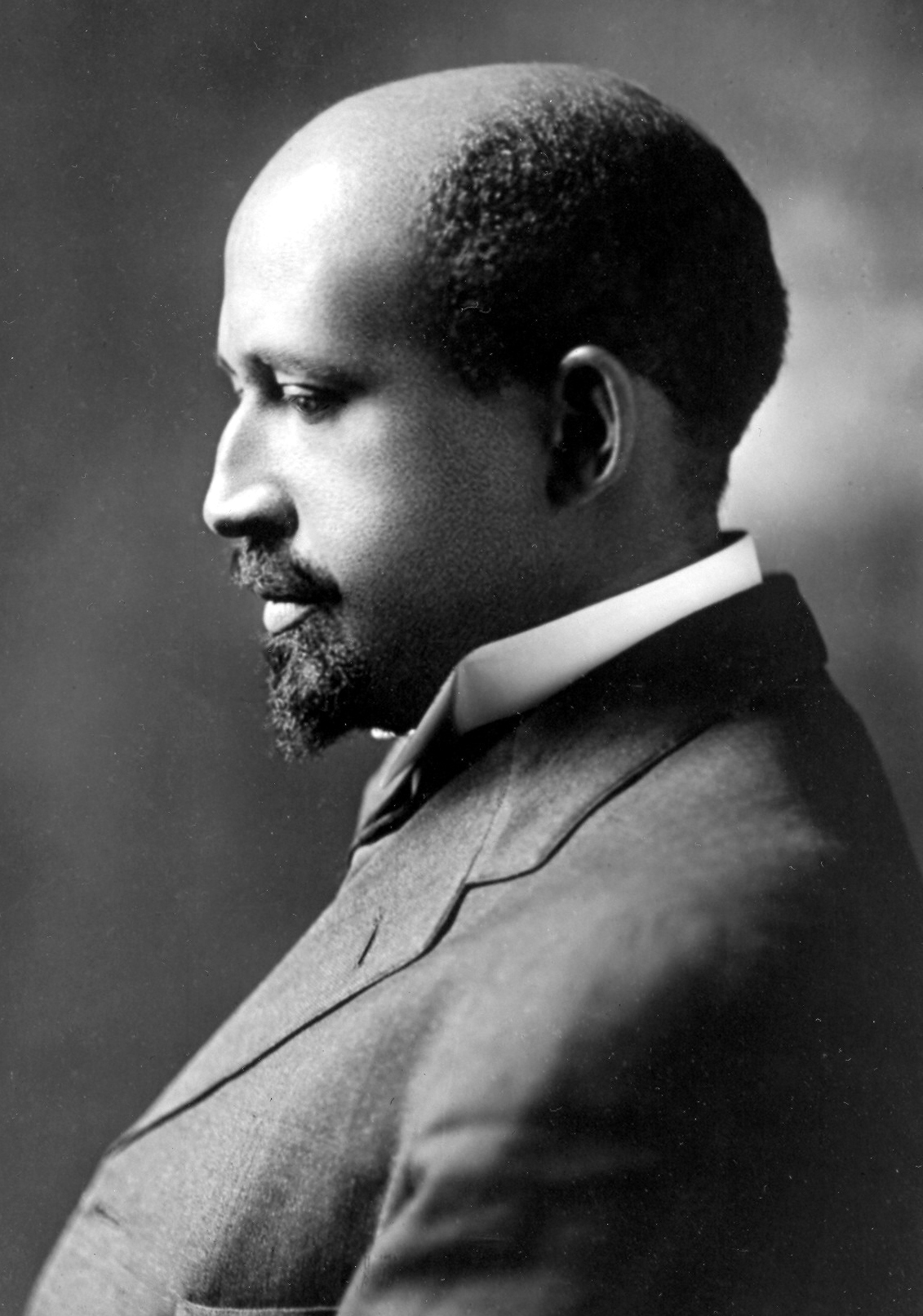
(Image courtesy of Smithsonian Archives)
A Window into Washington’s Black Community
Scurlock's work was deeply rooted in the vibrant, yet often overlooked, community of African Americans in Washington D.C. during this period. He wasn’t simply a portraitist; he was an active participant in documenting the daily lives, cultural expressions, and political aspirations of Black Washingtonians. His studio became a central hub, a place where families sought dignified portraits – a tangible assertion of their presence and identity within a society that frequently denied them recognition. The photograph itself reflects this community engagement, hinting at a setting beyond the formal studio, suggesting a moment captured in a more relaxed, intimate environment.
The backdrop, though subtly rendered, speaks volumes about the era. It’s not a grand cityscape or an opulent interior; instead, it suggests a quiet street scene – a deliberate choice that anchors Du Bois within his immediate context and highlights his connection to the everyday realities of Black life in Washington.
Technical Mastery and Photographic Language
Scurlock's mastery is evident in the photograph’s nuanced details. The use of black and white gelatin silver print lends a timeless quality, with subtle tonal variations creating depth and texture. Note the careful control of light – it illuminates Du Bois’s face, drawing attention to his thoughtful expression while leaving the background softly shadowed. This technique emphasizes the subject's presence without overwhelming him. The composition is carefully balanced; Du Bois’s posture conveys a sense of quiet contemplation, while his slightly turned head invites the viewer into his thoughts.
Furthermore, Scurlock’s use of photographic techniques—particularly in capturing the subtle nuances of expression—demonstrates an understanding that went beyond mere documentation. He was striving to create a portrait that resonated with both intellectual and emotional depth.
Symbolism and the “Double Consciousness”
Du Bois's gaze, directed slightly off-camera, is particularly significant. It’s not a direct, confrontational stare; rather, it suggests introspection and a considered awareness of his position within American society. This subtle shift in focus powerfully embodies the concept of "double consciousness" – the feeling of always looking at oneself through the eyes of others, as articulated by Du Bois himself. The photograph becomes a visual representation of this internal struggle: the simultaneous experience of being both an African American and an American citizen.
The image serves as a poignant reminder of the challenges faced by Black intellectuals during this period – the constant need to navigate racial prejudice while striving for social justice and intellectual advancement. Scurlock’s photograph is not simply a portrait; it's a powerful testament to Du Bois’s legacy and the enduring significance of his ideas.
Fragen & Antworten
In welchem Raum des Zuhauses lässt sich eine Reproduktion von "W. E. B. Du Bois" gut platzieren?
Der empfohlene Raum für "W. E. B. Du Bois" von Addison N. Scurlock ist ein Living Room. Dieser Vorschlag kann natürlich an Ihr Interieur angepasst werden.
Darf die Abbildung von "W. E. B. Du Bois" von Addison N. Scurlock frei reproduziert werden?
Was das Urheberrecht betrifft, so ist "W. E. B. Du Bois" noch urheberrechtlich geschützt.
Welche Größe und Ausrichtung werden für einen Druck von "W. E. B. Du Bois" von Addison N. Scurlock empfohlen?
Für einen Druck von "W. E. B. Du Bois" von Addison N. Scurlock wird ein Format von Medium in der Ausrichtung Portrait empfohlen.
Biografie des Künstlers
Addison N. Scurlock (1883-1964): A Pioneer of Black Washington Photography
Addison Norton Scurlock, born in Fayetteville, North Carolina, on June 19, 1883, stands as a pivotal figure in documenting the vibrant tapestry of African American life during the early to mid-20th century. His unwavering dedication to capturing visual narratives shaped not only his own artistic legacy but also profoundly impacted the historical record of Washington, D.C., and beyond. Scurlock’s journey began with a formative apprenticeship under Moses P. Rice, a respected white photographer who instilled in him the foundational principles of photographic technique and artistry—a skill that would serve as bedrock for his subsequent endeavors.Early Life and Career Foundations
Moving to Washington, D.C., in 1900 alongside his family – including attorney George Clay Scurlock and wife Nannie – marked a significant turning point in Scurlock’s life trajectory. Recognizing the burgeoning cultural landscape of Black Washington, he embarked on an ambitious path toward establishing himself as a prominent photographer. He honed his craft through meticulous observation and skillful execution, securing positions with influential organizations like Howard University, where he documented student life and celebrated academic achievements. His commitment to capturing authentic moments solidified his reputation as a chronicler of the era’s social realities.The Scurlock Studio: A Hub for Artistic Excellence
Driven by entrepreneurial spirit and fueled by a passion for visual storytelling, Scurlock founded the Scurlock Studio in 1907—a landmark institution that would become synonymous with Black Washington photography for decades to come. Situated strategically in the heart of U Street Corridor, a thriving center of Black cultural life, the studio attracted clients from diverse backgrounds – actors, politicians, educators, and prominent figures alike. Scurlock’s artistic vision extended beyond mere portraiture; he mastered panoramic photography, skillfully capturing grand events like presidential visits to Howard University and documenting celebrations of academic milestones. His meticulous attention to detail—combining light, shadow, posing, and subtle retouching—elevated his work to a level of sophistication that distinguished it from its contemporaries.Notable Achievements & Artistic Legacy
Scurlock’s influence resonated far beyond the confines of his studio walls. He served as official photographer for Howard University until his passing in 1964, meticulously documenting the university's history and fostering a sense of pride among its students. His sons, George H. Scurlock and Robert Scurlock, continued his family’s photographic tradition, establishing the Capital School of Photography and nurturing the talents of future Washington Post photographers. Perhaps most powerfully, Scurlock's photographs immortalized iconic figures like W.E.B. Du Bois, Mary McLeod Bethune, Booker T. Washington, and Lillian Evans Tibbs—capturing their dignity and conveying their significance to a wider audience. His enduring contribution to visual history remains an inspiration for artists striving to document diverse experiences and illuminate untold stories.A Lasting Impression on Black History
Addison Scurlock’s legacy transcends his artistic accomplishments; he fundamentally reshaped our understanding of Black Washington's cultural landscape. Through his photographs, he preserved invaluable glimpses into the daily lives, aspirations, and achievements of African Americans during a transformative period in American history—a testament to the power of visual storytelling and the importance of preserving cultural heritage. His work continues to inspire artists today who seek to honor the voices and perspectives often marginalized from mainstream narratives.
Addison N. Scurlock
1883 - 1964 , Vereinigte Staaten von Amerika
Eckdaten zum Künstler
- Artistic Movement Or Style: Dokumentarfotografie
- Artists Who Influenced This Artist: ['Moses P. Rice']
- Date Of Birth: 1883
- Full Name: Addison Norton Scurlock
- Nationality: Amerikaner
- Notable Artworks:
- W. E. B. Du Bois
- Madame C. J. Walker
- Place Of Birth: Fayetteville, Vereinigte Staaten
Verwandte Artikel
Ferdinand du Puigaudeau: Bridging Impressionism & Symbolism in Breton Landscapes
Discover Ferdinand du Puigaudeau's captivating Breton landscapes – a bridge between Impressionism & Symbolism. Explore his life, unique style, and enduring legacy with OriginalUniqueArt.
Floating World: The Captivating Art and Legacy of Japanese Ukiyo-e
Explore the profound beauty of Japanese Ukiyo-e. Discover the history, masters like Hokusai, and the enduring legacy of the 'Floating World' through an expert art-historical lens.
Ukiyo-e: Exploring Japan's Floating World & Enduring Artistic Legacy
Explore the captivating world of Ukiyo-e – Japan's iconic woodblock prints! Discover masters like Hokusai & Hiroshige, learn about Edo period culture, and find expert art collecting guidance at OriginalUniqueArt.
Suzuki Harunobu und die Vollendung des Ukiyo-e: Revolution der Farbgebung im Edo-Zeitalter
Entdecken Sie die Revolution der Farbgebung im Ukiyo-e mit Suzuki Harunobu! Erfahren Sie mehr über seine innovativen Drucktechniken, lyrischen Werke und seinen Einfluss auf den Japonismus. Expertenwissen & hochwertige Reproduktionen.

Katsushika Hokusai: Die 25 Meisterwerke des Ukiyo-e – Kunst für Ihr Zuhause | OriginalUniqueArt
Entdecken Sie die 25 Meisterwerke von Katsushika Hokusai! Tauchen Sie ein in die Welt des Ukiyo-e, berühmte Holzschnitte wie 'Die große Welle' & Fuji-Ansichten. Hochwertige Kunstdrucke für Ihr Zuhause – jetzt auf OriginalUniqueArt.com!
