

 Vorschau anzeigen
 Versenden
 Teilen
 Details anzeigen

 Herunterladen
 Ähnliche Objekte
 Röntgenaufnahme
 Diashow
Khagen Babu


 Weiterlesen
Handgefertigte Ölreproduktion
Handgemaltes Ölgemälde auf Leinwand in Ihrer Wunschgröße und mit Rahmen, auf Bestellung von unseren Künstlern angefertigt. ( Druck bestellen Bild kaufen)




P118B $10

P118H $10

P118W $10

P438Z $10

P508JH $12

P508YH $12

P805H $10

P805Z $10

P919BZ $10

P919G $10

P919XJ $10

P959ZH $10

P968JZ $12

W106C $8

W218G $10

W218JH $8

W218Y $10

W307PJ $10

W316G $10

W316PJ $8

W316Y $10

W398PJ $8

W4111J $10

W500HY $15

W500JH $15

W692G $12

W849H $8

W940BG $15

W953PJ $8




Wählen Sie aus unseren vordefinierten Formaten, die den ursprünglichen Proportionen des Kunstwerks entsprechen.

Sie können Ihre eigenen Maße eingeben, um einen bestimmten Rahmen oder Platz auszufüllen. Wenn die gewählte Größe nicht den Proportionen des Originalbildes entspricht, werden wir das Kunstwerk entweder beschneiden oder das Gemälde durch zusätzliche, handgemalte Elemente erweitern. Ein digitales Mockup wird Ihnen zur Genehmigung zugesandt, bevor die Produktion beginnt.
Bitte beachten Sie, dass die Bildschirmvorschau nicht die tatsächliche Beschneidung oder Erweiterung widerspiegelt. Nur das Mockup zeigt die endgültige Komposition exakt an.
Obwohl Sondermaße verfügbar sind, empfehlen wir, eine Größe aus der vordefinierten Liste zu wählen, um die ursprünglichen Proportionen beizubehalten.
Nach der Bestellung wird das OriginalUniqueArt.com-Team dem Kunden Anweisungen per E-Mail zusenden und eine Mockup-Vorschau bereitstellen.
Weltweiter Versand () in nur 3 bis 4 Wochen statt der üblichen 5 Wochen. (19 August). Keine Kompromisse bei der Qualität.

Kostenloser weltweiter Expressversand

Hochwertige Leinenleinwand

Umfassender Versicherungsschutz beim Versand

Zollgebühren-Rückerstattungsgarantie

Garantie für exakte Farbtreue

60 Tage Rückgaberecht (nur bei Mängeln)

100% Geld-zurück-Garantie

Mengenrabatt verfügbar
 Die Glasoption ist nur für Größen unter 110 cm verfügbar.

Khagen Babu
Art der Reproduktion
Format der Reproduktion
-


Gesamtpreis
$ 300
Beschreibung des Kunstwerks
A Portrait of Quiet Contemplation: Khagen Babu by Abanindranath Tagore
Abanindranath Tagore’s “Khagen Babu” is more than just a portrait; it's a carefully constructed meditation on Indian identity and the burgeoning movement towards a distinctly modern, yet deeply rooted, artistic expression. Painted in 1907, during a pivotal moment in India’s cultural awakening, this black-and-white photograph – meticulously reproduced as a fine art print – captures a sense of dignified introspection within a man identified simply as “Khagen Babu.” The image, originally intended for the Indian Society of Oriental Art's exhibition, immediately draws the viewer into a world where traditional Indian aesthetics are subtly interwoven with Western artistic sensibilities.
The subject himself is rendered with a remarkable restraint. His face, framed by a neatly trimmed mustache and a thoughtful gaze directed towards the camera, exudes an air of quiet contemplation. Tagore’s masterful use of light and shadow creates a subtle depth, emphasizing the lines of his face and hinting at a lifetime of experience. The background, a simple green expanse – reminiscent of traditional Indian gardens – provides a serene backdrop that allows the subject to command the entire composition. It's a deliberate choice, grounding the portrait firmly within an Indian context while simultaneously inviting a universal connection.
The Bengal School and its Hybrid Style
“Khagen Babu” is a quintessential example of the Bengal School of Art, founded by Tagore himself. This revolutionary movement sought to break away from the dominant Western artistic trends that had infiltrated India during the colonial period. Instead, it drew inspiration from ancient Indian art forms – particularly Mughal and Rajput miniature paintings – alongside elements of Japanese aesthetics, notably in its use of composition and color palettes. Tagore’s approach was not simply a revival; he skillfully blended these influences to create something entirely new: a distinctly ‘Indian’ modernism.
Notice the deliberate simplification of forms, reminiscent of traditional Indian painting styles. The brushstrokes are visible, lending a sense of immediacy and intimacy to the portrait. The use of monochrome – a conscious rejection of vibrant Western color schemes – further emphasizes the spiritual and contemplative nature of the subject. This stylistic choice was deeply symbolic, aligning with the Swadeshi movement’s emphasis on self-reliance and rejecting foreign influences.
Symbolism and the Essence of Indian Identity
Beyond its formal qualities, “Khagen Babu” is rich in symbolism. The man's posture – upright and dignified – reflects a sense of honor and tradition. The subtle details, such as the folds of his garment and the arrangement of his hands, are imbued with meaning within the context of Indian culture. Tagore’s intention was to capture not just a likeness but also an essence—a representation of the soul of India itself.
The photograph's composition echoes traditional Indian temple murals, further reinforcing this connection to national identity. The subject is presented as a figure of authority and wisdom, embodying the values of self-sufficiency, spirituality, and cultural pride that were central to the Swadeshi movement. It’s a powerful statement about reclaiming artistic agency within a nation grappling with its own history and future.
A Timeless Masterpiece for Your Space
Reproduced as a high-quality print, “Khagen Babu” offers a captivating glimpse into a pivotal moment in Indian art history. Its serene beauty and profound symbolism make it an ideal addition to any collection or interior space. Whether you’re an art enthusiast, a collector seeking unique pieces, or simply someone who appreciates the power of visual storytelling, this portrait invites contemplation and celebrates the enduring legacy of Abanindranath Tagore.
The original dimensions of 25 x 17 cm make it suitable for a variety of settings, from smaller studies to larger wall displays. Its timeless appeal ensures that “Khagen Babu” will continue to resonate with viewers for generations to come.
Über den Künstler
Frühes Leben und Hintergrund
- Geboren: 7. Mai 1861, Joransanko, Kalkutta, Britisch-Indien
- Gestorben: 5. Dezember 1951
- Familie: Mitglied der angesehenen Tagore-Familie; Neffe von Rabindranath Tagore. Sein Großvater war Girindranath Tagore und sein Vater Gunendranath Tagore.
- Ausbildung: Studierte in den 1880er Jahren am Sanskrit College, Kalkutta, und besuchte später die Calcutta School of Art.
Künstlerische Entwicklung und Einflüsse
- Frühe Ausbildung: Erlernte Pastelle von O. Ghilardi und Ölmalerei von Charles Palmer an der Calcutta School of Art.
- Mughal- und Rajput-Stile: Bemühte sich, diese Stile zu modernisieren und lehnte westliche Kunstmodelle ab.
- Swadeshi-Werte: Integrierte Swadeshi-Werte in seine Kunst und förderte indische Traditionen.
- Aesthetizismus von Whistler: Beeinflusst vom Aesthetizismus von Whistler.
- Japanischer Einfluss: Später integrierte er chinesische und japanische Kalligraphietraditionen in seinen Stil, nachdem er die Künstler Tikan und Hesida getroffen hatte.
Hauptwerke und künstlerische Beiträge
- Rohini II: Ein bemerkenswertes Werk, das seine künstlerischen Fähigkeiten zeigt.
- Das Vergehen von Schah Dschahan: Ein weiteres bedeutendes Gemälde, das seinen Stil widerspiegelt.
- Blumenzeit in einer Vase: Demonstriert seine Beherrschung der Technik und des Themas.
- Arabische Nächte-Reihe (1930): Gilt als eines seiner besten Werke und verwendet Geschichten aus Tausendundeiner Nacht, um kolonialisiertes Kalkutta zu erkunden.
- Bharat Mata: Ein bedeutendes Gemälde, das Mutter Indien symbolisiert.
- Gründer der Bengal School of Art: Spielte eine entscheidende Rolle bei der Gestaltung der modernen indischen Malerei und der Förderung nationalistischer Kunst.
- Indian Society of Oriental Art (1907): Gründete diese Gesellschaft, um traditionelle indische Kunstformen zu fördern.
Vermächtnis und historische Bedeutung
- Pionier der modernen indischen Malerei: Anerkannt als eine Schlüsselfigur bei der Entwicklung der modernen indischen Kunst.
- Einfluss auf nachfolgende Künstler: Mentor von bekannten Künstlern wie Nandalal Bose, Asit Halder, Kshitindranath Majumdar und Jamini Roy.
- Wiederbelebung traditioneller Kunstformen: Setzte sich für eine Rückkehr zu traditionellen indischen Techniken und Stilen ein.
- Auswirkungen auf die bengalische Kinderliteratur: Verfasste einflussreiche Kinderbücher wie Rajkahini, Budo Angla, Nalak und Khirer Putul.
- Nationales Kunstschatz: Seine Werke gelten als Nationales Kunstschatz.

Abanindranath Tagore
1871 - 1951 , Indien
Kurzinfos
- Beeinflusste Künstler:
- Whistler
- Mughal-Künstler
- Rajput-Künstler
- Bemerkenswerte Werke:
- Rohini II
- Gehende von Shajahan
- Blumen in einer Vase
- Geburtsdatum: 7. Mai 1871
- Geburtsort: Jorasanko, Indien
- Künstlerische Bewegung: Bengal School of Art
- Nationalität: Indisch
- Sterbedatum: 5. Dezember 1951
- Vollständiger Name: Abanindranath Tagore
- Von Künstlern Beeinflusst:
- Nandalal Bose
- Kshitindranath Majumdar
- Jamini Roy
Ähnliche Artikel

Raja Ravi Varma: Bridging Tradition & Modernity in 19th-Century Indian Art
Explore the life & art of Raja Ravi Varma, a pioneer who fused European techniques with Indian iconography. Discover his iconic paintings, lasting legacy, and influence on modern Indian art at OriginalUniqueArt.

The Alluring Gaze: Orientalism in 19th-Century Art – Representation, Reception & Construction of the 'Orient'
Explore the complex history of Orientalism in 19th-century art. Discover how Western artists depicted the 'Orient,' its cultural impact, and Edward Said's critical analysis. A deep dive for art lovers & historians.

Panoramic Visions of Empire: The Daniells’ Artistic Collaboration & Legacy
Explore the captivating 'Oriental Scenery' by Thomas & William Daniell. Discover their pioneering aquatint prints of India, imperial context, artistic collaboration, and lasting legacy. A deep dive for history lovers.
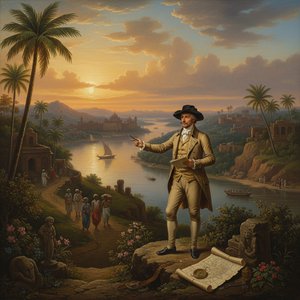
Thomas Daniell: Navigating Light, Landscape & Cultural Exchange in Early 19th-Century India
Explore the captivating landscapes of Thomas Daniell, a pioneering artist who documented India's beauty in the 19th century. Discover his 'Oriental Scenery,' aquatint technique & lasting legacy. Hand-painted reproductions available at OriginalUniqueArt.

The Allure of the Exotic: Orientalism in 19th-Century Art
Explore the captivating world of 19th-century Orientalist art! Discover iconic painters like Gérôme & Benjamin-Constant, key themes, and collecting insights. Expert analysis at OriginalUniqueArt.


