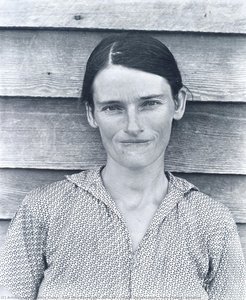
Portræt af Walker Evans

Walker Evans Paintings: The 50 Most Famous, Through a Gallery's Eye

Opdateret oktober 2026 · rangeret efter vores popularitetsscore (søgninger, besøg og ordrer for hvert værk) · 50 værker af Walker Evans i vores katalog

In short

To the gallery's eye, Walker Evans's most famous painting is Roadside Stand, vicinity Birmingham, Alabama (1971), whose original hangs in the George Eastman Museum, Rochester. Let Us Now Praise Famous Men (1936) and Havana Citizen / Citizen in Downtown Havana (1933) complete the trio every eye recognises. Of the 50 works by Walker Evans in our catalog, the gallery presents the 50 most famous below, each original with its year, its museum and what makes it unique.

1903 – 1975, St. Louis Contemporary realism Flest værker: J. Paul Getty Museum

The gallery's top 10 Walker Evans paintings

1
Roadside Stand, vicinity Birmingham, Alabama (1971) af Walker Evans

Roadside Stand, vicinity Birmingham, Alabama

1971 · Black and White Photography · George Eastman Museum, Rochester

In the quiet, sun-drenched corners of rural Alabama, Walker Evans captured more than just a storefront; he froze a moment of profound human resilience. "Roadside Stand, vicinity Birmingham, Alabama," produced in 1971, serves as a hauntingly beautiful meditation on American identity. The photograph presents a deceptively simple tableau: a weathered structure, the home of ‘F.M. Pointer – The Old Reliable House Mover,’ where two men stand amidst their trade. There…

2
Let Us Now Praise Famous Men (1936) af Walker Evans

Let Us Now Praise Famous Men

1936 · Photography · La Biennale di Venezia, Venedig

Walker Evans' "Let Us Now Praise Famous Men," born from a collaboration between the photographer and writer James Agee in 1936-37, isn’t merely a collection of photographs; it’s a profound meditation on poverty, resilience, and the fractured landscape of the American South during the Great Depression. The work, initially conceived as an article for *Fortune* magazine, ultimately transcended its journalistic origins to become a seminal text in documentary photography and…

3
Havana Citizen / Citizen in Downtown Havana (1933) af Walker Evans

Havana Citizen / Citizen in Downtown Havana

1933 · Gelatin Silver Print · J. Paul Getty Museum, Los Angeles

Walker Evans’ “Citizen in Downtown Havana,” created in 1933, isn’t merely a photograph; it’s a distilled moment, a frozen tableau of urban life that speaks volumes about a city grappling with change and the quiet dignity of its inhabitants. Captured during a brief assignment for Carlton Beals' book *The Crime of Cuba*, this image transcends simple documentation, becoming a poignant meditation on identity, masculinity, and the subtle rhythms of daily…

4
Let Us Now Praise Famous Men (1936) af Walker Evans

Let Us Now Praise Famous Men

1936 · Acrylic On Canvas · La Biennale di Venezia, Venedig

Walker Evans’s “Let Us Now Praise Famous Men,” published in 1941, isn't merely a collection of photographs; it’s a profound meditation on poverty, dignity, and the fractured American landscape during the Great Depression. Born from an assignment for *Fortune* magazine to document the lives of tenant farmers in Alabama, the project quickly transcended its initial journalistic purpose. James Agee, a young writer brimming with empathy, joined Evans, and together they…

5
Silverware (1936) af Walker Evans

Silverware

1936 · Black and White Photography · Nelson-Atkins Museum of Art, Kansas City

In the quiet, textured stillness of Walker Evans’ 1936 masterpiece, “Silverware,” we find much more than a mere photographic record of a weathered interior. It is a profound, distilled moment of American history, captured with an unwavering gaze that speaks volumes about the spirit of perseverance during the Great Depression. At first glance, the viewer is presented with a seemingly simple depiction of a wooden wall, yet beneath this surface…

6
Allie Mae Burroughs, Wife of a Cotton Sharecropper, Hale County, Alabama (1936) af Walker Evans

Allie Mae Burroughs, Wife of a Cotton Sharecropper, Hale County, Alabama

1936 · Acrylic On Canvas · J. Paul Getty Museum, Los Angeles

Walker Evans's photograph, "Allie Mae Burroughs, Wife of a Cotton Sharecropper, Hale County, Alabama," isn't merely a snapshot; it’s a poignant window into the heart of the American Depression. Captured in 1936 during his work for the Farm Security Administration, this image transcends its documentary origins to become a powerful meditation on dignity, hardship, and the quiet strength of an ordinary woman facing extraordinary circumstances. The photograph, now housed at…

7
Alabama Tenant Farmer (1936) af Walker Evans

Alabama Tenant Farmer

1936 · Gelatin Silver Print · J. Paul Getty Museum, Los Angeles

In the quiet, monochrome stillness of Walker Evans’ “Alabama Tenant Farmer,” one finds much more than a mere documentation of a kitchen interior; one encounters a profound meditation on the human condition. Captured in 1936 amidst the dust and desperation of the Great Depression, this masterpiece serves as a poignant emblem of resilience. The photograph transports the viewer into a humble cotton farmer’s cabin in Hale County, Alabama, where the…

8
Let Us Now Praise Famous Men (1936) af Walker Evans

Let Us Now Praise Famous Men

1936 · Acrylic On Canvas · La Biennale di Venezia, Venedig

Walker Evans' "Let Us Now Praise Famous Men," born from a 1936 assignment for *Fortune* magazine, isn’t merely a photographic record; it’s a profound meditation on the dignity of human existence amidst crushing poverty. Published in 1941, this seminal work transcends its documentary origins to become a hauntingly beautiful exploration of rural America during the Great Depression. Evans, initially tasked with capturing the realities of sharecropping families in Alabama, quickly…

9
Uncle Sam (1935) af Walker Evans

Uncle Sam

1935 · Black and White Photography · Ogden Museum of Southern Art, New Orleans

In the quiet, silvered tones of Walker Evans’s 1935 masterpiece, Uncle Sam, we are invited to step through a temporal threshold into the heart of a vanishing America. This evocative black and white photograph serves as more than a mere documentation of architecture; it is a profound meditation on existence during the Great Depression. The composition centers on a sprawling, two-story house, its weathered facade and numerous windows acting as…

10
Let Us Now Praise Famous Men (1936) af Walker Evans

Let Us Now Praise Famous Men

1936 · Acrylic On Canvas · La Biennale di Venezia, Venedig

Walker Evans’s “Let Us Now Praise Famous Men,” published in 1941, stands as an unparalleled achievement in documentary photography and a cornerstone of American literature. More than just capturing the bleak realities of the Great Depression—specifically the plight of tenant farmers in Hale County, Alabama—Evans’s magnum opus delves into the profound dignity inherent within human experience even amidst crushing hardship.

Walker Evans paintings, ranked 11 to 50

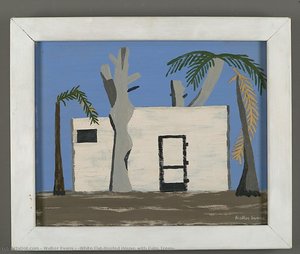
11License Photo Studio, New York (1934) af Walker EvansLicense Photo Studio, New York1934 · J. Paul Getty Museum 12Water Fountain, Havana (1932) af Walker EvansWater Fountain, Havana1932 · Boca Raton Museum of Art 13Miners (1935) af Walker EvansMiners1935 · J. Paul Getty Museum 14Barber Shop, New Orleans (1971) af Walker EvansBarber Shop, New Orleans1971 · Boca Raton Museum of Art 15Boarding House Porch, Birmingham, Alabama (1971) af Walker EvansBoarding House Porch, Birmingham, Alabama1971 · Boca Raton Museum of Art 16Brooklyn bridge, new york af Walker EvansBrooklyn bridge, new york 17Parked car, small town main street af Walker EvansParked car, small town main street 18Sharecropper, hale county, alabama af Walker EvansSharecropper, hale county, alabama 19Coal dock worker af Walker EvansCoal dock worker 20American legionnaire af Walker EvansAmerican legionnaire 21Interior detail, west virginia coal miner's house af Walker EvansInterior detail, west virginia coal miner's house 22Girl in Fulton Street, New York af Walker EvansGirl in Fulton Street, New York 23Roadside Sandwich Shop, Ponchatoula, Louisiana af Walker EvansRoadside Sandwich Shop, Ponchatoula, Louisiana 24Battlefield Monument, Vicksburg, MS (1936) af Walker EvansBattlefield Monument, Vicksburg, MS1936 · Ogden Museum of Southern Art 25[Landscape with Adobe Church] (1947) af Walker Evans[Landscape with Adobe Church]1947 26[Red Church] (1950) af Walker Evans[Red Church]1950 27[Three Director's Chairs] (1950) af Walker Evans[Three Director's Chairs]1950 28[Ship's Prow] (1950) af Walker Evans[Ship's Prow]1950 29[Floral Still-Life] (1950) af Walker Evans[Floral Still-Life]1950 30[Shack with Broken Windows] (1950) af Walker Evans[Shack with Broken Windows]1950 31[Architectural Interior] (1950) af Walker Evans[Architectural Interior]1950 32[White Flat-Roofed House with Palm Trees] (1950) af Walker Evans[White Flat-Roofed House with Palm Trees]1950 33[Construction Site] (1950) af Walker Evans[Construction Site]1950 34The Shell House (1950) af Walker EvansThe Shell House1950 35Anna Maria, Florida (1958) af Walker EvansAnna Maria, Florida1958 36[Seashore Scene with Boardwalk] (1961) af Walker Evans[Seashore Scene with Boardwalk]1961 37[Boat with Palm Trees on Shore] (1958) af Walker Evans[Boat with Palm Trees on Shore]1958 38[House with Gridded Panel and Palm Trees] (1958) af Walker Evans[House with Gridded Panel and Palm Trees]1958 39[Barn with Porch Addition, Old Lyme, Connecticut] (1963) af Walker Evans[Barn with Porch Addition, Old Lyme, Connecticut]1963 40[Red Building in Field] (1963) af Walker Evans[Red Building in Field]1963 41Main Street in a Pennsylvania Town (1971) af Walker EvansMain Street in a Pennsylvania Town1971 42Joe's auto graveyard, pennsylvania af Walker EvansJoe's auto graveyard, pennsylvania 43Kitchen wall, alabama farmstead af Walker EvansKitchen wall, alabama farmstead 44Kitchen corner, tenant farmhouse, hale county, alabama af Walker EvansKitchen corner, tenant farmhouse, hale county, alabama 45End of House on Logan Street, Charleston, South Carolina af Walker EvansEnd of House on Logan Street, Charleston, South Carolina 46Allie Mae Burroughs, Wife of a Cotton Sharecropper, Hale County, Alabama af Walker EvansAllie Mae Burroughs, Wife of a Cotton Sharecropper, Hale County, Alabama 47Main street block, selma, alabama af Walker EvansMain street block, selma, alabamaGeorgia Museum of Art 48Penny picture display, savannah, georgia af Walker EvansPenny picture display, savannah, georgia 49Negro church, south carolina af Walker EvansNegro church, south carolina 50City lunch counter, new york af Walker EvansCity lunch counter, new york

Walker Evans's famous paintings, period by period

The subjects that held Walker Evans's eye

The four subjects that come back most often in these originals, each with its finest example.

The museums that keep Walker Evans's originals

De 7 museer, der rummer flest af malerierne på denne side.

Museum By Værker af Walker Evans Malerier fra denne liste
J. Paul Getty Museum, Los AngelesJ. Paul Getty Museum Los Angeles 5 Havana Citizen / Citizen in Downtown Havana, Allie Mae Burroughs, Wife of a Cotton Sharecropper, Hale County, Alabama, Alabama Tenant Farmer
La Biennale di Venezia, VenedigLa Biennale di Venezia Venedig 4 Let Us Now Praise Famous Men, Let Us Now Praise Famous Men, Let Us Now Praise Famous Men
Boca Raton Museum of Art, Boca RatonBoca Raton Museum of Art Boca Raton 3 Water Fountain, Havana, Barber Shop, New Orleans, Boarding House Porch, Birmingham, Alabama
Ogden Museum of Southern Art, New OrleansOgden Museum of Southern Art New Orleans 2 Uncle Sam, Battlefield Monument, Vicksburg, MS
George Eastman Museum, RochesterGeorge Eastman Museum Rochester 1 Roadside Stand, vicinity Birmingham, Alabama
Nelson-Atkins Museum of Art, Kansas CityNelson-Atkins Museum of Art Kansas City 1 Silverware
Georgia Museum of Art, AthenGeorgia Museum of Art Athen 1 Main street block, selma, alabama

Walker Evans, one signature painting per decade

Værker per årti

Pick a decade to see the original that defines it.

Walker Evans's paintings: the gallery answers

Which Walker Evans painting is the most famous of all?Reveal the answer

Roadside Stand, vicinity Birmingham, Alabama (1971), George Eastman Museum, Rochester. Let Us Now Praise Famous Men (1936) and Havana Citizen / Citizen in Downtown Havana (1933) come next.

How old was Walker Evans on completing Roadside Stand, vicinity Birmingham, Alabama?Reveal the answer

68 years old: Roadside Stand, vicinity Birmingham, Alabama dates from 1971, and Walker Evans was born in 1903.

Which are Walker Evans's top 10 paintings?Reveal the answer

Roadside Stand, vicinity Birmingham, Alabama, Let Us Now Praise Famous Men, Havana Citizen / Citizen in Downtown Havana, Let Us Now Praise Famous Men, Silverware, Allie Mae Burroughs, Wife of a Cotton Sharecropper, Hale County, Alabama, Alabama Tenant Farmer, Let Us Now Praise Famous Men, Uncle Sam og Let Us Now Praise Famous Men. The ranking above gives each one's year and museum.

How many works did Walker Evans create?Reveal the answer

Our catalog holds 50 works by Walker Evans, dated from 1932 to 1971.

Where do Walker Evans's most famous originals hang?Reveal the answer

Mostly in J. Paul Getty Museum (Los Angeles), La Biennale di Venezia (Venedig) og Boca Raton Museum of Art (Boca Raton). The museum table above lists them all.

When did Walker Evans create the most famous paintings?Reveal the answer

In 1930s: 13 of the 50 works on this page were made then, Let Us Now Praise Famous Men among them.

Which are Walker Evans's earliest and latest famous works?Reveal the answer

On this page, the earliest is Water Fountain, Havana (1932) and the latest Roadside Stand, vicinity Birmingham, Alabama (1971).

Which subjects did Walker Evans return to most?Reveal the answer

Usa (7), Great depression (5) og American south (4), across the 50 works on this page.

Which medium did Walker Evans work in most?Reveal the answer

Acrylic On Canvas, for 5 of the 50 works on this page.

Which movement is Walker Evans associated with?Reveal the answer

Contemporary realism og Documentary photography, judging by the originals on this page.

Which Walker Evans originals does the J. Paul Getty Museum hold?Reveal the answer

Havana Citizen / Citizen in Downtown Havana, Allie Mae Burroughs, Wife of a Cotton Sharecropper, Hale County, Alabama og Alabama Tenant Farmer: the J. Paul Getty Museum, Los Angeles holds 5 of the works on this page.

Walker Evans: the artist

Walker Evans: En Amerikansk Fotografs Stille Stemme

Walker Evans, født i St. Louis i 1903, blev en afgørende figur i amerikansk fotografi – hans navn er uadskilleligt forbundet med det visuelle billede af Depressionstiden. Men at definere ham udelukkende ud fra denne periode ville være at overse bredden af hans kunstneriske vision og hans varige indflydelse. Hans liv var en konstant udforskning, der udviklede sig fra litterære ambitioner til en unikt observerende fotografisk stil, der ikke blot gengav *hvad* Amerika var, men også *hvordan* det føltes – dets rolige værdighed, dets barske realiteter og dets ofte oversete skønhed. Evans’s barndom, præget af hyppige flytninger mellem byer som Toledo, Chicago og New York, gav ham en tidlig bevidsthed om Amerikas mangfoldige facetter. Selvom han blev uddannet på prestigefyldte institutioner som Phillips Academy Andover og kortvarigt ved Williams College, fandt hans egentlige uddannelse sted gennem selvstudier og en dybdegående forståelse af den kulturelle strømning i tiden. Et år i Paris i 1926 åbnede for ham verdener af europæisk kunstnerisk tendens, men det var først på sin tilbagevenden til New York, at han opdagede sit kald – oprindeligt som forfatter, før han omkring 1928 med entusiasme vendte sig mod fotografi.

Formning af en Dokumentarisk Vision

De tidlige indflydelser på Evans’s fotografiske tilgang var dybtgående. Han beundrede Eugène Atgets omhyggelige dokumentation af parisernes gader, der føltes både tidløse og umiddelbare, og August Sander, hvis portrætter sigtede efter en objektiv katalogisering af tysk samfund. Lige så vigtige var litterære figurer som T.S. Eliot, D.H. Lawrence, James Joyce og e.e. cummings – forfattere, der værdsatte sprogets præcision og en skarp observation af den menneskelige tilstand. Disse indflydelser samledes i Evans’s udviklende æstetik: et engagement i klarhed, direktehed og en undgåelse af sentimentalitet. Denne tilgang fandt sin mest kraftfulde udtryk under hans ophold med Farm Security Administration (FSA) begyndende i 1935. Ansættelsen var at dokumentere Depressionens virkninger på landsamfundene i det sydlige USA, og Evans rejste rundt i landet, fangede billeder, der blev ikoniske repræsentationer af vanskeligheder og modstandskraft. Hans samarbejde med forfatteren James Agee i *Let Us Now Praise Famous Men* (1941), en banebrydende værk, der kombinerede skarpe fotografier med lyriske prosa, der beskrev livet for tre lejeslagsfamilier i Alabama, er et afgørende eksempel på dokumentarlitteratur og fotografi. Selvom projektet oprindeligt blev afvist af *Fortune* magazine på grund af dets længde og ukonventionelle stil, står det som et vidnesbyrd om deres fælles engagement i at portrættere almindelige menneskers liv med ærlighed og empati. Evans’s brug af en 8x10-formatkamera bidrog betydeligt til hans distinkte stil; det store format gav billederne en følelse af tidløshed.

Ud over FSA: Portrætter og Skiftende Perspektiver

Efter sit arbejde med FSA fortsatte Evans’s kunstneriske rejse i udvikling. Udstillingsåbningen “Walker Evans: American Photographs” på Museum of Modern Art i 1938 fastslog hans status som en afgørende figur i fotografiets historie, og markerede det første solo-udstilling dedikeret til en fotograf på museet. Alligevel nægtede han at blive kategoriseret udelukkende som dokumentarisk fotograf. Han vendte i stedet sin opmærksomhed mod portrætter og gadefotografi, fangede hverdagslivet i New York City med en underdådig elegance. Disse senere værker afslører en subtil skift i fokus – mindre optaget af social kommentar og mere interesseret i de æstetiske kvaliteter af almindelige scener. I 1960'erne omfavnede Evans farvefotografi, hvor han skabte levende billeder af interiører, arkitektur og almindelige genstande. Denne eksperimentering viste en villighed til at udfordre konventionelle opfattelser af fotografisk repræsentation og udforske nye veje for kunstnerisk udtryk. Disse senere værker afslørede en hidtil uset facet af hans kreative personlighed, da de var langt fra de sort-hvide FSA-billeder.

En Varig Indflydelse på Fotografihistorien

Walker Evans’s arv strækker sig ud over de ikoniske billeder, han skabte under Depressionstiden. Han betragtes bredt som en af de vigtigste figurer i fotografihistoriens udvikling, og har etableret en ny standard for realisme og objektivitet i fotografisk repræsentation. Hans arbejde har haft en dybtgående indflydelse på generationer af fotografer, der inspirerede dem til at se verden med friske øjne og finde skønhed og mening i det almindelige. Hans indflydelse på socialrealismen er uomtvistelig, da hans FSA-billeder blev kraftfulde symboler på vanskeligheder og modstandskraft under en afgørende periode i amerikansk historie. Men måske er hans største bidrag at demonstrere, hvordan fotografi kunne tjene ikke kun som et værktøj til social kommentar, men også som et medium for æstetisk udforskning. Han beviste, at selv de mest tilsyneladende almindelige emner kunne transformeres til kunstværker gennem omhyggelig observation, præcis komposition og en forpligtelse til visuel sandhed. Evans’s arbejde resonerer stadig i dag, der minder os om fotografiens kraft til at dokumentere vores verden, udfordre vores opfattelser og forbinde os med den fælles menneskelige erfaring.

Alle 50 værker af Walker Evans →