Portræt af Michiel Coxie

De 44 mest berømte Michiel Coxie-malerier, en galleriselektion

Opdateret november 2026 · rangeret efter vores popularitetsscore (søgninger, besøg og ordrer for hvert værk) · 44 værker af Michiel Coxie i vores katalog

Kort sagt

Af alle de originale værker, som Michiel Coxie efterlod, er det mest berømte Susanna and the Elders (1554), som er en del af samlingen på National Gallery of Canada i Ottawa. Lige efter følger Saint John the Baptist (after The Ghent Altarpiece) (1557) og Ecce homo (1587). Vores katalog indeholder 44 værker af Michiel Coxie; galleriet har bevaret de 44 værker, som verden beundrer mest, hver vist med sin dato, sit museum og sin historie.

1499 – 1592, Mechelen Northern renaissance Flest værker: Det Kongelige Museum for Fin Kunst Antwerpen

Michiel Coxies top 10 malerier: galleriets udvalg

1
Susanna and the Elders (1554) af Michiel Coxie

Susanna and the Elders

1554 · Oil · National Gallery of Canada, Ottawa

This monochrome-toned painting from 1554 captures a high-contrast biblical scene of intense emotional tension. The composition is a tight, intimate grouping of three figures: a central woman flanked by two men. The lighting utilizes a chiaroscuro effect, where strong light illuminates the woman's face, chest, and hands, while the background and portions of the men's faces recede into deep shadow. This technique focuses the viewer's attention on the woman's distressed…

2
Saint John the Baptist (after The Ghent Altarpiece) (1557) af Michiel Coxie

Saint John the Baptist (after The Ghent Altarpiece)

1557 · Oil On Panel · Alte Pinakothek, München

A single figure occupies the vertical space, anchored within a stone-like arched niche. He is Saint John the Baptist, rendered with a heavy, tactile presence. His robes, thick with texture and trimmed with fur, fall in deep, shadowed folds that suggest the weight of his ascetic life. One hand holds an open book, its pages catching a sharp, directional light from the upper left, while the other hand points upward…

3
Ecce homo (1587) af Michiel Coxie

Ecce homo

1587 · Oil · Alte Pinakothek, München

A crown of thorns presses into a brow of weary suffering. In this vertical arrangement, the figure of Christ tilts his head downward, eyes cast toward the shadows. The skin is pale against the dark, heavy folds of cloth. To the right, an older man with a dark, textured beard and an ornate turban leans into the frame. His gaze is a piercing, direct confrontation with the viewer. A single…

4
Christ bearing the Cross (1555) af Michiel Coxie

Christ bearing the Cross

1555 · Oil On Panel · Museo del Prado, Madrid

Michiel van Coxcie produced Christ bearing the Cross circa 1555. This religious work focuses on the figure of Jesus Christ during the Passion, capturing a specific moment of physical and spiritual endurance. The composition centers on the weight of the cross and the suffering inherent in the narrative of the crucifixion.

5
Susanna en de ouderlingen (Daniël 13: 20-22) (1553) af Michiel Coxie

Susanna en de ouderlingen (Daniël 13: 20-22)

1553 · Oil · Staatliche Kunsthalle Karlsruhe, Karlsruhe

The oil painting titled Susanna en de ouderlingen (Daniël 13: 20-22) is a work by the artist Michiel Coxie. Known in other languages as Susanna and the Elders and Susanna und die beiden Alten, the piece depicts a specific narrative from the Book of Daniel. The subject matter focuses on the biblical figure Susanna, who is portrayed in a moment of prayer or distress. She is positioned in a close…

6
The Presentation of the Virgin at the Temple. The Visitation. The Adoration of the Magi (1530) af Michiel Coxie

The Presentation of the Virgin at the Temple. The Visitation. The Adoration of the Magi

1530 · Painting · Museo del Prado, Madrid

In this work, titled The Presentation of the Virgin at the Temple. The Visitation. The Adoration of the Magi, Michiel Coxie presents a complex narrative through a series of religious scenes. Created about 1530, the piece focuses on significant biblical moments involving sacred figures. The imagery is divided into distinct sections, moving from the intimate embrace of the Visitation in the upper panel to a more crowded, layered gathering in…

7
St John the Evangelist on Patmos (1540) af Michiel Coxie

St John the Evangelist on Patmos

1540 · Oil On Panel · Nationalgalleriet i Prag, Prag

The painting presents a vertically oriented scene, measuring 90 cm in width and 230 cm in height. In the foreground, a seated figure of St. John the Evangelist occupies the lower portion of the frame. He is draped in a saturated orange-red robe that contrasts with the dark, organic tones of the surrounding environment. His gaze is directed upward toward a turbulent sky. Beside him, an eagle, his traditional symbol,…

8
Plato's Cave (1550) af Michiel Coxie

Plato's Cave

1550 · Oil On Canvas · Musée de la Chartreuse de Douai, Duffel

Plato's Cave is an oil painting by Michiel Coxie, created about 1550. The artist likely produced this work during his residence in Rome. The composition addresses the philosophical concepts found in Plato's The Sophist, specifically regarding the way art imitates nature. Through this visual approach, the work explores how art can depict reality and the degree to which it deviates from a perfect imitation of the natural world.

9
Mary (after The Ghent Altarpiece) (1557) af Michiel Coxie

Mary (after The Ghent Altarpiece)

1557 · Oil On Panel · Bavarian State Painting Collections, München

In Mary (after The Ghent Altarpiece), Michiel Coxie presents a figure of profound stillness. Created about 1557, this work captures the Virgin Mary in a moment of quiet devotion. She sits or kneels, her attention fixed upon an open book, lost in the sacred text. The weight of her presence fills the space, drawing the eye toward the delicate intersection of her human contemplation and her divine purpose. There is…

10
St. Mary Magdalene (1550) af Michiel Coxie

St. Mary Magdalene

1550 · Oil On Panel · Nationalmuseet i Warszawa, Warszawa

The vertical portrait of St. Mary Magdalene by Michiel Coxie focuses on the upper body of the subject. Positioned slightly off-center, the figure is presented from a close-up, eye-level perspective that establishes a direct proximity to the viewer. The composition is set against a minimalist, near-black background, which removes any environmental distractions and directs all attention toward the subject. The color palette is dominated by muted, earthy tones, including pale…

Michiel Coxie-udvalget fortsætter, fra 11 til 44

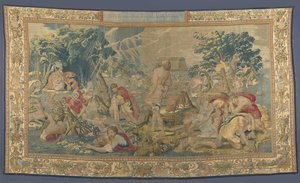
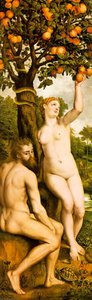
11Hermits (1557) af Michiel CoxieHermits1557 · De Kongelige Skønkunstmuseer i Belgien 12Knights (after The Ghent Altarpiece) (1557) af Michiel CoxieKnights (after The Ghent Altarpiece)1557 · De Kongelige Skønkunstmuseer i Belgien 13God the Father (after The Ghent Altarpiece) (1558) af Michiel CoxieGod the Father (after The Ghent Altarpiece)1558 · Gemäldegalerie 14The Crucifixion (Hosden triptych) (Matthew 27: 45-58) (1571) af Michiel CoxieThe Crucifixion (Hosden triptych) (Matthew 27: 45-58)1571 15Tryptich with Christ, John the Evangelist, Peter and donor portraits and their saints (1566) af Michiel CoxieTryptich with Christ, John the Evangelist, Peter and donor portraits and their saints1566 16St Agnes (1571) af Michiel CoxieSt Agnes1571 · Det Kongelige Museum for Fin Kunst Antwerpen 17Episode from the martyrdom of St George (1571) af Michiel CoxieEpisode from the martyrdom of St George1571 · Det Kongelige Museum for Fin Kunst Antwerpen 18St George (1571) af Michiel CoxieSt George1571 · Det Kongelige Museum for Fin Kunst Antwerpen 19Episode from the martyrdom of St George (1571) af Michiel CoxieEpisode from the martyrdom of St George1571 · Det Kongelige Museum for Fin Kunst Antwerpen 20Martyrdom of Saint Sebastian (1575) af Michiel CoxieMartyrdom of Saint Sebastian1575 · Det Kongelige Museum for Fin Kunst Antwerpen 21The Martydom of St Luke (1570) af Michiel CoxieThe Martydom of St Luke1570 · Nationalgalleriet i Prag 22Annunciation (1580) af Michiel CoxieAnnunciation1580 · Hermitage Museum 23Tapestry The Flood from the series The Story of Noah (1550) af Michiel CoxieTapestry The Flood from the series The Story of Noah1550 · Wawel Royal Castle 24The expulsion from paradise (Genesis 3: 22-24) (1566) af Michiel CoxieThe expulsion from paradise (Genesis 3: 22-24)1566 · Kunsthistorisches Museum 25The Revenge of Tomyris (1620) af Michiel CoxieThe Revenge of Tomyris1620 · Academy of Fine Arts Vienna 26The Birth of the Virgin. The Annunciation. The Adoration of the Shepherds (1530) af Michiel CoxieThe Birth of the Virgin. The Annunciation. The Adoration of the Shepherds1530 · Museo del Prado 27Christina of Denmark (1545) af Michiel CoxieChristina of Denmark1545 · Allen Memorial Art Museum 28Saint Cecilia (1569) af Michiel CoxieSaint Cecilia1569 · Museo del Prado 29The Torture of St George (1580) af Michiel CoxieThe Torture of St George1580 · Sint Rembouts katedral 30The Circumcision of Christ (detail) (1580) af Michiel CoxieThe Circumcision of Christ (detail)1580 · Sint Rembouts katedral 31Transfiguration af Michiel CoxieTransfigurationStaatsgalerie Aschaffenburg 32Landscape with Diana and Actaeon (Ovid, Metamorphoses, III, 193) af Michiel CoxieLandscape with Diana and Actaeon (Ovid, Metamorphoses, III, 193)Det Kongelige Museum for Fin Kunst Antwerpen 33The Story of Saint George af Michiel CoxieThe Story of Saint GeorgeDet Kongelige Museum for Fin Kunst Antwerpen 34Adam and Eve af Michiel CoxieAdam and Eve 35Adam and the God (detail of a tapestry). af Michiel CoxieAdam and the God (detail of a tapestry). 36Killing of Abel af Michiel CoxieKilling of AbelMuseo del Prado 37Saint John the Baptist in a rocky landscape af Michiel CoxieSaint John the Baptist in a rocky landscape 38Family of Mary. af Michiel CoxieFamily of Mary. 39David and Goliath af Michiel CoxieDavid and Goliath 40Cain and Abel af Michiel CoxieCain and Abel 41God's conversation with Noah af Michiel CoxieGod's conversation with Noah 42A Man with a Skull af Michiel CoxieA Man with a SkullNational Gallery 43Original Synd af Michiel CoxieOriginal SyndKunsthistorisches Museum 44The Death of the Virgin (1550) af Michiel CoxieThe Death of the Virgin1550 · Museo del Prado

Michiel Coxies berømte malerier, periode for periode

Motiverne, der fangede Michiel Coxies blik

De fire motiver, der optræder hyppigst i disse originaler, hver med sit fineste eksempel.

De museer, der udstiller Michiel Coxies originalværker

De 8 museer, der rummer flest af malerierne på denne side.

Museum By Værker af Michiel Coxie Malerier fra denne liste
Det Kongelige Museum for Fin Kunst Antwerpen, AntwerpenDet Kongelige Museum for Fin Kunst Antwerpen Antwerpen 7 St Agnes, Episode from the martyrdom of St George, St George
Museo del Prado, MadridMuseo del Prado Madrid 6 Christ bearing the Cross, The Presentation of the Virgin at the Temple. The Visitation. The Adoration of the Magi, The Birth of the Virgin. The Annunciation. The Adoration of the Shepherds
Alte Pinakothek, MünchenAlte Pinakothek München 2 Saint John the Baptist (after The Ghent Altarpiece), Ecce homo
Nationalgalleriet i Prag, PragNationalgalleriet i Prag Prag 2 St John the Evangelist on Patmos, The Martydom of St Luke
De Kongelige Skønkunstmuseer i Belgien, BruxellesDe Kongelige Skønkunstmuseer i Belgien Bruxelles 2 Hermits, Knights (after The Ghent Altarpiece)
Kunsthistorisches Museum, WienKunsthistorisches Museum Wien 2 The expulsion from paradise (Genesis 3: 22-24), Original Synd
Sint Rembouts katedral, MiddelburgSint Rembouts katedral Middelburg 2 The Torture of St George, The Circumcision of Christ (detail)
National Gallery of Canada, OttawaNational Gallery of Canada Ottawa 1 Susanna and the Elders

Michiel Coxie årti for årti: det originale værk, der definerer hvert enkelt

Værker per årti

Vælg et årti for at se det originale værk, der definerer det.

Samleres spørgsmål om Michiel Coxies malerier

Hvilket værk er Michiel Coxie mest kendt for?Vis svaret

Susanna and the Elders (1554), National Gallery of Canada, Ottawa. Derefter følger Saint John the Baptist (after The Ghent Altarpiece) (1557) og Ecce homo (1587).

Hvor gammel var Michiel Coxie, da Susanna and the Elders blev skabt?Vis svaret

55 år gammel: Susanna and the Elders er fra 1554, og Michiel Coxie blev født i 1499.

Hvad er de ti mest berømte Michiel Coxie malerier?Vis svaret

Susanna and the Elders, Saint John the Baptist (after The Ghent Altarpiece), Ecce homo, Christ bearing the Cross, Susanna en de ouderlingen (Daniël 13: 20-22), The Presentation of the Virgin at the Temple. The Visitation. The Adoration of the Magi, St John the Evangelist on Patmos, Plato's Cave, Mary (after The Ghent Altarpiece) og St. Mary Magdalene. Ranglisten ovenfor viser det enkelte værks årstal og museum.

Hvor mange malerier efterlod Michiel Coxie?Vis svaret

Vores katalog indeholder 44 værker af Michiel Coxie, dateret fra 1530 til 1587.

I hvilke museer udstilles Michiel Coxie's mesterværker?Vis svaret

Primært i Det Kongelige Museum for Fin Kunst Antwerpen (Antwerpen), Museo del Prado (Madrid) og Alte Pinakothek (München). Museumslisten ovenfor viser dem alle.

I hvilke år malede Michiel Coxie sine mest berømte værker?Vis svaret

I 1550s: 12 af de 44 værker på denne side blev skabt dengang, herunder Susanna and the Elders.

Hvad er de første og de sidste berømte originaler af Michiel Coxie?Vis svaret

På denne side er det tidligste The Presentation of the Virgin at the Temple. The Visitation. The Adoration of the Magi (1530) og det seneste Ecce homo (1587).

Hvilke motiver valgte Michiel Coxie oftest?Vis svaret

Man (15), Drapery (10) og Woman (9), fordelt på de 44 værker på denne side.

Hvilken teknik brugte Michiel Coxie mest?Vis svaret

Oil On Panel, for 12 af de 44 værker på denne side.

Hvilken kunstretning tilhører Michiel Coxie?Vis svaret

Northern renaissance og Renaissance, baseret på originalerne på denne side.

Hvilke værker af Michiel Coxie udstilles på Det Kongelige Museum for Fin Kunst Antwerpen?Vis svaret

St Agnes, Episode from the martyrdom of St George og St George: Det Kongelige Museum for Fin Kunst Antwerpen, Antwerpen har 7 af værkerne på denne side.

Michiel Coxie: liv og værk

Den flamske Raphael: Livet og eftermælet efter Michiel van Coxcie

Michiel van Coxcie (1499–1592) forbliver en af det 16. århundredes mest fængslende skikkelser, en mester hvis penselstrøg byggede bro mellem Flanderns dybe spirituelle traditioner og den italienske renæssances monumentale storhed. Ofte hyldet af historikere som den flamske Raphael, besad Coxcie en sjælden evne til at syntetisere den anatomiske præcision og klassiske balance fra syd med den følelsesmæssige, teksturerede realisme, der kendetegner hans nordlige rødder. Han blev født i Mechelen, Belgien, og hans liv udfoldede sig i en æra af enorme religiøse og kunstneriske transformationer – en periode, hvor de europæiske kunstgrænser blev tegnet om under indflydelse fra mestre som Michelangelo og Raphael. Hans tidlige uddannelse var dybt forankret i den flamske tradition, hvor han lærte under de vågne øjne af skikkelser som Jan Portaers og den legendarende Pieter Bruegel den Ældre. Fra disse mentorer arvede han en hengivenhed til minutiøse detaljer og en urokkelig tilgang til menneskelige følelser. Alligevel længtes Coxcies kunstneriske sjæl efter noget mere ekspansivt. Hans rejser og studier gjorde det muligt for ham at opsuge de revolutionerende fremskridt fra de italienske mestre, især Michelangelos dramatiske muskuløsitet og Leonardo da Vincis harmoniske kompositioner. Denne unikke fusion tillod ham at skabe værker, der ikke blot var efterligninger af fremmede stilarter, men en sofistikeret evolution af hans egen arv, karakteriseret ved figurer, der besidder både åndeløs fysisk nøjagtighed og en hjemsøgende psykologisk dybde.

En alsidig mester af medie og skala

Omfanget af Coxcies talent var sandelig ekstraordinært, da han bevægede sig ubesværet mellem portrætkunstens delikate intimitet og de monumentale religiøse bestillingsværkers overvældende skala. Hans alsidighed strakte sig langt ud over lærredet; han var lige så dygtig til at designe indviklede tapeter som til at forme skulpturer, der krævede sin plads i rummet. Denne polymatiske tilgang gjorde det muligt for ham at sikre sig mæcenat fra nogle af Europas mest magtfulde skikkelser, herunder Maximilian 1. af Bayern og Filip 2. af Spanien. Sådan højprofileret støtte sikrede, at hans indflydelse gennemtrængte de øverste lag af det europæiske hofliv og gjorde ham til en central figur i tidens visuelle sprog. Hans bedrifter kommer måske bedst til udtryk gennem hans bidrag til de store katedraler i de lave lande. I Sankt Mikael og Sankt Gudula-katedralen i Bruxelles står hans massive altertavler som vedvarende vidnesbyrd om hans tekniske kunnen, hvor han benyttede komplekse kompositioner til at guide beskueren gennem hellige fortællinger. Ydermere betragtes hans arbejde med tapetet i Sankt Rumbolds Katedral – specifikt hans skildring af Adam og Gud – af lærde som et højdepunkt inden for renæssancens tekstilkunst. I disse værker kan man observere den sømløse integration af:
  • Anatomisk mesterskab: En dyb forståelse for den menneskelige form, der tilfører en følelse af vægt og nærvær til enhver figur.
  • Narrativ dybde: Evnen til at væve komplekse teologiske temaer ind i visuelt tilgængelige og følelsesmæssigt resonante scener.
  • Kromatisk brillans: En sofistikeret brug af farver, der forstærker den dramatiske spænding og den spirituelle atmosfære i hans kompositioner.

Historisk betydning og kunstnerisk evolution

Som det 16. århundrede skred frem, gennemgik Coxcies stil en subtil, men betydelig udvikling, der spejlede de skiftende strømninger i den europæiske smag, da renæssancen bevægede sig mod de mere dramatiske og følelsesladede kvaliteter i den tidlige barok. Selvom han aldrig forlod det klassiske fundament, der definerede hans tidlige karriere, begyndte hans senere værker at omfavne en større følelse af bevægelse og teatralitet. Denne tilpasningsevne sikrede, at hans arbejde forblev relevant, selvom det kunstneriske landskab blev stadig mere komplekst og turbulent på grund af de religiøse omvæltninger under reformationen og modreformationen. Den historiske betydning af Michiel van Coxcie ligger i hans rolle som kulturel formidler. Han bragte ikke blot italienske idéer til Flandern; han oversatte dem til et lokalt sprog, der resonerede med sit folks spirituelle følsomhed. Ved at forene den intellektuelle stringens fra syd med den sjælfulde realisme fra nord, var han med til at smede en unik æstetisk identitet for flamsk kunst. I dag lever hans eftermæle videre i den tavse majestæt af hans overlevende malerier og tapeter, som fortsat inviterer beskueren ind i en verden, hvor det guddommelige og det menneskelige er uadskilleligt forbundet gennem mesterlig kunstnerisk kraft.