Portræt af John Watson Gordon

De 100 mest berømte John Watson Gordon-malerier, en galleriselektion

Opdateret november 2026 · rangeret efter vores popularitetsscore (søgninger, besøg og ordrer for hvert værk) · 202 værker af John Watson Gordon i vores katalog

Kort sagt

Af alle de originale værker, som John Watson Gordon efterlod, er det mest berømte Sir Walter Scott, 1771 - 1832. Novelist and poet (1830), som er en del af samlingen på Scottish National Portrait Gallery i Edinburgh. Lige efter følger Mr Kippen (1810) og Roderick Gray (1788 - 1858) (1854). Vores katalog indeholder 202 værker af John Watson Gordon; galleriet har bevaret de 100 værker, som verden beundrer mest, hver vist med sin dato, sit museum og sin historie.

1788 – 1864, Edinburgh Flest værker: Scottish National Portrait Gallery

John Watson Gordons top 10 malerier: galleriets udvalg

1
Sir Walter Scott, 1771 - 1832. Novelist and poet (1830) af John Watson Gordon

Sir Walter Scott, 1771 - 1832. Novelist and poet

1830 · Oil On Canvas · Scottish National Portrait Gallery, Edinburgh

The oil on canvas work titled Sir Walter Scott, 1771 - 1832. Novelist and poet was executed by the artist John Watson Gordon in 1830. This portrait depicts the subject, Sir Walter Scott, who was a novelist and poet. The painting was commissioned by Robert Cadell for the 'Magnum Opus' edition of the Waverley Novels, which was produced between 1829 and 1833.

2
Mr Kippen (1810) af John Watson Gordon

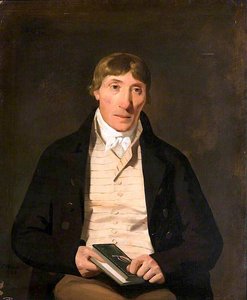
Mr Kippen

1810 · Oil On Canvas · Scottish National Gallery, Edinburgh

To stand before Mr Kippen is to step directly into the refined drawing rooms of early nineteenth-century Britain. Painted in 1810 by Sir John Watson Gordon, this portrait transcends a mere likeness; it is a carefully constructed document of status, intellect, and quiet assurance. The gentleman depicted sits with an air of composed gravity, his presence commanding yet utterly natural. Gordon masterfully captures the essence of the era’s gentry—a class…

3
Roderick Gray (1788 - 1858) (1854) af John Watson Gordon

Roderick Gray (1788 - 1858)

1854 · Oil On Canvas · Scottish National Gallery, Edinburgh

A formal mid-19th-century oil portrait, this work presents an elderly man in a three-quarter length composition. The subject is positioned slightly off-center, lending a sense of physical weight to his presence. Dark browns, blacks, and deep umbers dominate the palette, creating a monochromatic environment that allows the warm flesh tones of the face and hands to emerge from the shadows. Directional lighting from the upper left casts much of the…

4
The Prince of Wales (King Edward VII) (1860) af John Watson Gordon

The Prince of Wales (King Edward VII)

1860 · Oil On Canvas · Smithsonian American Art Museum, Washington, D.C.

A young man sits in the quiet gravity of 1860. He is draped in a military tunic of saturated red, a color that pulls the eye away from the surrounding gloom. A blue sash cuts a sharp, diagonal path across his chest, slicing through the warmth of the fabric. Light falls heavily upon his face and the gold embroidery of his collar, leaving the edges of his figure to dissolve…

5
Anne Sherriff (1866–1781) (later Mrs Charles Young) (1835) af John Watson Gordon

Anne Sherriff (1866–1781) (later Mrs Charles Young)

1835 · Oil

The portrait depicts a woman seated in a controlled environment. She wears a dark, black dress that absorbs much of the light, contrasted by a white hat positioned upon her head. In her hands, she holds a single piece of paper, her fingers positioned to grip its edges. The background is composed of heavy red curtains that hang in vertical folds, providing a deep color field behind the subject. The…

6
An English gentleman (1850) af John Watson Gordon

An English gentleman

1850 · Oil On Canvas · Museo del Prado, Madrid

In "An English gentleman" by John Watson Gordon, the viewer meets a figure captured in a three-quarter length portrait. The subject sits slightly off-center, his body angled in a way that suggests a moment of quiet pause. He gazes toward the right of the frame, his eyes directed away from the viewer toward an unseen point in the distance. This eye-level perspective creates an intimate connection, as if one is…

7
William Ramsay; (1806-1865) (1800) af John Watson Gordon

William Ramsay; (1806-1865)

1800 · Oil On Canvas · The Hunterian Museum and Art Gallery, Glasgow

The portrait captures a moment of intellectual repose. There is a sense of the man's inner life held within the tension of his gaze and the stillness of his posture. The shadows do not hide him; they define the contours of his character. He exists in a space of quiet contemplation, where the weight of the book and the darkness of the room suggest a life dedicated to the mind.…

8
Mrs Campbell (1819) af John Watson Gordon

Mrs Campbell

1819 · Oil On Canvas · City Art Centre, Edinburgh

The oil on canvas painting titled Mrs Campbell was executed by the artist John Watson Gordon. This portrait, which dates to 1819, depicts a seated woman presented in a formal manner. The subject is shown from the upper body and shoulders, positioned against a dark, indistinct drapery that provides a subtle contrast to her attire.

9
Sir William Molesworth, 8th Bt (1854) af John Watson Gordon

Sir William Molesworth, 8th Bt

1854 · Oil On Canvas · National Portrait Gallery, London

In the quiet, commanding presence of Sir William Molesworth, 8th Bt, we encounter more than just a likeness; we enter the structured, dignified world of the mid-19th century. Painted in 1854 by the esteemed Scottish master Sir John Watson Gordon, this portrait serves as a profound window into an era defined by social hierarchy and the meticulous cultivation of character. The subject sits with a poised, centered gravity, his form…

10
Fox Maule (1801–1874), 11th Earl of Dalhousie, 2nd Baron Panmure, Parliamentarian (1821) af John Watson Gordon

Fox Maule (1801–1874), 11th Earl of Dalhousie, 2nd Baron Panmure, Parliamentarian

1821 · Oil On Canvas · Scottish National Portrait Gallery, Edinburgh

The portrait presents a man of significant social standing, captured in a moment of formal composure. He is rendered in a traditional oil style, his figure centered against a dark, indistinct background that directs all attention to the subject's face and upper body. The lighting is directional, descending from the upper left to define the contours of his features and the heavy folds of his attire. His expression is one…

John Watson Gordon-udvalget fortsætter, fra 11 til 100

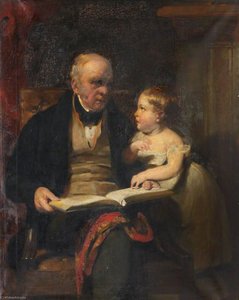
11Sir Walter Scott, 1771 - 1832. Novelist and poet (1830) af John Watson GordonSir Walter Scott, 1771 - 1832. Novelist and poet1830 · Scottish National Portrait Gallery 12Elizabeth Galloway (or Grieve), of Sandyhills (1829) af John Watson GordonElizabeth Galloway (or Grieve), of Sandyhills1829 13John Wilson (1829) af John Watson GordonJohn Wilson1829 · National Portrait Gallery 14Henry Stephens, Agricultural Writer (1835) af John Watson GordonHenry Stephens, Agricultural Writer1835 15Admiral Sir Peter Halkett of Pitferrane (1765–1839) (1837) af John Watson GordonAdmiral Sir Peter Halkett of Pitferrane (1765–1839)1837 16Samuel Smith (1805–1873), Mayor of Bradford (1851–1854) (1854) af John Watson GordonSamuel Smith (1805–1873), Mayor of Bradford (1851–1854)1854 17Sir William Fergusson (1808–1877), Surgeon (1850) af John Watson GordonSir William Fergusson (1808–1877), Surgeon1850 · Scottish National Portrait Gallery 18David Macbeth Moir (1798–1851), Physician and Author (1850) af John Watson GordonDavid Macbeth Moir (1798–1851), Physician and Author1850 · Scottish National Portrait Gallery 19Thomas Babington (1800–1859), 1st Baron Macaulay, Historian and Statesman (1850) af John Watson GordonThomas Babington (1800–1859), 1st Baron Macaulay, Historian and Statesman1850 · Scottish National Portrait Gallery 20Roderick Gray (1788–1858) (1853) af John Watson GordonRoderick Gray (1788–1858)1853 · The Merchant's Hall 21John Cruickshank, LLD (1861) af John Watson GordonJohn Cruickshank, LLD1861 · University of Aberdeen 22James Frederick Ferrier (1863) af John Watson GordonJames Frederick Ferrier1863 · University of St Andrews 23Mrs George Baird of Strichen (1862) af John Watson GordonMrs George Baird of Strichen1862 24James David Forbes, FRSE (1861) af John Watson GordonJames David Forbes, FRSE1861 · The Royal Society of Edinburgh 25Henry Philpott, Master (1859) af John Watson GordonHenry Philpott, Master1859 · University of Cambridge Museums 26Sir William Brown (1784–1864) (1857) af John Watson GordonSir William Brown (1784–1864)1857 · Walker Art Gallery 27Henry Stephens (1795–1874), Agricultural Writer (1860) af John Watson GordonHenry Stephens (1795–1874), Agricultural Writer1860 · Scottish National Portrait Gallery 28Hon. James Wilson (1858) af John Watson GordonHon. James Wilson1858 · National Portrait Gallery 29The Honourable Mrs Alexander Macalister (1843) af John Watson GordonThe Honourable Mrs Alexander Macalister1843 30Thomas de Quincey, 1785 - 1859. Author and essayist (1846) af John Watson GordonThomas de Quincey, 1785 - 1859. Author and essayist1846 · Scottish National Portrait Gallery 31Henry Pelham Fiennes Pelham Clinton (1811–1864), 5th Duke of Newcastle under Lyne (1855) af John Watson GordonHenry Pelham Fiennes Pelham Clinton (1811–1864), 5th Duke of Newcastle under Lyne1855 · The University of Nottingham 32John Inglis (1854) af John Watson GordonJohn Inglis1854 · University of Edinburgh Fine Art Collection 33Sir William Allan (1782–1850) (1844) af John Watson GordonSir William Allan (1782–1850)1844 34John Conolly, M.D. (1794-1866) af John Watson GordonJohn Conolly, M.D. (1794-1866)Auckland Art Gallery Toi o Tāmaki 35William Wood (1783–1858), FRCSEd (1805), PRCSEd (1822–1824), (1828–1830) af John Watson GordonWilliam Wood (1783–1858), FRCSEd (1805), PRCSEd (1822–1824), (1828–1830)The Royal College of Surgeons of Edinburgh 36Dr James Hamilton af John Watson GordonDr James HamiltonNhs Lothian 37The Flood Gate (1901) af John Watson GordonThe Flood Gate1901 · National Gallery of Canada 38Portrait of John Sanderson (1814) af John Watson GordonPortrait of John Sanderson1814 · National Gallery of Canada 39Mr Kippen (1810) af John Watson GordonMr Kippen1810 · Scottish National Gallery 40John Hunter af John Watson GordonJohn HunterUniversity of St Andrews 41The Laird of Cockpen and Mistress Jean af John Watson GordonThe Laird of Cockpen and Mistress JeanMcmanus: Dundee's Art Galleries And Museums 42Reverend William Bagshaw (1763–1847), of Ford Hall (1815) af John Watson GordonReverend William Bagshaw (1763–1847), of Ford Hall1815 · Buxton Museum - Art Gallery 43Carolina Oliphant (1766–1845), Lady Nairne, Songwriter (1818) af John Watson GordonCarolina Oliphant (1766–1845), Lady Nairne, Songwriter1818 · Scottish National Portrait Gallery 44A Grandfather's Lesson (1831) af John Watson GordonA Grandfather's Lesson1831 45James Hogg, Poet The Ettrick Shepherd (1830) af John Watson GordonJames Hogg, Poet The Ettrick Shepherd1830 46Henry Scott, 3rd Duke of Buccleuch and 5th Duke of Queensberry, FRSE (1830) af John Watson GordonHenry Scott, 3rd Duke of Buccleuch and 5th Duke of Queensberry, FRSE1830 · The Royal Society of Edinburgh 47John Hope, 4th Earl of Hopetoun (1824) af John Watson GordonJohn Hope, 4th Earl of Hopetoun1824 48Alexander Dunlop of Keppoch (1766–1840) (1825) af John Watson GordonAlexander Dunlop of Keppoch (1766–1840)1825 49Thomas Allan (1777–1833) (1824) af John Watson GordonThomas Allan (1777–1833)1824 50Professor John Wilson (1785–1854), Author and Moral Philosopher (Nom de Plume Christopher North) (1829) af John Watson GordonProfessor John Wilson (1785–1854), Author and Moral Philosopher (Nom de Plume Christopher North)1829 · Scottish National Portrait Gallery 51Sir Walter Scott (1771–1832), Novelist and Poet (1830) af John Watson GordonSir Walter Scott (1771–1832), Novelist and Poet1830 · Scottish National Portrait Gallery 52A Grandfather's Lesson (1831) af John Watson GordonA Grandfather's Lesson1831 · Royal Scottish Academy of Art - Architecture 53Return from a Foray (1827) af John Watson GordonReturn from a Foray1827 · Scottish National Gallery 54Peter Spalding (c.1758–1826) (1826) af John Watson GordonPeter Spalding (c.1758–1826)1826 · Scottish National Gallery 55John Hope (1765–1823), 4th Earl of Hopetoun (1824) af John Watson GordonJohn Hope (1765–1823), 4th Earl of Hopetoun1824 · Abbotsford House 56Henry Scott (1746–1812), 3rd Duke of Buccleuch and 5th Duke of Queensberry, FRSE (after Thomas Frank Heaphy) (1830) af John Watson GordonHenry Scott (1746–1812), 3rd Duke of Buccleuch and 5th Duke of Queensberry, FRSE (after Thomas Frank Heaphy)1830 · The Royal Society of Edinburgh 57Sir Daniel Keyte Sandford (1798–1838), Professor of Greek at the University of Glasgow (1821–1838) (1837) af John Watson GordonSir Daniel Keyte Sandford (1798–1838), Professor of Greek at the University of Glasgow (1821–1838)1837 · The Hunterian Museum and Art Gallery 58Major General Sir Patrick Lindsay, Soldier (1835) af John Watson GordonMajor General Sir Patrick Lindsay, Soldier1835 59Mrs Keith of Usan House, Montrose (1834) af John Watson GordonMrs Keith of Usan House, Montrose1834 60David Cox (1783–1859), Landscape Painter (1835) af John Watson GordonDavid Cox (1783–1859), Landscape Painter1835 · Scottish National Portrait Gallery 61The Honourable Sir Alexander Hope (1835) af John Watson GordonThe Honourable Sir Alexander Hope1835 · West Lothian Council 62Reverend Thomas Chalmers (1780–1847), Preacher and Social Reformer (1838) af John Watson GordonReverend Thomas Chalmers (1780–1847), Preacher and Social Reformer1838 · Scottish National Portrait Gallery 63Anne Grant of Laggan (1755–1838) (1837) af John Watson GordonAnne Grant of Laggan (1755–1838)1837 64Sir Arthur Farquhar (1772–1843), Rear Admiral (1837) af John Watson GordonSir Arthur Farquhar (1772–1843), Rear Admiral1837 · Scottish National Portrait Gallery 65Major General Sir Patrick Lindsay (1778–1839), Soldier (1835) af John Watson GordonMajor General Sir Patrick Lindsay (1778–1839), Soldier1835 · Scottish National Portrait Gallery 66Robert Haldane (1772–1854) (1841) af John Watson GordonRobert Haldane (1772–1854)1841 67Sir Hugh Lyon Playfair (1847) af John Watson GordonSir Hugh Lyon Playfair1847 68Reverend Alexander Brunton (1772–1854) (1846) af John Watson GordonReverend Alexander Brunton (1772–1854)1846 69George Thomson (1759–1851) (1842) af John Watson GordonGeorge Thomson (1759–1851)1842 70Adam Black (1784–1874), Lord Provost of Edinburgh (1843–1848) (1847) af John Watson GordonAdam Black (1784–1874), Lord Provost of Edinburgh (1843–1848)1847 71The Honourable Mrs Alexander Macalister (1843) af John Watson GordonThe Honourable Mrs Alexander Macalister1843 72Patrick Fraser Tytler (1791–1849), Historian (1840) af John Watson GordonPatrick Fraser Tytler (1791–1849), Historian1840 · Scottish National Portrait Gallery 73Reverend William Cunningham (1805–1861), Theologian (1844) af John Watson GordonReverend William Cunningham (1805–1861), Theologian1844 · Scottish National Portrait Gallery 74Portrait of a Lady (1840) af John Watson GordonPortrait of a Lady1840 · Scottish National Gallery 75Sir Thomas Makdougall Brisbane (1773–1860), Bt, FRSE (1848) af John Watson GordonSir Thomas Makdougall Brisbane (1773–1860), Bt, FRSE1848 · The Royal Society of Edinburgh 76Thomas de Quincey (1785–1859), Author and Essayist (1846) af John Watson GordonThomas de Quincey (1785–1859), Author and Essayist1846 · Scottish National Portrait Gallery 77Thomas de Quincey (1845) af John Watson GordonThomas de Quincey1845 · National Portrait Gallery 78James Andrew Broun Ramsay, 1st Marquess of Dalhousie (1847) af John Watson GordonJames Andrew Broun Ramsay, 1st Marquess of Dalhousie1847 · National Portrait Gallery 79Very Reverend Edward Bannerman Ramsay (1793–1872), Dean of Edinburgh (1841) af John Watson GordonVery Reverend Edward Bannerman Ramsay (1793–1872), Dean of Edinburgh1841 · Scottish National Portrait Gallery 80David Cox (1783–1859) (1855) af John Watson GordonDavid Cox (1783–1859)1855 · Birmingham Museum and Art Gallery 81John Inglis (1810–1891) (1854) af John Watson GordonJohn Inglis (1810–1891)1854 82Thomas Babington (1800–1859), Lord Macaulay (1849) af John Watson GordonThomas Babington (1800–1859), Lord Macaulay1849 · The Hunterian Museum and Art Gallery 83George (1784–1860), 4th Earl of Aberdeen (1851) af John Watson GordonGeorge (1784–1860), 4th Earl of Aberdeen1851 84William Foreman Home (1851) af John Watson GordonWilliam Foreman Home1851 85Andrew Rutherfurd (1791–1854), Lord Rutherfurd, Judge (1851) af John Watson GordonAndrew Rutherfurd (1791–1854), Lord Rutherfurd, Judge1851 · Scottish National Portrait Gallery 86John Smith, Master of Trinity House (1850) af John Watson GordonJohn Smith, Master of Trinity House1850 · Historic Scotland 87Sir William Gibson Craig (1797–1878), Lord Clerk Register (1852) af John Watson GordonSir William Gibson Craig (1797–1878), Lord Clerk Register1852 · Scottish National Portrait Gallery 88Charlotte Elizabeth, Wife of Sir John Forbes, 7th Bt of Craigievar, Daughter of the 18th Lord Forbes (1850) af John Watson GordonCharlotte Elizabeth, Wife of Sir John Forbes, 7th Bt of Craigievar, Daughter of the 18th Lord Forbes1850 · The National Trust For Scotland 89David Boyle (1772–1853), Lord Boyle, Lord President of the Court of Session (1852) af John Watson GordonDavid Boyle (1772–1853), Lord Boyle, Lord President of the Court of Session1852 · Scottish National Portrait Gallery 90Professor John Wilson (1785–1854), Author and Moral Philosopher (Nom de Plume Christopher North) (1852) af John Watson GordonProfessor John Wilson (1785–1854), Author and Moral Philosopher (Nom de Plume Christopher North)1852 · Scottish National Portrait Gallery 91Auld Lang Syne (1851) af John Watson GordonAuld Lang Syne1851 92Mrs George Baird of Strichen (1862) af John Watson GordonMrs George Baird of Strichen1862 93James Abercromby, 1st Baron Dunfermline, Speaker of the House of Commons (1859) af John Watson GordonJames Abercromby, 1st Baron Dunfermline, Speaker of the House of Commons1859 94Albert Edward (1841–1910), Prince of Wales (later Edward VII) (1861) af John Watson GordonAlbert Edward (1841–1910), Prince of Wales (later Edward VII)1861 · Examination Schools 95Hon. James Wilson (1858) af John Watson GordonHon. James Wilson1858 96James Andrew Ramsay (1812–1860), 10th Earl and 1st Marquess of Dalhousie, Governor General of India (1859) af John Watson GordonJames Andrew Ramsay (1812–1860), 10th Earl and 1st Marquess of Dalhousie, Governor General of India1859 · Scottish National Portrait Gallery 97HRH Edward, Prince of Wales (1859) af John Watson GordonHRH Edward, Prince of Wales1859 · University of Edinburgh Fine Art Collection 98Sir John Archibald Murray (1779–1859), Lord Murray, Judge (1856) af John Watson GordonSir John Archibald Murray (1779–1859), Lord Murray, Judge1856 · Scottish National Portrait Gallery 99James David Forbes (1809–1868), FRSE (1861) af John Watson GordonJames David Forbes (1809–1868), FRSE1861 · The Royal Society of Edinburgh 100The Right Honourable Sir William Gibson Craig (1797–1878), 2nd Bt of Riccarton (1863) af John Watson GordonThe Right Honourable Sir William Gibson Craig (1797–1878), 2nd Bt of Riccarton1863 · Heriot-watt University

John Watson Gordons berømte malerier, periode for periode

Motiverne, der fangede John Watson Gordons blik

De fire motiver, der optræder hyppigst i disse originaler, hver med sit fineste eksempel.

De museer, der udstiller John Watson Gordons originalværker

De 8 museer, der rummer flest af malerierne på denne side.

Museum By Værker af John Watson Gordon Malerier fra denne liste
Scottish National Portrait Gallery, EdinburghScottish National Portrait Gallery Edinburgh 31 Sir Walter Scott, 1771 - 1832. Novelist and poet, Fox Maule (1801–1874), 11th Earl of Dalhousie, 2nd Baron Panmure, Parliamentarian, Sir Walter Scott, 1771 - 1832. Novelist and poet
Scottish National Gallery, EdinburghScottish National Gallery Edinburgh 6 Mr Kippen, Roderick Gray (1788 - 1858), Mr Kippen
National Portrait Gallery, LondonNational Portrait Gallery London 6 Sir William Molesworth, 8th Bt, John Wilson, Hon. James Wilson
The Royal Society of Edinburgh, EdinburghThe Royal Society of Edinburgh Edinburgh 6 James David Forbes, FRSE, Henry Scott, 3rd Duke of Buccleuch and 5th Duke of Queensberry, FRSE, Henry Scott (1746–1812), 3rd Duke of Buccleuch and 5th Duke of Queensberry, FRSE (after Thomas Frank Heaphy)
The Hunterian Museum and Art Gallery, GlasgowThe Hunterian Museum and Art Gallery Glasgow 3 William Ramsay; (1806-1865), Sir Daniel Keyte Sandford (1798–1838), Professor of Greek at the University of Glasgow (1821–1838), Thomas Babington (1800–1859), Lord Macaulay
University of Edinburgh Fine Art Collection, EdinburghUniversity of Edinburgh Fine Art Collection Edinburgh 4 John Inglis, HRH Edward, Prince of Wales
University of St Andrews, St AndrewsUniversity of St Andrews St Andrews 3 James Frederick Ferrier, John Hunter
National Gallery of Canada, OttawaNational Gallery of Canada Ottawa 2 The Flood Gate, Portrait of John Sanderson

John Watson Gordon årti for årti: det originale værk, der definerer hvert enkelt

Værker per årti

Vælg et årti for at se det originale værk, der definerer det.

Samleres spørgsmål om John Watson Gordons malerier

Hvilket værk er John Watson Gordon mest kendt for?Vis svaret

Sir Walter Scott, 1771 - 1832. Novelist and poet (1830), Scottish National Portrait Gallery, Edinburgh. Derefter følger Mr Kippen (1810) og Roderick Gray (1788 - 1858) (1854).

Hvor gammel var John Watson Gordon, da Sir Walter Scott, 1771 - 1832. Novelist and poet blev skabt?Vis svaret

42 år gammel: Sir Walter Scott, 1771 - 1832. Novelist and poet er fra 1830, og John Watson Gordon blev født i 1788.

Hvad er de ti mest berømte John Watson Gordon malerier?Vis svaret

Sir Walter Scott, 1771 - 1832. Novelist and poet, Mr Kippen, Roderick Gray (1788 - 1858), The Prince of Wales (King Edward VII), Anne Sherriff (1866–1781) (later Mrs Charles Young), An English gentleman, William Ramsay; (1806-1865), Mrs Campbell, Sir William Molesworth, 8th Bt og Fox Maule (1801–1874), 11th Earl of Dalhousie, 2nd Baron Panmure, Parliamentarian. Ranglisten ovenfor viser det enkelte værks årstal og museum.

Hvor mange malerier efterlod John Watson Gordon?Vis svaret

Vores katalog indeholder 202 værker af John Watson Gordon, dateret fra 1800 til 1863.

I hvilke museer udstilles John Watson Gordon's mesterværker?Vis svaret

Primært i Scottish National Portrait Gallery (Edinburgh), Scottish National Gallery (Edinburgh) og National Portrait Gallery (London). Museumslisten ovenfor viser dem alle.

I hvilke år malede John Watson Gordon sine mest berømte værker?Vis svaret

I 1850s: 29 af de 100 værker på denne side blev skabt dengang, herunder Roderick Gray (1788 - 1858).

Hvad er de første og de sidste berømte originaler af John Watson Gordon?Vis svaret

På denne side er det tidligste William Ramsay; (1806-1865) (1800) og det seneste James Frederick Ferrier (1863).

Hvilke motiver valgte John Watson Gordon oftest?Vis svaret

Man (20), Portrait (14) og 19th century (9), fordelt på de 100 værker på denne side.

Hvilken teknik brugte John Watson Gordon mest?Vis svaret

Oil On Canvas, for 35 af de 100 værker på denne side.

Hvilke værker af John Watson Gordon udstilles på Scottish National Portrait Gallery?Vis svaret

Sir Walter Scott, 1771 - 1832. Novelist and poet, Fox Maule (1801–1874), 11th Earl of Dalhousie, 2nd Baron Panmure, Parliamentarian og Sir Walter Scott, 1771 - 1832. Novelist and poet: Scottish National Portrait Gallery, Edinburgh har 25 af værkerne på denne side.

John Watson Gordon: liv og værk

Sir John Watson Gordon: En skotsk mester af lys og portrætkunst

Sir John Watson Gordon (1788 – 1864) står som en skelsættende skikkelse i overgangen fra nyklassicistisk portrætkunst til den atmosfæriske tonalisme, der kom til at definere store dele af det 19. århundredes britiske kunst. Han blev født ind i en familie dybt forankret i kunstneriske traditioner – hans far, kaptajn James Watson, var en dygtig tegner, og hans onkel, George Watson, var en respekteret portrætmaler. Gordons vej mod at blive en berømt kunstner var ikke forudbestemt, men blev snarere kultiveret gennem et bevidst valg om at omfavne maleriets spirende verden. Selvom han oprindeligt var trænet til en militær karriere, indså han til sidst sit sande kald: at indfange den menneskelige karakters essens og det skotske landskabs subtile skønhed gennem sin kunst.

Gordons tidlige kunstneriske udvikling blev dybt præget af hans læretid under John Graham ved Trustees' Academy i Edinburgh. Denne formative periode indpodede ham en grundlæggende forståelse for teknik, men vigtigst af alt eksponerede den ham også for den voksende offentlige interesse for kunstudstillinger – et relativt nyt fænomen på det tidspunkt. Hans første betydningsfulde udstilling i 1808, der viste en scene fra Sir Walter Scotts episke digt ‘The Lay of the Last Minstrel’, markerede hans ankomst til Edinburghs kunstscene og demonstrerede et tidligt talent for at indfange fortælling og følelse gennem visuelle virkemidler. Efter denne succes fortsatte han med at eksperimentere med historiske og religiøse motiver, hvor han forfinede sine færdigheder og udviklede en særpræget stil karakteriseret ved en bemærkelsesværdig finfølelse og frihed i penselstrøgene.

Stilens evolution: Fra nyklassicisme til tonalisme

Et definerende træk ved Gordons kunstneriske rejse var det gradvise skift fra den nyklassicistiske portrætkunsts formelle begræltninger til tonalismens mere ekspressive og atmosfæriske kvaliteter. I begyndelsen fulgte hans portrætter de etablerede konventioner – skarpe linjer, omhyggeligt gengivne detaljer og et fokus på at indfange ligheden med metodisk præcision. Men i takt med at han modnedes som kunstner, begyndte han at prioritere stemning og atmosfære over streng realisme. Denne transformation er særligt tydelig i hans senere værker, hvor hudtonerne blødes op, baggrundene bliver mere dæmpede, og den samlede effekt er præget af stille kontemplation og følelsesmæssig resonans.

Denne stilistiske udvikling var ikke blot et spørgsmål om teknik; den afspejlede en dybere engagement i det skiftende kunstneriske landskab. Inspireret af kunstnere som John Constable og J.M.W. Turner søgte Gordon ikke blot at indfange sine subjekters ydre fremtræden, men også deres indre liv – deres karakter, temperament og forhold til verden omkring dem. Hans portrætter af Sir Walter Scott er for eksempel gennemsyret af en følelse af digterens intellektuelle dybde og romantiske ånd, mens hans skildringer af skikkelser som professor John Wilson og Dr. Chalmers formidler et lignende niveau af psykologisk indsigt.

Ikoniske modeller og en varig arv

Gordons atelier blev en magnet for Skotlands førende personligheder – et vidnesbyrd om hans ry som dygtig portrætmaler og en gæstfri vært. Blandt de mest bemærkelsesværdige modeller var Sir Walter Scott, hvis tidlige portrætter lagde fundamentet for Gordons særprægede stil; JG Lockhart, professor Wilson, Sir Archibald Alison, Dr. Chalmers, De Quincey og Sir David Brewster. Hans evne til at indfange essensen af disse individer – deres intellekt, deres karakter og deres plads i det skotske samfund – cementerede hans position som en af sin tids mest eftertragtede portrætmalere.

Portrætterne malet i perioden fra 1835 til 1864 repræsenterer kulminationen på Gordons kunstneriske udvikling. Disse værker er kendetegnet ved en bemærkelsesværdig subtilitet i farven, en mesterlig håndtering af lys og skygge samt en uovertruffen følsomhed over for de psykologiske nuancer hos hans motiver. Hans senere stil, præget af enkelhed og nøgternhed, er særligt bemærkelsesværdig – hudtonerne bliver næsten perlemorsagtige, baggrundene svinder ind i gråtoner, og fokus flyttes fuldstændigt til ansigtet, hvilket afslører subjektets indre verden med en utrolig klarhed. Portrætterne af Sir John G. Shaw-Lefevre og Roderick Gray, provst i Peterhead, er fremragende eksempler på denne sene stil, som sikrede ham en førsteklasses medalje ved Paris Salon i 1855.

En skotsk stemme i Royal Academy

Gordons kunstneriske bedrifter blev anerkendt af Royal Academy, som valgte ham til associeret medlem i 1841 og senere til fuldt akademiker i 1851. Hans udnævnelse til stillingen som H.M. Limner for Skotland i 1850 hævede yderligere hans status i kunstverdenen og cementerede hans rolle som nationens officielle portrætmaler. Hans arv rækker ud over de enkelte portrætter; han spillede en væsentlig rolle i at fremme den kunstneriske udvikling i Skotland og bidrage til etableringen af Royal Scottish Academy. Sir John Watson Gordon døde i Edinburgh i 1864 og efterlod sig en bemærkelsesværdig produktion, der fortsat fanger beskueren med sin skønhed, følsomhed og dybe forståelse for den menneskelige ånd.