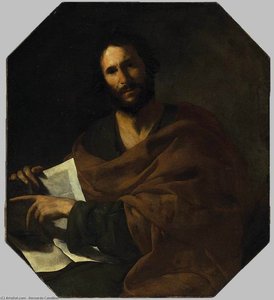
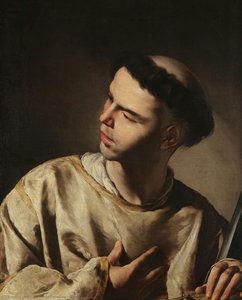
Portræt af Bernardo Cavallino

De 37 mest berømte Bernardo Cavallino-malerier, en galleriselektion

Opdateret november 2026 · rangeret efter vores popularitetsscore (søgninger, besøg og ordrer for hvert værk) · 37 værker af Bernardo Cavallino i vores katalog

Kort sagt

Af alle de originale værker, som Bernardo Cavallino efterlod, er det mest berømte The Drunkenness of Noah (1640), som er en del af samlingen på Thyssen-Bornemisza Museum i Madrid. Lige efter følger David Playing Harp to Saul (1640) og Saint John the Evangelist (1650). Vores katalog indeholder 37 værker af Bernardo Cavallino; galleriet har bevaret de 37 værker, som verden beundrer mest, hver vist med sin dato, sit museum og sin historie.

1616 – 1656, Naples Baroque Flest værker: Thyssen-Bornemisza Museum

Bernardo Cavallinos top 10 malerier: galleriets udvalg

1
The Drunkenness of Noah (1640) af Bernardo Cavallino

The Drunkenness of Noah

1640 · Oil · Thyssen-Bornemisza Museum, Madrid

The scene unfolds within a tight, oval frame, pulling the eye toward a heavy, earth-toned center. An elderly man lies prone, his body surrendered to an unconscious weight. He is Noah, draped in coarse, heavy fabrics that pool around him like cooling lava. Above his reclining form, three figures lean into the intimacy of his vulnerability. One figure holds a cascade of deep red drapery, a sudden splash of color…

2
David Playing Harp to Saul (1640) af Bernardo Cavallino

David Playing Harp to Saul

1640 · Oil On Canvas · Museum Boijmans Van Beuningen, Rotterdam

The air in the chamber feels heavy, thick with the shadows of a restless soul. On the left, a young David stands with a quiet, focused grace, his fingers dancing across the strings of a large harp. He is draped in a white and blue robe that catches the light, creating a luminous contrast against the murky, indistinct background. Opposite him, King Saul sits, his body leaning forward in a…

3
Saint John the Evangelist (1650) af Bernardo Cavallino

Saint John the Evangelist

1650 · Oil · Museu Nacional d'Art de Catalunya, Barcelona

In this 1650 oil painting, we find Saint John the Evangelist caught in a private moment of intense prayer. The composition is intimate, enclosed within an octagonal frame that draws the viewer into his immediate, sacred space. He is positioned slightly off-center, his gaze directed upward toward an unseen source of light that illuminates his face and neck. This upward movement creates a powerful diagonal line, guiding the eye through…

4
Saint Catherine of Alexandria (1644) af Bernardo Cavallino

Saint Catherine of Alexandria

1644 · Oil · Museum Boijmans Van Beuningen, Rotterdam

In this 1644 portrait, we find ourselves in a private, shadowed space with Saint Catherine of Alexandria. She is captured in a moment of profound intellectual and spiritual focus, her gaze directed toward her task rather than the viewer. The composition is intimate, a bust-length study that brings her close to our own space. A soft, directional light enters from the upper left, carving her features out of a deep,…

5
Saint Ursula (1650) af Bernardo Cavallino

Saint Ursula

1650 · Oil On Canvas · Smithsonian American Art Museum, Washington, D.C.

In this 1650 oil on canvas, we encounter a moment of profound spiritual transition. The figure of Saint Ursula is positioned with a subtle off-center grace, her gaze directed upward toward an unseen source of light. This upward longing defines the composition, drawing the eye from the heavy, lustrous folds of her golden and bronze drapery toward the pale clarity of her face. A deep blue bodice provides a cool…

6
The Vision of St. Dominic (1642) af Bernardo Cavallino

The Vision of St. Dominic

1642 · Oil On Canvas · National Gallery of Canada, Ottawa

The air feels heavy with the scent of incense and the weight of divine presence. Within an oval vignette that breaks through the surface of the canvas, a celestial vision unfolds. High above the earthly realm, the Virgin Mary sits upon a soft bank of clouds, her voluminous blue drapery flowing with a life of its own. She cradles the Christ Child, their luminous skin glowing against the deep, dark…

7
Judith with the Head of Holofernes (1650) af Bernardo Cavallino

Judith with the Head of Holofernes

1650 · Oil · Nationalmuseum, Stockholm

A single light source strikes the scene from the upper left, carving Judith out of a heavy, dark void. She leans over the task she has completed, her gaze fixed upon the viewer with a look that balances resolve against a quiet melancholy. Her bodice is a saturated golden yellow, catching the light with a satin sheen that contrasts against the deep lapis blue of her skirt. Below her, the…

9
Joseph’s dream (1645) af Bernardo Cavallino

Joseph’s dream

1645 · Oil On Canvas · Nationalmuseet i Warszawa, Warszawa

A dramatic Baroque scene unfolds in deep shadow, centered on a man lost in heavy slumber. To the left, an angelic figure with expansive white wings and flowing blue drapery leans into the darkness, hands outstretched to deliver a divine message. The composition is split between this celestial intervention and a quiet domestic scene on the right. There, a woman in a red tunic and blue skirt reclines upon a…

10
The Virgin Annunciate (1650) af Bernardo Cavallino

The Virgin Annunciate

1650 · Oil On Canvas · National Gallery of Victoria, Melbourne

In this intimate portrait, we find ourselves drawn into a private moment of spiritual contemplation. The subject, a young woman captured in a three-quarter view, is immersed in a state of serene devotion. A strong, directional light source illuminates the side of her face and her neck, casting the rest of her form into deep, shadowy depths. This use of tenebrism creates a profound sense of volume, making the luminous…

Bernardo Cavallino-udvalget fortsætter, fra 11 til 37

Motiverne, der fangede Bernardo Cavallinos blik

De fire motiver, der optræder hyppigst i disse originaler, hver med sit fineste eksempel.

De museer, der udstiller Bernardo Cavallinos originalværker

De 8 museer, der rummer flest af malerierne på denne side.

Museum By Værker af Bernardo Cavallino Malerier fra denne liste
Thyssen-Bornemisza Museum, MadridThyssen-Bornemisza Museum Madrid 2 The Drunkenness of Noah, Lot and his Daughters
Museum Boijmans Van Beuningen, RotterdamMuseum Boijmans Van Beuningen Rotterdam 2 David Playing Harp to Saul, Saint Catherine of Alexandria
Kunsthistorisches Museum, WienKunsthistorisches Museum Wien 2 Adoration of the Magi, David plays for Saul
Bavarian State Painting Collections, MünchenBavarian State Painting Collections München 2 Erminia with the Shepherds, Erminia and the Wounded Tancred
Museo di Capodimonte, NapoliMuseo di Capodimonte Napoli 2 The singer, The Ecstasy of St Cecilia
Museo del Prado, MadridMuseo del Prado Madrid 2 Curing of Tobias, Martyrdom of St Stephen
Museu Nacional d'Art de Catalunya, BarcelonaMuseu Nacional d'Art de Catalunya Barcelona 1 Saint John the Evangelist
Smithsonian American Art Museum, Washington, D.C.Smithsonian American Art Museum Washington, D.C. 1 Saint Ursula

Bernardo Cavallino år for år: de originale værker, der definerer hvert år

Knap et årti, fra 1640 til 1650, gav verden hvert eneste daterede Bernardo Cavallino originalværk i dette udvalg: her er de, år for år.

Værker per år

Vælg et årstal for at se de originale værker.

Samleres spørgsmål om Bernardo Cavallinos malerier

Hvilket værk er Bernardo Cavallino mest kendt for?Vis svaret

The Drunkenness of Noah (1640), Thyssen-Bornemisza Museum, Madrid. Derefter følger David Playing Harp to Saul (1640) og Saint John the Evangelist (1650).

Hvor gammel var Bernardo Cavallino, da The Drunkenness of Noah blev skabt?Vis svaret

24 år gammel: The Drunkenness of Noah er fra 1640, og Bernardo Cavallino blev født i 1616.

Hvad er de ti mest berømte Bernardo Cavallino malerier?Vis svaret

The Drunkenness of Noah, David Playing Harp to Saul, Saint John the Evangelist, Saint Catherine of Alexandria, Saint Ursula, The Vision of St. Dominic, Judith with the Head of Holofernes, St Peter and Cornelius the Centurion, Joseph’s dream og The Virgin Annunciate. Ranglisten ovenfor viser det enkelte værks årstal og museum.

Hvor mange malerier efterlod Bernardo Cavallino?Vis svaret

Vores katalog indeholder 37 værker af Bernardo Cavallino, dateret fra 1640 til 1650.

I hvilke museer udstilles Bernardo Cavallino's mesterværker?Vis svaret

Primært i Thyssen-Bornemisza Museum (Madrid), Museum Boijmans Van Beuningen (Rotterdam) og Kunsthistorisches Museum (Wien). Museumslisten ovenfor viser dem alle.

I hvilke år malede Bernardo Cavallino sine mest berømte værker?Vis svaret

I 1650: 12 af de 37 værker på denne side blev skabt dengang, herunder Saint John the Evangelist.

Hvad er de første og de sidste berømte originaler af Bernardo Cavallino?Vis svaret

På denne side er det tidligste The Drunkenness of Noah (1640) og det seneste Saint John the Evangelist (1650).

Hvilke motiver valgte Bernardo Cavallino oftest?Vis svaret

Woman (10), Man (8) og Dark background (5), fordelt på de 37 værker på denne side.

Hvilken teknik brugte Bernardo Cavallino mest?Vis svaret

Oil On Canvas, for 11 af de 37 værker på denne side.

Hvilken kunstretning tilhører Bernardo Cavallino?Vis svaret

Baroque, baseret på originalerne på denne side.

Hvilke værker af Bernardo Cavallino udstilles på Thyssen-Bornemisza Museum?Vis svaret

The Drunkenness of Noah og Lot and his Daughters: Thyssen-Bornemisza Museum, Madrid har 2 af værkerne på denne side.

Bernardo Cavallino: liv og værk

Bernardo Cavallino: Naples’ Baroque Visionary

Bernardo Cavallino remains one of the most enigmatic and captivating figures in the history of Italian Baroque art. Born in Naples on August 25, 1616, he emerged from a city brimming with artistic fervor under the Habsburg reign, yet his life remains shrouded in much of the same mystery that surrounds his canvases. While biographical details are frustratingly sparse—leaving scholars to reconstruct his journey through circumstantial evidence and stylistic analysis—his surviving works speak with an undeniable brilliance. Cavallino possessed a singular talent for capturing dramatic tension, creating a visual language that felt both intensely personal and profoundly epic. His output may be remarkably sparse compared to the prolific masters of his era, but every brushstroke carries a weight of expressive power that has allowed him to endure in the annals of art history.

The foundations of Cavallino’s mastery were laid within the vibrant Neapolitan school, likely under the tutelage of Massimo Stanzione. This association was pivotal, as Stanzione was a titan of religious commission known for his monumental use of chiaroscuro. From this training, Cavallino inherited a profound understanding of the dramatic interplay between light and shadow, a technique that would become a cornerstone of his identity. His visual vocabulary was further enriched by connections to artists like Andrea Vaccaro, fostering a collaborative spirit that expanded his technical range. Perhaps most transformative, however, was the influence of Anthony van Dyck. By absorbing the elegance and sophisticated portraiture of the Flemish master, Cavallical introduced a refined, almost lyrical aesthetic into the rugged Neapolitan tradition, creating a unique synthesis of styles.

A Synthesis of Light and Emotion

What distinguishes Cavallino from his contemporaries is his ability to bridge two seemingly opposing worlds: the gritty, shadow-drenched tenebrism of Caravaggio and the serene, luminous idealism found in the works of Murillo. This stylistic alchemy allowed him to depict scenes of profound spiritual ecstasy and harrowing human suffering with equal grace. His technique was never merely about imitation; it was about emotional resonance. In his hands, light does not just illuminate a scene—it sanctifies it or exposes the raw vulnerability of his subjects.

This mastery is perhaps most evident in his celebrated biblical and hagiographic compositions:

  • The Curing of Tobias: Painted between 1640 and 1644, this work serves as a radiant example of his ability to use meticulous detail and masterful light to breathe life into sacred narratives.
  • Lot and His Daughters: In this 1644 masterpiece, Cavallino presents a hauntingly desolate landscape, using the starkness of the cave setting to emphasize the psychological weight of the biblical tale.
  • The Martyrdom of St. Stephen: Here, the artist reaches the height of Baroque drama, blending intense shadows with a sense of divine presence to explore the intersection of faith and mortal agony.

Legacy and Historical Significance

Though his life was cut short in 1656—a year marked by tragedy in Naples—Cavallino left behind a legacy that continues to fascinate art historians. He did not merely follow the trends of the Neapolitan Baroque; he refined them, injecting a sense of intimacy and poetic elegance into a genre often characterized by grandiosity. His ability to balance the heavy shadows of the Caravaggesque tradition with a delicate, almost ethereal light source created a bridge between the intense realism of the early 17th century and the more decorative, emotive styles that followed.

Today, Cavallino is remembered as an artist of profound sensitivity. His works, housed in prestigious institutions such as the Museo del Prado in Madrid, serve as windows into a period of intense spiritual and artistic transition. He remains a master of the "small-scale" masterpiece, proving that even within a limited body of work, an artist can capture the infinite complexities of the human soul through the careful manipulation of light, shadow, and grace.