Portræt af Bartolomeo Passarotti

De 56 mest berømte Bartolomeo Passarotti-malerier, en galleriselektion

Opdateret november 2026 · rangeret efter vores popularitetsscore (søgninger, besøg og ordrer for hvert værk) · 59 værker af Bartolomeo Passarotti i vores katalog

Kort sagt

Af alle de originale værker, som Bartolomeo Passarotti efterlod, er det mest berømte Portrait of an old woman (1582), som er en del af samlingen på Kunsthistorisches Museum i Wien. Lige efter følger The Anatomy Lesson (1550) og Family Portrait (1585). Vores katalog indeholder 59 værker af Bartolomeo Passarotti; galleriet har bevaret de 56 værker, som verden beundrer mest, hver vist med sin dato, sit museum og sin historie.

1529 – 1592, Bologna Mannerism Flest værker: Museo del Prado

Bartolomeo Passarottis top 10 malerier: galleriets udvalg

1
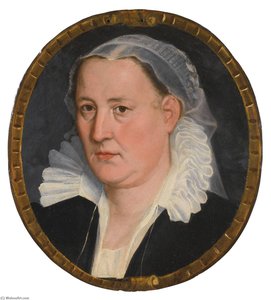
Portrait of an old woman (1582) af Bartolomeo Passarotti

Portrait of an old woman

1582 · Oil On Canvas · Kunsthistorisches Museum, Wien

The Portrait of an old woman is a work by Bartolomeo Passarotti. Created around 1582, this oil on canvas belongs to the portrait genre. It captures a single subject, an elderly woman, in a moment of quiet presence. The sitter faces the viewer with a steady, unadorned gaze.

2
The Anatomy Lesson (1550) af Bartolomeo Passarotti

The Anatomy Lesson

1550 · Oil · Galleria Borghese, Rom

The oil painting titled The Anatomy Lesson brings us into a crowded, intense moment of scholarly inquiry. Created by Bartolomeo Passarotti, this work captures a dramatic academic demonstration. The scene centers on an open human body, laid out for study. A professor, dressed in ecclesiastical attire, leads the lesson. He directs the attention of a group of listeners who gather closely to witness the unfolding dissection. The body rests above…

3
Family Portrait (1585) af Bartolomeo Passarotti

Family Portrait

1585 · Oil On Canvas · Kunsthistorisches Museum, Wien

In this vertical composition from around 1585, we find ourselves in the presence of three generations, brought together in a quiet, somber arrangement. The painting depicts an older widow seated with a grown son standing behind her, while a small child stands before them. There is a certain stillness to the grouping, a sense of social hierarchy expressed through their physical placement and stoic expressions. The figures are tightly clustered…

5
Portrait of a Man (1560) af Bartolomeo Passarotti

Portrait of a Man

1560 · Oil · Bavarian State Painting Collections, München

The gaze of the subject in Portrait of a Man meets the viewer with a quiet, steady presence. This work, created by the Bolognese artist Bartolomeo Passarotti, captures a moment of stillness from 1560. The man sits before us, his features defined by a calm and direct look that suggests a life of introspection and dignity.

6
Saint Jerome (1550) af Bartolomeo Passarotti

Saint Jerome

1550 · Oil On Canvas · National Gallery of Ireland, Dublin

A muscular, semi-nude ascetic occupies the center of a rugged landscape. His skin, a stark white against the warm ochre and tan of the earth, catches a sharp light that carves out the heavy anatomy of his torso. He is a figure of monumental presence, positioned vertically to command the space. Deep shadows cling to the contours of his muscles, creating a sense of three-dimensional volume that feels heavy and…

7
The Fishmongers (1550) af Bartolomeo Passarotti

The Fishmongers

1550 · Oil On Canvas

The air in the scene feels heavy with the scent of salt and wet scales. A dense crowd gathers around a bounty of seafood, their bodies pressed close in a crowded, intimate space. An older man with a grey beard anchors the composition, his presence steady amidst the movement. Beside him, a younger man opens his mouth in a wide, theatrical expression, while a child looks upward, eyes searching the…

8
Self-portrait (1560) af Bartolomeo Passarotti

Self-portrait

1560 · Oil On Panel

The oil painting on panel presents a tightly framed view of Bartolomeo Passerotti, focusing on his face and upper torso. The subject is positioned in a one-point perspective, directing the viewer's gaze toward his features. A dark color palette dominates the work, utilizing shades of brown, black, and muted green. Light enters the scene to create strong contrasts, sculpting the musculature of the face and the folds of the garment.…

9
Portrait of a Scribe (1560) af Bartolomeo Passarotti

Portrait of a Scribe

1560 · Oil On Canvas

In this 1560 oil on canvas, we find ourselves in the private, silent world of a scholar. The subject, a man engaged in the act of writing, is seated at a desk, his presence defined by a sense of focused intellectualism. There is a certain stillness here, a moment captured where the only sound is the scratching of a quill against parchment. The composition is centered and formal, drawing the…

10
Three Men with Two Dogs (1550) af Bartolomeo Passarotti

Three Men with Two Dogs

1550 · Oil On Canvas

The composition centers on three men positioned in a tight, intimate arrangement. A central figure holds a glass containing a reddish liquid, acting as the focal point of the group. To his side, another man appears to play a flute, while the third man engages with the others in a shared social moment. Two dogs are integrated into the lower portion of the frame, their forms resting near their human…

Bartolomeo Passarotti-udvalget fortsætter, fra 11 til 56

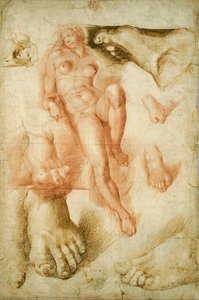
11Portrait of the Physician Carlo Fontana (1570) af Bartolomeo PassarottiPortrait of the Physician Carlo Fontana1570 · Museum of Fine Arts Ghent (MSK) 12Portrait of Pope Pius V (1579) af Bartolomeo PassarottiPortrait of Pope Pius V1579 13Portrait of a Young General (1575) af Bartolomeo PassarottiPortrait of a Young General1575 14Pope Gregory XIII (1580) af Bartolomeo PassarottiPope Gregory XIII1580 · Gemäldegalerie 15Portrait of a Man (1580) af Bartolomeo PassarottiPortrait of a Man1580 · Harvard Art Museums 16Poultry dealer (1580) af Bartolomeo PassarottiPoultry dealer1580 · Fondazione di Studi di Storia dell'Arte Roberto Longhi 17Blood of the Redeemer af Bartolomeo PassarottiBlood of the RedeemerMuseum of Fine Arts 18Portrait of Ignazio Danti (1597) af Bartolomeo PassarottiPortrait of Ignazio Danti1597 · Musée des Beaux-Arts de Brest 19Portrait of a Man Playing a Lute (1576) af Bartolomeo PassarottiPortrait of a Man Playing a Lute1576 · Museum of Fine Arts 20Copy after Michelangelo (1550) af Bartolomeo PassarottiCopy after Michelangelo1550 · Nelson-Atkins Museum of Art 21DIANE CHASSERESSE af Bartolomeo PassarottiDIANE CHASSERESSELouvre 22The Holy Family with St Elizabeth and the Infant St John the Baptist (1572) af Bartolomeo PassarottiThe Holy Family with St Elizabeth and the Infant St John the Baptist1572 23Portrait of a Young Man Holding a Statuette (1575) af Bartolomeo PassarottiPortrait of a Young Man Holding a Statuette1575 24Portrait of a Man with a Dog (detail) (1585) af Bartolomeo PassarottiPortrait of a Man with a Dog (detail)1585 · Pinacoteca Capitolina 25The Fishmonger's Shop (1580) af Bartolomeo PassarottiThe Fishmonger's Shop1580 · Galleria Nazionale d'Arte Antica 26Portrait of a Man with a Dog (1585) af Bartolomeo PassarottiPortrait of a Man with a Dog1585 · Pinacoteca Capitolina 27Study of Male Nudes Fighting (1572) af Bartolomeo PassarottiStudy of Male Nudes Fighting1572 28Perseus frees Andromeda (1575) af Bartolomeo PassarottiPerseus frees Andromeda1575 29Family portrait af Bartolomeo PassarottiFamily portraitGemäldegalerie Alte Meister 30Saint John Baptist, Saint Jerome and Saint Francis of Assisi af Bartolomeo PassarottiSaint John Baptist, Saint Jerome and Saint Francis of AssisiMusée des Beaux-Arts de Strasbourg 31Lute palyer af Bartolomeo PassarottiLute palyer 32Portrait d'homme en armure af Bartolomeo PassarottiPortrait d'homme en armure 33A Butchery (1575) af Bartolomeo PassarottiA Butchery1575 · Galleria Nazionale d'Arte Antica 34Male Nude (1550) af Bartolomeo PassarottiMale Nude1550 · Museo del Prado 35Copy of a Statue with A Female Nude From Back (1550) af Bartolomeo PassarottiCopy of a Statue with A Female Nude From Back1550 · Museo del Prado 36Lucretia's Suicide (1550) af Bartolomeo PassarottiLucretia's Suicide1550 37Portrait of a Botanist (Ulisse Aldrovandi.) (1570) af Bartolomeo PassarottiPortrait of a Botanist (Ulisse Aldrovandi.)1570 · Galleria Spada 38Portrait of Pope Pius V (1566) af Bartolomeo PassarottiPortrait of Pope Pius V1566 · Walters Art Museum 39Portrait of a Lady with a Dog (1569) af Bartolomeo PassarottiPortrait of a Lady with a Dog1569 40Double Portrait of Musicians (1579) af Bartolomeo PassarottiDouble Portrait of Musicians1579 · Capitoline Museums 41Double Dressed Portrait of Circe and Ulysses (1575) af Bartolomeo PassarottiDouble Dressed Portrait of Circe and Ulysses1575 42Copy of the Good Thief, From the Last Judgement of Michelangelo (1570) af Bartolomeo PassarottiCopy of the Good Thief, From the Last Judgement of Michelangelo1570 · Museo del Prado 43The Holy Family Accompained by an Angel and two Saints (1565) af Bartolomeo PassarottiThe Holy Family Accompained by an Angel and two Saints1565 · Museo del Prado 44Portrait of a Gentleman (1580) af Bartolomeo PassarottiPortrait of a Gentleman1580 45Nude Studies (1580) af Bartolomeo PassarottiNude Studies1580 46Portrait of a Cavalier with his Hunting Dogs (1580) af Bartolomeo PassarottiPortrait of a Cavalier with his Hunting Dogs1580 · Rhode Island School of Design Museum of Art 47The Coronation of the Virgin with Saints Luke, Dominic, and John the Evangelist (1580) af Bartolomeo PassarottiThe Coronation of the Virgin with Saints Luke, Dominic, and John the Evangelist1580 · Art Gallery of South Australia 48St. Dominicus and the Albigensians (1580) af Bartolomeo PassarottiSt. Dominicus and the Albigensians1580 · Pinacoteca Nazionale di Bologna 49Domenico Giuliani and His Servant af Bartolomeo PassarottiDomenico Giuliani and His Servant 50Portrait of an Old Woman af Bartolomeo PassarottiPortrait of an Old Woman 51A Group of Six Men, Including a Self Portrait af Bartolomeo PassarottiA Group of Six Men, Including a Self Portrait 52Portrait of a lady, head and shoulders af Bartolomeo PassarottiPortrait of a lady, head and shouldersBavarian State Painting Collections 53Portrait of an Unknown Soldier in Armour af Bartolomeo PassarottiPortrait of an Unknown Soldier in ArmourNational Trust 54Holy Family with the Infant St John the Baptist and St Catherine of Alexandria af Bartolomeo PassarottiHoly Family with the Infant St John the Baptist and St Catherine of AlexandriaChristian Museum 55Two market women and a boy with chicken and vegetables af Bartolomeo PassarottiTwo market women and a boy with chicken and vegetablesGemäldegalerie 56The Butcher's Shop (1580) af Bartolomeo PassarottiThe Butcher's Shop1580 · Galleria Nazionale d'Arte Antica

Bartolomeo Passarottis berømte malerier, periode for periode

Motiverne, der fangede Bartolomeo Passarottis blik

De fire motiver, der optræder hyppigst i disse originaler, hver med sit fineste eksempel.

De museer, der udstiller Bartolomeo Passarottis originalværker

De 8 museer, der rummer flest af malerierne på denne side.

Museum By Værker af Bartolomeo Passarotti Malerier fra denne liste
Museo del Prado, MadridMuseo del Prado Madrid 4 Male Nude, Copy of a Statue with A Female Nude From Back, Copy of the Good Thief, From the Last Judgement of Michelangelo
Kunsthistorisches Museum, WienKunsthistorisches Museum Wien 3 Portrait of an old woman, Family Portrait, Portrait of the physician Carlo Fontana
Galleria Nazionale d'Arte Antica, RomGalleria Nazionale d'Arte Antica Rom 3 The Fishmonger's Shop, A Butchery, The Butcher's Shop
Bavarian State Painting Collections, MünchenBavarian State Painting Collections München 2 Portrait of a Man, Portrait of a lady, head and shoulders
Museum of Fine Arts, BostonMuseum of Fine Arts Boston 2 Blood of the Redeemer, Portrait of a Man Playing a Lute
Pinacoteca Capitolina, RomPinacoteca Capitolina Rom 2 Portrait of a Man with a Dog (detail), Portrait of a Man with a Dog
Galleria Borghese, RomGalleria Borghese Rom 1 The Anatomy Lesson
National Gallery of Ireland, DublinNational Gallery of Ireland Dublin 1 Saint Jerome

Bartolomeo Passarotti årti for årti: det originale værk, der definerer hvert enkelt

Værker per årti

Vælg et årti for at se det originale værk, der definerer det.

Samleres spørgsmål om Bartolomeo Passarottis malerier

Hvilket værk er Bartolomeo Passarotti mest kendt for?Vis svaret

Portrait of an old woman (1582), Kunsthistorisches Museum, Wien. Derefter følger The Anatomy Lesson (1550) og Family Portrait (1585).

Hvor gammel var Bartolomeo Passarotti, da Portrait of an old woman blev skabt?Vis svaret

53 år gammel: Portrait of an old woman er fra 1582, og Bartolomeo Passarotti blev født i 1529.

Hvad er de ti mest berømte Bartolomeo Passarotti malerier?Vis svaret

Portrait of an old woman, The Anatomy Lesson, Family Portrait, Portrait of the physician Carlo Fontana, Portrait of a Man, Saint Jerome, The Fishmongers, Self-portrait, Portrait of a Scribe og Three Men with Two Dogs. Ranglisten ovenfor viser det enkelte værks årstal og museum.

Hvor mange malerier efterlod Bartolomeo Passarotti?Vis svaret

Vores katalog indeholder 59 værker af Bartolomeo Passarotti, dateret fra 1550 til 1585.

I hvilke museer udstilles Bartolomeo Passarotti's mesterværker?Vis svaret

Primært i Museo del Prado (Madrid), Kunsthistorisches Museum (Wien) og Galleria Nazionale d'Arte Antica (Rom). Museumslisten ovenfor viser dem alle.

I hvilke år malede Bartolomeo Passarotti sine mest berømte værker?Vis svaret

I 1580s: 15 af de 56 værker på denne side blev skabt dengang, herunder Portrait of an old woman.

Hvad er de første og de sidste berømte originaler af Bartolomeo Passarotti?Vis svaret

På denne side er det tidligste The Anatomy Lesson (1550) og det seneste Family Portrait (1585).

Hvilke motiver valgte Bartolomeo Passarotti oftest?Vis svaret

Man (19), Beard (8) og Book (6), fordelt på de 56 værker på denne side.

Hvilken teknik brugte Bartolomeo Passarotti mest?Vis svaret

Oil On Canvas, for 18 af de 56 værker på denne side.

Hvilken kunstretning tilhører Bartolomeo Passarotti?Vis svaret

Mannerism og Renaissance, baseret på originalerne på denne side.

Hvilke værker af Bartolomeo Passarotti udstilles på Museo del Prado?Vis svaret

Male Nude, Copy of a Statue with A Female Nude From Back og Copy of the Good Thief, From the Last Judgement of Michelangelo: Museo del Prado, Madrid har 4 af værkerne på denne side.

Bartolomeo Passarotti: liv og værk

Den bolognesiske mester af manieristisk storhed

I det levende og skiftende landskab i det sene 16. århundrede indfangede få kunstnere overgangen fra den strukturerede elegance i højrenæssancen til den dramatiske intensitet i barokken så dygtigt som Bartolomeo Passarotti. Født i Bologna i 1529 trådte Passarotti ikke blot frem som maler, men som en afgørende brobygger mellem epoker. Hans tidlige år var præget af en dyb fordybelse i den romerske kunstscene, hvor han mellem 1550 og 1555 søgte vejledning hos mestre som Giacomo Barozzi da Vignola og Taddeo Zuccari. Denne periode med romersk træning var transformativ; den indpodede i ham en dyb ærefrygt for antikken og de humanistiske principper om anatomisk præcision og balanceret komposition, selvom han begyndte at eksperimentere med de mere forlængede og komplekse former, der skulle definere manierismen.

Ved sin hjemkomst til sin fødeby, Bologna, nøjedes Passarotti ikke med at bosætte sig i det lokale kunstliv; han etablerede et formidabelt kunstnerisk kraftcenter. Hans atelier blev en smeltedigel for innovation, der tiltrak en generation af talenter, som i sidste ende ville omforme europæisk kunst. Blandt hans mest bemærkelsesværdige elever var Agostino Carracci, Lucio Massari og Francesco Brizzi—kunstnere, der ville føre frøene fra hans stilistiske eksperimenter ind i den spirende barok. Denne arv af mentorskab sikrede, at Passarottis indflydelse strakte sig langt ud over hans eget værksted, da hans tilgang til lys, tekstur og motivverden gennemsyrede selve fundamentet i den bolognesiske skole.

Et væv af genre og drama

Passarottis værk fejres for sin bemærkelsesværdige alsidighed, der spænder fra det guddommelige til det dybt jordiske. Han besad en unik evne til at navigere mellem storslåede religiøse altertavler og intime, ofte rå, genrebilleder. Hans værker er ofte præget af en slående brug af chiaroscuro, hvor han benytter skarpe kontraster mellem lys og skygge til at give sine motiver en følelse af psykologisk dybde og fysisk nærvær. Denne teknik, som foregreb den dramatiske lyssætning, der senere blev perfektioneret af Caravaggio, gjorde det muligt for ham at indblæse liv i både mytologiske figurer og dagligdags arbejdere.

I sine genrebilleder udviste Passarotti et ekstraordinært øje for detaljen og en fascination af hverdagens teksturer. Værker som Slagterens butik (1580) fungerer som fængslende vinduer ind i den sene renæssanceverden og fremviser en mesterlig beherskelse af varme toner og en realistisk skildring af det fælles liv. På samme måde er hans evne til at fremstille det guddommelige tydelig i værker som Diane Chasseresse, hvor den romerske jagtgudinde er fanget med en dynamisk, muskuløs ynde, der personificerer selve essensen af manieristisk energi. Uanset om han skildrer den stille ensomhed hos en Lutspiller eller højtideligheden i religiøs hengivenhed, søgte hans penselstrøg konsekvent at indfange den flygtige spænding mellem det ideelle og det virkelige.

Arv og historisk betydning

Selvom historien nogle gange overser Passarotti til fordel for mere revolutionerende skikkelser som Michelangelo, er hans betydning for udviklingen af italiensk kunst ubestridelig. Han var en overgangens mester, en kunstner der forstod, hvordan man ærer fortidens klassiske idealer, mens man samtidig baner vejen for det næste århundredes følelsesmæssige turbulens. Hans senere værker, påvirket af toscanske forbilleder som Giorgio Vasari og Prospero Fontana, vidner om en kontinuerlig udvikling og en vedvarende nysgerrighed over for de skiftende strømninger i den æstetiske smag.

Den historiske betydning af Bartolomeo Passarotti ligger i hans rolle som en grundlæggende skikkelse for Carracci-akademiet og den bredere bolognesiske tradition. Hans livsværk—en blanding af omhyggelig anatomisk studium, dramatisk lyssætning og en dyb interesse for den menneskelige tilstand—forbliver et vidnesbyrd om manierismens vedvarende kraft. Gennem hans atelier, hans elever og hans evokative lærreder sikrede Passarotti, at Bolognas ånd ville forblive i hjertet af den europæiske kunstneriske dialog i generationer fremover.