Introduction
Forget the polished, untouchable myths of old-world legends; there is a raw, unvarnished truth found in the grit and glory of the American landscape. To step into the world of American Realism is to strip away the romanticized filters of history and look directly at the soul of a nation. This movement wasn't about chasing ethereal dreams or abstract shadows; it was about the heavy weight of industrial progress, the quiet dignity of the working class, and the stark, breathtaking reality of a continent in flux.
Emerging as a powerful cultural heartbeat, these artists turned their gaze toward the streets, the factories, and the lonely stretches of farmland. They captured the tension of an era defined by rapid urban expansion and the rugged spirit of the frontier, documenting life with a precision that felt both cinematic and deeply intimate. It was art that breathed the same air as the people it depicted—unapologetic, textured, and profoundly human.
Today, these masterpieces resonate with a renewed intensity. In an age of digital saturation and fleeting images, there is something magnetic about the deliberate, tactile honesty of Realism. These works serve as a visual anchor, reminding us that beauty isn't found in perfection, but in the authentic, often difficult, details of our shared existence. They offer a window into a foundational era, preserved through thick layers of oil and unmistakable brushstrokes.
As we walk through this curated selection, prepare to encounter more than just paint on canvas. We are about to explore ten definitive works that captured the pulse of a developing superpower—pieces that redefined how we see ourselves and the world we inhabit. From the smoky industrial skylines to the quiet intensity of a single portrait, these are the icons that shaped the American visual identity.
Nighthawks, The Art Institute of Chicago, Chica - Edward Hopper
 Nighthawks, The Art Institute of Chicago, Chica - Edward Hopper
There is a profound, cinematic stillness found within the glow of Nighthawks by Edward Hopper, a scene that feels less like a painting and more like a captured moment of urban introspection. As we journey through the greatest pillars of American Realism, this 1942 masterpiece stands as an essential entry due to its unparalleled ability to translate the quiet ache of modern alienation into visual poetry. Hopper uses the harsh, artificial light of the diner to slice through the deep, shadowy blues of the city street, creating a voyeuristic window into a world of beautiful isolation.
The painting’s inclusion in our definitive list is earned by its masterful use of light and geometric tension, influencing everything from noir cinema to contemporary street photography. It captures the heavy atmosphere of a nation on the cusp of change, turning a simple late-night corner into a universal symbol of the human condition. Today, this evocative mood serves as a powerful design anchor; through our high-fidelity oil reproductions, you can bring this transformative, atmospheric presence into your own home or gallery, allowing Hopper’s legendary interplay of light and shadow to redefine your personal space.
Snap the Whip - Winslow Homer
 Snap the Whip - Winslow Homer
There is a pulse in Snap the Whip by Winslow Homer that vibrates through the canvas—not just as a depiction of movement, but as an infectious surge of pure, unadulterated energy. As one of the most iconic pillars of the American Realism movement, this 1872 masterpiece captures a high-stakes tug-of-war that feels less like a historical relic and more like a captured moment of raw human connection. Homer uses bold, diagonal compositions and a rich, earthy palette of deep reds and lush greens to pull your eyes directly into the fray.
This isn't just a nostalgic glance at rural Americana; it is a mirror reflecting our own universal desire for community and play. The way the light hits the straining figures and the weathered red schoolhouse serves as a powerful reminder of the beauty found in simplicity. When you bring this piece into your space, it doesn't just decorate a wall—it injects a sense of vitality and timeless joy, reminding you that even amidst the chaos of modern life, the spirit of connection remains unbreakable.
Sunlight in a Cafeteria - Edward Hopper
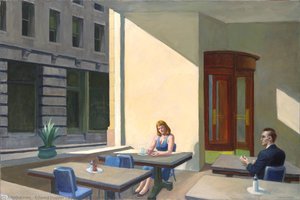 Sunlight in a Cafeteria - Edward Hopper
In Sunlight in a Cafeteria , Edward Hopper doesn’t just paint light; he composes it like a cinematic score. As you stand before this 1958 masterpiece, the light isn't merely illumination—it is a silent protagonist, a sharp, geometric language cutting through the urban gloom. This is the heart of American Realism: the ability to find profound drama in the most mundane corners of city life.
The scene captures a heavy, beautiful tension. Two figures sit in close proximity, yet they are worlds apart, lost in private orbits of thought. Hopper uses chiaroscuro to sculpt the space, letting intense beams of sun collide with deep, melancholic shadows to highlight the emotional gulf between the man and the woman. The muted palette of beiges and grays is pierced by sudden, brilliant highlights, creating a sense of stillness that feels almost breathless. It is a masterclass in urban alienation —a poignant meditation on being alone even when surrounded by others. This painting doesn't just reflect the light of a mid-century afternoon; it invents a mood that lingers long after you turn away.
Long Branch, New Jersey - Winslow Homer
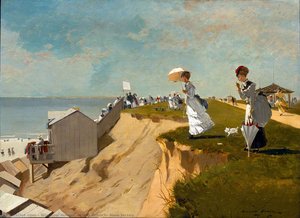 Long Branch, New Jersey - Winslow Homer
Owning Long Branch, New Jersey by Winslow Homer isn’t just a purchase; it’s an inheritance of the Gilded Age. This 1869 masterpiece serves as a high-definition window into 19th-century leisure, capturing the vibrant social pulse of a premier coastal retreat. Homer masterfully blends the grit of American Realism with a luminous, almost Impressionistic light, guiding your eye across sun-drenched dunes and through a crowd of elegantly dressed figures poised against the Atlantic swell.
The palette is a sophisticated study in contrast: the deep, rhythmic blues of the ocean crashing against the warm, earthy tones of the shoreline. There is a palpable sense of movement in his loose brushwork—a sensory experience that brings the salt air and midday heat directly into your space. To hang this piece is to claim a lineage of taste, bringing the serene, structured elegance of Homer’s coastal vision to your modern walls. It is more than a painting; it is a legacy of light and atmosphere, preserved for the contemporary collector.
Men of the Docks - George Wesley Bellows
 Men of the Docks - George Wesley Bellows
Bellows’ Men of the Docks is a raw, high-impact masterclass in urban grit, capturing the pulse of early 20th-century New York with unmatched energy. As a cornerstone of the American Realism movement, this piece strips away the polished veneer of high society to reveal the heavy, rhythmic toil of the Ashcan School. The canvas is alive with thick, expressive impasto and a moody, industrial palette of muted earth tones, deep blues, and overcast grays that mirror the salt-sprayed atmosphere of a winter port.
The painting’s power lies in its cinematic scale; the massive, looming vessels and skeletal masts create a sense of monumental progress clashing with the human struggle. For the modern collector, this work brings a sophisticated, edgy vibe to contemporary interiors. Its heavy textures and dark, atmospheric depth make it a perfect anchor for design-conscious spaces—think industrial lofts or minimalist galleries looking for a piece with soul, movement, and a profound connection to the relentless spirit of urban industry.
The fox hunt pensylvania academy of the fine arts - Winslow Homer
 The fox hunt pensylvania academy of the fine arts - Winslow Homer
Imagine a frozen moment of high-stakes tension: the sharp, sudden leap of a fox cutting through a stark, winter silence. In The Fox Hunt , Winslow Homer delivers a cinematic masterclass in American Realism, stripping away the unnecessary to focus on the raw pulse of survival. The palette is a cold, atmospheric blend of icy blues, muted grays, and bone whites, punctuated by the sudden, warm strike of red fur and winter berries. Above, a dark, watchful raven looms, adding a layer of heavy, symbolic mystery to the landscape.
Homer’s technique is visceral; his loose, painterly brushstrokes create a tactile sense of movement and biting cold that feels almost palpable. This isn't just a landscape—it is an emotional experience of resilience and solitude. For the modern collector, bringing this piece into a space introduces a profound sense of quiet prestige and dramatic depth. It serves as a powerful focal point that inspires reflection, grounding a contemporary room with the rugged, unyielding beauty of the natural world.
Max Schmitt in a Single Scull - Thomas Eakins
 Max Schmitt in a Single Scull - Thomas Eakins
There’s a rhythm in Max Schmitt in a Single Scull by Thomas Eakins that pulls you into the flow—not just of the Schuylkill River, but of the very soul of American Realism. This isn't merely a depiction of a rower; it is a mirror reflecting the perfect equilibrium between human discipline and the untamed natural world. As you gaze upon the cool blues and muted greens of the water, you feel the quiet intensity of Max Schmitt’s solitary journey.
Eakins uses meticulous, layered oil techniques to capture the light hitting the ripples, creating a texture that feels almost tactile. The composition balances the dynamic energy of the sport with a serene, atmospheric stillness. In your own space, this masterpiece acts as a reminder : even in moments of intense focus and individual effort, there is profound harmony to be found. It stands as a definitive pillar of the American Realism movement, inviting you to find your own center amidst the movement of life.
Girl with a Hay Rake - Winslow Homer
 Girl with a Hay Rake - Winslow Homer
In Girl with a Hay Rake , Winslow Homer masters the art of atmospheric light to capture a fleeting moment of American pastoral life. The scene is bathed in the diffused, soft glow of an autumnal afternoon, where the light doesn't just illuminate the orchard but seems to breathe through the watercolor pigments. There is no harsh chiaroscuro here; instead, Homer uses subtle tonal shifts and a hazy, atmospheric perspective to create depth, making the distant trees appear pale and ethereal against the warm ochres and muted greens of the foreground.
This sophisticated command of illumination is exactly why this work stands as a pillar of the American Realism movement . By prioritizing the *impression* of light over rigid detail, Homer achieved a sense of quiet dignity and seasonal melancholy that resonates even today. When reproduced as a high-quality oil painting, the interplay of these soft shadows and sun-drenched textures adds an incredible layer of organic luxury and calm to a modern interior, bringing the soulful, naturalistic essence of 19th-century landscapes into a contemporary design space.
Under a Palm Tree - Winslow Homer
 Under a Palm Tree - Winslow Homer
Imagine the heavy, warm stillness of a tropical afternoon, where the only sound is the rhythmic rustle of fronds and the soft breathing of a sleeping child. Winslow Homer’s 1886 watercolor, Under a Palm Tree , captures this exact pulse of serenity. It isn't just a landscape; it is an intimate study of protection and peace. Through delicate, translucent washes, Homer masterfully renders dappled sunlight filtering through the canopy, illuminating a mother cradling her infant in a moment of profound human connection.
As a cornerstone of the American Realism movement , this masterpiece earns its place among the top 10 by stripping away artifice to reveal raw, quiet truth. The way the light dances across the textured bark and the soft folds of fabric brings a sense of living vitality to the paper. Bringing such a piece into a modern space does more than decorate a wall; it introduces a sanctuary of calm. In our high-speed, digital world, Homer’s ability to freeze a fleeting moment of grace offers a timeless way to infuse your environment with depth, light, and soul.
Trout Breaking - Winslow Homer
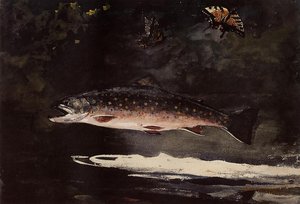 Trout Breaking - Winslow Homer
Imagine the sudden, sharp splash of cold water breaking a silent morning—the visceral energy of life erupting from a tranquil stream. In Trout Breaking (1889), Winslow Homer captures this exact pulse of nature with breathtaking precision. This isn't just a study of wildlife; it is a masterclass in the American Realism movement, stripping away European pretension to focus on the raw, unscripted truth of the landscape.
Homer uses watercolor to freeze a fleeting moment of struggle and vitality, where shimmering surface tension meets the muted greens and blues of a New England riverbank. As one of the top 10 masterpieces that defined American Realism , this work earns its place by finding profound beauty in the ordinary. The trout’s upward surge serves as a powerful symbol of resilience and determination. Bringing such a piece into a modern space does more than decorate a wall; it injects a sense of organic movement and serene strength into your daily environment, reminding us to find magic in the sudden, beautiful disruptions of life.
Conclusion
As the light fades on this exploration of American Realism, we are left with more than just a collection of images; we are left with the enduring pulse of a nation captured in pigment and grit. These masterpieces do not belong solely to the museums that house them or the centuries that birthed them. Instead, they exist as living presences, breathing through every textured brushstroke and every honest shadow. They serve as a bridge across time, connecting the raw, unvarnished observations of the past to our modern sensibilities, proving that the human experience—in all its struggle, quietude, and dignity—remains unchanged.
To stand before these works is to enter into a silent, timeless conversation with the artists who dared to see the world exactly as it was. They remind us that beauty is often found in the most ordinary corners of life, waiting for a steady hand to reveal it. Whether draped over a gallery wall or anchoring the soul of a contemporary home, these paintings continue to shape our spaces and stir our imaginations, inviting us to pause, to reflect, and to feel. We invite you to continue this journey and find your own connection within our full collection , where the legacy of the masters remains forever vibrant and ever-present.