Introduction
To step into a gallery of Edward Hopper’s work is to enter a world of profound stillness, where the air feels heavy with the weight of unspoken stories and the sharp, cinematic clarity of light hitting a lonely street corner. His paintings do not merely depict scenes; they capture the very essence of modern existence—the quiet tension found in a late-night diner, the haunting solitude of an empty hotel room, and the way sunlight can simultaneously illuminate and isolate. As we explore these top 25 masterpieces, we are not just looking at oil on canvas, but witnessing a poet of shadows documenting the psychological landscape of the American experience.
Emerging from the early 20th century, Hopper’s era was one of rapid industrialization and shifting social structures. While his contemporaries often chased the fleeting brilliance of Impressionism, Hopper turned inward, finding his strength in a stark, unvarnished realism. He became a chronicler of the American Scene, focusing on the architecture of urban life and the quiet corners of the domestic sphere. His work reflects a period of transition, capturing the tension between the growing connectivity of modern cities and the deep, individual isolation that often accompanies them.
These works remain profoundly meaningful today because the themes Hopper mastered—loneliness, voyeurism, and the search for connection in an increasingly crowded world—are more resonant than ever. In our hyper-connected digital age, the physical solitude captured in his brushstrokes offers a mirror to our own contemporary anxieties. There is a timelessness in his use of light; it acts as a silent protagonist, carving out spaces of introspection that invite every viewer to project their own narratives onto the canvas.
In the following selection, we will guide you through twenty-five pivotal works that define his legacy. From the iconic, neon-lit melancholy of Nighthawks to the evocative, sun-drenched landscapes of his early career, each piece serves as a window into Hopper’s unique ability to find the extraordinary within the ordinary. Prepare to encounter a collection where every shadow holds a secret and every light reveals a truth.
Nighthawks, The Art Institute of Chicago, Chica - Edward Hopper
 Nighthawks, The Art Institute of Chicago, Chica - Edward Hopper
A profound silence hangs suspended in the amber glow of Nighthawks by Edward Hopper, a masterpiece where light and shadow perform a haunting, eternal duet. As one of the most recognizable entries in the top 25 artworks of Edward Hopper, this 1942 painting transcends mere American Realism to become a universal symbol of modern solitude. The composition is anchored by the stark, cinematic contrast between the warm, artificial brilliance of the diner’s interior and the deep, melancholic blues of the deserted urban street.
Hopper utilizes smooth, deliberate brushstrokes to render the glass barrier that simultaneously invites the viewer in and keeps them at a distance, mirroring the psychological isolation of the patrons. The palette—a sophisticated interplay of warm yellows against cool, nocturnal greens—creates a sensory experience that is both unsettling and deeply captivating. In contemporary interiors, this piece serves as a powerful focal point, offering a sense of quiet sophistication and an invitation to contemplate the beauty found within life's most still and reflective moments.
Automat - Edward Hopper
 Automat - Edward Hopper
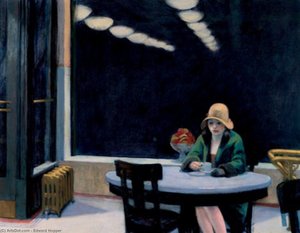
While many view Automat as a simple depiction of urban loneliness, the painting’s true power lies in Hopper's ability to transform a mundane, self-service restaurant into a stage for profound psychological drama. In this 1927 masterpiece, the artist utilizes stark, directional light to carve a single figure out of the surrounding darkness, creating a vacuum of silence amidst the implied bustle of New York life. The composition is a masterclass in geometric tension; the rigid, vertical lines of the window frames contrast sharply with the soft, organic curves of the woman’s silhouette and the reflective surface of the glass.
The palette—dominated by deep, nocturnal blues and punctuated by the sudden warmth of a fruit bowl—captures that specific, melancholic glow characteristic of the top 25 artworks of Edward Hopper . This interplay of light and shadow does more than define form; it evokes a sense of introspective stillness. For the modern professional, such a focused and atmospheric work serves as an ideal anchor for a study or home office, fostering a sophisticated environment of quiet concentration and deep, uninterrupted thought.
Sunday - Edward Hopper
 Sunday - Edward Hopper
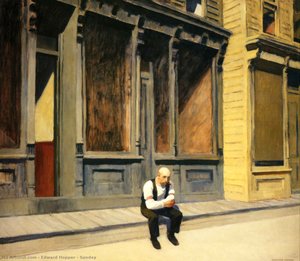
While many associate the 1920s with the vibrant energy of the Jazz Age, Edward Hopper was quietly documenting its shadow side. In Sunday (1926), he captures a profound stillness that feels almost heavy, as if the city itself is holding its breath. The painting presents a solitary man seated on a wooden bench before closed storefronts, a masterful study in urban alienation. Through a restrained palette of muted browns, grays, and a striking pop of red from a nearby door, Hopper utilizes New Realism to transform an empty street into a psychological landscape.
The technical brilliance lies in his use of geometric structure; the sharp verticality of building columns contrasts with the soft, diffused light that washes over the scene, creating a sense of deep, contemplative space. This interplay of light and shadow serves as a precursor to his most famous works, establishing him as a premier figure among the top 25 artworks of Edward Hopper . For the modern professional, the quietude of Sunday offers more than just melancholy; its structured, calm composition provides an ideal aesthetic for a sophisticated home office or study, fostering an environment of deep focus and uninterrupted thought.
Gas - Edward Hopper
 Gas - Edward Hopper
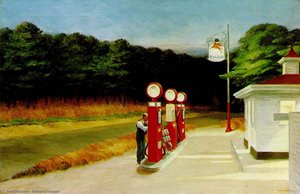
In Gas by Edward Hopper, the viewer is met with a profound geometric precision that anchors this piece within the top 25 artworks of Edward Hopper. The composition relies on a masterful use of diagonal lines, where the placement of the gas pumps guides the eye through a landscape defined by stark, rectangular forms and the rhythmic verticality of distant trees. This structural harmony creates a sense of timeless perfection, capturing a moment of stillness that feels both permanent and fleeting.
The painting’s internal balance—the juxtaposition of the small, white attendant's booth against the vast, muted expanse of the American landscape—mirrors the principles of modern minimalist design. The clean lines and controlled color palette of earthy greens, browns, and a singular, vibrant red provide a grounding element that complements a contemporary, uncluttered aesthetic. Through soft, diffused light and a sense of quietude, Hopper transforms an everyday roadside stop into a meditative study of solitude, making it an essential masterpiece for any curated collection.
Chop Suey - Edward Hopper
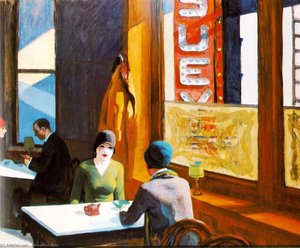 Chop Suey - Edward Hopper
In Chop Suey , Edward Hopper captures a fragment of urban pulse frozen within the amber glow of a late 1920s evening. This masterpiece stands among the top 25 artworks of Edward Hopper because it masterfully balances the vibrant energy of Art Deco modernity with the profound, quiet introspection that defines his legacy. The composition pulls the viewer into a stylized cafe, where saturated yellows and deep blues collide under the dramatic illumination of a neon sign.
The painting breathes with a rhythmic, almost surreal vitality; bold outlines and geometric forms create a sense of movement, yet a palpable sense of solitude lingers between the figures. The interplay of light and shadow does more than define space—it shapes thought, evoking the bittersweet nostalgia of a bustling city where individuals remain islands unto themselves. For the modern collector, integrating a reproduction of this piece into a contemporary interior brings a sophisticated layer of historical depth and cinematic atmosphere, offering a window into the soul of American Realism through its rich textures and evocative, dreamlike light.
Office at Night - Edward Hopper
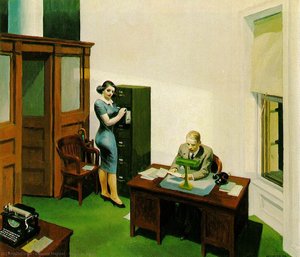 Office at Night - Edward Hopper
To encounter Office at Night is to step into a profound moment of mid-century stillness, a work that secures its position among the top 25 artworks of Edward Hopper through its masterful command of atmosphere and light. In this 1940 composition, Hopper transforms a mundane bureaucratic setting into a stage for quiet introspection. The scene is anchored by a muted palette of deep greens, browns, and grays, punctuated brilliantly by the striking blue of a woman’s dress, which draws the eye through the structured, geometric layout of the office.
The painting captures the tension between professional routine and the underlying sense of urban isolation. Through precise brushwork and a careful balance of artificial light and shadow, Hopper renders the textures of wooden furniture and the rhythmic lines of filing cabinets with exceptional clarity. For the discerning collector or decorator, this piece offers more than historical insight; it provides a timeless aesthetic of American Realism that resonates within modern, sophisticated interiors, bringing a sense of contemplative depth and architectural stability to any curated space.
Summertime - Edward Hopper
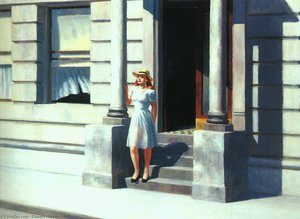 Summertime - Edward Hopper
In Summertime , painted in 1943, Edward Hopper captures a moment of profound stillness that transcends mere observation. This masterpiece serves as a poignant window into the American psyche during the uncertainties of World War II, where the heavy atmosphere of the era meets the quiet drama of an individual life. A young woman, draped in a light blue dress and crowned by a straw hat, sits poised on the stone steps of a grand, classical edifice. Her presence is both central and solitary, a focal point of contemplation amidst the rigid, geometric architecture.
Hopper’s mastery of light and shadow creates a palpable sense of depth; the sun casts sharp, directional shadows that emphasize the rough texture of the stone facade while highlighting the soft curves of the figure. Through his signature American Realist style, the painting evokes a sensory experience of heat, silence, and a subtle, lingering melancholy. To possess such a work is to invite this evocative tension into your own space, transforming a room into a gallery of the soul where the beauty of solitude can be truly felt.
Sunlight in a Cafeteria - Edward Hopper
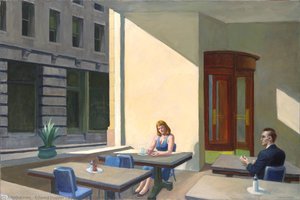 Sunlight in a Cafeteria - Edward Hopper
A single beam of light pierces the stillness, illuminating a moment of profound, shared solitude in Edward Hopper’s Sunlight in a Cafeteria (1958). This masterpiece earns its place among the top 25 artworks of Edward Hopper through its unparalleled ability to capture the quiet tension of modern existence. Through a masterful use of chiaroscuro , Hopper transforms a mundane urban setting into a stage for psychological drama, where the brilliant sunlight and deep, geometric shadows act as silent protagonists.
The painting is an essential pillar of American Realism, symbolizing the beautiful yet unsettling alienation found in the heart of the city. Its muted palette of beiges and grays, punctuated by sharp architectural lines, offers a sophisticated aesthetic that resonates deeply with contemporary design. At OriginalUniqueArt.com, we believe in democratizing this level of profound beauty. By offering high-fidelity, hand-painted reproductions, we enable you to bring the transformative, contemplative presence of Hopper’s light and shadow into your own home, office, or professional gallery space.
People in the Sun - Edward Hopper
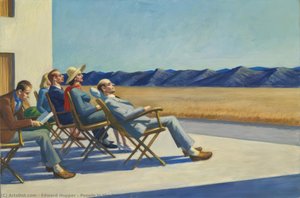 People in the Sun - Edward Hopper
In People in the Sun , Edward Hopper presents a masterclass in the quietude of the American landscape. Painted in 1960, this work captures five individuals suspended in a moment of serene repose, seated against an expansive, arid backdrop that stretches toward a brilliant blue sky. The composition utilizes a strong horizontal orientation, where the rhythmic placement of figures and wooden chairs creates a balanced, harmonious flow that draws the eye across the vastness of the scene.
Hopper’s signature use of light is on full display here; directional sunlight carves out distinct shadows, lending a sculptural three-dimensionality to the subjects. The palette—a sophisticated blend of earthy tones, soft greens, and sun-drenched blues—evokes a sense of peaceful introspection. While the figures share a space, each remains absorbed in their own internal world, embodying the profound themes of solitude and contemplation characteristic of Hopper's mature period. Owning a reproduction of this masterpiece is more than an acquisition; it is an inheritance of a lineage of taste, bringing the evocative light and emotional depth of American realism directly to your walls.
Cape Cod Morning - Edward Hopper
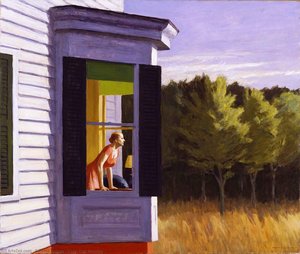 Cape Cod Morning - Edward Hopper
In Cape Cod Morning , the tactile essence of Edward Hopper’s mastery is found in the deliberate, layered application of oil paint that defines the stark white architecture against the lush, organic textures of the New England landscape. One can almost feel the weight of the impasto strokes used to render the vibrant red of the woman's dress and the heavy, sun-drenched shadows cast across the house. This interplay of light and physical texture is what secures its place among the top 25 artworks of Edward Hopper ; it is not merely a depiction of sunlight, but a structural use of pigment to evoke profound stillness.
At OriginalUniqueArt.com, our mission is to preserve this three-dimensional quality for your collection. Our hand-painted reproductions focus on capturing every visible brushstroke and the deep tonal range that digital prints lack. By meticulously recreating the physical depth of Hopper’s original canvas, we ensure that the contemplative mood and the architectural weight of this masterpiece are brought into your professional or residential space with absolute fidelity.
Rooms for Tourists - Edward Hopper
 Rooms for Tourists - Edward Hopper
In Rooms for Tourists , Edward Hopper captures that profound, universal moment when the world falls silent, leaving only the warm glow of a lighted window to anchor us against the vast, encroaching night. There is a haunting beauty in how he balances the architectural structure of the Victorian house with the deep, atmospheric blues of the evening, creating a sense of quiet anticipation and nostalgic solitude that resonates deeply with anyone who has ever sought refuge in the stillness.
This masterpiece earns its place among the top 25 artworks of Edward Hopper due to its masterful use of light and shadow—a hallmark of American Realism. The striking contrast between the golden interior light and the dark, nocturnal backdrop does more than define shape; it evokes a palpable emotional landscape of safety and isolation. At OriginalUniqueArt.com, we honor this legacy through our hand-painted oil reproductions . Our artists meticulously recreate every visible brushstroke and tonal depth, ensuring that the evocative mood and textured soul of Hopper’s original vision are preserved, allowing you to bring this timeless sense of tranquility into your own professional or private space.
New York Movie - Edward Hopper
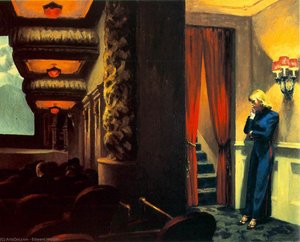 New York Movie - Edward Hopper
In New York Movie by Edward Hopper, the drama is not found in movement, but in the stark, cinematic interplay of light and shadow. The composition is anchored by a brilliant, almost voyeuristic glow that illuminates the woman against the deep, heavy crimson of the theater curtain. This masterful use of chiaroscuro creates a profound sense of psychological depth, casting much of the surrounding theater into an enigmatic gloom that mirrors the subject's internal solitude. As one of the top 25 artworks of Edward Hopper , this piece captures the tension between the public spectacle of the cinema and the private, contemplative world of the individual.
The way light spills across the scattered chairs and catches the edge of a clock creates a stillness so palpable it feels frozen in time. When choosing a high-quality oil reproduction for a contemporary space, this sophisticated manipulation of illumination offers more than mere decoration; it introduces a layer of atmospheric luxury and intellectual weight. A faithful reproduction of Hopper’s light brings a soulful, quiet strength to any professional or residential interior, inviting viewers to linger in the beautiful melancholy of the American urban experience.
Two Comedians - Edward Hopper
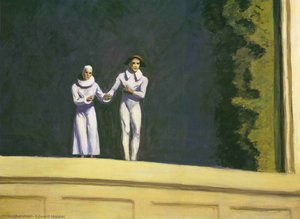 Two Comedians - Edward Hopper
What story does the heavy, shadowed backdrop of Two Comedians by Edward Hopper tell about the moments between the spotlight's glare? Painted in 1965, just a year before the artist’s passing, this work serves as a profound coda to his career, capturing the quiet, backstage tension of the human condition. The scene presents two figures in stark white costumes against a deep, nocturnal palette of midnight blues and muted greens, creating a sense of theatrical isolation that is quintessential to Hopper's mastery of New Realism.
As one of the top 25 artworks of Edward Hopper, this piece transcends mere performance; it explores the psychological weight of solitude. The subdued lighting and neutral expressions invite viewers into a contemplative space, making it an ideal selection for sophisticated interior curation. For those seeking to bring a sense of historical depth and atmospheric stillness to a modern home or corporate space, this painting offers a curated escape into the evocative, light-drenched shadows of mid-century American life.
First Row Orchestra - Edward Hopper
 First Row Orchestra - Edward Hopper
In First Row Orchestra , Edward Hopper captures a profound paradox of the human condition: the experience of being physically present yet psychologically distant. Painted in 1951, this striking composition presents an audience dressed for an elegant performance, yet each figure seems locked within their own silent narrative. The stark interplay of light and shadow across the seated figures evokes a sense of mid-century urban alienation, making it an essential inclusion in our collection of the top 25 artworks of Edward Hopper .
The painting’s enduring power lies in its ability to transform a simple social gathering into a meditation on solitude. Through precise lines and masterful tonal gradations, Hopper renders the textures of formal attire and the heavy stillness of the auditorium with uncanny realism. This emotional resonance is why his work remains a cornerstone of American modernism. At OriginalUniqueArt.com, we honor this legacy through our hand-painted oil reproductions . Our artists meticulously recreate every brushstroke and light gradation on 100% cotton canvas, allowing you to bring the evocative, quiet drama of Hopper’s vision into your own professional or private space.
Blackwell - Edward Hopper
 Blackwell - Edward Hopper
In Blackwell , Edward Hopper masterfully employs a rigorous geometric composition to anchor one of the most profound entries in his top 25 artworks. The painting is structured through a precise interplay of vertical architectural lines and the horizontal expanse of the harbor, creating a balanced, rhythmic stability that guides the eye across the New York cityscape. This structural harmony achieves a sense of timeless perfection, where the weight of the buildings is offset by the airy, cloudy sky and the distant, drifting boats.
The internal balance of Blackwell mirrors the core principles of modern minimalist design; its clean silhouettes and lack of ornamental clutter provide a grounding element for contemporary interiors. By stripping the scene down to essential shapes and tonal gradations of gray and beige, Hopper captures an atmosphere of quietude and urban isolation. This mastery of form and light ensures the piece remains an enduring icon of American realism, offering a sophisticated aesthetic that resonates deeply within modern architectural spaces.
untitled (6160) - Edward Hopper
 untitled (6160) - Edward Hopper
In untitled (6160) , Edward Hopper does not merely paint a scene; he composes a silent sonata of light and shadow. As you stand before this masterpiece, notice how the diffused illumination acts as a language of its own, casting a soft glow over three figures positioned against a curtained window. It is a profound study in American Realism, where the light does not just illuminate the room—it invents the very atmosphere of modern isolation.
The composition captures a palpable sense of detachment; two men and a woman exist within the same frame yet remain emotionally distant, their postures hinting at the unspoken anxieties of 1942. Through a muted palette of browns and creams, Hopper uses geometric precision to mirror the psychological walls of the era. The curtain serves as a poignant metaphor for concealment, while the solitary handbag adds a touch of mundane drama to this evocative urban landscape. This work remains a cornerstone of his top 25 collection because it transforms a simple interior into a portal of deep, introspective emotion.
Second Story Sunlight, , Whitney Museum of Ameri - Edward Hopper
 Second Story Sunlight, , Whitney Museum of Ameri - Edward Hopper
In the hushed, monochrome tones of Second Story Sunlight , Edward Hopper invites us into a world where silence speaks louder than words. As one of the most profound entries in our collection of the top 25 artworks of Edward Hopper , this 1960 masterpiece captures a moment of absolute stillness. The composition features two figures seated on a porch swing, facing away from one another; their backs turned to the viewer create an immediate sense of unspoken longing and psychological distance.
The starkness of the black and white palette strips away all distraction, forcing the eye to confront the raw geometry of light hitting sunlit walls against deep, impenetrable shadows. For the modern professional decorating a minimalist or corporate space, this work offers a sophisticated anchor. Its mastery of tonal gradation and structural elegance resonates with contemporary aesthetics that value contemplative depth. Hopper does not merely depict a porch; he captures the very essence of the modern condition —the experience of being physically present yet emotionally isolated.
Summer Evening - Edward Hopper
 Summer Evening - Edward Hopper
In Summer Evening (1947), Edward Hopper captures a profound moment of quietude that transcends simple realism to become a meditation on the human condition. As one of the most evocative pieces among the top 25 artworks of Edward Hopper , this painting utilizes a stark, cinematic composition to explore the tension between intimacy and isolation. The scene centers on a man and a woman standing on a porch, their proximity suggesting a shared connection that is simultaneously threatened by the encroaching darkness of the surrounding cityscape.
Hopper’s masterful use of chiaroscuro creates a sensory experience; the warm, localized glow from the porch lamp illuminates the figures against a muted palette of deep blues and earthy tones, sculpting form out of shadow. In today's hyper-connected yet often lonely digital age, this painting remains a powerful cultural touchstone. Its themes of urban solitude and the psychological weight of stillness resonate deeply in modern curated spaces, making it an essential study for anyone exploring the masterpieces of American realism .
Lighthouse HIll - Edward Hopper
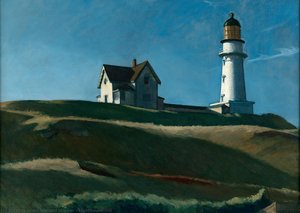 Lighthouse HIll - Edward Hopper
To stand before a landscape is to confront the vastness of one's own thoughts, a sensation captured with profound stillness in Lighthouse Hill by Edward Hopper . Painted in 1927, this work serves as a cornerstone in our collection of the top 25 artworks of Edward Hopper, representing a pivotal moment where his mastery of American realism met an almost haunting psychological depth. The composition presents a sentinel-like lighthouse overlooking a tranquil yet lonely hillside, where muted greens and earthy browns meet an expansive, cloudless blue sky.
Hopper’s technique is remarkably precise; his controlled brushwork sculpts the architecture of isolation, using light and shadow to create a sense of profound introspection. The placement of the modest houses suggests a narrative of quiet separation, mirroring the emotional distance often found in his most iconic scenes. This painting does more than depict a coastal view; it captures the very essence of solitude. For modern collectors and decorators, such a piece brings a timeless, contemplative energy to any professional or residential space, transforming a wall into a window of deep emotional resonance.
Hotel room - Edward Hopper
 Hotel room - Edward Hopper
In Edward Hopper’s 1931 masterpiece, Hotel Room , we encounter one of the most profound entries in the top 25 artworks of Edward Hopper. The scene is a masterclass in psychological realism, capturing a lone woman perched on the edge of a bed, lost in a book. Through a palette of earthy browns and soft creams, Hopper uses light to sculpt a sanctuary of introspection. Every detail—the solitary suitcase, the misplaced handbags, the heavy shadows—whispers of transience and the bittersweet solitude of modern life.
Owning Hotel Room by Edward Hopper isn’t merely a purchase; it is an inheritance of taste. It brings a lineage of American modernism directly to your walls, offering a focal point that anchors any space with its quiet strength. As you observe the subtle gradations of light falling across the linens, you aren't just looking at a painting; you are participating in a legacy of profound observation. This work remains an essential cornerstone for collectors seeking to capture the evocative, silent beauty of the human experience.
night windows - Edward Hopper
 night windows - Edward Hopper
In the pantheon of the top 25 artworks of Edward Hopper , Night Windows stands as a profound masterclass in atmospheric tension and psychological depth. Created in 1942, this piece captures the heavy, unspoken anxieties of a world at war, using the stark contrast of light and shadow to mirror the internal isolation of the human spirit. The composition, anchored by two windows that act as both gateways and barriers, invites the viewer into a space of quiet contemplation where the boundaries between the domestic interior and the vast, dark unknown begin to blur.
Hopper’s technical mastery is evident in his use of a muted, almost monochromatic palette, which heightens the sense of stillness within the room. This work earns its place among Hopper's most significant achievements by transforming a simple moment of solitude into a universal meditation on perception and loneliness. For modern collectors and designers, the essence of Night Windows offers a timeless way to introduce contemplative energy into a curated space, fostering a sophisticated dialogue between historical realism and contemporary architectural elegance.
Eleven AM - Edward Hopper
 Eleven AM - Edward Hopper
In Eleven AM by Edward Hopper, the composition achieves a profound structural harmony through a precise arrangement of geometric forms and light. The painting is anchored by the stark, vertical lines of the window frame and the seated figure, creating a balanced tension between the interior stillness and the indistinct cityscape beyond. This meticulous use of shape and negative space creates a sense of timeless perfection, securing its place among the top 25 artworks of Edward Hopper .
The internal balance of the piece mirrors the principles of modern minimalist design; the clean edges and restrained palette of muted yellows and deep shadows provide a grounding element for any contemporary aesthetic. As light filters through the scene, it illuminates the textures of the room—the soft drape of the couch and the quiet presence of the vase—evoking a mood of contemplative prestige. This interplay of light and shadow does more than define space; it captures the psychological weight of urban solitude, making the artwork an enduring masterpiece of American realism that resonates with both historical depth and modern elegance.
Girl at Sewing Machine - Edward Hopper
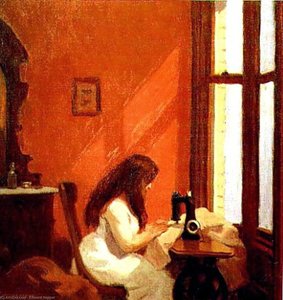 Girl at Sewing Machine - Edward Hopper
In Girl at Sewing Machine , one of the most profound entries in our collection of the top 25 artworks of Edward Hopper, there is a gaze that follows you—not with judgment, but with a deep, quiet understanding. This 1921 masterpiece is far more than a portrait of domestic industry; it is a mirror held up to the soul of modern solitude. As the subject sits immersed in her craft, the sunlight streaming through the window does not merely illuminate the room; it sculpts an atmosphere of heavy, beautiful stillness.
Hopper uses light to bridge the gap between the bustling New York brickwork outside and the meditative sanctuary within. The interplay of warm, sun-drenched surfaces against deep, receding shadows creates a tactile tension that makes the scene feel remarkably tangible. Now, imagine this evocative atmosphere in your own space. This painting does not watch you; instead, it serves as a gentle reminder that even in moments of isolation, we are part of a larger, shared human story. It is an essential piece for any collector seeking to capture the poetic essence of American realism.
Self-Portrait - Edward Hopper
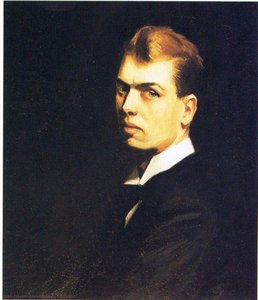 Self-Portrait - Edward Hopper
In the Self-Portrait of 1906, we encounter the raw, unvarnished beginnings of a master. Before he became the definitive chronicler of urban loneliness, Edward Hopper used this early work to explore the weight of his own gaze. There is a profound, quiet intensity in this study; it captures that universal moment of introspection where one looks into a mirror and sees not just a face, but the burgeoning anxieties of a modern soul. This piece earns its place among the top 25 artworks of Edward Hopper because it serves as the psychological blueprint for his later masterpieces, establishing his signature use of stark realism and emotional stillness.
The muted palette of grays and browns creates an atmosphere of palpable solitude, a precursor to the dramatic light and shadow that would define his career. At OriginalUniqueArt.com, we honor this legacy through our hand-painted oil reproductions . Our artists meticulously recreate every precise brushstroke and tonal depth found in this foundational work, allowing you to bring the haunting, contemplative beauty of Hopper’s early realism into your own professional or private space with museum-grade fidelity.
the el station - Edward Hopper
 the el station - Edward Hopper
In the quiet, heavy atmosphere of “The El Station,” Edward Hopper invites us into a moment suspended in time, where the bustling energy of the American metropolis is distilled into a poignant observation of stillness. This masterpiece earns its place among the top 25 artworks of Edward Hopper by capturing the profound tension of urban life—the way individuals can exist in separate worlds even while sharing the same platform. Through his signature use of light and shadow, Hopper creates a sense of luminosity that makes the weathered red brick and the amber glow of late afternoon feel palpably real.
The painting serves as a timeless meditation on modern solitude, a theme that continues to resonate in our fast-paced world. At OriginalUniqueArt.com, we honor this emotional depth through our hand-made oil reproductions . Our artists meticulously recreate Hopper’s precise brushstrokes and tonal gradations on 100% cotton canvas, ensuring that the evocative texture and melancholic beauty of this iconic scene can be brought into your own professional or personal space with museum-grade fidelity.
Conclusion
To wander through the works of Edward Hopper is to inhabit a space between light and shadow, where the silence of an empty diner or the glow of a lonely streetlamp speaks more loudly than words. These twenty-five masterpieces are far more than mere historical artifacts; they are living presences that continue to pulse with the quiet rhythms of the human condition. They remind us that even in moments of profound solitude, there is a shared, universal beauty found in the stillness of an afternoon or the stark geometry of urban life. As these canvases capture the essence of modern isolation and cinematic tension, they remain timeless anchors for the soul, inviting us to pause, reflect, and find meaning in the overlooked corners of our world.
At OriginalUniqueArt.com , we believe that such profound emotional resonance should not be confined to museum walls but integrated into the very fabric of our most cherished environments. We serve as a dedicated creative partner for architects, interior designers, and hospitality professionals who seek to transform hotels, villas, and corporate spaces into curated artistic statements. Whether you are furnishing a boutique hotel lobby or a private estate, we provide the technical precision and scale required for large-scale projects—offering custom collections, professional digital mockups to visualize placement, and museum-quality, hand-painted reproductions that bring the tactile depth of Hopper’s brushstrokes into your design vision. We invite you to explore the full collection and discover how these enduring shadows and lights can become the heartbeat of your next architectural masterpiece.