
 Se i rummet
 Del som kort
 Del
Del
 Detaljer
 Guide
Guide

 Download
 Lignende værker
 Røntgenundersøgelse
 Diasshow
 Spørgsmål og svar
 Statistikker
Chickens (En Mangeant du Maiz)


 Vis mere
Kunstværket vist på denne side er beskyttet af ophavsretsloven, hvilket betyder, at vi ikke lovligt kan skabe eller sælge en identisk reproduktion. Denne beskyttelse håndhæves i henhold til internationale aftaler som f.eks. den Bernerkonventionen og af nationale love, herunder de bestemmelser, der er fastlagt i Amerikansk ophavsretslov - Titel 17.
Denne metode overholder fuldt ud ophavsretsreglerne, da den ikke indebærer kopiering eller duplikering af det beskyttede kunstværk. I stedet er der tale om en kreativ nytolkning – et nyt maleri, som er inspireret af det oprindelige, men ikke identisk med det.
Giclée / Kunsttryk
Giclée- eller lærredstryk i museumskvalitet med hurtig produktion og fleksible muligheder for finish. ( Køb håndmalet maleri Skift til digitalt billede)




P118B Dkr10

P118H Dkr10

P118W Dkr10

P438Z Dkr10

P508JH Dkr12

P508YH Dkr12

P805H Dkr10

P805Z Dkr10

P919BZ Dkr10

P919G Dkr10

P919XJ Dkr10

P959ZH Dkr10

P968JZ Dkr12

W106C Dkr8

W218G Dkr10

W218JH Dkr8

W218Y Dkr10

W307PJ Dkr10

W316G Dkr10

W316PJ Dkr8

W316Y Dkr10

W398PJ Dkr8

W4111J Dkr10

W500HY Dkr15

W500JH Dkr15

W692G Dkr12

W849H Dkr8

W940BG Dkr15

W953PJ Dkr8




Vælg mellem vores forudindstillede størrelser, der matcher kunstværkets originale proportioner.

Indtast den bredde og højde, du har brug for, så det passer til din ramme eller din væg. Et print kan kun beskæres, aldrig gøres større end selve billedet, så en størrelse med et andet format vil medføre, at dele af motivet går tabt. Vi sender dig en digital mockup til godkendelse, før vi printer noget. Billedet vist på denne side viser ikke den faktiske beskæring — det er kun mockuppen, der gør.
Verdensomspændende levering () på 2 uger i stedet for de sædvanlige 4/5 uger. (5 november)

Gratis ekspresforsendelse til hele verden

Lærred af linned i høj kvalitet

Fuld transportforsikring

Garanti for refusion af told og importafgifter

Garanti for præcis farvegengivelse

100 dages returret ved fabrikationsfejl

100% fuld returret

Mængderabat ved flere køb
 Glasmulighed er kun tilgængelig i størrelser under 110 cm

Chickens (En Mangeant du Maiz)
Giclée / Kunsttryk
Størrelse på reproduktion
-


Samlet pris
Dkr 541
A Vibrant Symphony of Haitian Life
In the heart of Wilson Bigaud’s 1957 masterpiece, Chickens (En Mangeant du Maiz), we are invited into a moment of pure, unadulterated pastoral joy. This painting serves as a breathtaking window into the rhythmic simplicity of rural life, capturing a group of five chickens gathered around a bountiful pile of corn. The composition is anchored by a magnificent central figure, a large bird that commands the viewer's attention with its presence, while smaller companions flutter at its sides, creating a sense of natural movement and communal harmony. Through Bigaud’s lens, a mundane agricultural task is transformed into a vibrant spectacle of color and life, where every grain of corn and every feather seems to pulse with the energy of the Caribbean landscape.
The artistry of Bigaud is deeply rooted in his unique ability to blend sculptural depth with the fluid expressionism of Haitian painting. Having begun his journey as a sculptor, Bigaud brings an extraordinary sense of volume and materiality to this canvas. The chickens are not merely flat shapes; they possess a tactile quality that suggests weight and substance, as if one could reach out and feel the texture of their plumage. This technique, combined with a palette of rich, saturated hues, allows the foreground to pop against the soft, receding majesty of the distant mountains. The backdrop provides more than just depth; it offers a sense of permanence and peace, framing the lively feeding frenzy within the eternal embrace of the Haitian terrain.
The Soul of Caribbean Expressionism
To behold this work is to experience the essence of Caribbean Expressionism, a movement where color serves as the primary language of emotion. Bigaud utilizes light and pigment to evoke the warmth of the tropical sun, making the scene feel as though it is bathed in a perpetual afternoon glow. There is a profound symbolism found in the act of feeding; it represents abundance, fertility, and the interconnectedness of all living things within the natural order. For the collector or interior designer, this piece offers much more than mere decoration. It brings an infusion of vitality and warmth into any space, acting as a focal point that sparks conversation and invites contemplation.
For those seeking to adorn their homes with high-quality reproductions, Chickens (En Mangeant du Maiz) stands as an exemplary choice for creating an atmosphere of serenity and spirited charm. The painting’s ability to balance complex textures with a clear, engaging narrative makes it a versatile treasure for modern interiors. Whether placed in a sunlit gallery or a cozy living space, the artwork radiates a timeless quality, reminding us of the beauty found in life's simplest, most nourishing moments. It is an invitation to slow down, to observe the intricate dance of nature, and to celebrate the enduring spirit of Haitian creativity.
Spørgsmål og svar
Hvor kan man i dag se "Chickens (En Mangeant du Maiz)" af Wilson Biguad udstillet?
Du kan se det originale værk "Chickens (En Mangeant du Maiz)" på Haitian Art Society, Washington, D.C., United States of America.
Giver ophavsretten til "Chickens (En Mangeant du Maiz)" af Wilson Biguad tilladelse til reproduktioner?
Originalen af "Chickens (En Mangeant du Maiz)" findes på Haitian Art Society, og værket er stadig beskyttet af ophavsret.
Hvor lys eller mørk fremstår "Chickens (En Mangeant du Maiz)" af Wilson Biguad?
Den oplevede lysstyrke i "Chickens (En Mangeant du Maiz)" af Wilson Biguad er brilliant. Den kan tilpasses lyset i det tiltænkte rum.
Kunstnerbiografi
A Life Shaped by Clay and Canvas
Wilson Bigaud began his life in Port-au-Prince, Haiti, finding his first expression through the tactile world of sculpture. As a child, he worked with clay, molding figures that captured the weight and presence of the earth. This early focus on three-dimensional form gave him a unique way of seeing volume and light, a skill that would later define his paintings. His path changed when DeWitt Peters encouraged him to move away from carving and toward the two-dimensional surface of the canvas.
The legendary Hector Hyppolite played a significant role in bringing Bigaud into the Centre d'Art in 1946. Through this connection, he found himself part of a community where art was deeply tied to the rhythms of Haitian life. His work often drew from his own memories of the city, pulling from the sights and sounds of social gambling, Vodou ceremonies, and local melodramas. He did not merely paint scenes; he recorded the atmosphere of his surroundings.
The Weight of Color and Light
Bigaud developed a style that relied on thick layers of paint, known as impasto, to create surfaces you could almost feel. He had a particular way of using light and shadow to give his figures weight. While he was influenced by the techniques of artists like Edvard Munch and Oskar Kokoschka, his subject matter remained firmly rooted in the streets and traditions of Haiti. His palette often featured a specific, strange yellow light that bathed his scenes, from cemetery gatherings to village life.
His paintings often explored the tension between joy and hardship. He captured the energy of Carnival and the solemnity of religious life with equal intensity. Some of his most notable subjects included:
- The rituals of Vodou ceremonies
- Scenes of poverty and social gambling
- The movement of the rhythms of drums and rara
- Biblical narratives reimagined through a local lens
Recognition and Personal Struggles
In 1950, at the age of nineteen, Bigaud achieved international notice when his painting “Paradise” won second place at an International Exhibit in Washington, D.C. That same year, he worked on one of his most significant large-scale projects, a mural for the Holy Trinity Cathedral in Port-au-Prince depicting the wedding at Cana. This work allowed him to use scale to tell stories of faith and community.
However, the pressure of his success and the political shifts in Haiti took a heavy toll on his well-being. Between 1957 and 1961, Bigaud faced periods of acute depression and entered a mental institution. During these difficult years, he eventually retreated to Petit-Goave to find peace. When he returned to painting in the mid-sixties, some observers noted that the fire of his earlier work had changed, reflecting more of the fear and defeat he had experienced. Yet, even in these later years, works like “Village Wedding” showed a persistent spirit and an ability to reclaim the energy of his youth.

Wilson Biguad
1931 - 2010 , Haiti
Kort om kunstneren
- Artistic Movement Or Style: Caribbean Expressionism
- Artists Or Movements Influenced By This Artist: ['Contemporary Haitian artists']
- Artists Who Influenced This Artist:
- Hector Hyppolite
- Edvard Munch
- Oskar Kokoschka
- Full Name: Wilson Biguad
- Nationality: Haitian
- Notable Artworks:
- Paradise
- The Wedding at Cana
- Untitled (Guédés at the Cemetary)
- Place Of Birth: Port-au-Prince, Haiti
- Date Of Birth: 1931
- Date Of Death: 2010
Relaterede artikler

Tysk Ekspressionisme: 10 Mesterværker der Definerede en Æra – Kunst til Dit Hjem
Oplev de 10 mest ikoniske værker fra Tysk Ekspressionisme! Lær historierne bag Kirchner, Nolde & Kandinsky. Find museumskvalitets kunsttryk og inspiration til din indretning på OriginalUniqueArt.com – udforsk samlingen online.

Top 10 Abstrakt Ekspressionisme Mesterværker – Kunst der Forandrede Verden | OriginalUniqueArt.com
Oplev de 10 mest ikoniske værker inden for Abstrakt Ekspressionisme – Jackson Pollock, Mark Rothko og mere. Lær historien bag kunstnerne & teknikken. Find museumskvalitets reproduktioner på OriginalUniqueArt.com.

Figurative Expressionism: Emotional Intensity & Subjective Reality in 20th-Century Art
Explore the powerful world of Figurative Expressionism with OriginalUniqueArt. Discover key artists like Kirchner & Beckmann, understand its emotional depth, and learn how to collect this influential 20th-century art movement.

Unmasking Emotion: A Journey Through the Raw Power and Visceral Beauty of German Expressionism
Explore the raw emotional power of German Expressionism. From Kirchner to Die Brücke, discover how artists used distortion and vibrant color to unmask the human psyche. A deep dive into art history for the discerning collector and enthusiast.
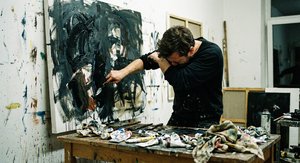
The Raw Emotion of Expressionism: A Deep Dive into its History, Characteristics & Enduring Influence
Explore the raw emotion of Expressionism with OriginalUniqueArt. Discover its history, key artists like Kirchner & Munch, and lasting influence on modern art. Expert insights for collectors & enthusiasts.