

 Se i fuld skala
 Del
Del Del
Del
 Detaljer

 Download
 Lignende værker
 Røntgenundersøgelse
 Diasshow
Quiet Ochre

 Se mere
Køb et højopløst, forbedret digitalt billede, der er langt bedre end online-forhåndsvisningen.
Hver fil er omhyggeligt forberedt af vores interne specialister ved hjælp af avancerede værktøjer og ekspertmæssig manuel retuschering. Vi sikrer, at hvert billede har enestående klarhed, præcis farvegengivelse og fine detaljer.
Den endelige fil leveres via e-mail inden for 72 timer og er optimeret til øjeblikkelig brug i professionelle, redaktionelle og trykte miljøer. Det er den samme kvalitet, som førende designstudier, forlag og gallerier har tillid til.
Digitalt billede
Download en højopløselig fil til personlig fremvisning, print og kreative projekter. ( Køb print Køb håndlavet maleri)
Inkluderet i alle ordrer på digitale billeder
Ekspert digital levering, garanteret
Når du vælger OriginalUniqueArt.com, får du ikke blot et billede – du modtager et professionelt optimeret digitalt kunstværk, skabt med præcision og sikret med en tilfredshedsgaranti. Her er alt, hvad din ordre automatisk indeholder:

Hurtig levering via e-mail
Din højkvalitets digitale billedfil vil blive sendt til din e-mail inden for 72 timer efter bestilling – klar til øjeblikkelig brug.

AI-optimeret digital fil
Dit kunstværk optimeres professionelt ved hjælp af avancerede AI-værktøjer og manuel redigering, hvilket sikrer maksimal detaljegrad, klarhed og farvenøjagtighed.

Gratis livslang genlevering
Har du ved en fejl slettet eller mistet din fil? Ingen bekymring – vi sender den igen til enhver tid, helt gratis.

Ingen importgebyrer – nogensinde
Nyd dit kunstværk med det samme uden told, afgifter eller leveringsgebyrer – digitale downloads er altid skattefrie.

Garanteret farvenøjagtighed
Vi sikrer, at dit digitale billede gengiver de originale farver så præcist som muligt ved hjælp af professionelle værktøjer og farvestyring.

60 dages tilfredshedsgaranti
Hvis du ikke er tilfreds med dit digitale billede, vil vi revidere det eller refundere 100% inden for 60 dage – uden spørgsmål.

100% Pengene tilbage-garanti
Ik tilfreds? Få fuld refusion inden for 60 dage efter modtagelse af din digitale fil – uden spørgsmål.

Mængderabat
Køb 3 billeder, spar 10% - Køb 5, spar 15% - Køb 10+, spar 20%. Ideelt til kreative projekter, gallerier og bureauer.
Kunstnerens biografi
A Legacy of Form and Essence: The Life of William Scott
The story of William Scott is one of profound duality, a narrative woven from the rugged textures of his Scottish roots and the delicate, abstract geometries of his mature vision. Born in Greenock, Scotland, on February 15, 1913, to parents of Irish and Scottish heritage, Scott’s early life was marked by a sudden, transformative tragedy. The loss of his father, a dedicated housepainter, in a local fire during his childhood instilled in the young artist a deep-seated awareness of human fragility—a theme that would subtly underpin the structural strength of his later compositions. As he moved to Enniskillen, Northern Ireland, the landscapes and rhythms of Ulster began to settle into his consciousness, providing a foundational palette for a career that would eventually transcend borders and redefine the boundaries of British modernism.
His artistic education was a journey of disciplined mastery and intellectual expansion. From the early guidance of Kathleen Bridle at the Belfast Technical School to the prestigious halls of the Royal Academy Schools in London, Scott’s development was characterized by an insatiable curiosity for both form and feeling. It was during his time in London that he forged connections with luminaries such as the poet Dylan Thomas, a friendship that enriched his work with a lyrical, almost poetic sensibility. Initially drawn to sculpture, Scott eventually pivoted toward painting, finding in the medium a way to explore the tension between the tangible world and the abstract idea. This period of experimentation was furthered by his travels through France and Italy, where he found kinship with the French tradition of still life, drawing inspiration from the lineage of Chardin and Braque.
The Alchemy of Still Life and Abstraction
To look upon a William Scott painting is to witness a silent dialogue between object and space. He did not merely paint still lifes; he distilled them. His work often centered on the humble—kitchen utensils, fragments of pottery, and organic shapes—yet through his lens, these everyday items were elevated to symbols of cosmic order. In his hands, a simple bowl or a shard of ceramic became part of a larger, rhythmic arrangement of flat planes of color and sensitive, painterly lines. While his work was rooted in the recognizable, he moved with remarkable fluidity toward pure abstraction, particularly during the 1950s. Even in his most abstract phases, the ghost of the object remained, providing a structural anchor that prevented his compositions from drifting into total formlessness.
The technique of Scott was never about mere imitation; it was about the sensation of depth within flatness. As the critic Patrick Heron famously noted, Scott possessed a brilliant ability to evoke space and depth through a seemingly two-dimensional surface. His later works, particularly those from the 1960s and 1970s, moved toward a more austere and monumental style. The compositions became more stripped back, focusing on the raw power of geometric shapes—circles, squares, and arcs—that felt organic rather than mathematically precise. This evolution reflected a maturing artist who had moved beyond the need for narrative, finding instead a profound truth in the balance of weight, light, and shadow.
A Titan of Modernism and Lasting Significance
The achievements of William Scott are etched into the very fabric of 20th-century art history. As a central figure of the Post-war generation, he stood alongside giants like Peter Lanyon and Patrick Heron, helping to establish a uniquely British voice within the international modernist movement. His accolades were numerous, including winning first prize at the prestigious 1959 John Moores Liverpool Exhibition, a moment that solidified his standing among the elite of his era. His influence extended beyond the canvas; as Head of Painting at the Bath Academy of Art, he helped shape the pedagogical landscape for future generations of artists.
Today, the significance of Scott’s oeuvre lies in its enduring ability to bridge the gap between the figurative and the abstract. His work remains a testament to the idea that art can be both deeply personal and universally resonant. The presence of his paintings in the world's most esteemed institutions—including the Tate, the Guggenheim Museum, and the Museum of Modern Art (MoMA)—ensures that his exploration of form, space, and the essence of objects continues to inspire. He remains a pioneer of Ulster abstraction, an artist who took the fragments of a broken world and rearranged them into a vision of enduring, structured beauty.
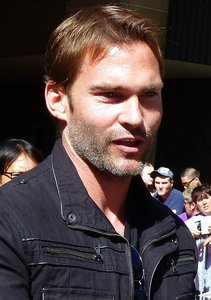
William Scott
1913 - 1989 , United Kingdom
Kort om kunstneren
- Artistic Movement Or Style: Abstract Still Life
- Artists Or Movements Influenced By This Artist: ['Modernist Art']
- Artists Who Influenced This Artist: ['Henry Raeburn']
- Date Of Birth: February 15, 1913
- Date Of Death: 1989
- Full Name: William Scott CBE RA
- Nationality: British
- Notable Artworks:
- The Sheep Farm
- The Colonel with William Scott up and John Scott
- Place Of Birth: Greenock, United Kingdom

