

 Se i fuld skala
 Del
Del Del
Del
 Detaljer

 Download
 Lignende værker
 Røntgenundersøgelse
 Diasshow
 Statistik
Isabella Appiani


 Se mere
Håndlavet oliereproduktion
Håndmalet olie på lærred i din valgte størrelse og ramme, udført efter bestilling af vores kunstnere. ( Skift til print Skift til digitalt billede)




































Vælg mellem vores forudindstillede størrelser, der matcher kunstværkets originale proportioner.

Du kan indtaste dine egne mål for at passe til en bestemt ramme eller plads. Hvis den valgte størrelse ikke stemmer overens med det originale billedes proportioner, vil vi enten beskære kunstværket eller udvide maleriet med yderligere håndmalede elementer. En digital skitse sendes til din godkendelse, før produktionen påbegyndes.
Bemærk venligst, at forhåndsvisningen på skærmen ikke afspejler den faktiske beskæring eller udvidelse. Kun skitsen vil nøjagtigt vise den endelige komposition.
Selvom specialmål er mulige, anbefaler vi at vælge en dimension fra den foruddefinerede liste for at bevare de originale proportioner.
Efter bestilling vil OriginalUniqueArt.com team sende en e-mail til kunden for at få instruktioner og levere et udkast til en skitse.
Levering i hele verden () på 3/4 uger i stedet for de standard 5 uger. (18 september). Ingen kompromiser med kvaliteten.

Gratis ekspresforsendelse til hele verden

Lærred af linned i høj kvalitet

Fuld transportforsikring

Garanti for refusion af told og importafgifter

Garanti for præcis farvegengivelse

100 dages returret (kun ved fejl og mangler)

100% Tilfredshedsgaranti

Mængderabat tilgængelig
 Glasmulighed er kun tilgængelig i størrelser under 110 cm

Isabella Appiani
Reproduktionsmetode
Størrelse på reproduktion
-


Samlet pris
$ 300
Kunstnerens biografi
Pieter Bruegel the Elder: A Window into 16th-Century Life
Pieter Bruegel the Elder, a name synonymous with Flemish art of the 16th century, wasn’t merely a painter; he was a chronicler of his time, a keen observer of human nature, and a master storyteller rendered in oil on panel. Born around 1525 in Breda, a bustling city within the Duchy of Brabant (now part of Belgium), Bruegel’s life unfolded against a backdrop of political upheaval, religious reform, and burgeoning urban centers. While details about his early years remain somewhat elusive, it's believed he was apprenticed to Pieter Coecke van Aelst, a prominent Antwerp artist known for his versatility as a sculptor, architect, and tapestry designer – an experience that undoubtedly shaped the foundations of Bruegel’s artistic development.
Bruegel’s career blossomed in Brussels, a vibrant hub of commerce and culture. He quickly established himself as a respected painter, attracting commissions from wealthy patrons including Margaret of Austria, regent of the Netherlands, and various noble families. His early works often showcased a refined elegance, reflecting the influence of Italian Renaissance art – particularly the subtle color palettes and classical motifs prevalent in the work of artists like Raphael and Giovanni Bellini. However, it was his later paintings that truly cemented his legacy, marking a distinct shift towards a uniquely Bruegelian style characterized by earthy tones, dynamic compositions, and an unparalleled ability to capture the essence of everyday life.
The Landscapes and Scenes of Rural Life
Bruegel’s artistic trajectory is marked by a fascinating evolution. Initially, his landscapes were imbued with a delicate beauty reminiscent of Flemish tradition. But as he matured, he began to infuse them with a distinctly observational quality, depicting scenes of peasant life with remarkable realism and psychological depth. These weren't idealized depictions; instead, they presented a raw and often humorous portrayal of rural existence – harvests, festivals, hunts, and the simple routines of daily labor. His paintings aren’t simply records of events; they are imbued with social commentary, subtly critiquing human folly and celebrating the resilience of ordinary people.
Consider his iconic “Peasant Wedding” (1567), a masterpiece that captures the chaotic energy and boisterous joy of a rural celebration. The painting is not just visually arresting; it’s packed with symbolic details – the drunken farmer, the dancing couple, the discarded food – all contributing to a broader meditation on human behavior and societal values. Similarly, “The Goldsmith” (1564) offers a poignant glimpse into the solitary life of a craftsman, highlighting his dedication and the potential for both reward and disappointment in his profession.
Technique and Innovation
Bruegel’s artistic technique was as innovative as it was masterful. He employed a distinctive palette dominated by earthy browns, greens, and ochres, creating a sense of groundedness and realism. His brushwork is often loose and expressive, conveying movement and emotion with remarkable immediacy. Crucially, Bruegel was a pioneer in the use of perspective, particularly atmospheric perspective – employing variations in color and detail to create the illusion of depth and distance. This technique, combined with his meticulous attention to detail, allowed him to render landscapes with astonishing accuracy and realism.
Furthermore, Bruegel’s mastery of composition is evident in his ability to pack a great deal of information into each painting – figures, objects, and symbolic elements all vying for the viewer's attention. He frequently utilized crowded scenes, creating a sense of dynamism and immediacy that draws the eye across the canvas. His use of diagonals and overlapping forms further enhances this effect, contributing to the overall feeling of movement and energy.
Influence and Legacy
Pieter Bruegel the Elder’s influence on subsequent generations of artists is profound. His focus on everyday life, his realistic depictions of rural scenes, and his innovative use of perspective paved the way for later masters such as Jan Bruegel the Younger (his son), Lucas Cranach the Elder, and Pieter de Hooch. His work also resonated with the rise of Northern Mannerism, a style characterized by elongated figures, distorted perspectives, and an emphasis on psychological expression.
Beyond his direct influence on individual artists, Bruegel’s paintings offer invaluable insights into 16th-century society – its customs, beliefs, and values. His works serve as a powerful reminder of the enduring appeal of depicting the human condition in all its complexity and contradictions. Today, Bruegel's paintings are celebrated for their artistic merit, their historical significance, and their timeless ability to connect with viewers across centuries.
Key Works
- The Peasant Wedding (1567)
- The Goldsmith (1564)
- Landscape with the Fall of Icarus (c. 1560-1563)
- Hay Harvest (c. 1560-1563)
- Tower Scene (c. 1563)
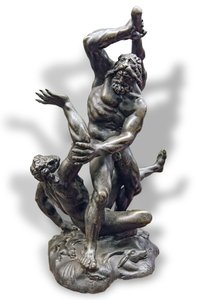
willem danielsz van tetrode
1525 - 1587 , Netherlands
Kort om kunstneren
- Artistic Movement Or Style: Flemish Renaissance
- Artists Or Movements Influenced By This Artist: ['His sons (Jan & Pieter)']
- Artists Who Influenced This Artist: ['Pieter Coecke van Aelst']
- Date Of Birth: c. 1525
- Date Of Death: 1569
- Full Name: Pieter Bruegel the Elder
- Nationality: Flemish
- Notable Artworks:
- Peasant Wedding
- Hunters in the New World
- The Goldsmith
- Fall of the Innocents
- Place Of Birth: Breda, Brabant
Relaterede artikler

The Enduring Allure of Marble in Art History: From Classical Sculpture to Modern Abstraction
Explore the captivating history of marble sculpture from ancient Greece to modern art. Discover renowned artists like Canova & Michelangelo, carving techniques, and investment insights at OriginalUniqueArt.

The Enduring Form: Exploring Themes & Techniques in Sculpture Across Historical Periods
Explore the rich history of sculpture from ancient masterpieces to contemporary innovations. Discover key techniques, influential artists & investment potential for discerning art collectors.

Rembrandts Mesterværker: Top 25 Kunstværker til Din Væg – OriginalUniqueArt.dk
Oplev Rembrandts 25 mest ikoniske kunstværker! Fordyb dig i historierne bag 'Nattevagten', hans selvportrætter og bibelske motiver. Find museumskvalitets reproduktioner & inspiration til din væg på OriginalUniqueArt.com.

Bronzeskulpturers Mestre: 10 Værker der Ændrede Kunsthistorien | OriginalUniqueArt
Oplev de 10 mest legendariske bronzeskulpturer, der har formet kunsthistorien! Fra Rodin til Vigeland – lær historierne bag mesterværkerne og find inspiration til din indretning. Køb museumskvalitets reproduktioner på OriginalUniqueArt.com.

Hollandsk Barok: Top 10 Mesterværker der Definerede en Æra – Kunst til Dit Hjem
Oplev Hollandsk Barok's 10 mest ikoniske værker! Rembrandt, Vermeer & co. – dyk ned i historien bag mesterværkerne og find inspiration til din boligindretning. Køb luksus kunsttryk på OriginalUniqueArt.com.