

 Se i rummet
 Send
Send Del
Del
 Detaljer
 Studieguide til kunstværker

 Download
 Lignende værker
 Røntgenundersøgelse
 Se diasshow
 Statistik
Passport No.2
 Oil On Canvas
- WallArt
- Contemporary Art
 Contemporary
 150.0 x 120.0 cm
 Today Art Museum
 Læs mere
Håndlavet oliereproduktion
Håndmalet olie på lærred i din valgte størrelse og ramme, udført efter bestilling af vores kunstnere. ( Skift til printversion Skift til digitalt billede)




P118B Dkr10

P118H Dkr10

P118W Dkr10

P438Z Dkr10

P508JH Dkr12

P508YH Dkr12

P805H Dkr10

P805Z Dkr10

P919BZ Dkr10

P919G Dkr10

P919XJ Dkr10

P959ZH Dkr10

P968JZ Dkr12

W106C Dkr8

W218G Dkr10

W218JH Dkr8

W218Y Dkr10

W307PJ Dkr10

W316G Dkr10

W316PJ Dkr8

W316Y Dkr10

W398PJ Dkr8

W4111J Dkr10

W500HY Dkr15

W500JH Dkr15

W692G Dkr12

W849H Dkr8

W940BG Dkr15

W953PJ Dkr8




Vælg mellem vores forudindstillede størrelser, der matcher kunstværkets originale proportioner.

Du kan indtaste dine egne mål for at passe til en bestemt ramme eller plads. Hvis den valgte størrelse ikke stemmer overens med det originale billedes proportioner, vil vi enten beskære kunstværket eller udvide maleriet med yderligere håndmalede elementer. En digital skitse sendes til din godkendelse, før produktionen påbegyndes.
Bemærk venligst, at forhåndsvisningen på skærmen ikke afspejler den faktiske beskæring eller udvidelse. Kun skitsen vil nøjagtigt vise den endelige komposition.
Selvom specialmål er mulige, anbefaler vi at vælge en dimension fra den foruddefinerede liste for at bevare de originale proportioner.
Efter bestilling vil OriginalUniqueArt.com team sende en e-mail til kunden for at indhente instruktioner og fremsende et udkast til gennemgang.
Levering i hele verden () på 3-4 uger i stedet for de standard 5 uger. (3 oktober). Ingen kompromiser med kvaliteten.

Gratis ekspresforsendelse til hele verden

Lærred af linned i høj kvalitet

Komplet transportforsikring

Garanti for refusion af told og importafgifter

Garanti for autentisk farvegengivelse

100 dages returret ved fabrikationsfejl

100% fuld returret

Mængderabat ved flere køb
 Glasmulighed er kun tilgængelig i størrelser under 110 cm

Passport No.2
Reproduktionsmateriale
Reproduktionsstørrelse
-


Samlet pris
Dkr 1930
The Intersection of Identity and Bureaucracy
In the profound and intellectually stimulating work Passport No.2, the renowned Chinese contemporary artist Wang Guangyi invites viewers into a complex dialogue between the individual and the state. At first glance, the painting presents a striking portrait of a man, poised in a suit and tie, his gaze directed thoughtfully away from the viewer. Yet, this is no traditional portrait; it is a layered exploration of how human identity is codified, categorized, and ultimately reduced to data. The presence of text—words such as "passport," "names," "sex," "male," and "date of birth"—intertwines with the figure, creating a visual tension between the living, breathing subject and the cold, clinical labels used by bureaucratic institutions to define existence.
The composition is masterfully executed, utilizing a style that bridges the gap between classical oil painting techniques and the bold, graphic language of modern propaganda. Wang Guangyi, a pivotal figure in the Great Criticism movement, utilizes his background in socialist realism to manipulate imagery that feels both familiar and unsettling. The man’s attire—the formal suit and glasses—suggests a sense of professional or civic order, yet the scattered red and black typography acts as a disruptive force, much like the intrusive nature of modern surveillance and globalized movement. This interplay of text and image forces the eye to oscillate between the human face and the administrative script, mirroring the way we navigate our lives through the lens of official documentation.
A Masterpiece of Symbolic Critique
To understand Passport No.2 is to understand the historical weight of Wang Guangyi’s era. Emerging from the transformative period of the Cultural Revolution in China, Wang developed a unique visual vocabulary that critiques the collision between political ideology and the rising tide of global consumerism. In this specific piece, the symbolism of the "visa" and "passport" serves as a poignant metaphor for the boundaries—both physical and psychological—that define our place in the world. The inclusion of specific identifiers like "China" and "birth place" grounds the work in a geopolitical reality, reminding us that our identities are often constructed by the borders we inhabit and the documents we carry.
For the discerning collector or interior designer, this artwork offers more than just visual prestige; it provides a profound intellectual anchor for any sophisticated space. The large-scale 150 x 120 cm format allows the intricate details of the brushwork and the sharp clarity of the typography to command attention, making it an ideal centerpiece for galleries, executive offices, or modern living environments that value thought-provoking contemporary art. The muted tones, punctuated by the authoritative red lettering, create a palette that is both somber and commanding, ensuring that the piece resonates with an emotional depth that lingers long after the initial viewing.
Investing in a high-quality reproduction of this work allows one to bring the heavy, contemplative atmosphere of Wang Guangyi’s vision into their own collection. It is a piece that invites conversation, challenging guests and residents alike to reflect on the nature of freedom, identity, and the invisible structures that govern our modern lives. Through its masterful blend of portraiture and graphic design, Passport No.2 remains a timeless testament to the power of art to interrogate the very essence of what it means to be human in an increasingly regulated world.
Spørgsmål & svar
Hvordan forenes medie og bevægelse i "Passport No.2"?
"Passport No.2" af Wang Guangyi kombinerer Oil On Canvas-teknikken med Contemporary Art-stilen. Teknik og stilart beskriver værkets fremstilling og æstetiske udtryk.
Hvad handler "Passport No.2" om, og hvilken atmosfære formidler den?
"Passport No.2" af Wang Guangyi skildrer portrait, man in suit, bureaucracy, identity, socialist imagery, consumerism, textual elements i en Bold stemning. Motiv og atmosfære beskriver tilsammen værket.
Hvilken følelsesmæssig stemning formidler "Passport No.2" af Wang Guangyi?
"Passport No.2" er forbundet med en Reflective følelse. Den emotionelle tone beskriver det indtryk, værket efterlader.
Hvor kan jeg købe en håndmalet reproduktion af "Passport No.2" af Wang Guangyi?
"Passport No.2" er tilgængelig som en håndmalet oliereproduktion på lærred af hør. Bestilling kan foretages på denne side, med valgmulighed mellem forskellige størrelser.
Hvilken kunstner tilskrives "Passport No.2"?
"Passport No.2" tilskrives Wang Guangyi.
Hvordan kan jeg få et tryk af "Passport No.2" af Wang Guangyi?
Et print af "Passport No.2" af Wang Guangyi kan bestilles direkte på denne side: et fine art-print på bomuldscanvas eller arkivbestandigt lærredspapir.
Hvor stor er den originale "Passport No.2"?
Det originale værk "Passport No.2" af Wang Guangyi måler 150 x 120 cm.
Om kunstneren
Wang Guangyi: En Biografi
Tidligt liv og uddannelse
- Født: Harbin, Kina (1957)
- Oplevede Kulturrevolutionen og arbejdede i en landbrugslandsby, før han forfulgte sin kunstneriske karriere.
- Studerede ved Zhejiang Academy of Fine Arts, hvor han dimitterede fra afdelingen for oliemaling i 1984.
Kunstnerisk udvikling og hovedværker
- Tidlige værker (1980'erne): Udforskede vestlig filosofi gennem serier som "North Pole" og "Post-Classical", ofte ved brug af gråtoner og referencer til ikoniske vestlige kunstværker for at bryde med klassiske stilarter.
- The Great Criticism-serien (1990-2007): Dette er Wang Guangyis mest berømte værkcyklus, der kombinerer socialistisk billedsprog fra Kulturrevolutionen med vestlige forbrugermærker og logoer. Serien kritiserer konflikten mellem politisk ideologi og kommercialisme. Eksempler inkluderer "Great Criticism: Coca-Cola."
- VISA, Passport, and Virus Carriers-serien (1990'erne): Disse installationer præsenterer billeder af individer ledsaget af bureaukratisk information, hvilket kommenterer på statslig kontrol og individuel identitet.
- Materialist-serien (2001-2005): Udforskede transcendente temaer ved brug af skulpturer udledt af propagandabilleder, hvilket afspejler en interesse for dialektisk materialisme.
Indflydelser og kunstnerisk stil
- Ernst Gombrich: Wang nævner Gombrichs teori om nedarvede "skemaer" som værende indflydelsesrig for hans kunstneriske tilgang til kulturel revision og kontinuitet.
- Andy Warhol & Joseph Beuys: Inspireret af disse kunstnere udviklede Wang en Political Pop-stil, der forener socialistisk billedsprog med referencer til forbrugskulturen.
- <Political Pop: Wang betragtes som en førende skikkelse i Political Pop-bevægelsen, hvor han bruger kunsten som et værktøj til at kritisere politiske og kommercielle magtstrukturer.
Historisk betydning og eftermæle
- <Leder af den nye kunstbevægelse (Post-1989): Wang Guangyi spillede en væsentlig rolle i formningen af kinesisk samtidskunst efter 1989.
- <Kritik af propaganda: Hans arbejde udfordrer beskueren til kritisk at undersøge propaganda fra både socialistiske og kapitalistiske systemer.
- <Global anerkendelse: Hans værker er udstillet over hele verden og indgår i store internationale museumssamlinger, hvilket cementerer hans position som en betydningsfuld skikkelse i samtidskunsten.

Wang Guangyi
1957 -
Hurtige fakta
- Artistic Movement Or Style: Political Pop
- Artists Who Influenced This Artist:
- Andy Warhol
- Joseph Beuys
- Ernst Gombrich
- Date Of Birth: 1957
- Full Name: Wang Guangyi
- Nationality: Kinesisk
- Notable Artworks:
- North Pole-serien
- Post-Classical-serien
- Great Criticism-serien
- VISA-serien
- Passport-serien
- Place Of Birth: Harbin, Kina
Relaterede artikler
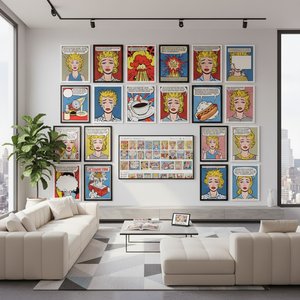
Roy Lichtensteins 25 Mesterværker: Pop Art Ikoner til Dit Hjem | OriginalUniqueArt
Oplev Roy Lichtensteins 25 mest ikoniske pop art værker. Dyk ned i historien bag kunstneren, teknikken og farverne der definerede en æra. Find museumskvalitets reproduktioner og inspiration til dit hjem på OriginalUniqueArt.com
Challenging Conventions: Pop Art's Origins, Evolution & Enduring Legacy
Explore the fascinating history of Pop Art, from its rebellious origins to its enduring influence on contemporary artists. Discover key figures like Warhol & Lichtenstein and learn about collecting this iconic movement.
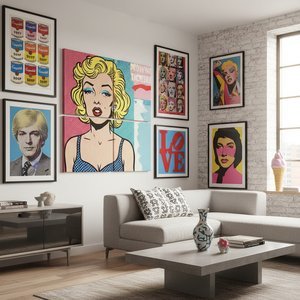
Pop Art's Ikoner: Top 10 Mesterværker der Definerede en Æra | OriginalUniqueArt.dk
Oplev Pop Art's 10 mest ikoniske værker! Fra Andy Warhol til Roy Lichtenstein – dyk ned i historien bag farverige mesterværker og find inspiration til din bolig. Køb museumskvalitets kunsttryk på OriginalUniqueArt.com.

Aggressive Pop Art: The Bold Rebellion of Confrontational Imagery and its Impact on Modern Aesthetics
Explore the provocative world of Aggressive Pop Art. Discover how confrontational imagery, bold saturated hues, and mass media deconstruction redefined modern aesthetics through an expert art-historical lens.
Aggressive Confrontational Pop: The Bold Rebellion of Modern Art and Its Impact on Contemporary Aesthetics
Explore the visceral power of Aggressive Confrontational Pop. From the rebellion of NO!art to Neo-Pop icons, discover how bold aesthetics and social critique redefined modern art for today's discerning collectors.