

 Send
Send Del
Del
 Detaljer
 Studieguide til kunstværker

 Download
 Lignende værker
 Se diasshow
 Statistik
Jupiter
 Marble
- Sculpture
- Neoclassical period
 1783
1783- 19th Century
 120.0 x 142.0 cm
 Galleria Borghese
 Læs mere
Håndlavet oliereproduktion
Håndmalet olie på lærred i din valgte størrelse og ramme, udført efter bestilling af vores kunstnere. ( Skift til printversion Skift til digitalt billede)




































Vælg mellem vores forudindstillede størrelser, der matcher kunstværkets originale proportioner.

Indtast den bredde og højde, du har brug for, så det passer til din ramme eller din væg. Da dette er håndmalet, kan kunstneren ved en anden form på størrelsen male lidt mere rundt om billedet eller skære lidt væk — det er op til dig. Vi sender dig et digitalt mockup til godkendelse, før maleriet påbegyndes. Billedet, der vises på denne side, viser ikke det endelige resultat — det er kun mockuppet, der gør.
Efter bestilling vil OriginalUniqueArt.com team sende en e-mail til kunden for at indhente instruktioner og fremsende et udkast til gennemgang.
Levering i hele verden () på 3-4 uger i stedet for de standard 5 uger. (21 oktober). Ingen kompromiser med kvaliteten.

Gratis ekspresforsendelse til hele verden

Lærred af linned i høj kvalitet

Komplet transportforsikring

Garanti for refusion af told og importafgifter

Garanti for autentisk farvegengivelse

100 dages returret ved fabrikationsfejl

100% fuld returret

Mængderabat ved flere køb
 Glasmulighed er kun tilgængelig i størrelser under 110 cm

Jupiter
Reproduktionsmateriale
Reproduktionsstørrelse
-


Samlet pris
Dkr 1957
The Majesty of Jupiter: A Roman Masterpiece by Vincenzo Pacetti
Vincenzo Pacetti’s “Jupiter,” executed in 1783-84, is more than just a marble sculpture; it's a profound meditation on power, divinity, and the enduring legacy of classical antiquity. This imposing figure, housed within the Galleria Borghese in Rome, immediately commands attention with its sheer scale – measuring an impressive 120 x 142 cm – yet it’s the subtle nuances of expression and the masterful execution that truly elevate this work to a level of timeless artistry.
The sculpture depicts Jupiter, the king of the gods in Roman mythology, seated upon a commanding chair. His posture is one of deliberate authority, his gaze fixed forward with an air of serene dominance. Noticeably absent are the flamboyant gestures often associated with depictions of Zeus; Pacetti favors a more restrained elegance, conveying power through stillness and dignified presence. The drapery, meticulously carved to suggest both weight and fluidity, clings to his form, emphasizing his muscular physique and hinting at the boundless energy contained within.
A Restorer’s Vision: Technique and Historical Context
Pacetti's unique approach to sculpture stemmed from his dual role as a sculptor and restorer of ancient Roman works. This experience profoundly shaped his artistic philosophy, leading him not simply to replicate existing forms but to actively *complete* fragmented sculptures, informed by his deep understanding of classical aesthetics and proportions. The “Jupiter” exemplifies this process; it’s believed that Pacetti skillfully pieced together fragments from various sources, breathing new life into a damaged original – a testament to his skill and artistic judgment.
The sculpture was created during the Neoclassical period, a movement characterized by a renewed interest in the art and philosophy of ancient Greece and Rome. Pacetti’s work aligns perfectly with this trend, embracing classical ideals of beauty, order, and harmony. The use of marble itself is significant; it was considered the material of choice for monumental sculptures during the Roman era, lending an air of permanence and grandeur to the piece.
Symbolism and Divine Representation
Jupiter’s iconography is rich with symbolic meaning. His throne, a simple yet imposing structure, represents his dominion over the cosmos. The eagle perched atop his head – a traditional symbol of Jupiter – signifies his connection to the heavens and his role as protector of Rome. The subtle details, such as the folds in his drapery and the carefully rendered musculature, are not merely decorative; they contribute to the overall impression of strength, wisdom, and divine authority.
Furthermore, Pacetti’s decision to depict Jupiter seated rather than standing underscores a shift in Roman religious thought. Seated figures were often associated with kingship and governance, reflecting the growing importance of secular power alongside traditional religious beliefs. This subtle alteration adds another layer of complexity to the sculpture's interpretation.
A Legacy of Beauty: The Enduring Appeal
“Jupiter” by Vincenzo Pacetti is a remarkable achievement—a synthesis of technical skill, artistic vision, and historical awareness. It’s a powerful representation of Roman mythology, imbued with an aura of majesty and timelessness. The sculpture's enduring appeal lies not only in its exquisite craftsmanship but also in its ability to evoke a sense of awe and wonder, transporting the viewer back to the heart of ancient Rome and reminding us of the profound influence of classical art on Western culture.
Reproductions of this masterpiece offer an exceptional opportunity to bring this iconic work into any setting. The detailed textures and nuanced expressions are faithfully captured in high-quality prints, allowing you to appreciate the artistry of Pacetti’s vision for years to come.
Spørgsmål & svar
Hvor lys er "Jupiter" overordnet set?
I forhold til den oplevede lysstyrke er "Jupiter" af Vincenzo Pacetti balanced.
Er "Jupiter" af Vincenzo Pacetti et portræt, landskab eller en kvadratisk komposition?
"Jupiter" af Vincenzo Pacetti har et Landscape format. Formatet beskriver kompositionens proportioner.
Hvilken periode i Vincenzo Pacettis karriere tilhører "Jupiter"?
Inden for Vincenzo Pacettis karriere tilhører "Jupiter" perioden Mature Period. Denne fase gør det muligt at sammenligne værket med kunstnerens øvrige værker.
Om kunstneren
Vincenzo Pacetti: Life and Legacy
Early Life and Training
- Born: Rome, Italy in 1746.
- Vincenzo Pacetti began his artistic journey at the Accademia del Nudo, honing his skills in anatomical study and figure drawing.
- He furthered his training from 1766 to 1772 under the tutelage of sculptor-restorer Pietro Pacili. Upon Pacili’s death, Vincenzo took over his studio.
Career and Artistic Development
- Pacetti quickly established himself as an independent sculptor and was accepted into the Accademia di San Luca, serving as its director – a testament to his growing reputation.
- Bartolomeo Cavaceppi, another prominent sculptor-restorer, held Pacetti in high regard, even naming him as executor of his will.
- Pacetti’s work evolved around the intersection of sculpture and restoration. He wasn't merely a copier; he actively *completed* fragmented classical works, sometimes adding significant portions based on his artistic judgment.
Major Achievements & Notable Works
- The Barberini Faun (1799): Perhaps Pacetti’s most celebrated work. He restored and completed this iconic sculpture, adding a new right leg, now housed in the Glyptothek, Munich.
- Hope Dionysus: Currently residing in the Metropolitan Museum of Art, this piece exemplifies Pacetti's skill in completing ancient fragments.
- Athena of Velletri (1797): Now located in the Louvre, this sculpture showcases his ability to bring classical forms back to life.
- Extensive work at the Galleria Borghese, including reliefs and stucchi for the Sala degli Imperatori – notably “The Goat Amanthea” and “Perseus freeing Andromeda”. He also contributed to rooms housing Bernini’s masterpieces.
- Other works can be found in churches like San Salvatore in Lauro, Santo Spirito in Sassia, Santi Michele e Magno, and the Palazzo Carpegna.
Patronage and Later Life
- Lucien Bonaparte became a significant patron later in Pacetti’s career. He commissioned numerous plaster casts of famous antique sculptures for his villa at Canino.
- Pacetti's diary, covering the years 1773–1803, and his correspondence provide invaluable insights into the Roman art market during that period.
- Died: Rome in 1820.
Historical Significance & Legacy
- Vincenzo Pacetti occupies a unique position in art history as both a sculptor and a restorer. His work raises questions about authenticity, artistic intervention, and the interpretation of classical forms.
- He played a crucial role in shaping the understanding and appreciation of ancient sculpture during the Neoclassical period.
- His diaries remain an essential resource for scholars studying the art market and restoration practices of 18th and 19th-century Rome.

Vincenzo Pacetti
1746 - 1820 , Italy
Hurtige fakta
- Name: Vincenzo Pacetti
- Movement: Neoclassical
- Birth Date: 1746
- Death Date: 1820
- Birth Place: Rome, Italy
- Nationality: Italian
- Date Of Birth: 1746
- Date Of Death: 1820
- Influenced By: Pietro Pacili, Bartolomeo Cavaceppi
- Notable Works:
- Barberini Faun
- Hope Dionysus
- Athena of Velletri
- Place Of Birth: Rome, Italy
Relaterede artikler

The Enduring Allure of Marble in Art History: From Classical Sculpture to Modern Abstraction
Explore the captivating history of marble sculpture from ancient Greece to modern art. Discover renowned artists like Canova & Michelangelo, carving techniques, and investment insights at OriginalUniqueArt.

Top 10 Bronzemesterværker: Kunsthistorien Ændret for Evigt | OriginalUniqueArt.dk
Oplev de 10 mest legendariske bronzemesterværker, der har formet kunsthistorien! Fra Rodin til Degas – lær historierne bag ikoniske skulpturer og find inspiration til din indretning. Køb museumskvalitets reproduktioner på OriginalUniqueArt.com.

The Enduring Form: Exploring Themes & Techniques in Sculpture Across Historical Periods
Explore the rich history of sculpture from ancient masterpieces to contemporary innovations. Discover key techniques, influential artists & investment potential for discerning art collectors.

Bronzeskulpturers Mestre: 10 Værker der Ændrede Kunsthistorien | OriginalUniqueArt
Oplev de 10 mest legendariske bronzeskulpturer, der har formet kunsthistorien! Fra Rodin til Vigeland – lær historierne bag mesterværkerne og find inspiration til din indretning. Køb museumskvalitets reproduktioner på OriginalUniqueArt.com.
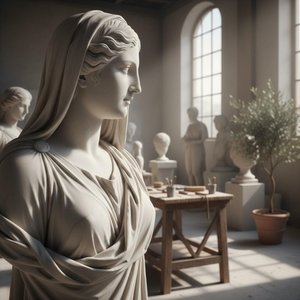
Timeless Elegance: A Complete Guide to the Sublime Beauty and Artistry of Marble Sculpture
Discover the sublime beauty of marble art through an expert exploration of Renaissance and Neoclassical masterpieces. From the delicate textures of Carpeaux to the grandeur of Sansovino, immerse yourself in a guide to timeless elegance and sculptural perfection.