

 Se i rummet
 Send
Send Del
Del
 Detaljer
 Studieguide til kunstværker

 Download
 Lignende værker
 Røntgenundersøgelse
 Se diasshow
 Statistik
Ukendt (efter Giorgione)


 Læs mere
Giclée / Kunsttryk
Giclée- eller lærredstryk i museumskvalitet med hurtig produktion og fleksible muligheder for finish. ( Bestil håndmalet reproduktion Skift til digitalt billede)




P118B Dkr10

P118H Dkr10

P118W Dkr10

P438Z Dkr10

P508JH Dkr12

P508YH Dkr12

P805H Dkr10

P805Z Dkr10

P919BZ Dkr10

P919G Dkr10

P919XJ Dkr10

P959ZH Dkr10

P968JZ Dkr12

W106C Dkr8

W218G Dkr10

W218JH Dkr8

W218Y Dkr10

W307PJ Dkr10

W316G Dkr10

W316PJ Dkr8

W316Y Dkr10

W398PJ Dkr8

W4111J Dkr10

W500HY Dkr15

W500JH Dkr15

W692G Dkr12

W849H Dkr8

W940BG Dkr15

W953PJ Dkr8




Vælg mellem vores forudindstillede størrelser, der matcher kunstværkets originale proportioner.

Du kan indtaste dine egne mål for at passe til en specifik ramme eller et bestemt område. Hvis den valgte størrelse ikke stemmer overens med det originale billedes proportioner, vil vi enten beskære kunstværket eller udvide billedet med en spejlet eller ensfarvet kant. En digital mockup vil blive sendt til din godkendelse, før produktionen påbegyndes.
Bemærk venligst, at forhåndsvisningen på skærmen ikke afspejler den faktiske beskæring eller udvidelse. Kun mockuppen vil nøjagtigt vise den endelige komposition.
Selvom specialmål er tilgængelige, anbefaler vi at vælge et mål fra den foruddefinerede liste for at bevare de originale proportioner.
Verdensomspændende levering () på 2 uger i stedet for de sædvanlige 4/5 uger. (27 september)

Gratis ekspresforsendelse til hele verden

Lærred af linned i høj kvalitet

Komplet transportforsikring

Garanti for refusion af told og importafgifter

Garanti for autentisk farvegengivelse

100 dages returret ved fabrikationsfejl

100% fuld returret

Mængderabat ved flere køb
 Glasmulighed er kun tilgængelig i størrelser under 110 cm

Ukendt (efter Giorgione)
Giclée / Kunsttryk
Reproduktionsstørrelse
-


Samlet pris
Dkr 520
Victor ManDet's Mystical Panther – A Reflection of Surrealist Echoes
Victor ManDet (1895-1964), belgian sculptor, emerged from the artistic landscape of Brussels during a period marked by experimentation and intellectual fervor. His oeuvre delves into themes of psychological depth and unsettling beauty, mirroring the spirit of Surrealism—a movement that championed dreamlike imagery and challenged conventional perceptions of reality. This enigmatic painting, titled “Untitled (after Giorgione),” exemplifies ManDet’s distinctive approach to artistic expression.Subject Matter & Composition
The artwork presents a captivating tableau: a dark and brooding scene dominated by shades of gray, black, and verdant green. At its core lies a panther—a creature steeped in mythic symbolism—partially concealed amongst dense foliage. The composition is deliberately claustrophobic, creating an atmosphere of unease that draws the viewer into a realm where boundaries blur between the tangible and the subconscious. Lines are organic and flowing, suggesting movement within the shadowy vegetation, while amorphous shapes blend seamlessly together, fostering a sense of uncertainty and inviting contemplation.Technique & Material
ManDet’s masterful technique utilizes layered brushstrokes to achieve remarkable textural depth and luminosity—a deliberate effort to evoke tactile sensations and heighten emotional resonance. Oil paints were applied onto canvas with meticulous care, resulting in a surface that possesses both roughness and subtle sheen. The artist skillfully employs chiaroscuro – dramatic contrasts between light and shadow – amplifying the painting’s mood and emphasizing its symbolic significance. This technique aligns perfectly with the Surrealist preoccupation with exploring hidden psychological states and disrupting visual expectations.Historical Context & Artistic Influences
“Untitled (after Giorgione)” resonates deeply within the broader artistic heritage of the early 20th century. ManDet's work draws inspiration from Giorgione’s Venetian masterpieces, particularly “The Tempest,” which embodies a fascination with atmospheric perspective and evocative symbolism—elements central to Surrealist aesthetics. The artist’s exploration of themes like decapitation – referencing biblical narratives and artistic precedents – underscores his engagement with the anxieties and contradictions inherent in human experience.Symbolism & Emotional Impact
Beyond its formal qualities, the painting communicates profound symbolic messages. The panther represents darkness, power, and primal instinct—themes frequently explored by Surrealist artists seeking to confront repressed desires and unconscious fears. The dense foliage symbolizes entrapment and a threshold between worlds, mirroring ManDet’s preoccupation with transitional states and psychological journeys. Ultimately, “Untitled (after Giorgione)” compels the viewer to confront unsettling truths about human existence, fostering an emotional response characterized by fascination and apprehension—a testament to ManDet's ability to translate complex ideas into visually arresting imagery.Om kunstneren
A Life Sculpted in Bronze: The Story of Victor Demanet
Victor Joseph Ghislain Demanet, born February 3rd, 1895, in the Belgian town of Givet near Namur, was an artist whose life and work were deeply intertwined with the artistic currents of his time. Though initially destined to follow in his parents’ footsteps as an antique dealer, a burgeoning passion for sculpture led him down a different path—one that would see him exhibit at prestigious salons, compete on the Olympic stage, and leave behind a legacy of dynamic, emotionally resonant works. Demanet's early education included studies at the Academy of Fine Arts in Namur, but it was a sojourn to Paris in 1921 that proved pivotal. Immersed in the city’s vibrant art scene, he found inspiration in the sculptures of masters like Rude, Carpeaux, and Rodin, solidifying his commitment to three-dimensional form. He returned to Belgium, settling first in Namur before ultimately establishing himself in Brussels in 1926—a move that would mark a significant period of artistic productivity.Influences and Artistic Development
Demant’s formative years were significantly shaped by Constantin Meunier, the Belgian realist painter and sculptor known for his depictions of working-class life. Meunier's focus on social themes resonated deeply with Demanet, influencing his early exploration of human labor and strength in sculpture. This initial direction was tempered by a fascination with classical forms and the expressive power of Romantic sculpture encountered during his time in Paris. He skillfully blended these influences, creating works that were both grounded in reality and imbued with a sense of dramatic energy. His participation in the Salon des Artistes Français—where he became a member after receiving recognition for his bust of Bonaparte in 1923—provided crucial exposure and validation. This period saw him establish himself as a talented portraitist, undertaking numerous public commissions while simultaneously pursuing more personal artistic endeavors.Olympic Aspirations and Public Recognition
A unique facet of Demanet’s career was his involvement in the Olympic Games art competitions. He submitted works to the games in 1924, 1932, and 1936—a testament to his ambition and the growing recognition of sculpture as a legitimate form of artistic expression within the broader cultural context of the era. While specific details regarding his submissions vary, these entries demonstrate his commitment to representing athletic ideals through sculptural form. Beyond the Olympics, Demanet’s talent was acknowledged with appointments as a Knight of the Leopold Order in 1937 and an Officer in 1961, further solidifying his standing within Belgian society. He also received the honor of being named a Knight of the Legion of Honor in 1947.The Legacy of ‘Luminary Petals’ and Beyond
Demant is perhaps best known for his series of sculptures titled “Luminary Petals on a Wet, Black Bough.” These works—often rendered in bronze with delicate gold outlines—are characterized by their abstract floral forms and evocative titles. They possess a unique quality, suggesting both fragility and resilience, capturing a fleeting moment of beauty amidst darkness. Beyond this signature series, Demanet produced numerous large-scale sculptures depicting physical work and powerful movement, as well as over one hundred medals honoring public and private figures. His statue of King Leopold II in Namur stands as a prominent example of his skill in monumental sculpture.A Lasting Impression
Victor Demanet passed away on February 7th, 1964, in Ixelles, Brussels, leaving behind a body of work that reflects the artistic sensibilities of the early to mid-20th century. His sculptures—blending realism with dramatic flair and abstract beauty—continue to captivate audiences today. He was an artist who successfully navigated the demands of public commissions while pursuing his own unique vision, creating works that celebrate both human strength and the ephemeral nature of beauty. Demanet’s legacy lies not only in the enduring quality of his sculptures but also in his ability to capture a sense of emotion and movement within the solid form of bronze—a testament to his skill as a sculptor and his deep understanding of the human spirit.
victor joseph demanet
1895 - 1964 , Belgium
Hurtige fakta
- Artistic Movement Or Style: Art Deco, Social Art
- Artists Who Influenced This Artist:
- Constantin Meunier
- Rodin
- Rude
- Carpeaux
- Date Of Birth: February 3, 1895
- Date Of Death: February 7, 1964
- Full Name: Victor Joseph Demanet
- Nationality: Belgian
- Notable Artworks:
- Luminary Petals series
- Hercules
- Olympic works
- Place Of Birth: Brussels, Belgium
Relaterede artikler

The Enduring Power of Painting: A Historical & Contemporary Exploration of Form and Emotion
Explore the rich history & enduring techniques of oil painting with OriginalUniqueArt. Discover masterpieces, learn about art collecting, and find authentic handmade reproductions crafted by skilled artists.

Oil on Canvas: A Historical & Technical Exploration of a Timeless Artistic Medium
Explore the rich history & enduring techniques of oil painting on canvas. Discover the science behind its longevity, conservation practices, and contemporary relevance. Expert insights for art enthusiasts.
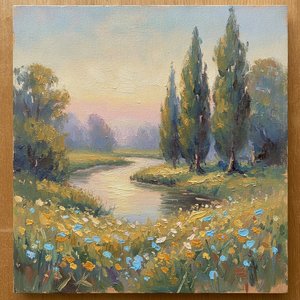
The Timeless Charm of Oil on Board: Reimagining Texture and Light through the Impressionist Lens
Discover the profound intimacy of oil on panel. Explore how Impressionist masters used rigid supports to capture light, texture, and impasto depth through exquisite, handmade oil reproductions for discerning collectors.

The Enduring Legacy of Oil on Canvas: Technique, History & Aesthetic Impact
Explore the rich history & techniques of oil painting – from Renaissance masters to Impressionism. Discover pigments, layering methods, and why this timeless medium endures. Expert insights for artists & art enthusiasts.

Oliemaleriets Arv: Teknik, Historie og Nutidig Praksis
Dyk ned i oliemaleriets fascinerende verden! Lær om teknikker, historie og nutidige kunstnere. Få ekspertviden og inspiration til dit eget maleprojekt.


