Skift til printsalg
 Vis mere







































 For kunstværker eller reproduktioner, der er større end 105 cm (ca. 41 tommer) på en hvilken som helst side, vil rammen blive leveret som et adskilt sæt. Denne metode sikrer sikker levering og forhindrer skader under transport.


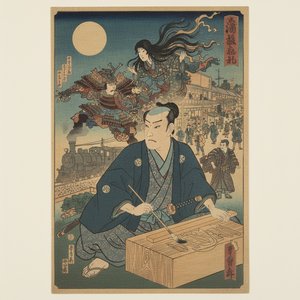
Subject and Composition
This exquisite artwork masterfully blends traditional Japanese aesthetics with a contemporary illustrative sensibility. At its core, the scene centers around a luminous golden candlestick or incense holder, symbolizing enlightenment and spiritual remembrance. Surrounding this focal point are delicately inscribed paper fans, each bearing elegant calligraphy that evokes poetic reflection and cultural reverence. The arrangement of these fans, layered and overlapping, guides the viewer’s eye across the composition, creating a dynamic yet harmonious visual narrative. Subtle botanical motifs, such as bamboo or fern leaves, add a touch of natural serenity, reinforcing themes of harmony between nature and spirituality.Style and Technique
This piece exemplifies a refined fusion of traditional Japanese painting techniques with modern illustrative elements. The use of flat, smooth textures and precise line work reflects the meticulous craftsmanship characteristic of ukiyo-e prints. The color palette is soft and muted, dominated by shades of teal, cream, pink, and black, contrasted by the warm glow of gold on the central object. Ink and watercolor are skillfully employed to create delicate shading and highlights, giving the scene a subtle depth while maintaining a flat, two-dimensional aesthetic typical of Japanese printmaking. The calligraphy adds an additional layer of artistry, emphasizing the importance of written language and poetic expression within the scene.Historical and Cultural Context
Rooted in Japan’s rich cultural tradition, this artwork draws inspiration from the Edo period’s emphasis on poetry, calligraphy, and symbolic objects. The scene likely references spiritual or ritualistic practices, emphasizing themes of enlightenment, remembrance, and the transient nature of life. The integration of calligraphic inscriptions and natural motifs reflects a deep appreciation for the harmony between human expression and the natural world. The artwork’s modern illustrative style bridges past and present, making it relevant for contemporary collectors and interior designers seeking to incorporate traditional Japanese elegance into modern spaces.Symbolism and Emotional Impact
Every element within this composition carries symbolic weight. The central golden candlestick or incense holder signifies illumination and spiritual awakening, while the inscribed fans represent poetic messages and cultural continuity. Botanical motifs evoke serenity and the enduring beauty of nature, fostering a contemplative mood. The layered arrangement and balanced composition evoke a sense of harmony and introspection, inviting viewers to pause and reflect. This piece’s understated elegance and poetic symbolism create an emotional resonance that can inspire tranquility, reverence, and cultural appreciation in any setting.Perfect for Collection and Interior Design
Ideal for art lovers, discerning collectors, and interior designers, this high-quality reproduction offers a timeless glimpse into Japan’s artistic heritage. Its refined aesthetic complements both traditional and contemporary interiors, adding a touch of cultural sophistication and poetic grace. Whether displayed in a living room, study, or gallery space, this artwork serves as a captivating focal point that sparks conversation and inspires reflection. Its meticulous craftsmanship and layered symbolism make it a valuable addition to any curated collection, embodying the enduring beauty and depth of Japanese artistic tradition.Spørgsmål og svar
Hvor kan jeg finde kunstværker, der ligner "Wakan Hyaku Monogatari" af Tsukioka Yoshitoshi?
Se lignende værker til "Wakan Hyaku Monogatari" af Tsukioka Yoshitoshi på denne side: Lignende værker
Kan jeg undersøge "Wakan Hyaku Monogatari" mere detaljeret?
Røntgenoptagelse-siden til "Wakan Hyaku Monogatari" af Tsukioka Yoshitoshi er en interaktiv viewer, der lader dig glide gennem elleve optiske lag af værkets billede, herunder en visning i røntgenstil.
Er "Wakan Hyaku Monogatari" typisk for det, som Tsukioka Yoshitoshi normalt skabte?
"Wakan Hyaku Monogatari" skildrer japanese calligraphy, symbolic objects, botanical motifs, traditional scene, cultural reverence, poetic elegance, layered visual narrative, illustrative style, mens Tsukioka Yoshitoshis registrerede temaer er calligraphy, symbolic objects, cultural reverence, poetic elegance, modern illustrative style. En sammenligning af de to viser, hvordan værket relaterer sig til kunstnerens sædvanlige motiver.
 Se i rummet
 Del som kort
 Del
Del
 Detaljer
 Guide
Guide

 Download
 Lignende værker
 Røntgenundersøgelse
 Diasshow
 Spørgsmål og svar
 Statistikker