
 Se i fuld skala
 Del
Del Del
Del
 Detaljer

 Download
 Lignende værker
 Røntgenundersøgelse
 Diasshow
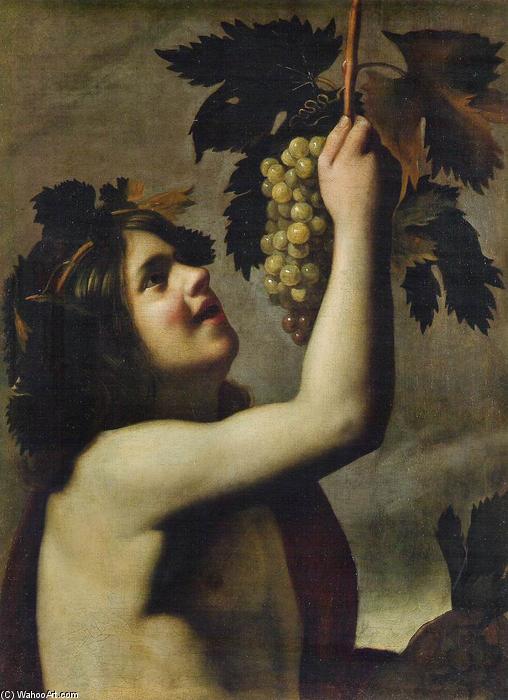
The Young Bacchus
 67.0 x 49.0 cm
 Se mere
Giclée / Kunsttryk
Giclée- eller lærredstryk i museumskvalitet med hurtig produktion og fleksible muligheder for finish. ( Køb håndlavet maleri Køb billede)




































Vælg mellem vores forudindstillede størrelser, der matcher kunstværkets originale proportioner.

Du kan indtaste dine egne mål for at passe til en specifik ramme eller et bestemt område. Hvis den valgte størrelse ikke stemmer overens med det originale billedes proportioner, vil vi enten beskære kunstværket eller udvide billedet med en spejlet eller ensfarvet kant. En digital mockup vil blive sendt til din godkendelse, før produktionen påbegyndes.
Bemærk venligst, at forhåndsvisningen på skærmen ikke afspejler den faktiske beskæring eller udvidelse. Kun mockuppen vil nøjagtigt vise den endelige komposition.
Selvom specialmål er tilgængelige, anbefaler vi at vælge et mål fra den foruddefinerede liste for at bevare de originale proportioner.
Verdensomspændende levering () på 2 uger i stedet for de sædvanlige 4/5 uger. (17 august)

Gratis ekspresforsendelse til hele verden

Lærred af linned i høj kvalitet

Fuld transportforsikring

Garanti for refusion af told og importafgifter

Garanti for præcis farvegengivelse

60 dages returret (kun ved fabrikationsfejl)

100% Tilfredshedsgaranti

Mængderabat tilgængelig
 Glasmulighed er kun tilgængelig i størrelser under 110 cm

The Young Bacchus
Giclée / Kunsttryk
Størrelse på reproduktion
-


Samlet pris
$ 81
Kunstnerens biografi
The Shadow of the Baroque: The Life and Legacy of Tommaso Salini
In the vibrant, often turbulent artistic landscape of late 16th-century Rome, few figures evoke as much mystery and scholarly intrigue as Tommaso Salini. Known to his contemporaries by the moniker Mao Salini, he emerged during a period of profound stylistic transition, where the structured elegance of Mannerism began to yield to the dramatic, visceral energy of the Baroque. While history has often relegated him to the periphery—frequently overshadowed by the monumental presence of Caravaggio or the biographical accounts of his contemporary Giovanni Baglione—Salini was far more than a mere footnote. He was a painter caught in the crosscurrents of revolution, a witness to the legal and artistic battles that defined an era, and an artist whose work sought a delicate balance between meticulous observation and dramatic light.
Born in Rome around 1575, Salini’s early life was deeply embedded in the Roman art scene. His presence in the prestigious Accademia di San Luca by 1605 signifies his standing among the city's elite practitioners. However, much of what we know of his character comes not from his brushstrokes, but from the courtroom. Salini famously stood as a courageous defender of his friend, Giovanni Baglione, during the infamous libel trial brought against Caravaggio and several other artists. This moment of intellectual and personal integrity highlights a man who navigated the competitive and often litigious milieu of Roman art circles with a steadfast commitment to his peers, even amidst the tempestuous rivalries that characterized the age.
A Synthesis of Light and Stillness
The stylistic evolution of Salini’s oeuvre presents a fascinating study in artistic synthesis. To look upon a Salini canvas is to witness a dialogue between two worlds: the lingering grace of the late Mannerist tradition, seen in the works of Santi di Tito, and the revolutionary naturalism introduced by Caravaggio. While he undeniably fell under the spell of Caravaggio’s dramatic chiaroscuro, Salini did not merely mimic the raw, often violent immediacy of the master. Instead, he tempered that darkness with a more restrained palette and a sense of compositional elegance that favored quiet dignity over visceral shock.
His mastery was particularly evident in his approach to different genres:
- Still Life: Salini was a specialist in the burgeoning genre of still life, often imbuing inanimate objects with a contemplative spirit. His works, such as those featuring luscious fruits, vegetables, and game, are characterized by a meticulous attention to texture and form that invites deep observation.
- Religious Compositions: In his sacred works, such as The Ecstasy of Saint Francis, one finds a profound sense of devotion expressed through nuanced rendering and a soft, atmospheric light that avoids the harshness of pure Caravaggism.
- Genre Scenes: His ability to capture the human element is seen in portraits and genre paintings where subjects possess a certain soulful stillness, bridging the gap between the mundane and the monumental.
Rediscovering a Forgotten Master
For centuries, the true identity of Salini’s hand was obscured by the emergence of "Pseudo-Salini" attributions—works that carried his name but lacked his specific touch. This scholarly fog led many to dismiss much of his output as anonymous or misattributed. Yet, recent connoisseurship and rigorous research are beginning to peel back these layers of doubt. By examining the original works documented by Baglione and identifying the consistent hallmarks of Salini’s technique—his unique way of handling light and his preference for a more tempered naturalism—art historians are reclaiming his place in the Baroque canon.
The historical significance of Tommaso Salini lies not only in the beauty of his surviving canvases but in what he represents: the essential, connective tissue of the Roman Baroque. He was an artist who stood at the crossroads of tradition and innovation, helping to shape a style that was neither purely Mannerist nor purely Caravaggesque, but something uniquely his own. As we continue to rediscover his contributions, Salini emerges from the shadows, no longer just a witness to history, but a vital voice in the grand narrative of Italian art.

Tommaso Salini
1575 - 1625 , Italy
Kort om kunstneren
- Artistic Movement Or Style: Early Baroque
- Artists Or Movements Influenced By This Artist: ['Giovanni Baglione']
- Artists Who Influenced This Artist: ['Caravaggio']
- Date Of Birth: Rome, Italy (1575)
- Date Of Death: 1625
- Full Name: Tommaso Salini
- Nationality: Italian
- Notable Artworks:
- A boy eating a loaf of bread with a cat
- Natura morta con cardo, cavolo, angurie, melagrana, cacciagione e fiori
- Place Of Birth: Rome

