International Gothic · 1312
Window (Simone Martini, 1312)
Simone Martini (1284–1344) har skabt Window. Det er fra 1312. Det tilhører International Gothic-bevægelsen. Den er udført i Acrylic On Canvas.
- 1312
- Acrylic On Canvas

 Se i rummet

 Håndmalet oliemalerie
 Del som kort
 Del
 Faktablad


 Download
 Lignende værker
 Røntgenundersøgelse
 Diasshow
 Spørgsmål og svar

 Statistikker
Window kort fortalt
- Titel
- Window
- Kunstner
- Simone Martini (1284–1344)
- Kunstner født i
- Siena, Italien
- Dato
- 1312
- Medium
- Acrylic On Canvas
- Bevægelse
- International Gothic
- Motiv
- stained_glass, medieval_art, siena, martini, religious_imagery, italian_painting
Hvad forestiller Window?
Simone Martini’s Window: A Fragment of Siena’s Gothic Soul
The painting “Window” by Simone Martini—a masterpiece executed in 1312—isn't merely an image; it’s a portal into the artistic fervor and spiritual contemplation of Siena during its zenith as a medieval principality. More than just depicting a simple architectural element, Martini transforms this commonplace feature into a vehicle for profound symbolism and masterful execution, embodying the very essence of International Gothic style. Its unassuming appearance belies the intricate artistry that defines it.- Subject Matter: The composition centers around a stained glass window—a motif prevalent in Sienese churches at the time—illuminated by diffused light. Within its frame are meticulously rendered figures, including human forms and avian creatures – doves symbolizing peace and divine grace – creating a harmonious blend of earthly and celestial realms.
- Style: Martini’s work exemplifies International Gothic style, characterized by delicate lines, luminous colors, and an emphasis on elegance and refinement. Unlike the harsher realism championed by Giotto di Bondone, Martini prioritizes beauty and expressive detail, prioritizing visual impact over strict anatomical accuracy. This stylistic choice reflects Siena's cultural aspirations during a period marked by papal patronage and artistic innovation.
- Technique: Martini employed tempera paint on panel—a technique favored for its vibrancy and durability—allowing him to achieve astonishing levels of color saturation and textural nuance. The artist’s meticulous layering of glaze, combined with painstaking attention to detail in rendering drapery folds and facial expressions, speaks volumes about his dedication to craftmanship.
Historical Context: Siena Under Papal Influence
Siena flourished as a center of papal diplomacy and artistic production during the early 14th century. The papacy actively encouraged artistic endeavors, fostering a competitive environment where artists like Martini sought to elevate their reputations through ambitious commissions—particularly those honoring religious saints. This patronage fueled stylistic experimentation and ensured that Siena’s art would resonate across Europe. Martini's "Window" stands as testament to this era of cultural dynamism and papal ambition.Symbolism: Light, Faith, and Divine Harmony
The window itself serves as a potent symbol—representing divine illumination and the gateway to spiritual understanding. The doves adorning the composition reinforce this theme, symbolizing purity, peace, and the Holy Spirit’s presence. Martini skillfully integrates these visual cues into a carefully balanced composition that reflects Siena's devout Catholic faith. The artist’s deliberate use of color—particularly blues and golds—further enhances the painting’s spiritual aura, conveying grandeur and transcendence.Emotional Impact: A Moment Frozen in Time
“Window” transcends mere representation; it evokes a feeling of serene contemplation and wonder. Martini's masterful rendering captures not only the visual beauty of the stained glass but also its emotional resonance—a reflection of Siena’s artistic spirit and its unwavering belief in divine grace. Viewing this artwork is akin to stepping back into a moment frozen in time, allowing oneself to be transported by the artistry and symbolism of a bygone era. It remains an enduring emblem of Gothic elegance and a captivating glimpse into the soul of medieval Siena.Højopløselige billeder af Window

Public domain: kunstneren døde i 1344.
Andre størrelser, beskæringer og kildehenvisning →Simone Martini, Window (1312). Public domain
Farverne er matchet til originalen af en digital ekspert, og filen er finretoucheret og tro mod kunstnerens penselstrøg.
Køb filen i høj opløsningSpørgsmål om Window besvaret
I hvilket år blev "Window" af Simone Martini skabt?
"Window" af Simone Martini blev skabt i 1312.
Hvilken teknik er "Window" udført med?
Simone Martini brugte Acrylic On Canvas-teknikken til "Window". Teknikken definerer det originale værks materielle karakter.
Hvad forestiller "Window"?
Temaerne i "Window" af Simone Martini omfatter stained_glass, medieval_art, siena, martini, religious_imagery, italian_painting, figurative_composition, som tilsammen udgør værkets motivverden.
Er billedet af "Window" af Simone Martini frit tilgængeligt i det offentlige domæne?
"Window" af Simone Martini er i det offentlige domæne – ophavsretten er udløbet. Denne status bestemmer, hvordan billedet af værket må reproduceres.
Hvem er kunstneren bag "Window"?
"Window" blev skabt af Simone Martini. Informationen på denne side beskriver Simone Martinis originale værk.
Hvilken kunstretning tilhører "Window" af Simone Martini?
"Window" er et værk fra International Gothic. Denne stilart angiver den kunstneriske tradition, som værket indgår i.
Hvilken periode i Simone Martinis karriere tilhører "Window"?
Inden for Simone Martinis karriere tilhører "Window" perioden Mature Period, hvilket gør det muligt at sammenligne værket med kunstnerens øvrige værker.
Hvor gammel var Simone Martini, da "Window" blev skabt i 1312?
Da "Window" blev skabt i 1312, var Simone Martini – født i 1284 – 28 år gammel.
Hvad er årsagen til ophavsretsstatus for "Window" af Simone Martini?
"Window" af Simone Martini er i det offentlige domæne – ophavsretten er udløbet. Ophavsretten løber fra kunstnerens dødsår, som var 1344.
Om kunstneren, Simone Martini

1284–1344, Italien
Simone Martini
Livet og identiteten bag Simone Martini Født i Siena, Italien, omkring 1284, levede Simone Martini et liv, der spejlede sin tids skiftende strømninger. Kendt også som Simone di Martino, var han en central skikkelse i udviklingen af det tidlige italienske maleri. Hans tilstedeværelse i kunstverdenen kunne mærkes fra hjertet af Toscana til de franske pavehoffer, hvilket markerede ham som en mand, hvis rækkevidde strakte sig langt ud over hans fødested. Han var en maler, der forstod sin tids sprog, og som bevægede sig gennem Europas religiøse og borgerlige centre med en stødig og målrettet hånd.
Om Simone Martini Bemærkelsesværdige værker af Simone Martini
Også af Simone Martini
 Bebudelsen og To Hellige1333
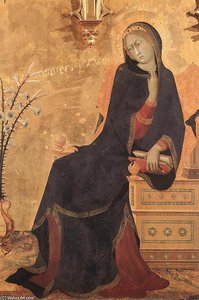 Bebudelsen og to helgener (detalje)1333
 Forkyndelsen med Sankt Margeret og Sankt Ansanus1333
 St Clare and St Elizabeth of Hungary1317
Essays om Window
 25 Masterpieces by Duccio di Buoninsegna: The Dawn of Sienese ArtJourney through the Sienese School with our curated guide to Duccio di Buoninsegna’s top 25 masterpieces. From the Maesta to iconic Madonna…
 From Gold to Gravity: Italo-Byzantine Style vs. the Proto-RenaissanceMaster the shift from Byzantine gold to Proto-Renaissance naturalism. Learn to spot the evolution of art history today.
 14th century Italian paintersMasterpieces by Giotto and Duccio define the Trecento era. Explore museum-quality reproductions on OriginalUniqueArt.com.