Se i rummet
 Del som kort
 Del
Del
 Detaljer
 Guide
Guide

 Download
 Lignende værker
 Røntgenundersøgelse
 Diasshow
 Q&A
Q&A Statistikker
Venus and Satyr

- 102.0 x 125.0 cm


 Vis mere
Giclée / Kunsttryk
Giclée- eller lærredstryk i museumskvalitet med hurtig produktion og fleksible muligheder for finish. ( Køb håndmalet maleri Skift til digitalt billede)




P118B Dkr10

P118H Dkr10

P118W Dkr10

P438Z Dkr10

P508JH Dkr12

P508YH Dkr12

P805H Dkr10

P805Z Dkr10

P919BZ Dkr10

P919G Dkr10

P919XJ Dkr10

P959ZH Dkr10

P968JZ Dkr12

W106C Dkr8

W218G Dkr10

W218JH Dkr8

W218Y Dkr10

W307PJ Dkr10

W316G Dkr10

W316PJ Dkr8

W316Y Dkr10

W398PJ Dkr8

W4111J Dkr10

W500HY Dkr15

W500JH Dkr15

W692G Dkr12

W849H Dkr8

W940BG Dkr15

W953PJ Dkr8




Vælg mellem vores forudindstillede størrelser, der matcher kunstværkets originale proportioner.

Indtast den bredde og højde, du har brug for, så det passer til din ramme eller din væg. Et print kan kun beskæres, aldrig gøres større end selve billedet, så en størrelse med et andet format vil medføre, at dele af motivet går tabt. Vi sender dig en digital mockup til godkendelse, før vi printer noget. Billedet vist på denne side viser ikke den faktiske beskæring — det er kun mockuppen, der gør.
Verdensomspændende levering () på 2 uger i stedet for de sædvanlige 4/5 uger. (3 november)

Gratis ekspresforsendelse til hele verden

Lærred af linned i høj kvalitet

Fuld transportforsikring

Garanti for refusion af told og importafgifter

Garanti for præcis farvegengivelse

100 dages returret ved fabrikationsfejl

100% fuld returret

Mængderabat ved flere køb
 Glasmulighed er kun tilgængelig i størrelser under 110 cm

Venus and Satyr
Giclée / Kunsttryk
Størrelse på reproduktion
-


Samlet pris
Dkr 538
Sebastiano Ricci’s “Venus and Satyr”: A Venetian Masterpiece of Sensuality and Illusion
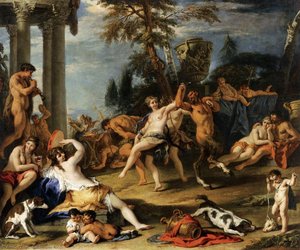
The painting "Venus and Satyr," executed around 1720 by Sebastiano Ricci, is more than a mere depiction of mythological figures; it's a vibrant testament to the late Baroque aesthetic flourishing in Venice. Ricci, an uncle to the renowned Marco Ricci, possessed a singular gift for capturing luminous color and creating an atmosphere of opulent illusion – qualities that define this captivating work. The scene unfolds within a richly detailed, almost theatrical setting, suggesting a private chamber or grotto, where the goddess Venus reclines amidst a profusion of luxurious fabrics, foliage, and architectural elements. This isn’t a straightforward narrative; rather, it's an exploration of sensuality, desire, and the interplay between earthly pleasure and divine beauty.
A Symphony of Light and Color – Ricci’s Technique
Ricci’s mastery lies in his masterful manipulation of light. He employs a technique known as “chiaroscuro,” dramatically contrasting areas of intense illumination with deep shadows, creating a palpable sense of depth and volume. The Venus herself is bathed in a warm, golden glow, highlighting her voluptuous form and the delicate curves of her skin. Notice how Ricci uses reflected light to create an almost ethereal quality around her, as if she’s emerging from a dream. The satyr, rendered with a more earthy palette – browns, ochres, and hints of crimson – stands in stark contrast, his shadowed features hinting at both mischievousness and primal instinct. He is not merely a subordinate figure but a crucial element in the painting's dynamic composition, embodying the earthly desires that Venus subtly acknowledges.
Symbolism and Mythological Allusion
The pairing of Venus and Satyr is deeply rooted in classical mythology. Venus, the Roman goddess of love and beauty, is often associated with fertility, pleasure, and sensuality. The satyr, a creature of the woods with goat-like features, represents untamed desire, instinct, and the wildness of nature. Ricci doesn’t shy away from the inherent tension between these two forces. The young Cupid, nestled amongst his parents, embodies innocent love – a counterpoint to the more overt sensuality of the scene. The inclusion of the elaborate drapery and foliage further amplifies the atmosphere of abundance and indulgence, suggesting a world where earthly pleasures are readily available.
Historical Context: Venice at its Zenith
To fully appreciate “Venus and Satyr,” it’s essential to understand the cultural context in which it was created. Venice in the early 18th century was a vibrant center of artistic innovation, boasting some of the greatest painters of the era – Titian, Veronese, and now Ricci. The city's wealth, fueled by trade and maritime power, fostered a taste for luxury and opulence, reflected in the lavish interiors depicted in many Venetian paintings. Ricci’s work exemplifies this trend, capturing the spirit of a society embracing pleasure and indulgence while simultaneously maintaining a sophisticated artistic sensibility. His style, influenced by the earlier works of Giovanni Battista Stoldo and even hints of Caravaggio's dramatic use of light, established him as a leading figure in the late Baroque movement.
Emotional Resonance: A Study in Desire and Contemplation
Beyond its technical brilliance and mythological references, “Venus and Satyr” possesses a profound emotional resonance. The painting invites contemplation – not just of the figures themselves, but of the complex interplay between desire, beauty, and restraint. Venus’s pose is one of languid repose, suggesting both vulnerability and power. The satyr's watchful gaze conveys a mixture of admiration, possessiveness, and perhaps even a touch of melancholy. The overall effect is not overtly erotic, but rather subtly suggestive, prompting the viewer to engage with the painting on a deeply personal level. It’s a masterpiece that continues to captivate audiences centuries after its creation, offering a glimpse into the alluring world of Venetian art and the timeless themes it explores.
Spørgsmål og svar
Hvilket rum anbefales "Venus and Satyr" af Sebastiano Ricci til?
En reproduktion af "Venus and Satyr" vil passe smukt ind i et Living Room.
Hvor kan jeg se en forhåndsvisning af "Venus and Satyr"?
Siden Forhåndsvisning for "Venus and Satyr" giver dig mulighed for at se en forhåndsvisning af kunstværket, før du bestiller.
Hvordan forenes kunstretning og epoke i "Venus and Satyr" af Sebastiano Ricci?
"Venus and Satyr" tilhører Baroque-retningen, og dets skaber arbejdede i Tidlig moderne tid-æraen.
Kunstnerbiografi
Sebastiano Riccis liv og virke: En mester af det venezianske barok
Sebastiano Ricci, født i Belluno den 1. august 1659 og død den 15. maj 1734, var en af de mest fremtrædende skikkelser inden for det sene venezianske barokmaleri. Hans kunst er kendetegnet ved en lysfyldt elegance, dynamiske kompositioner og en evne til at fange øjeblikkets essens med stor virtuositet. Ricci repræsenterer kulminationen på den store venezianske malertradition, hvor farve, lys og bevægelse forenes i storslåede fortællinger.
De tidlige år og uddannelsen
Riccis kunstneriske rejse begyndte tidligt. I 1671 trådte han ind som lærling hos Federico Cervelli i Venedig, en respekteret mester, der hjalp med at forme hans grundlæggende færdigheder. Dog antyder visse kilder, at Sebastiano Mazzoni kan have været hans første lærer. Uanset den præcise identitet på hans tidlige vejleder, lagde han hurtigt fundamentet for en karriere, der skulle bringe ham stor anerkendelse. Hans tidlige værker viser allerede et talent for dramatisk effekt og en interesse for de klassiske motiver, der var så populære i barokkens æra.
Stilistiske påvirkninger og udvikling
Riccis kunstneriske horisont blev udvidet under et ophold i Bologna, hvor han kom under indflydelse af Giovanni Gioseffo dal Soles stil. Dal Soles fokus på bevægelse, farve og teatralsk dramatik satte dybe spor i Riccis egen udvikling. Han absorberede disse elementer og integrerede dem i sin unikke vision. Ricci var dog ikke blot en efterligner; han tilførte sine værker en særlig lysstyrke og elegance, der adskilte ham fra hans samtidige. Hans malerier er ofte præget af store, storslåede kompositioner, fyldt med livlige figurer og detaljerede landskaber.
Vigtige værker og bestillinger
Riccis karriere var rig på betydelige bestillinger og mesterværker. Bacchus og Ariadne, som nu findes på National Gallery i London, er et fremragende eksempel på hans barokke virtuositet. Maleriet udstråler en sanselighed og dynamik, der fanger beskuerens opmærksomhed. Et andet bemærkelsesværdigt værk er Mindesmærket over admiral Sir Clowdisley Shovell, et oliemaleri, der vidner om hans evne til at indfange en specifik stemning og fortælle en historie gennem billeder. Han modtog også vigtige bestillinger til udsmykningen af Oratoriet for Madonna of the Seraglio i 1685-1687, hvor han samarbejdede med Ferdinando Galli-Bibiena. Dette projekt resulterede i et imponerende værk, der demonstrerede hans evner inden for freskomaleri.
Senere liv og arv
Riccis karriere var ikke uden udfordringer; han oplevede perioder med tumult, herunder fængsling og skandaler. På trods af disse vanskeligheder fortsatte han med at producere bemærkelsesværdige værker, såsom Venus tager afsked fra Adonis, der viser hans talent for himmelske fremstillinger. Han accepterede til sidst udenlandsk patronage i London og arbejdede på en bestilling for Lord Burlington. Ricci efterlod sig et betydeligt kunstnerisk arv, der fortsat inspirerer malere og kunstelskere den dag i dag. Hans værker er eksempler på det venezianske baroks storhed og hans indflydelse kan spores hos mange af hans efterfølgere.
- Se Sebastiano Riccis kunstværker på OriginalUniqueArt.com
- Udforsk mere om det venezianske barokmaleri og dets indflydelse på Wikipedia
- Opdag andre bemærkelsesværdige kunstnere fra samme periode, såsom Luigi Bonazza, på OriginalUniqueArt.com
Vigtigt: Denne artikel er baseret på de tilgængelige oplysninger fra OriginalUniqueArt.com og kan ændres, efterhånden som der kommer flere data til.

Sebastiano Ricci
1659 - 1734 , Italien
Kort om kunstneren
- Bemærkelsesværdige Værker:
- Bacchus og Ariadne
- Venus tager afsked
- Dødsdato: 15. maj 1734
- Fulde Navn: Sebastiano Ricci
- Fødested: Belluno, Italien
- Fødselsdato: 1. august 1659
- Kunstnere Der Påvirkede: ['Giovanni Gioseffo dal Sole']
- Kunstnerisk Stil: Senbarok
- Nationalitet: Italiensk
Relaterede artikler

The Dramatic Flourish: Exploring the Baroque Movement's Enduring Legacy in Art History
Explore the dramatic world of Baroque art! Discover iconic artists like Caravaggio & Rubens, defining techniques, and its lasting impact on art history. Expert insights for collectors & enthusiasts at OriginalUniqueArt.
Sebastiano Ricci: Venetian Master of Baroque Illusionism & Rococo Grace
Explore the captivating world of Sebastiano Ricci, a leading Venetian Baroque painter renowned for his luminous frescoes & illusionistic masterpieces. Discover his life, techniques, and lasting influence on art history.

The Visceral Stage: Exploring Dramatic Narratives & Emotional Intensity in Baroque Art
Explore the dramatic world of Baroque art! Discover iconic masters like Caravaggio & Rembrandt, their techniques, and the movement's lasting impact. Expert insights for collectors & enthusiasts at OriginalUniqueArt.

Barokkens Mestre: Top 10 Kunstværker der Definerede en Æra | OriginalUniqueArt.dk
Oplev barokkens storhed! Dyk ned i 10 ikoniske kunstværker af Caravaggio, Rembrandt & Vermeer. Lær historierne bag mesterværkerne og find inspiration til din indretning med museumskvalitets reproduktioner på OriginalUniqueArt.com

Barokkens Drama: Hvordan Storhed og Emotion Bringes Ind i Moderne Interiører
Dyk ned i barokkunstens verden! Lær om stilens historie, karakteristika og hvordan du integrerer dens drama og elegance i dit moderne hjem. Inspiration & ekspertrådgivning.