Se i rummet
 Send
Send Del
Del
 Detaljer
 Studieguide til kunstværker

 Download
 Lignende værker
 Røntgenundersøgelse
 Se diasshow
 Statistik
Last Supper
 Oil On Canvas
- WallArt
- High Renaissance
 1713
1713 67.0 x 104.0 cm
 National Gallery of Art
 Læs mere
Håndlavet oliereproduktion
Håndmalet olie på lærred i din valgte størrelse og ramme, udført efter bestilling af vores kunstnere. ( Skift til printversion Skift til digitalt billede)




P118B Dkr10

P118H Dkr10

P118W Dkr10

P438Z Dkr10

P508JH Dkr12

P508YH Dkr12

P805H Dkr10

P805Z Dkr10

P919BZ Dkr10

P919G Dkr10

P919XJ Dkr10

P959ZH Dkr10

P968JZ Dkr12

W106C Dkr8

W218G Dkr10

W218JH Dkr8

W218Y Dkr10

W307PJ Dkr10

W316G Dkr10

W316PJ Dkr8

W316Y Dkr10

W398PJ Dkr8

W4111J Dkr10

W500HY Dkr15

W500JH Dkr15

W692G Dkr12

W849H Dkr8

W940BG Dkr15

W953PJ Dkr8




Vælg mellem vores forudindstillede størrelser, der matcher kunstværkets originale proportioner.

Indtast den bredde og højde, du har brug for, så det passer til din ramme eller din væg. Da dette er håndmalet, kan kunstneren ved en anden form på størrelsen male lidt mere rundt om billedet eller skære lidt væk — det er op til dig. Vi sender dig et digitalt mockup til godkendelse, før maleriet påbegyndes. Billedet, der vises på denne side, viser ikke det endelige resultat — det er kun mockuppet, der gør.
Efter bestilling vil OriginalUniqueArt.com team sende en e-mail til kunden for at indhente instruktioner og fremsende et udkast til gennemgang.
Levering i hele verden () på 3-4 uger i stedet for de standard 5 uger. (24 oktober). Ingen kompromiser med kvaliteten.

Gratis ekspresforsendelse til hele verden

Lærred af linned i høj kvalitet

Komplet transportforsikring

Garanti for refusion af told og importafgifter

Garanti for autentisk farvegengivelse

100 dages returret ved fabrikationsfejl

100% fuld returret

Mængderabat ved flere køb
 Glasmulighed er kun tilgængelig i størrelser under 110 cm

Last Supper
Reproduktionsmateriale
Reproduktionsstørrelse
-


Samlet pris
Dkr 1968
A Moment Frozen in Time: The Story of the Last Supper
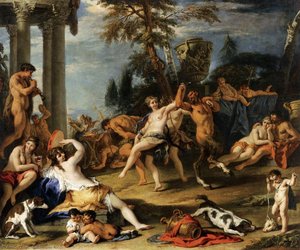
Sebastiano Ricci’s “Last Supper,” a monumental fresco dominating the refectory of Santa Maria delle Grazie in Milan, isn't merely a depiction of a biblical event; it’s a profound exploration of human emotion and betrayal. Painted between 1713 and 1714, this work captures the immediate aftermath of Jesus’ announcement that one among his disciples will betray him – a moment charged with disbelief, apprehension, and simmering resentment. Ricci masterfully conveys the palpable tension in the room, drawing the viewer into the heart of this dramatic exchange. The composition is carefully orchestrated; Jesus sits at the center, radiating an almost serene authority, while the apostles react with a spectrum of responses—shock, denial, suspicion, and outright anger – each face meticulously rendered to reveal their individual personalities and inner turmoil.
The painting’s historical context is crucial to understanding its power. Commissioned during the late Baroque period, Ricci's work reflects the era’s fascination with dramatic narratives and intense emotional expression. The Renaissance ideals of humanism are present, not in a purely idealized form, but through the realistic portrayal of flawed humanity – the vulnerability beneath the bravado, the fear masked by defiance. Ricci was part of a vibrant artistic milieu in Venice, influenced by masters like Dal Simè and Titian, yet he developed a distinct style characterized by a luminous palette and dynamic compositions. His work stands as a bridge between the grandeur of the High Renaissance and the more emotionally charged sensibilities of the Baroque.
Technique and Materials: A Delicate Balance
What sets Ricci’s “Last Supper” apart is not just its subject matter, but also the innovative – and ultimately problematic – techniques he employed. Unlike traditional fresco methods, which involve painting directly onto wet plaster, Ricci utilized tempera on a prepared gesso ground. This allowed for greater flexibility in altering details after the paint had dried, a crucial element for a work of this scale and complexity. However, it also introduced instability; the materials used were not entirely compatible with the wall’s structure, leading to rapid deterioration over centuries. The painting's surface has undergone numerous restorations, each attempting to mitigate the damage caused by humidity, temperature fluctuations, and the inherent fragility of tempera paint.
- The Gesso Ground: A carefully prepared layer of gesso provided a stable base for the pigment.
- Tempera Paint: Ricci used tempera, a fast-drying emulsion of pigments in egg yolk, known for its luminosity and rich colors.
- Pitch and Mastic: These substances were applied to seal the wall and create a barrier against moisture, though they ultimately proved insufficient to protect the delicate paint layer.
Symbolism and Emotional Resonance
Beyond the immediate narrative of betrayal, Ricci’s “Last Supper” is rich in symbolic detail. The arrangement of the apostles around the table reflects their social standing and relationships within the group. Judas Iscariot, often depicted with a subtly averted gaze and a gesture of offering, embodies deceit and treachery. The use of light and shadow – *chiaroscuro* – dramatically emphasizes key figures and creates a sense of drama and psychological intensity. Notice how Ricci uses subtle shifts in color to convey the emotional state of each apostle; the vibrant reds and yellows associated with Jesus contrast sharply with the muted blues and grays used for the disciples, highlighting their internal conflict.
The inclusion of the dog at the bottom left corner is a particularly intriguing detail. While its precise meaning remains debated by art historians, it’s often interpreted as representing loyalty or perhaps even the impending doom that awaits Judas. The overall effect is one of profound emotional depth – a visceral portrayal of human fallibility and the devastating consequences of betrayal.
A Timeless Masterpiece: Reproduction and Legacy
“The Last Supper” remains one of the most studied and admired paintings in the world, captivating viewers with its dramatic composition, masterful technique, and profound emotional resonance. High-quality reproductions capture much of the original’s power, offering a window into this pivotal moment in Christian history. When selecting a reproduction, consider factors such as print quality, color accuracy, and archival suitability to ensure that you are preserving the essence of Ricci's masterpiece for years to come. This iconic image continues to inspire artists, designers, and art lovers alike, solidifying its place as a cornerstone of Western artistic heritage.
Spørgsmål & svar
Hvilken størrelse anbefales til "Last Supper" i et Dining Room?
Til et Dining Room er den anbefalede printstørrelse for "Last Supper" af Sebastiano Ricci Large.
Hvilken fase i Sebastiano Riccis karriere svarer datoen 1713 for "Last Supper" til?
"Last Supper", skabt i 1713, tilhører Late Renaissance af Sebastiano Ricci's karriere.
Kan "Last Supper" af Sebastiano Ricci, som findes på National Gallery of Art, reproduceres lovligt?
Originalen af "Last Supper" findes på National Gallery of Art, og værket er i det offentlige domæne – ophavsretten er udløbet.
Om kunstneren
Sebastiano Riccis liv og virke: En mester af det venezianske barok
Sebastiano Ricci, født i Belluno den 1. august 1659 og død den 15. maj 1734, var en af de mest fremtrædende skikkelser inden for det sene venezianske barokmaleri. Hans kunst er kendetegnet ved en lysfyldt elegance, dynamiske kompositioner og en evne til at fange øjeblikkets essens med stor virtuositet. Ricci repræsenterer kulminationen på den store venezianske malertradition, hvor farve, lys og bevægelse forenes i storslåede fortællinger.
De tidlige år og uddannelsen
Riccis kunstneriske rejse begyndte tidligt. I 1671 trådte han ind som lærling hos Federico Cervelli i Venedig, en respekteret mester, der hjalp med at forme hans grundlæggende færdigheder. Dog antyder visse kilder, at Sebastiano Mazzoni kan have været hans første lærer. Uanset den præcise identitet på hans tidlige vejleder, lagde han hurtigt fundamentet for en karriere, der skulle bringe ham stor anerkendelse. Hans tidlige værker viser allerede et talent for dramatisk effekt og en interesse for de klassiske motiver, der var så populære i barokkens æra.
Stilistiske påvirkninger og udvikling
Riccis kunstneriske horisont blev udvidet under et ophold i Bologna, hvor han kom under indflydelse af Giovanni Gioseffo dal Soles stil. Dal Soles fokus på bevægelse, farve og teatralsk dramatik satte dybe spor i Riccis egen udvikling. Han absorberede disse elementer og integrerede dem i sin unikke vision. Ricci var dog ikke blot en efterligner; han tilførte sine værker en særlig lysstyrke og elegance, der adskilte ham fra hans samtidige. Hans malerier er ofte præget af store, storslåede kompositioner, fyldt med livlige figurer og detaljerede landskaber.
Vigtige værker og bestillinger
Riccis karriere var rig på betydelige bestillinger og mesterværker. Bacchus og Ariadne, som nu findes på National Gallery i London, er et fremragende eksempel på hans barokke virtuositet. Maleriet udstråler en sanselighed og dynamik, der fanger beskuerens opmærksomhed. Et andet bemærkelsesværdigt værk er Mindesmærket over admiral Sir Clowdisley Shovell, et oliemaleri, der vidner om hans evne til at indfange en specifik stemning og fortælle en historie gennem billeder. Han modtog også vigtige bestillinger til udsmykningen af Oratoriet for Madonna of the Seraglio i 1685-1687, hvor han samarbejdede med Ferdinando Galli-Bibiena. Dette projekt resulterede i et imponerende værk, der demonstrerede hans evner inden for freskomaleri.
Senere liv og arv
Riccis karriere var ikke uden udfordringer; han oplevede perioder med tumult, herunder fængsling og skandaler. På trods af disse vanskeligheder fortsatte han med at producere bemærkelsesværdige værker, såsom Venus tager afsked fra Adonis, der viser hans talent for himmelske fremstillinger. Han accepterede til sidst udenlandsk patronage i London og arbejdede på en bestilling for Lord Burlington. Ricci efterlod sig et betydeligt kunstnerisk arv, der fortsat inspirerer malere og kunstelskere den dag i dag. Hans værker er eksempler på det venezianske baroks storhed og hans indflydelse kan spores hos mange af hans efterfølgere.
- Se Sebastiano Riccis kunstværker på OriginalUniqueArt.com
- Udforsk mere om det venezianske barokmaleri og dets indflydelse på Wikipedia
- Opdag andre bemærkelsesværdige kunstnere fra samme periode, såsom Luigi Bonazza, på OriginalUniqueArt.com
Vigtigt: Denne artikel er baseret på de tilgængelige oplysninger fra OriginalUniqueArt.com og kan ændres, efterhånden som der kommer flere data til.

Sebastiano Ricci
1659 - 1734 , Italien
Hurtige fakta
- Bemærkelsesværdige Værker:
- Bacchus og Ariadne
- Venus tager afsked
- Dødsdato: 15. maj 1734
- Fulde Navn: Sebastiano Ricci
- Fødested: Belluno, Italien
- Fødselsdato: 1. august 1659
- Kunstnere Der Påvirkede: ['Giovanni Gioseffo dal Sole']
- Kunstnerisk Stil: Senbarok
- Nationalitet: Italiensk
Relaterede artikler
Leonardo da Vincis 25 Mesterværker: Kunst, Historie & Inspiration til Dit Hjem
Oplev Leonardo da Vincis 25 mest ikoniske værker! Dyk ned i renæssancens kunsthistorie, fra Mona Lisa til Den Sidste Nadver. Find inspiration & køb museumskvalitets reproduktioner på OriginalUniqueArt.com – perfekt til dit hjem.
Leonardo da Vinci: A Renaissance Master’s Synthesis of Art, Science & Human Observation – Reinterpreted for the Collector
Explore Leonardo da Vinci’s timeless masterpieces with OriginalUniqueArt. Discover insights into his art, science, and legacy – trusted expertise for discerning collectors seeking authentic reproductions & investment opportunities.
Galleria degli Uffizi: Top 25 Kunstværker – Renæssancens Mestre | OriginalUniqueArt.dk
Oplev Galleria degli Uffizi's 25 mest ikoniske kunstværker! Dyk ned i renæssancens mestre som Leonardo da Vinci, Michelangelo & Botticelli. Find inspiration til din indretning og køb museumskvalitets reproduktioner på OriginalUniqueArt.com.
Renæssancens Mestre: Top 10 Værker der Definerede Humanismen – Kunst til Dit Hjem
Oplev renæssancens humanistiske idealer gennem 10 ikoniske mesterværker af Leonardo da Vinci, Michelangelo & Rafael. Lær historien bag disse berømte malerier og find inspiration til din indretning med museumskvalitets kunsttryk på OriginalUniqueArt.com.
Louvrens Mesterværker: Top 25 Kunstværker til Dit Hjem – OriginalUniqueArt.dk
Oplev Louvres 25 mest ikoniske kunstværker! Fra Mona Lisa til Venus de Milo – dyk ned i historien bag berømte malerier og skulpturer. Find museumskvalitets reproduktioner & inspiration til dit hjem på OriginalUniqueArt.com.