Ashcan School · 1904
Eakers (Robert Henri, 1904)
Robert Henri (1865–1929) har skabt Eakers. Det er fra 1904. Det tilhører Ashcan School-bevægelsen. Den er udført i Oil On Canvas. Det opbevares på Harvard Art Museums i Cambridge, USA.
- 1904
- Oil On Canvas
- Harvard Art Museums, Cambridge

 Se i rummet

 Håndmalet oliemalerie
 Del som kort
 Del
 Faktablad


 Download
 Lignende værker
 Røntgenundersøgelse
 Diasshow
 Spørgsmål og svar

 Statistikker
Eakers kort fortalt
- Titel
- Eakers
- Kunstner
- Robert Henri (1865–1929)
- Kunstner født i
- Cincinnati, USA
- Dato
- 1904
- Medium
- Oil On Canvas
- Hvor det kan ses
- Harvard Art Museums, Cambridge, USA
- Bevægelse
- Ashcan School
- Periode
- Modern
- Motiv
- man, portrait, grayscale, face, shoulder, clothing
Hvad forestiller Eakers?
Identification of Eakers by Robert Henri
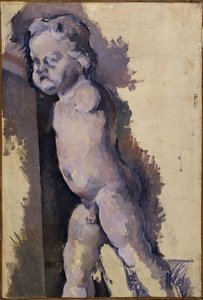
In this 1904 work, titled Eakers, the artist Robert Henri presents us with a quiet, singular presence. The painting focuses entirely on a single male figure, captured in a moment of stillness that feels both heavy and deeply personal. There is a certain gravity to his posture, as he sits with his arms crossed, a stance that suggests a man settled within his own thoughts.
The subject carries a contemplative or somber expression, inviting a closer look at the psychological weight he holds. Henri avoids the superficiality of a casual pose, opting instead to document a sense of introspection. Through this direct engagement, the figure becomes a study of resilience and quietude, presented without the need for external distraction or artifice.
Composition and Visual Elements
The composition is a medium close-up, focusing on the subject from the chest up. By positioning the figure slightly off-center, the artist avoids a static, formal arrangement, opting instead for a sense of immediacy. The perspective is set at eye-level, which establishes an intimate connection between the viewer and the subject's contemplative expression. This directness is heightened by a strictly grayscale color palette, where the absence of color forces a total reliance on tonal shifts to define form and presence.
Light enters the frame from the upper left, creating a dramatic chiaroscuro effect. This directional light casts strong highlights across the forehead, the cheek, and the shoulder, carving the subject out of the darkness. In contrast, the right side of the face and the surrounding background are submerged in deep shadow. These heavy shadows create a sense of depth and tension, emphasizing the contours of the face through light rather than through sharp outlines.
Technique and Artistic Style
The execution of this work suggests a deep engagement with the impasto technique, likely rendered in oil on canvas. There is a palpable sense of immediacy in the application of the medium. Bold, gestural brushwork defines the surface, moving beyond mere representation to emphasize the physical presence of the paint itself. These thick, visible strokes do more than suggest form; they actively construct the texture of the clothing and the contours of the face, lending the piece a sense of movement and raw vitality.
The artist’s approach here is reminiscent of Impressionism or early Expressionism, favoring a directness that avoids the rigidity of academic precision. Rather than relying on sharp outlines, the shapes are loosely defined through a sophisticated interplay of light and shadow. This chiaroscuro effect creates a profound sense of depth and tension, particularly where the light catches the high points of the subject's features and recedes into deep, dark tones. The result is a composition that feels both spontaneous and deeply considered.
Current Collection and Location
This work is held within the collections of the Harvard Art Museums. It is specifically part of the holdings at the Fogg Museum, where it is cataloged under the identification number 1948.85. The piece remains a permanent part of this institutional repository, preserved for study and observation.
The collection is situated in Cambridge, United States of America. Visitors to the museum can find this work within the specialized environment of the Fogg Museum's galleries. It is maintained as part of the modern and contemporary art holdings within the Cambridge campus.
Hvilket museum udstiller Eakers?
Harvard Art Museums
Cambridge, USA
Historien om Harvard Art Museums Harvard Art Museums udgør en uadskillelig del af Harvard University. Institutionens nuværende form blev skabt gennem en sammensmeltning af tre særskilte enheder i 1983. Denne forening bragte Fogg Museum, grundlagt i 1895, sammen med Busch-Reisinger Museum, stiftet i 1903, og Arthur M.


Højopløselige billeder af Eakers

Public domain: kunstneren døde i 1929.
Andre størrelser, beskæringer og kildehenvisning →Robert Henri, Eakers (1904), Harvard Art Museums. Public domain
Spørgsmål om Eakers besvaret
Hvilket museum udstiller det originale "Eakers"?
"Eakers" af Robert Henri er udstillet på Harvard Art Museums, Cambridge, USA. Museets fortegnelse henviser til det originale værk og ikke til reproduktioner.
Hvornår er "Eakers" af Robert Henri skabt?
"Eakers" stammer fra 1904. Datoen placerer værket i Robert Henri's karriere og dets tidsalder.
Hvilken teknik er brugt til "Eakers" af Robert Henri?
"Eakers" af Robert Henri er udført i Oil On Canvas. Reproduktionerne har til formål at gengive denne tekniks visuelle udtryk.
Hvad forestiller "Eakers" af Robert Henri?
Temaerne i "Eakers" af Robert Henri omfatter man, portrait, grayscale, face, shoulder, clothing, som tilsammen udgør værkets motivverden.
Er "Eakers" fri for ophavsret?
"Eakers" af Robert Henri er i det offentlige domæne – ophavsretten er udløbet. Denne status bestemmer, hvordan billedet af værket må reproduceres.
Hvilken kunstner tilskrives "Eakers"?
"Eakers" tilskrives Robert Henri.
Hvilken kunstretning tilhører "Eakers" af Robert Henri?
"Eakers" er et værk fra Ashcan School. Denne stilart angiver den kunstneriske tradition, som værket indgår i.
Hvor i Robert Henris karriere placerer "Eakers" sig?
"Eakers" repræsenterer Robert Henris Mature Period.
Hvor gammel var Robert Henri, da vedkommende skabte "Eakers"?
Robert Henri var 39 år gammel, da vedkommende skabte "Eakers" i 1904. Alderen er beregnet ud fra kunstnerens fødselsår, 1865.
Om kunstneren, Robert Henri

1865–1929, USA
Robert Henri
A Turbulent Genesis: The Early Life of Robert Henri Robert Henri, født den 24. juni 1865 i Cincinnati, Ohio, bar fra barnsben en dyb følelse af forfremmelse og omdefinering, der ville forme både hans liv og kunst på dybtgående måder. Hans barndom var langt fra idyllisk; præget af den ustabile relation mellem hans far, John Jackson Cozad – en mand drevet af ambitioner og risikovillighed som gambler og ejendomsmægler – og hans mor, Theresa Gatewood Cozad. Denne uro kulminerede i 1882 med et tragisk skudduel over en jordstrid, der tvang familien til at flygte og antage nye identiteter for at undslippe hævn.
Også af Robert Henri
 Betalo Rubino, Dramatic Dancer1916
 The Green Fan (Girl of Toledo, Spain)
 O'Malley Home (Achill Island, County Mayo, Ireland)1913
 Young Woman in Black

Essays om Eakers
 The Weight of Stillness: Examining Melancholy in the Art of Edvard Munch and Hendrick ter BrugghenExplore the profound history of melancholy through Munch and Ter Brugghen. Discover the emotional depth of art today.
 Mastering the Frame: How Detailed Composition and Structural Harmony Bring Artworks to LifeDiscover the profound impact of composition on fine art. Explore how masters use geometry, light, and structural harmony to breathe life in…
 The Art of Prestige: How Fine Reproductions Anchor Elite Gallery CollectionsDiscover how museum-grade fine art reproductions anchor elite collections. Explore the intersection of historical mastery and modern luxury…