 Se i rummet
 Del som kort
 Del
Del
 Detaljer
 Guide
Guide

 Download
 Lignende værker
 Røntgenundersøgelse
 Diasshow
 Spørgsmål og svar
 Statistikker
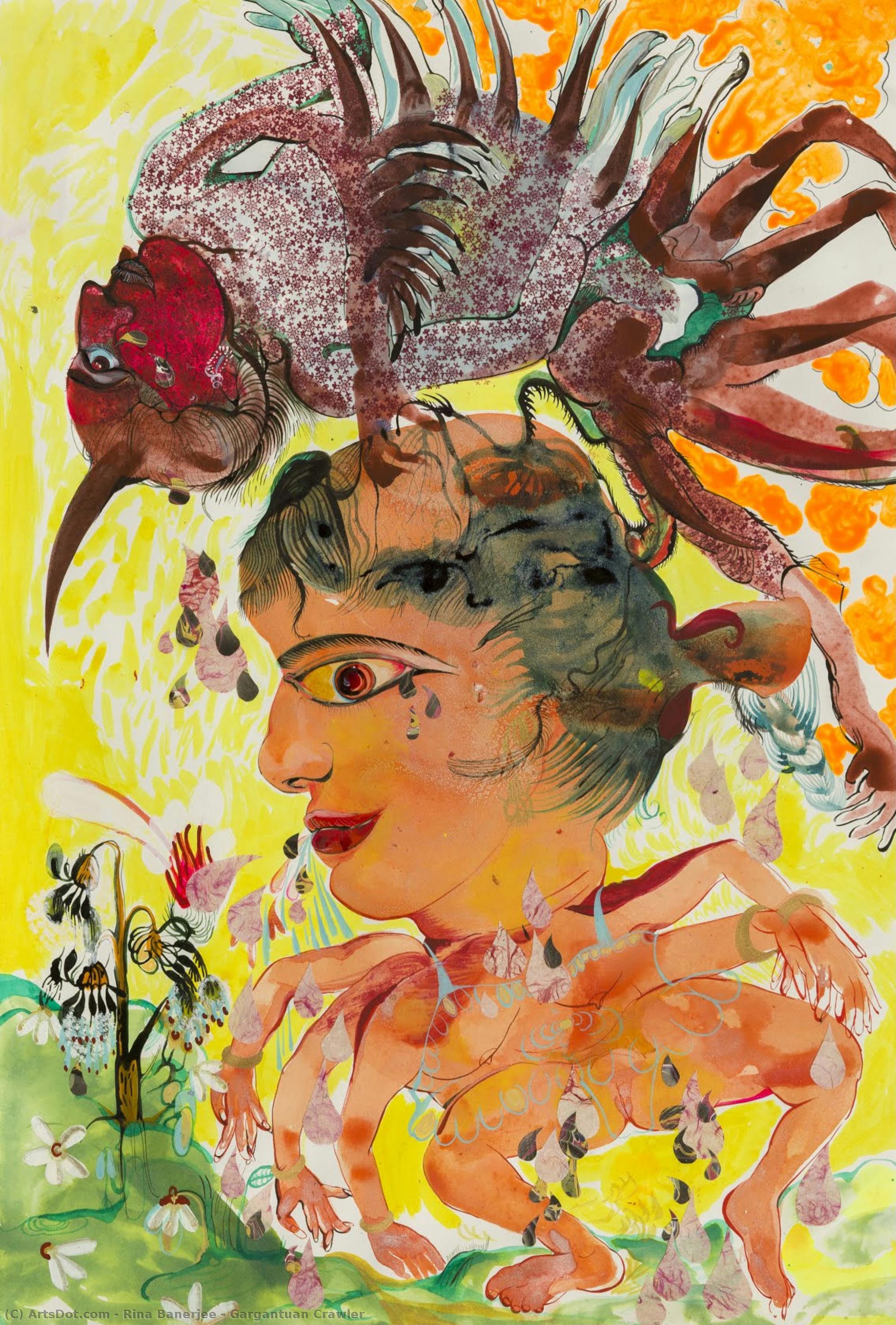
Gargantuan Crawler

 Vis mere
Kunstværket vist på denne side er beskyttet af ophavsretsloven, hvilket betyder, at vi ikke lovligt kan skabe eller sælge en identisk reproduktion. Denne beskyttelse håndhæves i henhold til internationale aftaler som f.eks. den Bernerkonventionen og af nationale love, herunder de bestemmelser, der er fastlagt i Amerikansk ophavsretslov - Titel 17.
Denne metode overholder fuldt ud ophavsretsreglerne, da den ikke indebærer kopiering eller duplikering af det beskyttede kunstværk. I stedet er der tale om en kreativ nytolkning – et nyt maleri, som er inspireret af det oprindelige, men ikke identisk med det.
Giclée / Kunsttryk
Giclée- eller lærredstryk i museumskvalitet med hurtig produktion og fleksible muligheder for finish. ( Køb håndmalet maleri Skift til digitalt billede)




































Vælg mellem vores forudindstillede størrelser, der matcher kunstværkets originale proportioner.

Indtast den bredde og højde, du har brug for, så det passer til din ramme eller din væg. Et print kan kun beskæres, aldrig gøres større end selve billedet, så en størrelse med et andet format vil medføre, at dele af motivet går tabt. Vi sender dig en digital mockup til godkendelse, før vi printer noget. Billedet vist på denne side viser ikke den faktiske beskæring — det er kun mockuppen, der gør.
Verdensomspændende levering () på 2 uger i stedet for de sædvanlige 4/5 uger. (4 november)

Gratis ekspresforsendelse til hele verden

Lærred af linned i høj kvalitet

Fuld transportforsikring

Garanti for refusion af told og importafgifter

Garanti for præcis farvegengivelse

100 dages returret ved fabrikationsfejl

100% fuld returret

Mængderabat ved flere køb
 Glasmulighed er kun tilgængelig i størrelser under 110 cm

Gargantuan Crawler
Giclée / Kunsttryk
Størrelse på reproduktion
-


Samlet pris
Dkr 540
Kunstnerbiografi
The Alchemist of Assemblage: The Transnational Vision of Rina Banerjee
In the sprawling, sensory-rich landscapes of contemporary sculpture, few voices resonate with as much intricate complexity as that of Rina Banerjee. Born in 1963 in the vibrant, historic city of Kolkata, India, Banerjee’s life and art are defined by a profound sense of movement and the beautiful, often turbulent, intersections of disparate worlds. Her journey—stretching from the cultural heart of Bengal to the cosmopolitan energy of London and eventually to New York City—has gifted her with a unique perspective on what it means to exist within the post-colonial diaspora. This biographical tapestry is not merely a personal history but the very foundation of an artistic practice that seeks to map the splintered experiences of identity, migration, and memory.
Before she became a master of sculptural assemblage, Banerjee’s intellectual path was marked by a rigorous scientific curiosity; she earned a degree in Polymer Engineering and worked as a research chemist. This background in the structural and the molecular perhaps informs the meticulous way she deconstructs and reconstructs her materials. Her formal artistic training at the College of Santa Fe and later at the Pratt Institute provided the technical scaffolding for her burgeoning vision, but it was her MFA from Yale University that truly refined her ability to weave complex narratives through medium and form. In her hands, the act of creation becomes a form of alchemy, where the discarded and the precious are fused into something entirely new.
A Material Language of Memory and Displacement
To encounter a work by Rina Banerjee is to enter a dreamscape where the boundaries between the organic and the manufactured, the ancient and the contemporary, begin to dissolve. Her primary method—assemblage—is far more than a technical choice; it is a conceptual necessity. She gathers a vast, eclectic array of materials: textiles, feathers, beads, epoxy horns, glass bottles, and antique porcelain dolls. By juxtaposing mass-produced trinkets from the tourist trade with rare ethnographic specimens and colonial artifacts, she creates a tension that mirrors the friction of globalized commerce and historical power dynamics.
Her sculptures are often described as hyper-ornamented and lushly seductive, yet beneath this surface of beauty lies a deeper, more unsettling exploration of trauma and transformation. Through her use of layered fabrics and found objects, she evokes the physical and emotional residue of colonialism. Her work does not merely represent migration; it embodies the very sensation of being "disrobed, torn, or ripped by wind," reflecting the precariousness of the expatriated experience. In her paintings and drawings, this theme continues through chimerical landscapes where female figures float in states of metamorphosis, often blending with the features of birds or beasts to suggest a fluid, ever-changing sense of self.
Global Recognition and Artistic Legacy
The significance of Banerjee’s contribution to contemporary art is reflected in her monumental presence on the international stage. Her career has been marked by prestigious exhibitions that have brought her complex narratives to the world's most esteemed institutions. Notable achievements include:
- Major Retrospectives: Her mid-career retrospective at the Pennsylvania Academy of the Fine Arts (PAFA), which traveled to the Frist Art Museum in Nashville and the San Jose Museum of Art, solidified her status as a leading figure in contemporary sculpture.
- Biennale Participation: Her inclusion in the 55th and 57th Venice Biennales placed her work at the epicenter of global art discourse, showcasing her ability to engage with universal themes of climate change, femininity, and identity.
- Institutional Presence: Her works are held and exhibited in premier collections including the Centre Pompidou in Paris, the Whitney Museum of American Art, and the Metropolitan Museum of Art in New York.
Ultimately, Rina Banerjee’s legacy lies in her ability to reject the hierarchies of material and culture. By treating a cheap piece of plastic with the same reverence as an antique textile, she challenges the viewer to reconsider what we value and how we remember. Her art serves as a vital bridge between East and West, creating a language that is both deeply personal and profoundly universal—a summary of a world that is constantly being unmade and remade.

Rina Banerjee
1963 - , India
Kort om kunstneren
- Artistic Movement Or Style: Mixed media sculpture
- Artists Who Influenced This Artist:
- Louise Bourgeois
- Marcel Duchamp
- Date Of Birth: 1963
- Full Name: Rina Banerjee
- Nationality: Indian-American
- Notable Artworks:
- Make me a summary of the world
- Disrobed, torn, ripped by wind
- Place Of Birth: Kolkata, India