

 Se i rummet
 Send
Send Del
Del
 Detaljer
 Studieguide til kunstværker

 Download
 Lignende værker
 Røntgenundersøgelse
 Se diasshow
 Statistik
Vatican Rooms - The Parnassus


 Læs mere
Håndlavet oliereproduktion
Håndmalet olie på lærred i din valgte størrelse og ramme, udført efter bestilling af vores kunstnere. ( Skift til printversion Skift til digitalt billede)




P118B Dkr10

P118H Dkr10

P118W Dkr10

P438Z Dkr10

P508JH Dkr12

P508YH Dkr12

P805H Dkr10

P805Z Dkr10

P919BZ Dkr10

P919G Dkr10

P919XJ Dkr10

P959ZH Dkr10

P968JZ Dkr12

W106C Dkr8

W218G Dkr10

W218JH Dkr8

W218Y Dkr10

W307PJ Dkr10

W316G Dkr10

W316PJ Dkr8

W316Y Dkr10

W398PJ Dkr8

W4111J Dkr10

W500HY Dkr15

W500JH Dkr15

W692G Dkr12

W849H Dkr8

W940BG Dkr15

W953PJ Dkr8




Vælg mellem vores forudindstillede størrelser, der matcher kunstværkets originale proportioner.

Indtast den bredde og højde, du har brug for, så det passer til din ramme eller din væg. Da dette er håndmalet, kan kunstneren ved en anden form på størrelsen male lidt mere rundt om billedet eller skære lidt væk — det er op til dig. Vi sender dig et digitalt mockup til godkendelse, før maleriet påbegyndes. Billedet, der vises på denne side, viser ikke det endelige resultat — det er kun mockuppet, der gør.
Efter bestilling vil OriginalUniqueArt.com team sende en e-mail til kunden for at indhente instruktioner og fremsende et udkast til gennemgang.
Levering i hele verden () på 3-4 uger i stedet for de standard 5 uger. (24 oktober). Ingen kompromiser med kvaliteten.

Gratis ekspresforsendelse til hele verden

Lærred af linned i høj kvalitet

Komplet transportforsikring

Garanti for refusion af told og importafgifter

Garanti for autentisk farvegengivelse

100 dages returret ved fabrikationsfejl

100% fuld returret

Mængderabat ved flere køb
 Glasmulighed er kun tilgængelig i størrelser under 110 cm

Vatican Rooms - The Parnassus
Reproduktionsmateriale
Reproduktionsstørrelse
-


Samlet pris
Dkr 1968
Vatican Rooms - The Parnassus: A Renaissance Tapestry of Wisdom and Beauty
Raphael’s “Parnassus,” housed within the breathtaking Stanze di Raffaello in the Vatican, isn't merely a fresco; it’s an immersive experience, a vibrant testament to the High Renaissance’s fascination with classical ideals and its belief in the harmonious union of art, poetry, and philosophy. Painted between 1511 and 1512, this monumental work captures a pivotal moment – a gathering of legendary figures on Mount Parnassus, the mythical home of Apollo and the Muses, symbolizing the enduring power of ancient knowledge and creative inspiration. The scene unfolds within a richly detailed architectural setting, a carefully constructed illusion that draws the viewer into a world brimming with intellectual and artistic significance.
At the heart of the composition stands Apollo, rendered in exquisite detail, playing his lira da braccio – an instrument far more refined than its classical counterpart. His pose is both serene and commanding, radiating authority and embodying the god’s role as patron of music and poetry. Surrounding him are nine Muses, each a distinct embodiment of the arts and sciences: Calliope (epic poetry), Thalia (comedy), Melpomene (tragedy), Clio (history), Erato (lyric poetry), Terpsichore (dance), Urania (astronomy), Euterpe (music), and Polyhymnia (sacred song). These goddesses, depicted with graceful elegance and individual personalities, represent the diverse facets of human creativity. Beyond them gather nine poets from antiquity – Homer, Sappho, Bacchus, Orpheus,Æacus, Hesiod, Democritus, and Iophon – alongside nine contemporary poets, a deliberate juxtaposition highlighting the continuity between classical wisdom and modern artistic expression.
The genius of Raphael’s composition lies not only in its subject matter but also in his masterful use of perspective and spatial illusion. The architectural setting, with its grand archway leading to an unseen space, creates a sense of depth and invites the viewer to step into the scene. Notably, Raphael cleverly integrated elements from classical sculpture, most prominently the figure of Homer, who is posed in a manner strikingly reminiscent of Laocoön and His Sons – a sculpture that had recently captivated the artistic world. This subtle reference adds layers of meaning to the painting, suggesting a dialogue between antiquity and modernity, tradition and innovation. The use of color is equally sophisticated, with a careful balance of warm earth tones contrasted by vibrant blues and reds, creating a visually dynamic and engaging composition.
Key Figures and Their Symbolic Weight
Each figure within “The Parnassus” carries significant symbolic weight, contributing to the painting’s rich tapestry of meaning. Apollo himself represents divine inspiration and artistic patronage, while the Muses embody the various disciplines that fuel human creativity. Homer, blind and draped in dark blue, symbolizes the power of oral tradition and the enduring legacy of classical literature. Sappho, the only female poet depicted, stands as a testament to the importance of female voices within the literary canon – a deliberate inclusion reflecting Raphael’s humanist sensibilities. The presence of contemporary poets underscores the notion that artistic inspiration transcends time, continuing to flourish in each generation.
The painting is not simply a celebration of poetry and music; it's an affirmation of the pursuit of knowledge and wisdom. The figures are arranged in a carefully orchestrated manner, suggesting a harmonious balance between different fields of study – philosophy, religion, poetry, and law. This reflects the Renaissance humanist ideal of a well-rounded education, encompassing both intellectual and artistic pursuits. The inclusion of figures like Democritus, the Greek philosopher known for his atomic theory, further emphasizes this commitment to rational inquiry.
The painting’s impact transcends mere aesthetics; it embodies the spirit of its time—the High Renaissance—a period marked by a fervent revival of classical ideals and an unprecedented flourishing of artistic creativity. Commissioned by Pope Julius II as part of his ambitious project to transform the Vatican Palace into a magnificent testament to papal grandeur, Raphael's masterpiece stands alongside Michelangelo’s Sistine Chapel ceiling as one of the defining achievements of this era.
Historical Context: A Renaissance Masterpiece
"The Parnassus" was created during a period of profound cultural transformation in Europe – the High Renaissance. Following the artistic and intellectual ferment of the Early Renaissance, Rome emerged as the center of artistic innovation, attracting artists from across Italy and beyond. Pope Julius II commissioned Raphael to decorate the Stanze di Raffaello as part of his ambitious plan to transform the Apostolic Palace into a magnificent palace worthy of the papacy. The Stanze became a focal point for artistic patronage and intellectual exchange, bringing together some of the most brilliant minds of the era.
Alongside Michelangelo’s Sistine Chapel ceiling, “The Parnassus,” alongside Leonardo da Vinci’s Mona Lisa, represents the pinnacle of artistic achievement during this period. Both works embody the Renaissance ideals of humanism, classical revival, and technical mastery. Raphael's ability to seamlessly blend classical mythology with contemporary figures demonstrates his exceptional skill as a painter and his deep understanding of both ancient and modern culture. The fresco’s creation coincided with a renewed interest in Greek philosophy and literature, fueled by the rediscovery of classical texts and the rise of humanistic scholarship.
Reproductions Available at OriginalUniqueArt.com
OriginalUniqueArt.com is proud to offer meticulously crafted, hand-painted oil painting reproductions of Raphael’s “Parnassus.” Our skilled artists painstakingly recreate every detail – from the intricate folds of the figures’ drapery to the subtle nuances of color and light – ensuring that your reproduction captures the essence of this iconic masterpiece. These reproductions are not merely copies; they are works of art in their own right, imbued with the spirit and beauty of Raphael’s original fresco. Explore our selection today at /art/list/?Filter=5ZKEAA-Raphael-(Raffaello-Sanzio-Da-Urbino)-Vatican-Rooms-The-Parnassus and bring a touch of Renaissance brilliance to your home or office.
Further Exploration
For deeper insights into Raphael’s life, works, and the context of “The Parnassus,” we recommend exploring these resources:
- Raphael Rooms (Wikipedia)
- The School of Athens (Wikipedia)
- Parnassus - Vatican Museums
Spørgsmål & svar
Findes der et faktablad om "Vatican Rooms - The Parnassus" af Rafael til studerende?
En Guide-side er tilgængelig for "Vatican Rooms - The Parnassus" af Rafael: et printbart faktablad om kunstværket, designet til brug i undervisningen og til elever.
Er en højtopløselig download af "Vatican Rooms - The Parnassus" tilgængelig?
For at få en digital fil af "Vatican Rooms - The Parnassus" af Rafael, skal du bestille et højtopløseligt digitalt billeddownload på dens Digitalt billede-side.
Hvordan relaterer farverne i "Vatican Rooms - The Parnassus" af Rafael sig til værkets følelsesmæssige udtryk?
Den Jordagtig farvepalet i "Vatican Rooms - The Parnassus" af Rafael harmonerer med værkets Reflekterende følelsesmæssige tone. Farven er en af de måder, et værk formidler følelser på.
Om kunstneren
Raffael: Renæssancens Mester fra Urbino
Raffaello Sanzio da Urbino, kendt under navnet Raffael, er en af renæssancens mest betydningsfulde kunstnere. Født i 1483 i den lille, men kulturelt blomstrende bystat Urbino, voksede han op omgivet af en atmosfære præget af både kunstnerisk dygtighed og humanistiske idealer. Hans far, Giovanni Santi, var ikke blot maler hos hertug Federico da Montefeltro, men også en belæst mand med interesse for tidens tanker og strømninger. Han kronikerede hertugens liv og søgte aktivt inspiration fra kunstnere i hele Italien. Denne opvækst i et hofmiljø, hvor raffinement og intellektuel samtale blev værdsat højt, formede den unge Raffaels følsomhed dybt. Tab af faderen i en alder af elleve år pålagde ham ansvar, men gav også mulighed for at udvikle sine færdigheder i familie-værkstedet under vejledning af lokale kunstnere. Selv i disse tidlige værker begyndte en blid elegance og omhyggelig detaljegrad – kendetegnende for hans modne stil – at vise sig.
Fra Umbrien til Firenze: Nye Indflydelser
Raffaels kunstneriske rejse var præget af kontinuerlig udvikling og assimilation. Hans tidlige træning under Pietro Perugino i Perugia lagde et solidt fundament i den umbriske stil – karakteriseret ved bløde former, harmoniske kompositioner og rolige religiøse scener. Men Raffael besad en umættelig nysgerrighed, der drev ham til at søge nye udfordringer og udvide sine kunstneriske horisonter. I 1504 rejste han til Firenze, en by i fuld blomst af kunstnerisk innovation. Her stødte han på mesterværkerne af Leonardo da Vinci og Michelangelo, kunstnere der skubbede maleriets grænser på hidtil usete måder. Han studerede deres teknikker omhyggeligt – Leonardos sfumato, hans subtile lys- og skyggegraderinger, og Michelangelos kraftfulde anatomiske præcision og dramatiske kompositioner. Denne florentinske periode var en skæbnesvanger tid for Raffael, der tvang ham til at konfrontere nye kunstneriske muligheder og syntetisere dem i sin egen unikke vision. Indflydelsen ses tydeligt i den øgede dynamik og psykologiske dybde i hans værker fra denne periode, især i hans serie af Madonna-malerier.
Det Romerske Triumph: Bestillinger og Mesterværker
I 1508 modtog Raffael en indkaldelse, der skulle ændre hans karriere – en invitation fra pave Julius II til at komme til Rom. Dette markerede begyndelsen på hans mest produktive og berømte periode. Den Evige Stad gav ham en enestående mulighed for at fremvise sit talent i stor skala ved at dekorere de pavelige lejligheder i Vatikanet med betagende freskoer. Skolen i Athen, måske hans mest kendte værk, står som et vidnesbyrd om hans mesterskab inden for komposition, perspektiv og filosofisk allegori. Inden for dette majestætiske rum samlede Raffael figurer fra den klassiske antikk – Platon, Aristoteles, Pythagoras, Euklid – og skabte et levende tableau, der fejrede menneskelig fornuft og stræben efter viden. Han fortsatte med at arbejde for efterfølgende paver, Leo X blandt dem, og påtog sig monumentale projekter som dekorationen af Stanze della Segnatura og Stanza d'Eliodoro. Hans freskoer i disse rum er ikke blot dekorative; de er dybe udsagn om pavelig magt, religiøs tro og renæssancens idealer.
En Syntese af Ynde og Storhed: Raffaels Kunstneriske Stil
Raffaels kunstneriske stil beskrives ofte som en harmonisk blanding af ynde, klarhed og idealiseret skønhed. Han besad en ekstraordinær evne til at syntetisere forskellige indflydelser – den umbriske tradition, florentinske innovationer, klassisk antikk – i et unikt balanceret æstetik. Hans kompositioner er omhyggeligt planlagte og udviser en følelse af orden og proportion, der afspejler hans dybe forståelse af renæssanceprincipperne. Hans figurer udstråler en rolig værdighed og emotionel udtryksfuldhed, der legemliggør det humanistiske ideal om menneskelig perfektion. Han var også en mester i farvelægningen og brugte rige, lysende nuancer til at skabe værker, der både er visuelt fængslende og intellektuelt stimulerende. I modsætning til Michelangelos ofte dramatiske og turbulente stil udstråler Raffaels arbejde en følelse af ro og harmoni – en kvalitet, der har gjort ham elsket af publikum i århundreder.
Eftermæle og Varig Indflydelse
Raffaels for tidlige død i 1520 i en alder af syvogtredive år afkortede en karriere fyldt med potentiale. Alligevel består hans arv som en af de mest betydningsfulde figurer i vestlig kunsthistorie. Hans arbejde blev en hjørnesten i den høje renæssances æstetik og tjente som en model for generationer af kunstnere. Mens Michelangelos indflydelse senere dominerede kunstnerisk diskurs, oplevede Raffaels vægt på klarhed, harmoni og idealiseret skønhed en genopblomstring under neoklassicismen, fremmet af kritikere som Johann Joachim Winckelmann. I dag fortsætter hans malerier med at inspirere ærefrygt og beundring og fange seerne med deres tekniske brillante, emotionelle dybde og varige appel. Hans indflydelse kan ses i utallige kunstværker efterfølgende, hvilket cementerer hans plads som en sand mester af renæssancen – en maler, der ikke kun fangede sine emners fysiske lighed, men også essensen af menneskelig ynde og værdighed.

Rafael
1483 - 1520 , Italien
Hurtige fakta
- Bemærkelsesværdige Værker:
- Skolen i Athen
- Sistinske Madonna
- Dødsdato: 6. april 1520
- Fulde Navn: Raffaello Sanzio da Urbino
- Fødested: Urbino, Italien
- Fødselsdato: 6. april 1483
- Kunstnere Der Påvirkede:
- Leonardo da Vinci
- Michelangelo
- Kunstnerisk Stil: Højrenæssancen
- Nationalitet: Italiensk
Relaterede artikler
Kunsten at Bo Med Dig: Den Emotionelle Kraft i Et Skræddersyet Interiørfresko
Skab et unikt hjem med et håndmalet freskomaleri! Ekspertvejledning, skræddersyede designs & holdbare kvalitetsløsninger. Få inspiration og realiser din drømmevæg hos os.
Raphaels 25 Mesterværker: Kunst, Historie & Inspiration til Dit Hjem | OriginalUniqueArt
Oplev Raphaels 25 mest ikoniske værker! Dyk ned i renæssancens kunsthistorie, fra 'Skolen i Athen' til smukke madonna-malerier. Find inspiration & køb museumskvalitets reproduktioner på OriginalUniqueArt.com.

The Enduring Legacy of Fresco: Technique, History & Artistic Expression Across Cultures
Explore the rich history & enduring legacy of fresco painting! Discover ancient techniques, Giotto's masterpieces, and modern applications. Expert insights for art lovers & professionals.

Freskoen som Familiens Arv: Bevar Din Historie på Væggene
Bevar din families historie med smukke, håndmalede vægmalerier og freskoer. Få professionel rådgivning & skræddersyede kunstværker hos – kvalitet og ekspertise garanteret!
The Enduring Legacy of Fresco Painting: Techniques, History & Contemporary Relevance
Explore the rich history & enduring artistry of fresco painting – from Giotto to Michelangelo! Discover techniques, conservation efforts, & modern applications. Learn how OriginalUniqueArt brings this timeless art form to your home.
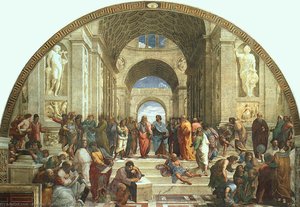




![Stanze Vaticane - Fordrivelsen af Heliodorus fra Templet (detalje) [02]](/media/artworks/images-thumb/3a/23/3a2308b63b60b5cb105575e135028d92.jpg)