

 Send
Send Del
Del
 Detaljer
 Studieguide til kunstværker

 Download
 Lignende værker
 Se diasshow
 Statistik
False Door
 Cement
- Sculpture
- Contemporary Realism
 1990
1990- Contemporary
 146.0 x 406.0 cm
 British Council
 Læs mere
Håndlavet oliereproduktion
Håndmalet olie på lærred i din valgte størrelse og ramme, udført efter bestilling af vores kunstnere. ( Skift til printversion Skift til digitalt billede)




































Vælg mellem vores forudindstillede størrelser, der matcher kunstværkets originale proportioner.

Du kan indtaste dine egne mål for at passe til en bestemt ramme eller plads. Hvis den valgte størrelse ikke stemmer overens med det originale billedes proportioner, vil vi enten beskære kunstværket eller udvide maleriet med yderligere håndmalede elementer. En digital skitse sendes til din godkendelse, før produktionen påbegyndes.
Bemærk venligst, at forhåndsvisningen på skærmen ikke afspejler den faktiske beskæring eller udvidelse. Kun skitsen vil nøjagtigt vise den endelige komposition.
Selvom specialmål er mulige, anbefaler vi at vælge en dimension fra den foruddefinerede liste for at bevare de originale proportioner.
Efter bestilling vil OriginalUniqueArt.com team sende en e-mail til kunden for at indhente instruktioner og fremsende et udkast til gennemgang.
Levering i hele verden () på 3-4 uger i stedet for de standard 5 uger. (28 september). Ingen kompromiser med kvaliteten.

Gratis ekspresforsendelse til hele verden

Lærred af linned i høj kvalitet

Komplet transportforsikring

Garanti for refusion af told og importafgifter

Garanti for autentisk farvegengivelse

100 dages returret ved fabrikationsfejl

100% fuld returret

Mængderabat ved flere køb
 Glasmulighed er kun tilgængelig i størrelser under 110 cm

False Door
Reproduktionsmateriale
Reproduktionsstørrelse
-


Samlet pris
Dkr 1926
The Architecture of Absence: Reimagining Space with Rachel Whiteread
In the quiet, contemplative realm of contemporary sculpture, few voices resonate with as much haunting beauty as that of Rachel Whiteread. Her 1990 masterpiece, False Door, serves as a profound gateway into her unique artistic language—a language not spoken through presence, but through the eloquent articulation of what is missing. As a pivotal figure within the influential Young British Artists (YBA) movement, Whiterelyad revolutionized our perception of the void. False Door is far more than a mere sculptural representation of an ordinary object; it is a radical rethinking of materiality and memory, inviting viewers to confront the ghostly impressions left behind by the passage of time.
The emotional weight of the piece lies in its ability to transform the mundane into the monumental. To encounter False Door is to experience a sense of "reverse archaeology." Rather than excavating layers of history to find something tangible, Whiteread meticulously captures the negative space—the hollowed-out essence of a Victorian house door. This technique creates a palpable tension between the solid, heavy presence of the sculpture and the ethereal concept of the emptiness it represents. For collectors and lovers of fine art, this duality offers a sophisticated intellectual depth that transcends mere decoration, making it a centerpiece of profound psychological resonance.
Materiality and the Alchemy of Memory
The technical execution of False Door is a masterclass in what Whiteread terms "reverse archaeology." The sculpture was constructed using pigmented concrete, cast in situ—a process where the material is poured directly onto the floor to replicate the interior surface of a door. This method allows for an incredible level of textural detail, capturing every grain and imperfection of the original wooden surface. The resulting monochrome hue, a chalky, weathered grey, evokes the solemnity of ancient stone or the quiet dust of an abandoned room.
This choice of medium and technique serves to bridge the gap between the domestic and the eternal. By using concrete—a material often associated with urban permanence and brutalist architecture—to capture a fleeting, domestic moment, Whiteread creates a vanitas for the modern age. The sculpture acts as a physical manifestation of memory, frozen in time. For interior designers seeking to introduce a sense of history and gravitas into a space, a high-quality reproduction of this work provides an anchor of contemplative stillness, offering a textured, sculptural element that commands attention through its understated power.
Symbolism: From Victorian Shadows to Ancient Rituals
Beyond its physical form, False Door is steeped in rich, cross-cultural symbolism. The hollowed-out aperture at the center of the sculpture is a deliberate nod to the "false doors" found in ancient Egyptian sarcophagi. In those sacred contexts, such structures were designed as spiritual conduits, allowing the deceased to transition from the earthly realm into the afterlife. Whiteread masterfully repurposes this ancient concept, using the familiar architecture of a Victorian home to explore the threshold between the known and the unknown, the living and the departed.
This connection to funerary traditions imbues the work with a sense of reverence and melancholy. It invites the observer to reflect on their own relationship with space and loss. The sculpture does not merely occupy a room; it alters the atmosphere of the environment it inhabits, casting a shadow of introspection. Whether displayed in a minimalist gallery setting or as a sophisticated focal point in a curated private collection, False Door remains an enduring testament to the power of the unseen, making it an essential acquisition for those who find beauty in the profound mysteries of existence.
Om kunstneren
A Sculptor of Absence and Memory
Rachel Whiteread, born in Ilford, England, in 1963, stands as a pivotal figure in contemporary sculpture, renowned for her hauntingly beautiful explorations of absence, memory, and the spaces that surround us. Her work isn’t about what *is* there, but rather what *isn't*, a subtle yet profound shift in sculptural thinking that propelled her to international acclaim and cemented her place within the influential Young British Artists (YBA) movement. Whiteread’s artistic journey began amidst a creatively stimulating environment; her mother, Patricia Whiteread, was also an artist, instilling an early appreciation for visual expression, while her father, Thomas Whiteread, fostered a strong sense of social awareness that would later permeate her work. The personal losses of both parents during her career undoubtedly deepened the emotional resonance found within her sculptures, imbuing them with a palpable sense of melancholy and reflection.Formative Years and Artistic Development
Whiteread’s formal training laid the groundwork for her unique artistic vision. She studied at Brighton Polytechnic from 1982 to 1985, followed by the prestigious Slade School of Art, University College London, where she earned an MA in sculpture in 1987. A crucial turning point came during a workshop led by sculptor Richard Wilson, which sparked her fascination with casting techniques and their potential for artistic expression. This exploration wasn’t about replicating form, but rather capturing the void—the negative space left behind when an object is removed. Early works like “Closet” (1988) exemplified this nascent approach. A plaster cast of a wardrobe's interior, draped in black felt, evoked childhood memories and the comforting darkness of hidden spaces, hinting at the psychological weight objects can carry. This fascination with domesticity and personal history became a recurring theme throughout her career.The Art of Casting Negative Space
Whiteread’s signature technique revolves around casting negative space—the areas *around* objects rather than the objects themselves. She employs materials like plaster, concrete, and resin to create casts of spaces surrounding everyday items – furniture, architectural details, even entire rooms. This innovative approach challenges traditional notions of sculpture by focusing on what is absent, creating a sense of mystery and evoking feelings of loss or memory. Her sculptures aren’t simply representations; they are ghostly presences, echoes of lives lived and spaces occupied. Whiteread believes her casts retain “the residue of years and years of use,” imbuing them with a sense of history and human presence. This isn't merely about the physical form but also the intangible traces left behind by those who interacted with it. The resulting works are profoundly evocative, prompting viewers to contemplate the significance of what is not immediately present.Landmark Works and Lasting Legacy
Whiteread’s career has been punctuated by several groundbreaking works that have garnered international acclaim. “Ghost” (1990), a monumental plaster cast of an entire room, captured the atmosphere of a demolished house, establishing her reputation and attracting the attention of Charles Saatchi. However, it was "House" (1993) that truly catapulted her to fame—and controversy. This large concrete cast of the interior of a Victorian terraced house, exhibited on-site before being controversially demolished by the local council, sparked public debate about urban development and preservation. The work earned her the prestigious Turner Prize in 1993, making her the first woman to receive the award. Further demonstrating her ability to engage with significant social issues, “Judenplatz Holocaust Memorial” (2000) in Vienna consists of concrete casts of library shelves with pages turned inwards, a poignant symbol of the loss of knowledge and identity during the Holocaust. "Untitled Monument" (2001), a massive resin cast of the empty fourth plinth in Trafalgar Square, London, offered a unique perspective on public space and civic engagement. Whiteread’s contribution to contemporary art is significant for redefining sculpture, exploring memory and loss, offering social commentary, and influencing countless artists to explore new forms of expression. Her work continues to resonate with audiences worldwide, reminding us of the power of absence and the enduring weight of memory.Recognition and Continued Influence
- Turner Prize (1993): Awarded for “House,” solidifying her position as a leading figure in contemporary art.
- Venice Biennale (1997): First woman to present a solo exhibition at the British Pavilion, receiving the Best Young Artist award.
- Dame Commander of the Order of the British Empire (DBE) (2019): Honored for her services to art, recognizing her significant contribution to the cultural landscape.
- Ongoing Exhibitions and Collections: Whiteread’s work is featured in major museums and galleries worldwide, including the Tate Modern, Museum of Modern Art (MoMA), and National Gallery of Art.

Rachel Whiteread
1963 - , United Kingdom
Hurtige fakta
- Artistic Movement Or Style: Young British Artists
- Artists Or Movements Influenced By This Artist: ['Contemporary sculpture']
- Artists Who Influenced This Artist: ['Richard Wilson']
- Date Of Birth: 1963
- Full Name: Rachel Whiteread
- Nationality: British
- Notable Artworks:
- Ghost
- House
- Untitled Monument
- Place Of Birth: Ilford, UK
Relaterede artikler

The Enduring Form: Exploring Themes & Techniques in Sculpture Across Historical Periods
Explore the rich history of sculpture from ancient masterpieces to contemporary innovations. Discover key techniques, influential artists & investment potential for discerning art collectors.

Top 10 Bronzemesterværker: Kunsthistorien Ændret for Evigt | OriginalUniqueArt.dk
Oplev de 10 mest legendariske bronzemesterværker, der har formet kunsthistorien! Fra Rodin til Degas – lær historierne bag ikoniske skulpturer og find inspiration til din indretning. Køb museumskvalitets reproduktioner på OriginalUniqueArt.com.

Bronzeskulpturers Mestre: 10 Værker der Ændrede Kunsthistorien | OriginalUniqueArt
Oplev de 10 mest legendariske bronzeskulpturer, der har formet kunsthistorien! Fra Rodin til Vigeland – lær historierne bag mesterværkerne og find inspiration til din indretning. Køb museumskvalitets reproduktioner på OriginalUniqueArt.com.
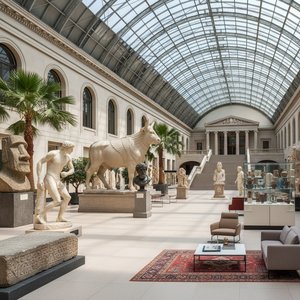
British Museums 25 Mesterværker: Kunsthistorie til Dit Hjem | OriginalUniqueArt.dk
Oplev British Museums 25 mest ikoniske kunstværker! Fra egyptiske skatte til Rembrandts mesterværker – lær historierne bag tidløs kunst. Find museumskvalitets reproduktioner & inspiration til dit hjem på OriginalUniqueArt.com

The Enduring Form: Sculpture Across History, Technique & Emotional Resonance
Explore the rich history of sculpture with OriginalUniqueArt. Discover key techniques, influential artists & investment potential for discerning collectors. Expert insights into valuing and collecting timeless masterpieces.