
 Se i rummet
 Del som kort
 Del
Del
 Detaljer
 Guide
Guide

 Download
 Lignende værker
 Røntgenundersøgelse
 Diasshow
 Q&A
Q&A Statistikker
Lady in a bamboo grove

- 125.0 x 45.0 cm


 Vis mere
Giclée / Kunsttryk
Giclée- eller lærredstryk i museumskvalitet med hurtig produktion og fleksible muligheder for finish. ( Køb håndmalet maleri Skift til digitalt billede)




P118B Dkr10

P118H Dkr10

P118W Dkr10

P438Z Dkr10

P508JH Dkr12

P508YH Dkr12

P805H Dkr10

P805Z Dkr10

P919BZ Dkr10

P919G Dkr10

P919XJ Dkr10

P959ZH Dkr10

P968JZ Dkr12

W106C Dkr8

W218G Dkr10

W218JH Dkr8

W218Y Dkr10

W307PJ Dkr10

W316G Dkr10

W316PJ Dkr8

W316Y Dkr10

W398PJ Dkr8

W4111J Dkr10

W500HY Dkr15

W500JH Dkr15

W692G Dkr12

W849H Dkr8

W940BG Dkr15

W953PJ Dkr8




Vælg mellem vores forudindstillede størrelser, der matcher kunstværkets originale proportioner.

Indtast den bredde og højde, du har brug for, så det passer til din ramme eller din væg. Et print kan kun beskæres, aldrig gøres større end selve billedet, så en størrelse med et andet format vil medføre, at dele af motivet går tabt. Vi sender dig en digital mockup til godkendelse, før vi printer noget. Billedet vist på denne side viser ikke den faktiske beskæring — det er kun mockuppen, der gør.
Verdensomspændende levering () på 2 uger i stedet for de sædvanlige 4/5 uger. (2 november)

Gratis ekspresforsendelse til hele verden

Lærred af linned i høj kvalitet

Fuld transportforsikring

Garanti for refusion af told og importafgifter

Garanti for præcis farvegengivelse

100 dages returret ved fabrikationsfejl

100% fuld returret

Mængderabat ved flere køb
 Glasmulighed er kun tilgængelig i størrelser under 110 cm

Lady in a bamboo grove
Giclée / Kunsttryk
Størrelse på reproduktion
-


Samlet pris
Dkr 538
A Moment of Serene Contemplation: Exploring Qiu Ying’s “Lady in a Bamboo Grove”
Qiu Ying's "Lady in a Bamboo Grove," a captivating painting housed within the Metropolitan Museum of Art, offers a glimpse into the refined artistic sensibilities of 16th-century Suzhou. This exquisite work transcends mere representation; it’s an embodiment of understated elegance and a testament to Qiu Ying’s mastery of brushwork – a skill honed not through formal academic training, but through diligent apprenticeship as a lacquer artisan, imbuing his paintings with a remarkable precision and detail. The painting depicts a woman, her posture suggesting quiet contemplation, positioned before a dense grove of bamboo, a motif deeply resonant within Chinese art and philosophy.
The scene unfolds with a deliberate simplicity that belies its profound impact. The lady, rendered in the meticulous gongbi style – characterized by precise brushstrokes and layered colors – is not overtly posed or dramatically adorned. Instead, she stands as an observer, her gaze directed towards something just beyond the frame, inviting the viewer to share in her unspoken thoughts. This subtle ambiguity is a hallmark of Qiu Ying’s approach; he prioritized atmosphere and mood over explicit narrative, allowing the viewer's imagination to complete the story.
The Artistry of Brushstroke and Color
Examining the painting closely reveals the extraordinary skill of its creator. The bamboo itself is depicted with a remarkable sensitivity – each stalk rendered with varying degrees of detail, capturing both their strength and their delicate texture. Qiu Ying’s use of color is equally masterful; muted greens and browns dominate the landscape, creating a sense of tranquility and harmony. The woman's robes are subtly shaded, suggesting luxurious fabrics without resorting to excessive ornamentation. The layering of thin washes of ink and color – a technique central to gongbi painting – creates an illusion of depth and luminosity, bringing the scene to life with remarkable realism.
Notably, Qiu Ying’s background in lacquer work is evident in his meticulous attention to line and detail. This foundation instilled within him a profound understanding of materials and their properties, translating into a level of control and precision rarely seen in contemporary artists. The painting's composition—the verticality of the bamboo contrasted with the horizontal lines of the woman’s robes—further enhances its visual balance and serenity.
Historical Context and Artistic Influences
"Lady in a Bamboo Grove" emerged during a period of significant social and artistic change in Suzhou, a thriving center for art and culture. Qiu Ying navigated the complex dynamics between the established scholarly circles and the emerging professional painters, forging connections with figures like Wen Zhengming while maintaining his own distinct artistic voice. The painting reflects the influence of Song Dynasty landscape painting, particularly its emphasis on capturing the essence of nature through subtle color and atmospheric perspective – a key element that Qiu Ying skillfully incorporates into his work.
The choice of bamboo as a central motif is deeply symbolic in Chinese culture. Bamboo represents resilience, flexibility, and longevity—qualities highly valued by scholars and artists alike. It’s often associated with virtue, integrity, and the pursuit of wisdom. The lady's presence within this grove suggests a connection to these ideals, inviting contemplation on themes of inner peace and harmony.
A Timeless Appeal: Reproduction and Beyond
OriginalUniqueArt is proud to offer meticulously crafted hand-painted reproductions of Qiu Ying’s “Lady in a Bamboo Grove.” These reproductions capture not only the painting's visual beauty but also its underlying emotional resonance. By employing traditional Chinese painting techniques, our artisans faithfully recreate the delicate brushwork, subtle color gradations, and atmospheric depth of the original.
Whether adorning a study, a gallery wall, or a serene interior space, this artwork offers a window into the artistic world of 16th-century China—a world of refined elegance, profound symbolism, and enduring beauty. Consider it not just a painting, but an invitation to pause, reflect, and connect with the timeless wisdom embedded within its tranquil scene.
Spørgsmål og svar
Er farverne i "Lady in a bamboo grove" kraftige eller dæmpede?
Farven på "Lady in a bamboo grove" har en mætning på Subtle Color og en intensitet på Balanced.
Hvilken følelse formidler "Lady in a bamboo grove" af Qiu Ying?
I "Lady in a bamboo grove" ledsages en Elegant stemning af en Calm følelse.
Hvordan forenes medie og bevægelse i "Lady in a bamboo grove"?
I "Lady in a bamboo grove" forenes Acrylic-teknikken med Ming Dynasty Gongbi-bevægelsen.
Kunstnerbiografi
Et liv formet af penselstrøg: Qiu Yings verden
Født under ydmyge kår i 1494 i byen Taicang, nær det nuværende Jiangsu-provins, rejste Qiu Ying sig til at blive en af Ming-dynastiets mest berømmedte malere. I modsætning til mange af sin tids kunstnere, der nød godt af en lærdomsrig opvækst og formel uddannelse inden for etablerede kunstneriske kredse, var Qiu Yings vej bemærkelsesværdig selvskabt. Han påbegyndte ikke sin kunstneriske rejse gennem traditionelle kanaler, men som lærling hos en lakforarbejder, hvor han finpudsede sine færdigheder i detaljeret dekorativt arbejde – et fundament, der skulle få en dyb indflydelse på den minutiøse præcision, som kendetegner hans senere malerier. Denne tidlige erfaring indgydede i ham en beherskelse af linje og farve, kvaliteter han senere forfinede under vejledning af Zhou Chen i Suzhou, som var et pulserende kulturelt knudepunkt i Ming-perioden. Det var i dette dynamiske miljø, at Qiu Ying for alvor begyndte at blomstre, idet han opsugede teknikker og udviklede en kunstnerisk stemme, der var helt hans egen.Alsidighedens mester: Stil og teknik
Qiu Yings geni lå ikke i en rigid overholdelse af én bestemt skole eller stil, men i hans ekstraordinære alsidighed. Selvom Suzhou var et højborg for den delikate tuschvaskemaling, som Wu-skolen foretrak, udviste Qiu Ying en exceptionel evne til at mestre både denne nuancerede tilgang og den livlige, detaljerede gongbi-teknik. Denne tilpasningsevne gjorde det muligt for ham at imødekomme en mangfoldig klientel med varierende smag, hvilket etablerede ham som en højt eftertragtet kunstner. Han sammenflettede dygtigt disse teknikker og indarbejdede ofte elementer fra grøn-og-blå-stilen – kendt for sin rige farvebrug og intrikate detaljer – i sine kompositioner. Hans malerier er kendetegnet ved en udsøgt raffinering af farver, en minutiøs opmærksomhed på detaljen og en bemærkelsesværdig evne til at indfange både storslåede panoramiske landskaber og intime, fint fremstillede scener. Denne tekniske kunnen handlede ikke blot om færdighed; det handlede om historiefortælling, om at formidle følelser og om at bringe fortællinger til live på silke eller papir.Mæcenat og karrierens blomstring
Qiu Yings karriere blomstrede takket være den generøse støtte fra velhavende mæcener, der bestilte værker inden for et bredt spektrum af motiver. Han malede landskaber gennemsyret af atmosfærisk perspektiv, religiøse scener, der udstrålede spirituel hengivenhed, delikate skildringer af blomster og haver fyldt med liv, samt fængslende figurkompositioner, der indfangede sine subjekters essens. Blandt hans mest berømte kreationer er mesterlige fortolkninger som Up the River During Qingming, inspireret af det ikoniske værk fra den nordlige Song-dynasti; Lady in a Sand Grove, der fremviser hans evne til at portrættere elegante figurer i naturlige omgivelser; The Seven Sages of the Bamboo Grove, som demonstrerer hans forståelse for klassiske litterære temaer; og Spring Morning in the Han Palace, en livlig skildring af hoffets liv. Centrale mæcener som Chen Guan fra Suzhou, og senere Zhou Fenglai og Xiang Yuanbian – begge fremtrædende kunstsamlere – spillede afgørende roller i at støtte hans kunstneriske bestræbelser og gav ham friheden til at udforske sin kreativitet og forfine sin teknik.Eftermæle og varig indflydelse
Qiu Yings talent og alsidighed sikrede ham en plads blandt "De Fire Mestre" fra Ming-dynastiet – et vidnesbyrd om hans dybe indvirkning på kinesisk malerkunst. Han byggede bro mellem traditionelle stilarter og samtidige smagspræferencer og skabte værker, der var både teknisk brillante og æstetisk smukke. Hans malerier afspejler indflydelser fra tidligere mestre, især fra Song-dynastiet, men han formåede dygtigt at forene disse historiske forlæg med sin egen tids æstetik. Han kopierede ikke blot; han syntetiserede, innoverede og skabte i sidste ende en stil, der var distinkt hans egen. Ud over sin egen levetid strakte Qiu Yings indflydelse sig til generationer af kunstnere, der beundrede hans mesterlige teknik og innovative tilgang. Han forbliver en berømt skikkelse i den kinesiske kunsthistorie, æret for sin evne til at indfange skønhed, formidle mening og efterlade et uudsletteligt mærke på det kunstneriske landskab. Selv i dag pryder hans navn et krater på Merkur – en passende hyldest til en kunstner, hvis vision rakte ud over jordiske grænser. Hans eftermæle fortsætter med at vække ærefrygt og beundring blandt kunstentusiaster verden over.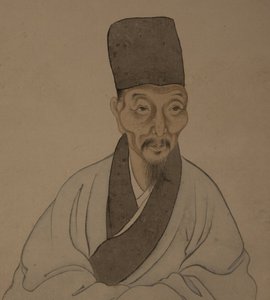
Qiu Ying
1494 - 1552 , Kina
Kort om kunstneren
- Artistic Movement Or Style: Gongbi, Wu-skolen
- Artists Or Movements Influenced By This Artist: ['Ming-dynastiets kunstnere']
- Artists Who Influenced This Artist: ['Mestre fra Song-dynastiet']
- Date Of Birth: 1494
- Date Of Death: 1552
- Full Name: Qiu Ying
- Nationality: Kinesisk
- Notable Artworks:
- Op ad floden under Qingming
- Dame i en bambuslund
- De syv vise i bambuslunden
- Forårsmorgen i Han-paladset
- Place Of Birth: Taicang, Kina
Relaterede artikler

Ephemeral Expressions: Exploring the Nuances of Ink on Paper Through History & Contemporary Art
Explore the captivating world of ink wash painting – from its ancient origins to contemporary masters. Discover techniques, symbolism & conservation insights with OriginalUniqueArt.com.
Xie Zhiliu: A Legacy of Ink Wash Painting & Modern Chinese Literati Tradition
Explore the legacy of Xie Zhiliu, a master of Chinese ink wash painting & prominent figure in modern art. Discover his techniques, influences, and contributions to literati tradition. A guide for discerning collectors.

Mastering the Flow: The Timeless Art of Ink on Paper and the Legacy of Calligraphic Mastery
Explore the profound elegance of ink on paper. From the rhythmic running script of the Ming Dynasty to Zen-inspired haiku, discover the history, technique, and meditative mastery behind the world's most timeless calligraphic traditions.
The Timeless Beauty of Chinese Calligraphy: An Exploration of Ink, Spirit, and the Art of the Brush
Embark on a profound journey through the soul of Chinese calligraphy. Explore the historical mastery of ink, brush, and script, from ancient Zhuanshu to elegant running script, and discover how this timeless art form reflects the enduring spirit of classical East Asian aesthetics.
Pu Xinyu's 'Puru': A Legacy of Literati Painting & Emotional Resonance
Explore the captivating world of Pu Xinyu (Puru), the last great literati painter. Discover his imperial heritage, masterful ink wash techniques & enduring legacy – a valuable addition to any discerning art collection.