

 Se i rummet
 Send
Send Del
Del
 Detaljer
 Studieguide til kunstværker

 Download
 Lignende værker
 Røntgenundersøgelse
 Se diasshow
 Statistik
Deux Children Sitting,


 Læs mere
Håndlavet oliereproduktion
Håndmalet olie på lærred i din valgte størrelse og ramme, udført efter bestilling af vores kunstnere. ( Skift til printversion Skift til digitalt billede)




P118B Dkr10

P118H Dkr10

P118W Dkr10

P438Z Dkr10

P508JH Dkr12

P508YH Dkr12

P805H Dkr10

P805Z Dkr10

P919BZ Dkr10

P919G Dkr10

P919XJ Dkr10

P959ZH Dkr10

P968JZ Dkr12

W106C Dkr8

W218G Dkr10

W218JH Dkr8

W218Y Dkr10

W307PJ Dkr10

W316G Dkr10

W316PJ Dkr8

W316Y Dkr10

W398PJ Dkr8

W4111J Dkr10

W500HY Dkr15

W500JH Dkr15

W692G Dkr12

W849H Dkr8

W940BG Dkr15

W953PJ Dkr8




Vælg mellem vores forudindstillede størrelser, der matcher kunstværkets originale proportioner.

Indtast den bredde og højde, du har brug for, så det passer til din ramme eller din væg. Da dette er håndmalet, kan kunstneren ved en anden form på størrelsen male lidt mere rundt om billedet eller skære lidt væk — det er op til dig. Vi sender dig et digitalt mockup til godkendelse, før maleriet påbegyndes. Billedet, der vises på denne side, viser ikke det endelige resultat — det er kun mockuppet, der gør.
Efter bestilling vil OriginalUniqueArt.com team sende en e-mail til kunden for at indhente instruktioner og fremsende et udkast til gennemgang.
Levering i hele verden () på 3-4 uger i stedet for de standard 5 uger. (23 oktober). Ingen kompromiser med kvaliteten.

Gratis ekspresforsendelse til hele verden

Lærred af linned i høj kvalitet

Komplet transportforsikring

Garanti for refusion af told og importafgifter

Garanti for autentisk farvegengivelse

100 dages returret ved fabrikationsfejl

100% fuld returret

Mængderabat ved flere køb
 Glasmulighed er kun tilgængelig i størrelser under 110 cm

Deux Children Sitting,
Reproduktionsmateriale
Reproduktionsstørrelse
-


Samlet pris
Dkr 1966
The Enigmatic Grace of Pinturicchio: A Renaissance Master
Bernardino di Betto, universally known as Pinturicchio – a nickname affectionately bestowed upon him for his diminutive stature – stands as a captivating figure within the vibrant tapestry of 15th-century Italian art. Born in Perugia in 1454, Pinturicchio’s life unfolded during a period of profound artistic transformation, the High Renaissance blossoming across Italy while he carved out a unique and enduring legacy. Unlike the monumental ambition of giants like Leonardo da Vinci or the dramatic realism of Michelangelo, Pinturicchio cultivated a style defined by refined grace, intricate detail, and a luminous, decorative sensibility – a testament to his exceptional skill in transforming established forms into something uniquely captivating.
His early training remains somewhat shrouded in mystery, likely nurtured within the workshops of lesser-known Perugian painters. However, it’s clear that Pinturicchio absorbed the essence of the Umbrian School of Painting, inheriting its characteristic elegance and a deep appreciation for color. This foundation would later inform his work across various commissions, from the opulent Borgia Apartments in Rome to the serene beauty of the Piccolomini Library in Siena. His career wasn’t one of revolutionary upheaval, but rather a meticulous refinement – a testament to his mastery of technique and his ability to imbue even seemingly simple subjects with profound emotional resonance.
“Deux Children Sitting”: A Study in Innocence and Connection
"Deux Children Sitting" is a captivating depiction of two young children nestled together on the ground, their hands clasped in a gesture of quiet contemplation. Painted in 1513 by Pinturicchio, this work transcends mere representation; it’s an exploration of innocence, vulnerability, and the profound connection between human beings. The scene unfolds with remarkable intimacy – the children are positioned close to one another, bathed in soft light that suggests a timeless serenity. Their nakedness is not presented as provocative but rather as a symbol of purity and unburdened joy, highlighting their inherent beauty and innocence.
The composition itself is remarkably balanced, with the figures occupying the central space and creating a sense of harmonious unity. The surrounding details – the scattered smaller figures, the suggestion of a landscape beyond – contribute to a feeling of quiet contemplation and invite the viewer to share in the children’s peaceful moment. Pinturicchio's masterful use of color—muted earth tones punctuated by subtle highlights—further enhances the work’s sense of tranquility and understated beauty.
A Master at Work: Technique and Context
Pinturicchio was renowned for his meticulous technique, a hallmark of his style. He employed tempera on panel, a medium that allowed him to achieve remarkable detail and luminosity. His brushwork is incredibly delicate, with subtle gradations of color creating a sense of depth and texture. The artist’s attention to anatomical accuracy is evident in the children's forms, yet he avoids the rigid formality often associated with Renaissance portraiture, instead favoring a more fluid and expressive approach.
Furthermore, understanding Pinturicchio requires acknowledging his historical context. He worked during a period of immense artistic innovation, influenced by Perugino, Luca Signorelli, and other masters of the Umbrian School. Yet, he maintained a distinct voice, prioritizing grace and decorative elegance over dramatic grandeur. His work reflects the humanist ideals of the Renaissance, celebrating human beauty and fostering a sense of connection between individuals and the natural world.
Rediscovering Pinturicchio: Reproductions for Today
Today, “Deux Children Sitting” is available as a stunning hand-painted reproduction by OriginalUniqueArt.com, offering art lovers the opportunity to bring this timeless masterpiece into their homes or offices. The meticulous attention to detail and vibrant colors of the original are faithfully reproduced using traditional techniques, ensuring that every piece captures the essence of Pinturicchio’s artistic vision. Whether you're an admirer of Renaissance art, a collector seeking unique pieces, or simply someone who appreciates beauty and tranquility, this reproduction offers a captivating glimpse into the world of one of Italy’s most enigmatic masters.
Spørgsmål & svar
Er "Deux Children Sitting," af Pinturicchio i det offentlige domæne, og hvorfor?
Ophavsretsstatus for "Deux Children Sitting," - i det offentlige domæne – ophavsretten er udløbet - følger af kunstnerens død i 1513.
Hvilken størrelse skal jeg printe "Deux Children Sitting," i til mit værelse?
I et Living Room anbefales "Deux Children Sitting," i en trykstørrelse på Medium.
Hvilken lysstyrke har "Deux Children Sitting," af Pinturicchio?
"Deux Children Sitting," af Pinturicchio har en luminans på Gentle Luminance. Luminans beskriver, hvor meget lys farverne ser ud til at reflektere.
Om kunstneren
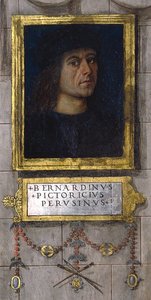
Bernardino di Betto, kaldet Pintoricchio
Bernardino di Betto, kaldet Pintoricchio – en kælenavn givet efter hans lille størrelse – blev født i Perugia i Italien omkring 1454. Hans liv udfoldedes under en periode af enorm kulturel ferment, hvor Renæssancen blomstrede ud over Italien, men Pintoricchio skæred sig ud fra kunstens centrum og udviklede en unik vej, der blandede den vedvarende elegance af Gotisk tradition med den spirende innovation af tiden. Mens giganter som Leonardo da Vinci og Michelangelo stræbte efter anatomisk perfektion og dramatisk realisme, dyrkede Pintoricchio en stil karakteriseret af raffineret grace, intrikat detalje og en levende, dekorativ sansibilitet. Hans rejse var ikke én af revolutionerende omvæltning, men snarere én af udsøgt raffinement – et vidnesbyrd om hans færdigheder i at transformere etablerede former til noget unikt fascinerende.Fra Umbrien Arbejdslokaler til Pæpstlige Kommissioner
Pintoricchio’s tidlige træning forbliver noget mystisk, selvom det antages, at han udviklede sine færdigheder under vejledning af mindre kendte perugienske kunstnere som Bonfigli og Fiorenzo di Lorenzo. Et vendepunkt kom, da han trådte ind i Pietro Peruginos kredsløb – en førende figur i Umbrien skole – hvor Vasari beskriver Pinturicchio som Peruginos assistent, hvilket sandsynligvis formede hans kunstneriske udvikling. Denne forbindelse viste sig afgørende for at sikre en kommission til Sistine Kapel i Rom under de tidlige 1500-tallet – hvor han arbejdede sammen med nogle af verdens mest fejrede kunstnere – Botticelli, Ghirlandaio og Signorelli blandt andre. Denne monumentale projekt bidrog Pinturicchio til, selvom hans fresker senere blev ødelagt for at gøre plads til Michelangelos *Sidste Domdag*. Dette erfaring tjente dog som et vigtigt skridt hen imod udviklingen af hans kunstneriske talent og styrkede hans ry.En Produktiv Periode: Rom og Borgia Appartamenterne
Årene mellem 1484 og 1492 markerede en periode af intens produktivitet for Pinturicchio, primært centreret i Rom. Han modtog kommissioner fra prominente familier som Della Rovere og dekorerede kirkerne i Santa Maria del Popolo med sin karakteristiske stil. Disse værker viste hans mesterskab inden for fresco teknik – kendt for sine delikate figurer, rigt ornamenterede baggrunde og en forkærlighed for komplekse dekorative motiver. Hans arbejde til pave Alexander VI – Rodrigo Borgia – cementerede hans plads i kunsthistorien ved at dekorere Borgia Appartamenterne i Vatikan Palæet mellem 1492 og 1494 – hvor han skabte en suite af rum overdækket med fresker, der forestillede mytologiske scener, portrætter og allegoriske repræsentationer. Disse lejligheder var kontroversielle på grund af deres forbindelse til den notorisk Borgia familie – men Pinturicchio’s kunst står som et bemærkelsesværdigt eksempel på renæssancemiljøkunst – afslørende hans evne til at blande klassiske motiver med sin egen unikke æstetiske sansibilitet. Brugen af guld blad og levende farver samt illusionistiske teknikker skabte en atmosfære af overdådig prakt, der afspejlede pavens magt og ambition.Eftermæle og Vedvarende Påvirkning
Pinturicchio’s kunstneriske eftermæle er én af raffineret elegance og præcisionsarbejde – selvom han måske ikke havde samme berømmelse som nogle af hans samtidige, var hans indflydelse på efterfølgende generationer af kunstnere ubestridelig. Hans unikke stil – en harmonisk blanding af Gotisk grace og Renæssance innovation – resonerede med dem, der værdsatte subtilitet og detalje. Han viste sig exceptionelt dygtig til at skabe visuelt imponerende kompositioner, der var både æstetisk behagelige og intellektuelt stimulerende. Hans arbejde i Piccolomini Bibliotek i Siena – udført kort før hans død i 1513 – står som et vidnesbyrd om hans vedvarende talent – hvor freskerne forestillede scener fra pave Pius II’s liv og viste en klarhed af form og farve, der forudsigede Renæssancens højeste stil. Pinturicchio’s kunst fortsætter med at fascinere publikum i dag – hvilket giver et glimt ind i en verden af skønhed, raffinement og kunstnerisk mesterskab – hvor den delikate berøring af en lille maler efterlod sig et varigt præg på italiensk Renæssance kunst.- Bemærkelsesværdige værker: Frescoes in the Sistine Chapel (destroyed), Borgia Apartments in the Vatican, Piccolomini Library in Siena
Pinturicchio
1454 - 1513 , Italien
Hurtige fakta
- Artistic Movement Or Style: Renæssance
- Artists Who Influenced This Artist:
- Pietro Perugino
- Bonfigli
- Fiorenzo di Lorenzo
- Date Of Birth: 1454 Perugia Italien
- Date Of Death: 1513 Siena Italien
- Full Name: Bernardino di Betto
- Nationality: Italien
- Notable Artworks:
- Sistine Kapel freske
- Borgia Appartement dekor.
- Saint Augustine
- Place Of Birth: Perugia Italien
Relaterede artikler

Freskoen som Familiens Arv: Bevar Din Historie på Væggene
Bevar din families historie med smukke, håndmalede vægmalerier og freskoer. Få professionel rådgivning & skræddersyede kunstværker hos – kvalitet og ekspertise garanteret!

The Enduring Legacy of Fresco: Technique, History & Artistic Expression Across Cultures
Explore the rich history & enduring legacy of fresco painting! Discover ancient techniques, Giotto's masterpieces, and modern applications. Expert insights for art lovers & professionals.

The Enduring Legacy of Fresco Painting: Techniques, History & Contemporary Relevance
Explore the rich history & enduring artistry of fresco painting – from Giotto to Michelangelo! Discover techniques, conservation efforts, & modern applications. Learn how OriginalUniqueArt brings this timeless art form to your home.

The Enduring Legacy of Fresco: Technique, History & Artistic Expression
Explore the rich history & enduring artistry of fresco painting. Discover techniques from Giotto to Michelangelo, conservation efforts, & modern applications. Learn how OriginalUniqueArt brings this timeless art form to your home.
Kunsten at Bo Med Dig: Den Emotionelle Kraft i Et Skræddersyet Interiørfresko
Skab et unikt hjem med et håndmalet freskomaleri! Ekspertvejledning, skræddersyede designs & holdbare kvalitetsløsninger. Få inspiration og realiser din drømmevæg hos os.