

 Se i rummet
 Send
Send Del
Del
 Detaljer
 Studieguide til kunstværker

 Download
 Lignende værker
 Røntgenundersøgelse
 Se diasshow
 Statistik
Painting R
 Geometric Abstraction
 37.0 x 31.0 cm
 MAGA - Museo Arte Gallarate
 Læs mere
Kunstværket vist på denne side er beskyttet af ophavsretsloven, hvilket betyder, at vi ikke lovligt kan skabe eller sælge en identisk reproduktion. Denne beskyttelse håndhæves i henhold til internationale aftaler som f.eks. den Bernerkonventionen og af nationale love, herunder de bestemmelser, der er fastlagt i Amerikansk ophavsretslov - Titel 17.
Denne metode overholder fuldt ud ophavsretsreglerne, da den ikke indebærer kopiering eller duplikering af det beskyttede kunstværk. I stedet er der tale om en kreativ nytolkning – et nyt maleri, som er inspireret af det oprindelige, men ikke identisk med det.
Giclée / Kunsttryk
Giclée- eller lærredstryk i museumskvalitet med hurtig produktion og fleksible muligheder for finish. ( Bestil håndmalet reproduktion Skift til digitalt billede)




































Vælg mellem vores forudindstillede størrelser, der matcher kunstværkets originale proportioner.

Indtast den bredde og højde, du har brug for, så det passer til din ramme eller din væg. Et print kan kun beskæres, aldrig gøres større end billedet, så en størrelse med en anden form vil miste en del af motivet. Vi sender dig en digital mockup til godkendelse, før vi printer noget. Billedet vist på denne side viser ikke den faktiske beskæring — det er kun mockuppen, der gør.
Verdensomspændende levering () på 2 uger i stedet for de sædvanlige 4/5 uger. (27 oktober)

Gratis ekspresforsendelse til hele verden

Lærred af linned i høj kvalitet

Komplet transportforsikring

Garanti for refusion af told og importafgifter

Garanti for autentisk farvegengivelse

100 dages returret ved fabrikationsfejl

100% fuld returret

Mængderabat ved flere køb
 Glasmulighed er kun tilgængelig i størrelser under 110 cm

Painting R
Giclée / Kunsttryk
Reproduktionsstørrelse
-


Samlet pris
Dkr 532
Om kunstneren
Early Life and Artistic Awakening
Giuseppe “Pino” Pinelli was born on October 1st, 1938, in Catania, Italy, a city steeped in history and vibrant Mediterranean light. Though his artistic foundations were laid in Sicily, the true blossoming of his creative vision occurred after his move to Milan in 1963. This relocation wasn’t merely a change of scenery; it was an immersion into the heart of Italy's postwar avant-garde, a period buzzing with intellectual ferment and radical experimentation. Pinelli found himself drawn to the pioneering work of Lucio Fontana and Piero Manzoni, artists who were actively dismantling traditional notions of painting and sculpture. Their influence wasn’t about imitation but rather a catalyst for his own unique exploration—a quest to understand the very essence of what constituted a painted image. He quickly became involved in the artistic debate of those years, participating in exhibitions like the San Fedele awards and holding his first solo show at the Galleria Bergamini in 1968.The Rise of Pittura Analitica
By the early 1970s, Pinelli had firmly established himself as a key figure within the Pittura Analitica movement—a group dedicated to dissecting and analyzing the fundamental elements of painting: color, surface, form, and space. This wasn’t about creating visually arresting compositions in the traditional sense; it was an intellectual undertaking, a systematic investigation into the building blocks of visual perception. Pinelli's early works from this period reflect this analytical approach, often featuring topological studies and monochromatic canvases that served as testing grounds for his evolving ideas. He began to question the necessity of the canvas itself, exploring how painting could exist beyond its conventional boundaries. This led him towards a radical simplification, stripping away all extraneous elements to focus on the pure sensation of color and the interplay between surface and space.Fragmentation and Sensory Totality
A pivotal shift in Pinelli’s work occurred around 1976 with his “La rottura del quadro” (“The Breaking of the Painting”) series, marking a decisive departure from traditional painting techniques. He liberated the image from its support, creating fragmented compositions that were directly applied to the wall. These weren't simply broken pieces; they were carefully considered elements designed to interact with the surrounding architecture and engage the viewer in a new way. This fragmentation wasn’t an act of destruction but rather a means of expanding the possibilities of painting—a desire to create a more immersive, experiential artwork. Pinelli believed that perception was integral to experiencing art, describing it as “part and parcel of an indivisible sensory and psychic totality” that shapes our emotional and rational response to images. His work aimed to tap into this holistic experience, engaging not just the eye but also the body and mind.Materials and Tactile Qualities
Throughout his career, Pinelli demonstrated a remarkable sensitivity to materials. He wasn’t content with conventional paints and canvases; he experimented with unconventional substances—flannel, industrial powders, polyurethane—each chosen for its unique tactile qualities and visual properties. These materials weren't merely supports or mediums but active participants in the artwork, contributing to its overall texture, color, and spatial presence. The artist often manipulated these materials with his hands, imbuing them with a sense of physicality and warmth. This emphasis on tactility wasn’t accidental; it was a deliberate attempt to heighten the viewer's sensory experience, inviting them to engage with the artwork on a more intimate level. He sought to create works that were not just seen but also *felt*, resonating with a primal connection between art and the human body.Legacy and Lasting Influence
Pino Pinelli passed away in Milan on April 30th, 2024, at the age of 85, leaving behind a rich and complex body of work that continues to inspire artists and scholars alike. His contributions to Pittura Analitica were significant, challenging conventional notions of painting and paving the way for new forms of artistic expression. He exhibited extensively throughout Italy and internationally, with his works finding homes in prestigious collections such as the Centre Pompidou in Paris and the Museo del Novecento in Milan. Pinelli’s legacy lies not only in his innovative techniques but also in his profound exploration of perception, emotion, and the very nature of visual experience. He redefined the boundaries of painting, transforming it from a purely representational medium into an immersive, sensory encounter—a testament to his unwavering commitment to artistic experimentation and intellectual rigor.
Pino Pinelli
1938 - 2024 , Italy
Hurtige fakta
- Full Name: Giuseppe "Pino" Pinelli
- Nationality: Italian
- Date Of Birth: 1938
- Date Of Death: 2024
- Place Of Birth: Catania, Italy
- Artistic Movement Or Style: Pittura Analitica
- Artists Who Influenced This Artist:
- Lucio Fontana
- Piero Manzoni
Relaterede artikler

Geometrisk Abstraktion: Top 10 Kunstværker der Definerede Bevægelsen | OriginalUniqueArt.dk
Oplev de 10 mest ikoniske værker inden for geometrisk abstraktion! Fra Kandinsky til Mondrian – lær historierne bag disse banebrydende kunstnere og deres farverige malerier. Find museumskvalitets reproduktioner & inspiration til din indretning på OriginalUniqueArt.dk.

Kandinskys 25 Mesterværker: En Rejse Ind i Abstrakt Kunst | OriginalUniqueArt.com
Oplev Kandinskys 25 mest ikoniske værker! Dyk ned i abstrakt kunst, ekspressionisme og farvernes sprog. Find luksus reproduktioner af berømte malerier som 'Komposition VIII' på OriginalUniqueArt.com – inspiration til din vægkunst & indretning.
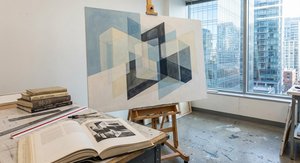
Beyond Form & Color: Geometric Abstraction's Enduring Legacy in Art History
Explore the captivating world of geometric abstraction! Discover its origins, key artists like Malevich & Mondrian, and why this movement remains highly valued by art collectors today. Expert insights at OriginalUniqueArt.

Beyond Form & Color: Geometric Abstraction's Evolution in 20th/21st Century Art
Explore the evolution of geometric abstraction from Cubism to contemporary art. Discover key artists like Malevich & Mondrian, investment insights, and expert collecting advice at OriginalUniqueArt.

Neo-Abstract Art: The High-Impact Evolution of Modern Visual Energy and Geometric Sophistication
Discover the power of Neo-Abstract art. Explore how bold geometric forms and high-impact visual energy are redefining modern design. Learn to curate sophisticated, high-energy spaces with the latest trends in contemporary abstraction and structural color.