
() ·
Et maleri skabt til dig, i hånden
Håndlavet oliereproduktion
Håndmalet olie på lærred i din valgte størrelse og ramme, udført efter bestilling af vores kunstnere. ( Skift til printsalg Skift til digitalt billede)
Kunstnerbiografi
Explore the sculptures of Pietro Tacca (1577-1640), a master sculptor bridging Mannerism & Baroque styles. Discover his Medici commissions, bronze masterpieces & iconic works like the Porcellino.
 Vis mere
fra ·
Kapitel 1
Hvor stor skal den være?
Træk i skyderen for at ændre størrelsen; billedet til venstre viser rammen i dens faktiske bredde. Originalens proportioner bevares.
Vælg mellem vores forudindstillede størrelser, der matcher kunstværkets originale proportioner.

Indtast den bredde og højde, du har brug for, så det passer til din ramme eller din væg. Da dette er håndmalet, kan kunstneren ved en anden form på størrelsen male lidt mere rundt om billedet eller skære lidt væk — det er op til dig. Vi sender dig et digitalt mockup til godkendelse, før maleriet påbegyndes. Billedet, der vises på denne side, viser ikke det endelige resultat — det er kun mockuppet, der gør.
Kapitel 2
Hvordan skal det leveres?
Vælg kanterne på det opspændte lærred
Vælg din ramme

Hvid kant Dkr1

Udvasket kant Dkr1

Fortsat motiv Dkr1

P118B Dkr10

P118H Dkr10

P118W Dkr10

P438Z Dkr10

P508JH Dkr12

P508YH Dkr12

P805H Dkr10

P805Z Dkr10

P919BZ Dkr10

P919G Dkr10

P919XJ Dkr10

P959ZH Dkr10

P968JZ Dkr12

W106C Dkr8

W218G Dkr10

W218JH Dkr8

W218Y Dkr10

W307PJ Dkr10

W316G Dkr10

W316PJ Dkr8

W316Y Dkr10

W398PJ Dkr8

W4111J Dkr10

W500HY Dkr15

W500JH Dkr15

W692G Dkr12

W849H Dkr8

W940BG Dkr15

W953PJ Dkr8

H24-GOLD Dkr30

H24-SILVER Dkr30

H36-GOLD Dkr45

H36-SILVER Dkr45
Indrammet
Profil: . Samlet størrelse med ramme: .
Kapitel 3
Hvem maler det, og bør der ændres noget?
Efter bestilling vil OriginalUniqueArt.com-teamet sende en e-mail til kunden for at få instruktioner og levere et udkast til forhåndsvisning
Verdensomspændende levering () på 3-4 uger i stedet for de standard 5 uger. (10 november). Ingen kompromiser med kvaliteten.
Kapitel 4
De sidste detaljer
En navneplade, ligesom på et museum?
Detaljer om indgraveret bronzeskilt
This elegant plaque features the artist's name and the title of the artwork, finely engraved for a timeless presentation.
It is made from bronze with a refined, elegant finish. The text is precisely laser-engraved for a sharp and permanent result. Measuring 9x2 cm, the plaque is compact yet easy to read. It's built to be durable and scratch-resistant, offering a professional, museum-quality look. Mounting is simple thanks to the included adhesive backing.
Detaljer om gennemsigtig akrylplade
The plaque includes essential engraved details such as the artist's name, the title of the artwork, the date it was created, the type of media used-like oil on canvas or watercolor-a brief description of the piece, and a QR code that links to the complete artwork information.
It is crafted from clear acrylic, offering a sleek, modern appearance. The text is UV-engraved in black to ensure strong visual contrast. With a size of 10x15 cm, it ensures optimal readability. It comes equipped with two metal hooks for secure wall mounting. The plaque is designed to be weather-resistant, making it suitable for various environments, and it includes interactive features that work seamlessly with smartphone scanning.
Detaljer om sort akrylplade
This elegant plaque includes engraved information such as the artist's name, the title of the artwork, the date it was created, the type of media used (like oil on canvas or watercolor), a short description of the artwork, and a QR code for quick access to more information.
The plaque itself is made from refined black acrylic with a premium finish. The text is laser-engraved in white for high contrast and readability. Its size is 10x15 cm, designed to be easy to read. It comes with two metal hooks for professional mounting. The design is sleek and fits any interior style. It is also weather-resistant and durable, with built-in digital integration for mobile compatibility.
En beskyttende lak?
Hvornår skal det leveres?
Kapitel 5
Dit maleri, præcis som du har bestilt det

Slave
Reproduktionsmetode
Størrelse på reproduktion
-

Eksklusivt udvalgte senior-kunstnere
Mere detaljerigdom, finesse og ekstra produktionstid
-

Indramning af reproduktion
-
-
For kunstværker eller reproduktioner, der er større end 105 cm (ca. 41 tommer) på en hvilken som helst side, vil rammen blive leveret som et adskilt sæt. Denne metode sikrer sikker levering og forhindrer skader under transport.
Professionel montering er påkrævet – dette er ikke et gør-det-selv produkt.
Sættet skal samles, og lærredet skal opspændes af en erfaren professionel indrammer ved brug af trælim (ikke medfølger), en lærredsspænder og klemmer til at holde blindrammen vinkelret, mens limen tørrer. Forkert samling eller ujævn spænding af lærredet kan beskadige kunstværket permanent og er ikke dækket af vores garanti.
 For kunstværker eller reproduktioner, der er større end 105 cm (ca. 41 tommer) på en hvilken som helst side, vil rammen blive leveret som et adskilt sæt. Denne metode sikrer sikker levering og forhindrer skader under transport.
Alle massive trælister er inkluderet, præcist tilpasset i størrelsen.
Samles med de medfølgende skruer samt trælim til hjørneforbindelserne, som ikke medfølger og skal anskaffes af din indrammer.
Professionelt værktøj er påkrævet og medfølger ikke: en lærredsstrækker (spændetang) og klemmer til at holde blindrammen vinkelret, mens limen tørrer.
Vigtigt:
Hjørneforbindelserne kræver trælim, listerne skal holdes fast med skruetvinger, indtil limen er helt tør, og opspænding af lærredet på den samlede ramme kræver en lærredsspænder. Ingen af disse dele er inkluderet i sættet. Vi anbefaler, at du kontakter en erfaren professionel indrammer, før du bestiller denne størrelse.

Navneskilt
-
-

Beskyttende fernis
Blank lak (fremhæver farverne og beskytter mod lys og fugt)
-

Tilpas mit kunstværk
Eksempler på tilpasningsmuligheder: Udskift ansigt med kunde-foto; Tilføj kæledyr (f.eks. udskift kat med hund); Inkluder skjult besked i baggrunden; Ændr baggrundslandskab eller elementer.
-

Hurtig levering
Verdensomspændende levering () på 3-4 uger i stedet for de standard 5 uger. (10 november). Ingen kompromiser med kvaliteten.
-
Ekspreslevering
Verdensomspændende levering til inden for 5 uger. (17 november).
Inkluderet
Samlet pris
Dkr 2001
Glasmulighed er kun tilgængelig i størrelser under 110 cm
Inkluderet i hver ordre
- Gratis ekspresforsendelse til hele verden
- Lærred af linned i høj kvalitet
- Fuld transportforsikring
- Garanti for refusion af told og importafgifter
- Garanti for præcis farvegengivelse
- 100 dages returret ved fabrikationsfejl
- 100% fuld returret
- Mængderabat ved flere køb


 Se i rummet
 Del som kort
 Del
Del
 Detaljer
 Guide
Guide

 Download
 Lignende værker
 Røntgenundersøgelse
 Diasshow
 Spørgsmål og svar
 Statistikker
I tal
- 1615året det blev malet
- 29vælg mellem forskellige rammer
- standardstørrelser, i deres egne proportioner
- 5uger at male og levere
Om det originale værk


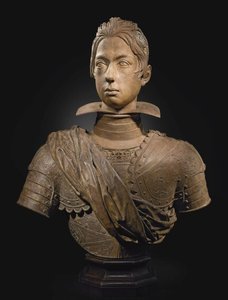
Pietro Tacca
1577 - 1640, Italy
Hurtige fakta om Pietro Tacca
- Full Name: Pietro Tacca
- Nationality: Italian
- Date Of Birth: 1577
- Date Of Death: 1640
- Place Of Birth: Carrara, Italy
- Notable Artworks:
- Monument of the Four Moors
- Equestrian Monument to Philip IV
- Porcellino Florence
- Artistic Movement Or Style: Baroque & Mannerism
- Artists Who Influenced This Artist: ['Giambologna']
- Artists Or Movements Influenced By This Artist: ['Louis XIV']
Kunstnerbiografi
The Sculptural Legacy of Pietro Tacca
In the heart of Tuscany, where the white marble of Carrara meets the golden light of Florence, the life of Pietro Tacca unfolded as a bridge between two monumental eras of art history. Born in 1577, Tacca emerged from a lineage of craftsmen to become a defining voice in the transition from the elegant, often artificial complexities of Mannerism to the visceral, dramatic energy of the Baroque. His journey was not merely one of personal ambition but a profound evolution of form, where the controlled grace of his predecessors gave way to a new, breathing realism that captured the very essence of movement and emotion.
The foundation of Tacca’s genius was laid within the legendary workshop of Giambologna. Entering the atelier in 1592, the young sculptor became more than just an apprentice; he became a custodian of a sophisticated aesthetic language. Under Giambologna’s watchful eye, Tacca mastered the intricate art of bronze casting and the delicate balance of asymmetrical compositions. While his early works retained the stylized elegance and elongated proportions characteristic of Mannerist tradition, there was an emerging hunger in his work for something more tangible, more human, and infinitely more dynamic.
The Medici Court and the Bronze Masterpieces
Following the passing of his mentor in 1608, Tacca ascended to the prestigious position of court sculptor for the Medici Grand Dukes. This appointment was a transformative milestone, granting him the resources and the monumental scale required to execute works of immense historical significance. As the favored artist of the Florentine elite, he navigated the demands of powerful patrons with a skill that blended political prestige with artistic innovation. His ability to translate the grandeur of the Medici dynasty into permanent, bronze reality helped define the visual identity of Florence during this golden age.
One of his most enduring contributions to the city's landscape is perhaps found in his mastery of smaller-scale bronze works that possessed a life of their own. The famous Porcellino, a bronze boar that has become a beloved icon of Florentine folklore, exemplifies his ability to infuse even a single subject with charm and vitality. Beyond these charming figures, Tacca’s work on equestrian statues—such as the tribute to Ferdinand I de' Medici—demonstrated his capacity for monumental storytelling, capturing the power and authority of the ruling class through sweeping gestures and muscular tension.
A Synthesis of Drama and Realism
As Tacca’s career progressed, the influence of the Baroque style became increasingly undeniable. He moved away from the intellectualized puzzles of Mannerist sculpture toward a more direct engagement with the viewer's emotions. His later works, such as the poignant Tarquinius and Lucretia, showcase a profound command over narrative tension and psychological depth. In these pieces, the metal seems to lose its rigidity, adopting the softness of skin and the heavy drape of fabric, creating a sense of theatricality that was revolutionary for his time.
The historical significance of Pietro Tacca lies in this very synthesis of styles. He did not simply abandon the lessons of Giambologna; rather, he expanded them to accommodate a world that was beginning to crave realism and emotional resonance. His legacy is etched into the bronze and marble of Italy, representing a moment in time when art moved from the cerebral to the visceral, ensuring that the sculptural traditions of Florence would continue to pulse with life long after his death in 1640.
Relaterede artikler
Pietro Perugino: Umbrian Master of Serenity & Precursor to Raphael's High Renaissance
Explore the life & art of Pietro Perugino, a pivotal Renaissance master and Raphael’s influential teacher. Discover his serene compositions, Sistine Chapel frescoes, and lasting legacy with OriginalUniqueArt.