 Se i rummet
 Del som kort
 Del
Del
 Detaljer
 Guide
Guide

 Download
 Lignende værker
 Røntgenundersøgelse
 Diasshow
 Q&A
Q&A Statistikker
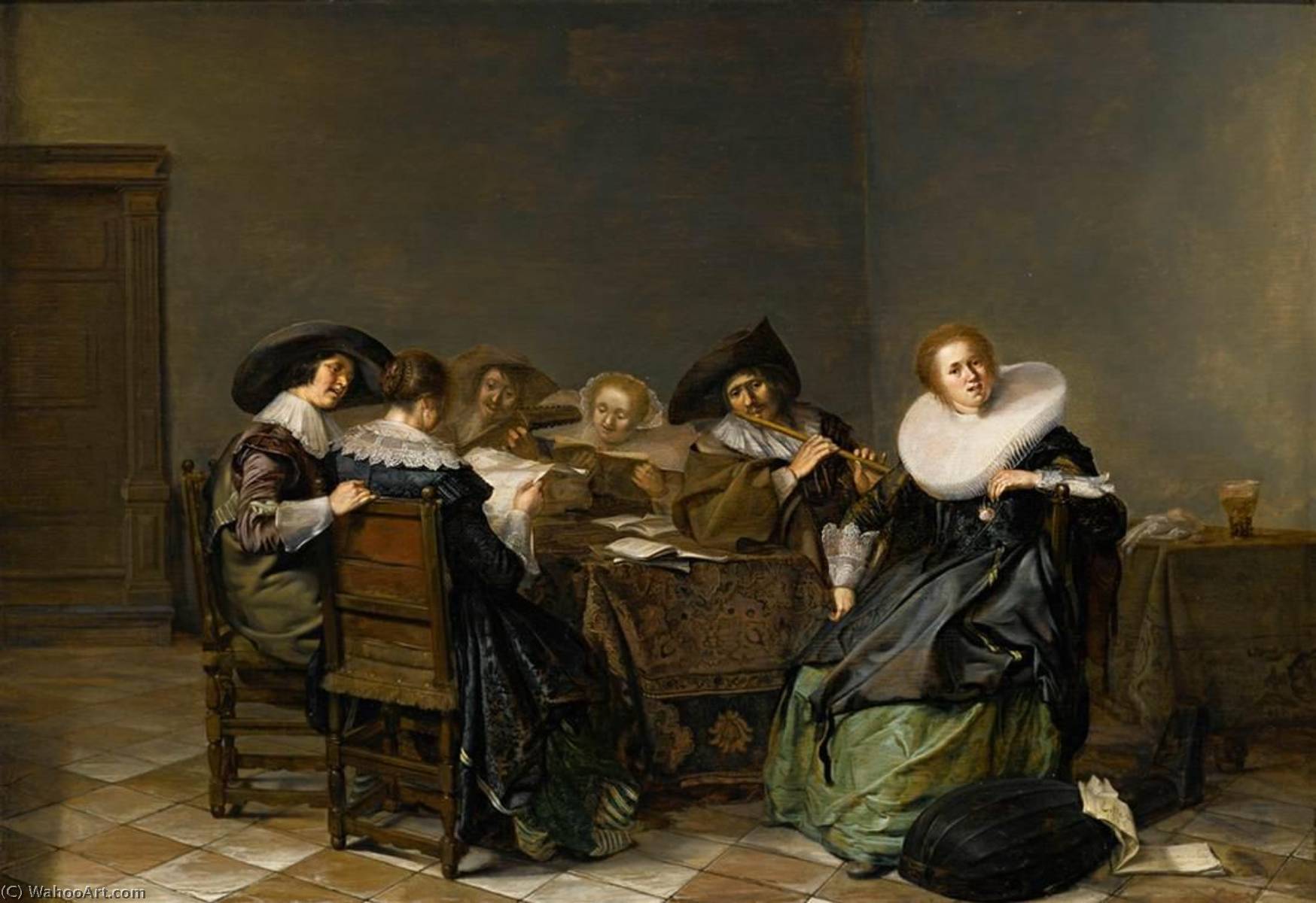
Interior with Musicians Seated around a Table

- 40.0 x 58.0 cm

 Vis mere
Giclée / Kunsttryk
Giclée- eller lærredstryk i museumskvalitet med hurtig produktion og fleksible muligheder for finish. ( Køb håndmalet maleri Skift til digitalt billede)




































Vælg mellem vores forudindstillede størrelser, der matcher kunstværkets originale proportioner.

Indtast den bredde og højde, du har brug for, så det passer til din ramme eller din væg. Et print kan kun beskæres, aldrig gøres større end selve billedet, så en størrelse med et andet format vil medføre, at dele af motivet går tabt. Vi sender dig en digital mockup til godkendelse, før vi printer noget. Billedet vist på denne side viser ikke den faktiske beskæring — det er kun mockuppen, der gør.
Verdensomspændende levering () på 2 uger i stedet for de sædvanlige 4/5 uger. (2 november)

Gratis ekspresforsendelse til hele verden

Lærred af linned i høj kvalitet

Fuld transportforsikring

Garanti for refusion af told og importafgifter

Garanti for præcis farvegengivelse

100 dages returret ved fabrikationsfejl

100% fuld returret

Mængderabat ved flere køb
 Glasmulighed er kun tilgængelig i størrelser under 110 cm

Interior with Musicians Seated around a Table
Giclée / Kunsttryk
Størrelse på reproduktion
-


Samlet pris
Dkr 538
Composition and Details
The scene depicts a lively gathering of musicians seated around a table, engaged in conversation and enjoying each other's company. The table is set with various items such as wine glasses, cups, bowls, and a knife, adding to the sense of warmth and camaraderie. The room features a chair positioned towards the left side of the image, another chair placed further back in the scene, and a bench situated along the right wall. Key elements of the painting include the use of light and shadow, which creates a sense of depth and dimensionality. The artist's use of color is also noteworthy, with a palette that ranges from warm earth tones to cool blues and greens. For art enthusiasts interested in learning more about Pieter Jacobsz Codde and his works, https://OriginalUniqueArt.com offers a range of resources, including information on the artist's life and style.Artist and Style
Pieter Jacobsz Codde was a Dutch painter who was active during the 17th century. His style is characterized by a sense of realism and attention to detail, which is evident in "Interior with Musicians Seated around a Table". The painting is a prime example of the Dutch Golden Age's artistic style, which emphasized realism, light, and shadow.- For those interested in purchasing a hand-made oil painting reproduction of "Interior with Musicians Seated around a Table", https://OriginalUniqueArt.com offers a range of options.
- The website also features information on other works by Pieter Jacobsz Codde, including "Gallant Company" and "The Adoration of the Shepherds".
Spørgsmål og svar
Hvor kan jeg købe et print af "Interior with Musicians Seated around a Table" af Pieter Jacobsz Codde?
Et print af "Interior with Musicians Seated around a Table" af Pieter Jacobsz Codde kan bestilles direkte på siden for Kunstprint i høj kvalitet: et fine art-print på bomuldscanvas eller arkivbestandigt lærredspapir.
Er farverne i "Interior with Musicians Seated around a Table" af Pieter Jacobsz Codde mættede eller dæmpede?
Farverne i "Interior with Musicians Seated around a Table" af Pieter Jacobsz Codde har en Subtle Color mætning. Mætning beskriver, hvor livlige eller dæmpede farverne er.
Hvilken kunstner tilskrives "Interior with Musicians Seated around a Table"?
Kunstneren bag "Interior with Musicians Seated around a Table" er Pieter Jacobsz Codde. Værket er katalogiseret under Pieter Jacobsz Coddes navn.
Kunstnerbiografi
The Silvery Light of the Dutch Golden Age
Pieter Jacobsz Codde, a name synonymous with the refined elegance of the seventeenth-century Dutch Golden Age, lived a life as textured and layered as the canvases he produced. Born in Amsterdam in 1599 to a family of modest means—his father serving as a city official responsible for port fees—Codde emerged from an environment steeped in the maritime commerce and burgeoning prosperity of the Netherlands. While historical records regarding his early training remain somewhat enigmatic, whispers of an apprenticeship under the legendary Frans Hals have long circulated among art historians. However, more recent scholarship suggests he may have refined his technical prowess under Barent van Someren or Cornelis van der Voort. Regardless of his specific master, Codde’s development was marked by a profound ability to capture the quiet, often silvery-gray tonalities that would become his aesthetic signature.
His early years were not merely defined by the brush, but also by a literary sensibility that added depth to his visual narratives. In the early decades of the 1600s, Codde was known to engage with the poetic and dramatic arts, appearing in publications such as Hollande Nachtegaelken. This intersection of word and image allowed him to approach genre painting not just as a recorder of reality, but as a storyteller capable of weaving classical and amorous themes into the fabric of everyday life. His move to the fashionable Sint Antoniesbreestraat in Amsterdam placed him at the very heart of the artistic community, surrounded by the vibrant energy of a city defining its cultural identity.
Mastery of the Genre and the Guardroom
As his career matured, Codde became a master of several distinct genres, most notably the guardroom scene, the musical company, and the intimate portrait. His work is celebrated for its meticulous attention to detail and a sophisticated use of chiaroscibility—the dramatic interplay of light and shadow that breathes life into inanimate objects and human subjects alike. In his guardroom paintings, he captured the rugged, often tense atmosphere of military life, yet he infused these scenes with a technical grace that elevated them beyond mere reportage. His ability to render the cold glint of steel, the heavy texture of fabric, and the soft glow of candlelight created an immersive experience for the viewer.
Beyond the martial themes, Codde found immense success in depicting the social harmonies of his era. His musical compositions are particularly evocative, capturing moments of shared leisure and artistic devotion. In works such as Dancing Lesson and The Lute Player, one can sense the rhythmic pulse of the music through his precise brushwork. These paintings often feature a delicate, silvery palette that lends a dreamlike, nostalgic quality to the scenes, making them feel both immediate and timeless. Through these small-scale masterpieces, Codde invited the viewer into the private, harmonious corners of Dutch domesticity, where melody and movement converged.
A Legacy Etched in Light and Shadow
The life of Pieter Codde was not without its shadows, mirroring the darker tones found in his more somber compositions. His personal history was marked by turbulence, including a high-profile legal accusation and a divorce that saw his wife move into the home of the painter Paulus Potter. Yet, even amidst personal upheaval, his professional trajectory remained one of significant achievement. By 1657, he had secured a prestigious residence on the Keizersgracht, a testament to the stability and success his talent had afforded him. His later years were spent in the very heart of Amsterdam's grandeur, continuing to refine the techniques that would influence generations of Dutch painters.
The historical significance of Codde lies in his role as a bridge between the raw naturalism of the early Golden Age and the more refined, polished aesthetics of the mid-seventeenth century. His contributions to the development of genre painting provided a blueprint for how light could be used to sculpt emotion and atmosphere. Today, his works reside in some of the world's most esteemed institutions, including:
- The Louvre, where his Dancing Lesson serves as a pinnacle of his musical genre.
- The Rijksmuseum, housing his profound religious works like the Adoration of the Shepherds.
- The Uffizi Gallery, which preserves his delicate conversational scenes.
- The Philadelphia Museum of Art, home to his evocative Lute Player.
Ultimately, Pieter Jacobsz Codde remains a vital figure in the canon of Western art, remembered not just for his technical skill, but for his ability to capture the fleeting, luminous essence of human connection and the quiet dignity of everyday existence.

Pieter Jacobsz Codde
1599 - 1678
Kort om kunstneren
- Full Name: Pieter Jacobsz Codde
- Nationality: Dutch
- Date Of Birth: 1599
- Date Of Death: 1678
- Place Of Birth: Amsterdam, Netherlands
- Notable Artworks:
- The Music Lesson
- Dancing Lesson
- Merry Company
- Artistic Movement Or Style: Dutch Golden Age
- Artists Who Influenced This Artist: ['Frans Hals']
- Artists Or Movements Influenced By This Artist: ['Golden Age Art']