Baroque
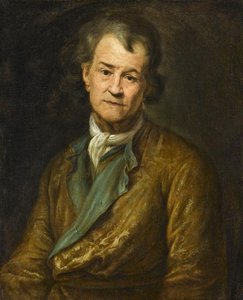
Self portrait Marble (Pierre Puget)
Pierre Puget (1620–1694) har skabt Self portrait Marble. Det tilhører Baroque-bevægelsen. Den er udført i Stone.
- Stone

 Håndmalet oliemalerie
 Del som kort
 Del
 Faktablad


 Download
 Lignende værker
 Diasshow
 Spørgsmål og svar

 Statistikker
Self portrait Marble kort fortalt
- Titel
- Self portrait Marble
- Kunstner
- Pierre Puget (1620–1694)
- Kunstner født i
- Marseille, Frankrig
- Materiale
- Stone
- Bevægelse
- Baroque
- Periode
- Early Modern
- Motiv
- portrait, sculpture, elderly, marble, baroque, classicism
Hvad forestiller Self portrait Marble?
Identification of the Self portrait Marble
The Self portrait Marble by Pierre Puget presents a quiet confrontation with the passage of time. This work is a photographic reproduction of a sculpted portrait, capturing the likeness of an older man in the stillness of stone. The subject is a bust, focusing on the head and shoulders to anchor the viewer in a singular, unmoving gaze.
In this representation, the artist Pierre Puget turns the chisel toward his own changing features. The sculpture acts as a vessel for human aging and experience, recording the weight of years through the physical presence of the subject. It is a portrait of a man, stripped of movement, existing only in the permanence of his own likeness.
The image holds a steady, frontal view. It captures a moment of stillness that feels heavy and fixed. The stone carries the memory of the face it once held.
Visual Composition and Subject Matter
The composition centers on the head and shoulders of an elderly man, captured in a black and white bust. A simple frontal view meets the eye, stripped of unnecessary distraction. The perspective remains direct, focusing entirely on the subject's presence. Because of the photographic nature of the image, the depth remains limited, pulling the viewer into a shallow space where only the immediate form exists.
Lines define the topography of the face, tracing the paths of wrinkles and the individual strands of hair. These contours map the history of a life through the texture of the skin. Organic shapes dominate the work, following the natural, soft curves of the human head and its features. The light settles into the hollows, emphasizing the physical reality of the subject.
A shallow depth of field isolates the man, blurring the world beyond his immediate silhouette. This focus sharpens the details of the face, making the texture of the sculpture feel tangible. The subject remains still, a quiet study of aging and the weight of experience. The stone holds a steady, silent gaze.
Technique and Material Properties
The original work is a classical sculpture carved from stone, likely marble. This heavy, pale medium captures the weight of the subject's features. The surface is not smooth; instead, the texture appears rough and uneven. Shading and modeling techniques emphasize this tactile quality, pulling light across the ridges of the face and the deep recesses of the hair. Every line is a physical groove in the stone.
This image is a photographic reproduction of that sculpted form. The lens translates the three-dimensional carving into a two-dimensional plane of light and shadow. The technique relies on the interplay of dark and light to define the contours of the head and shoulders. It is a study of how light meets a hard, unyielding surface. The result is a sense of solemnity. The stone holds its stillness.
Højopløselige billeder af Self portrait Marble
Public domain: kunstneren døde i 1694.
Pierre Puget, Self portrait Marble. Frit tilgængelig
Spørgsmål om Self portrait Marble besvaret
Hvilket medie er "Self portrait Marble" af Pierre Puget udført i?
"Self portrait Marble" af Pierre Puget er udført i Stone. Reproduktionerne har til formål at gengive denne tekniks visuelle udtryk.
Hvad forestiller "Self portrait Marble"?
Motiverne i "Self portrait Marble" er portrait, sculpture, elderly, marble, baroque, classicism, time, memory.
Er "Self portrait Marble" fri for ophavsret?
Ophavsretsstatus for "Self portrait Marble" af Pierre Puget: værket er i det offentlige domæne – ophavsretten er udløbet. Dette afgør, om der frit må foretages reproduktioner af billedet.
Hvem er kunstneren bag "Self portrait Marble"?
"Self portrait Marble" tilskrives Pierre Puget.
Hvilken kunstretning tilhører "Self portrait Marble" af Pierre Puget?
Kunstretningen forbundet med "Self portrait Marble" af Pierre Puget er Baroque. Denne klassificering placerer værket blandt relaterede kunstnere og kunstværker.
Hvilken fase af Pierre Pugets kunstneriske udvikling repræsenterer "Self portrait Marble"?
"Self portrait Marble" tilhører Mature Period i Pierre Pugets karriere. Denne klassificering knytter værket til kunstnerens udvikling.
Hvad er årsagen til ophavsretsstatus for "Self portrait Marble" af Pierre Puget?
"Self portrait Marble" af Pierre Puget er i det offentlige domæne – ophavsretten er udløbet. Ophavsretten løber fra kunstnerens dødsår, som var 1694.
Hvor placerer "Self portrait Marble" sig i forhold til Pierre Pugets samlede værk?
I Pierre Pugets samlede værk placerer "Self portrait Marble" sig i Baroque-stilen, sammen med temaerne omkring classical ideals, roman influence, baroque drama, emotional depth, portraiture tradition, realism, ageing, mortality.
Hvor placerer "Self portrait Marble" sig blandt Pierre Pugets gennemgående motiver?
"Self portrait Marble" skildrer portrait, sculpture, elderly, marble, baroque, classicism, time, memory, mens Pierre Pugets registrerede temaer er classical ideals, roman influence, baroque drama, emotional depth, portraiture tradition, realism, ageing, mortality. En sammenligning af de to viser, hvordan værket relaterer sig til kunstnerens sædvanlige motiver.
Om kunstneren, Pierre Puget
1620–1694, Frankrig
Pierre Puget
Pierre Puget: Et liv i kunst og ingeniørvidenskab Født: Marseille, Frankrig (1620) Død: 1694 Tidligt liv og italienske indflydelser Lærlingetid: Puget begyndte sin karriere som fjortenårig, hvor han udskår ornamenter til galejer bygget i Marseille. Denne tidlige eksponering for håndværk lagde fundamentet for hans senere kunstneriske bestræbelser. Rejsen til Italien (1640): I søgen efter muligheder rejste han til Italien, først til Livorno og derefter Firenze, hvor han forfinede sine færdigheder som træskærer og maler. Rom og Pietro da Cortona: Et vendepunkt indtraf, da han blev taget under vingerne af Pietro da Cortona i Rom.
Også af Pierre Puget
 Mødet mellem Alexander den Store og Diogenes1671
 Milo fra Kroton1671
 The Meeting of Alexander the Great and Diogenes1671
 Selvportræt1668
Essays om Self portrait Marble
 Eternal Stone: The History, Artistry, and Mastery of Marble SculptureExplore the profound history and technical mastery of marble sculpture. From Ancient Greek perfection to Baroque drama, discover how master…
 Masterpieces of Hans Baldung Grien: The Top 25 Essential ArtworksExplore 25 iconic works by Hans Baldung Grien. Discover German Renaissance masterpieces on OriginalUniqueArt.com.
 Pierre Puget: 25 Dynamic Sculptures and Paintings of the French Baroque EraExplore 25 iconic Pierre Puget works from the French Baroque. Discover museum-quality art and curated ideas on OriginalUniqueArt.com.