

 Se i fuld skala
 Del
Del Del
Del
 Detaljer

 Download
 Lignende værker
 Røntgenundersøgelse
 Diasshow
Penelope Asleep


 Se mere
Giclée / Kunsttryk
Giclée- eller lærredstryk i museumskvalitet med hurtig produktion og fleksible muligheder for finish. ( Køb håndlavet maleri Køb billede)




































Vælg mellem vores forudindstillede størrelser, der matcher kunstværkets originale proportioner.

Du kan indtaste dine egne mål for at passe til en specifik ramme eller et bestemt område. Hvis den valgte størrelse ikke stemmer overens med det originale billedes proportioner, vil vi enten beskære kunstværket eller udvide billedet med en spejlet eller ensfarvet kant. En digital mockup vil blive sendt til din godkendelse, før produktionen påbegyndes.
Bemærk venligst, at forhåndsvisningen på skærmen ikke afspejler den faktiske beskæring eller udvidelse. Kun mockuppen vil nøjagtigt vise den endelige komposition.
Selvom specialmål er tilgængelige, anbefaler vi at vælge et mål fra den foruddefinerede liste for at bevare de originale proportioner.
Verdensomspændende levering () på 2 uger i stedet for de sædvanlige 4/5 uger. (16 august)

Gratis ekspresforsendelse til hele verden

Lærred af linned i høj kvalitet

Fuld transportforsikring

Garanti for refusion af told og importafgifter

Garanti for præcis farvegengivelse

60 dages returret (kun ved fabrikationsfejl)

100% Tilfredshedsgaranti

Mængderabat tilgængelig
 Glasmulighed er kun tilgængelig i størrelser under 110 cm

Penelope Asleep
Giclée / Kunsttryk
Størrelse på reproduktion
-


Samlet pris
$ 81
Kunstnerens biografi
The Sculptural Legacy of Pierre-Jules Cavelier
In the vibrant, shifting landscape of nineteenth-century Paris, few artists captured the delicate tension between classical restraint and Romantic fervor as gracefully as Pierre-Jules Cavelier. Born in 1814 to a family of skilled artisans—his father being a silversmith and furniture maker—Cavelier was destined for a life defined by the tactile mastery of form and material. This early immersion in the precision of craftsmanship provided the bedrock upon which he would build an illustrious career, eventually ascending to become one of the most respected figures in French academic sculpture. His journey from the workshops of Paris to the prestigious halls of the Villa Medici is a testament to a talent that could bridge the gap between the rigorous discipline of antiquity and the emotive depth of the Romantic era.
Cavelian’s artistic evolution was deeply shaped by his encounters with the masters of his time. Studying under the legendary sculptor David d’Angers and the painter Paul Delaroche, he learned to navigate the complexities of human anatomy and historical narrative. This period of intense training culminated in his monumental achievement in 1842: winning the Prix de Rome with his plaster statue, Diomedes Entering the Palladium. This victory was more than a personal triumph; it granted him entry into the Villa Medici, an experience that would serve as the crucible for his mature style. Surrounded by a cohort of future luminaries such as Édouard Lantéri and Eugène Guillaume, Cavelier spent his years in Rome absorbing the grandeur of classical antiquity, refining a technique that allowed marble and bronze to breathe with a lifelike, poetic vitality.
A Synthesis of Neoclassicism and Romanticism
The true brilliance of Cavelier’s work lies in his ability to synthesize disparate artistic movements into a singular, cohesive voice. While his foundations were firmly rooted in the Neoclassical tradition—characterized by anatomical accuracy and a reverence for Greek and Roman ideals—his soul belonged to the Romantic movement. He possessed a rare ability to imbue static stone with a sense of psychological depth and transient emotion. In works such as Cornélie, one can observe how he utilizes the purity of classical form to convey profound human sentiment, creating figures that seem to exist in a state of eternal, quiet contemplation.
His mastery extended beyond the intimate scale of portraiture into the grand architectural landscape of Paris. Cavelier’s contributions to the city's visual identity are marked by a sense of drama and movement, as seen in his evocative Angel on the Bell Tower. His sculptures often feature:
- Fluidity of Form: A seamless transition between muscular tension and graceful repose.
- Narrative Depth: The ability to tell complex historical or mythological stories through a single, poignant gesture.
- Material Mastery: An expert command over the textures of marble and bronze, making stone appear as soft as skin or as light as drapery.
Historical Significance and Enduring Influence
As the nineteenth century progressed, Cavelier’s influence rippled through the academic institutions of France. His role as a teacher and a pillar of the artistic community ensured that his commitment to technical excellence and emotional sincerity would be passed down to subsequent generations of sculptors. His works, now housed in some of the world's most esteemed collections, including the Musée d'Orsay and the Louvre, serve as enduring windows into a period when art sought to reconcile the permanence of history with the fleeting beauty of human emotion.
Today, Pierre-Jules Cavelier is remembered not merely as a practitioner of academic sculpture, but as a poet in stone. His legacy remains a vital part of the French sculptural canon, reminding us of a time when the pursuit of beauty was inextricably linked to the exploration of the human spirit. Through his hands, the cold rigidity of classical tradition was transformed into a living, breathing testament to the Romantic imagination.

pierre jules cavelier
1814 - 1894 , France
Kort om kunstneren
- Artistic Movement Or Style: Neoclassical & Romantic Sculpture
- Artists Or Movements Influenced By This Artist: ['Romanticism']
- Artists Who Influenced This Artist:
- David d'Angers
- Paul Delaroche
- Date Of Birth: August 30, 1814
- Full Name: Pierre Jules Cavelier
- Nationality: French
- Notable Artworks:
- Cornélie
- Angel on the Bell Tower
- Bust of Ary Scheffer
- Place Of Birth: Paris, France
Relaterede artikler

Bronzeskulpturers Mestre: 10 Værker der Ændrede Kunsthistorien | OriginalUniqueArt
Oplev de 10 mest legendariske bronzeskulpturer, der har formet kunsthistorien! Fra Rodin til Vigeland – lær historierne bag mesterværkerne og find inspiration til din indretning. Køb museumskvalitets reproduktioner på OriginalUniqueArt.com.

The Enduring Allure of Marble in Art History: From Classical Sculpture to Modern Abstraction
Explore the captivating history of marble sculpture from ancient Greece to modern art. Discover renowned artists like Canova & Michelangelo, carving techniques, and investment insights at OriginalUniqueArt.
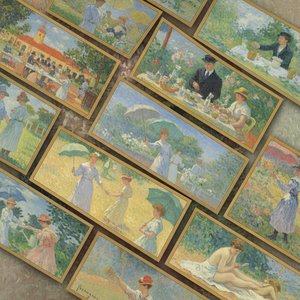
Renoirs Mesterværker: Top 25 Kunstværker til Dit Hjem | OriginalUniqueArt.dk
Oplev Renoirs 25 mest ikoniske malerier! Fordyb dig i Impressionismens verden, fra 'Bal du moulin de la Galette' til 'Umbrellas'. Køb museumskvalitets reproduktioner og find inspiration til din bolig på OriginalUniqueArt.com.
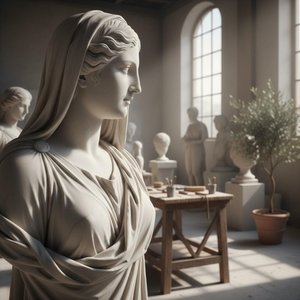
Timeless Elegance: A Complete Guide to the Sublime Beauty and Artistry of Marble Sculpture
Discover the sublime beauty of marble art through an expert exploration of Renaissance and Neoclassical masterpieces. From the delicate textures of Carpeaux to the grandeur of Sansovino, immerse yourself in a guide to timeless elegance and sculptural perfection.

The Enduring Form: Exploring Themes & Techniques in Sculpture Across Historical Periods
Explore the rich history of sculpture from ancient masterpieces to contemporary innovations. Discover key techniques, influential artists & investment potential for discerning art collectors.

