Abstract Expressionism · 1956
Red Garden (Patrick Heron, 1956)
Patrick Heron (1920–1999) har skabt Red Garden. Det er fra 1956. Det tilhører Abstract Expressionism-bevægelsen. Den er udført i Lithograph. Det opbevares på Tate Modern i London, Storbritannien.
- 1956
- Lithograph
- Tate Modern, London

 Se i rummet

 Håndmalet oliemalerie
 Del som kort
 Del
 Faktablad


 Download
 Lignende værker
 Røntgenundersøgelse
 Diasshow
 Spørgsmål og svar

 Statistikker
Red Garden kort fortalt
- Titel
- Red Garden
- Kunstner
- Patrick Heron (1920–1999)
- Kunstner født i
- Leeds, Storbritannien
- Dato
- 1956
- Medium
- Lithograph
- Hvor det kan ses
- Tate Modern, London, Storbritannien
- Bevægelse
- Abstract Expressionism
- Periode
- Modern
- Motiv
- color field painting, geometric forms, organic texture, cornish landscape, red hue, minimalist composition
Hvad forestiller Red Garden?
A Symphony of Crimson and Form
In the realm of British Abstract Expressionism, few works capture the visceral pulse of nature quite like Patrick Heron’s Red Garden. Created in 1956, this masterful lithograph serves as a profound exploration of how color alone can evoke the lush, tangled energy of a living landscape. At first glance, the viewer is met with a rhythmic dance of geometric shapes—rectangles and irregular forms that seem to drift across the paper like sunlight filtering through dense foliage. There is no literal depiction of flora or earth; instead, Heron utilizes a sophisticated visual vocabulary to translate the essence of a garden into a purely non-representational experience. The composition avoids the stillness of traditional landscapes, opting instead for a dynamic asymmetry that guides the eye in a continuous, wandering journey across the surface.
The emotional heartbeat of the piece lies in its striking color palette, dominated by a resonant spectrum of reds. From the most vibrant, electric scarlets to deep, brooding crimsons, these hues command immediate attention, imbuing the work with an undeniable sense of passion and vitality. This warmth is masterfully balanced by darker, grounding tones of black and rich brown, which provide much-needed shadow and structural definition to the overlapping shapes. Intermittent whispers of creamy off-white offer a luminous respite, preventing the intensity of the red from becoming overwhelming. For the discerning collector or interior designer, this interplay of light and dark offers a sophisticated focal point that can anchor a room with both warmth and modern elegance.
Technique and the Spirit of Modernism
Heron’s approach to Red Garden reflects his deep fascination with the geological textures of Cornwall, particularly the striking red sandstone found within the landscape. Through the meticulous process of layered lithography, he achieves a sense of spatial recession that defies the flat nature of the medium. By layering shapes and varying the density of pigment, Heron creates an illusion of depth, where certain forms appear to float forward while others recede into a shadowy background. This technique allows the artwork to breathe, suggesting a complex, multi-dimensional space that mirrors the layered complexity of a real garden.
Beyond its technical brilliance, the work stands as a testament to a pivotal moment in mid-century modernism. As an artist who was both a creator and a formidable critic, Heron understood how to bridge the gap between spontaneous emotional expression and rigorous color theory. Red Garden is not merely a decorative arrangement; it is a deliberate study of how pigment interacts with surface and sight. For those seeking to infuse their spaces with a sense of historical significance and avant-garde spirit, this reproduction offers an invitation to contemplate the eternal dance between chaos and order, and the enduring power of color to stir the human soul.
Hvilket museum udstiller Red Garden?
Tate Modern
London, Storbritannien
Historien og rødderne bag Tate Modern Tate Moderns tilstedeværelse i London, Storbritannien, er dybt forankret i den industrielle historie, der præger Southwark-skyline. Stedet blev oprindeligt domineret af Bankside Power Station, en massiv konstruktion, der var i drift i tre årtier, før den endeligt blev taget ud af drift. Økonomiske forskydninger, herunder de markante stigninger i oliepriserne, førte til, at kraftværket lukkede dørene den 31.


Højopløselige billeder af Red Garden

Beskyttet af ophavsret: billedet er kun vist som reference.
Andre størrelser, beskæringer og kildehenvisning →Patrick Heron, Red Garden (1956), Tate Modern.
Spørgsmål om Red Garden besvaret
Hvor kan jeg se det originale værk "Red Garden" af Patrick Heron?
"Red Garden" af Patrick Heron er udstillet på Tate Modern, London, Storbritannien. Museets fortegnelse henviser til det originale værk og ikke til reproduktioner.
Hvornår blev "Red Garden" skabt?
"Red Garden" af Patrick Heron er dateret til 1956.
Hvilket medie er "Red Garden" af Patrick Heron udført i?
"Red Garden" er udført i Lithograph.
Hvad forestiller "Red Garden"?
"Red Garden" af Patrick Heron forestiller: color field painting, geometric forms, organic texture, cornish landscape, red hue, minimalist composition, visual rhythm.
Er billedet af "Red Garden" af Patrick Heron frit tilgængeligt i det offentlige domæne?
"Red Garden" af Patrick Heron er stadig beskyttet af ophavsret. Denne status bestemmer, hvordan billedet af værket må reproduceres.
Hvem har skabt "Red Garden"?
"Red Garden" tilskrives Patrick Heron.
Hvilken kunstretning tilhører "Red Garden" af Patrick Heron?
Kunstretningen forbundet med "Red Garden" af Patrick Heron er Abstract Expressionism. Denne klassificering placerer værket blandt relaterede kunstnere og kunstværker.
Hvor i Patrick Herons karriere placerer "Red Garden" sig?
"Red Garden" repræsenterer Patrick Herons Mature Period.
Hvor gammel var Patrick Heron, da "Red Garden" blev skabt i 1956?
Da "Red Garden" blev skabt i 1956, var Patrick Heron – født i 1920 – 36 år gammel.
Om kunstneren, Patrick Heron

1920–1999, Storbritannien
Patrick Heron
Et liv nedsænket i farve og lys Patrick Heron, en skelsættende skikkelse i det 20. århundredes britiske kunst, var ikke blot en maler; han var en visuel poet, der oversatte verdens vitalitet til lærredet med et intenst personligt sprog. Han blev født i Headingley, Leeds, i 1920, og hans kunstneriske rejse begyndte ikke i de lærde akademiers saler, men midt i familiens forretningsliv og den spirende skønhed i det corniske landskab. Hans far, en tekstilproducent og dedikeret pacifist, skabende et miljø, hvor kreativiteten kunne blomstre, hvilket gjorde det muligt for unge Patrick at designe stofmønstre allerede som teenager – en tidlig indikation af hans medfødte følsomhed over for farve og form.
Også af Patrick Heron
 Azalea Garden May 19561956
 Market Place (Half Church Tower) St Ives 19501950
 Standing Figure, Rachel1950
 10 11 July 19921992
Essays om Red Garden
 Geometrisk Abstraktion: Top 10 Kunstværker der Definerede Bevægelsen | OriginalUniqueArt.dkOplev de 10 mest ikoniske værker inden for geometrisk abstraktion! Fra Kandinsky til Mondrian – lær historierne bag disse banebrydende kuns…
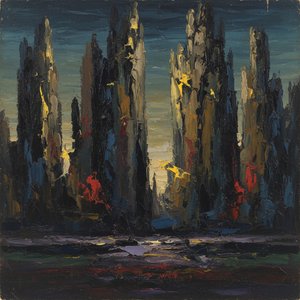 Clyfford Still's Abstract Expressionism: A Study of Color, Form & the Existential LandscapeExplore the profound world of Clyfford Still's Abstract Expressionism with OriginalUniqueArt. Discover his unique style, existential themes…
 Sculpting Space: The Structural Interplay of Impasto and Atmospheric Perspective in Modern ArtExplore the expert interplay of impasto texture and aerial perspective in modern art. Discover how depth is sculpted on canvas.