

 Se i rummet
 Send
Send Del
Del
 Detaljer
 Studieguide til kunstværker

 Download
 Lignende værker
 Røntgenundersøgelse
 Se diasshow
 Statistik
The Annunciation
 Tempera On Panel
- WallArt
- Early Renaissance
Early Renaissance
 1420
1420- Renaissance
 65.0 x 48.0 cm
 Læs mere
Giclée / Kunsttryk
Giclée- eller lærredstryk i museumskvalitet med hurtig produktion og fleksible muligheder for finish. ( Bestil håndmalet reproduktion Skift til digitalt billede)




P118B Dkr10

P118H Dkr10

P118W Dkr10

P438Z Dkr10

P508JH Dkr12

P508YH Dkr12

P805H Dkr10

P805Z Dkr10

P919BZ Dkr10

P919G Dkr10

P919XJ Dkr10

P959ZH Dkr10

P968JZ Dkr12

W106C Dkr8

W218G Dkr10

W218JH Dkr8

W218Y Dkr10

W307PJ Dkr10

W316G Dkr10

W316PJ Dkr8

W316Y Dkr10

W398PJ Dkr8

W4111J Dkr10

W500HY Dkr15

W500JH Dkr15

W692G Dkr12

W849H Dkr8

W940BG Dkr15

W953PJ Dkr8




Vælg mellem vores forudindstillede størrelser, der matcher kunstværkets originale proportioner.

Indtast den bredde og højde, du har brug for, så det passer til din ramme eller din væg. Et print kan kun beskæres, aldrig gøres større end billedet, så en størrelse med en anden form vil miste en del af motivet. Vi sender dig en digital mockup til godkendelse, før vi printer noget. Billedet vist på denne side viser ikke den faktiske beskæring — det er kun mockuppen, der gør.
Verdensomspændende levering () på 2 uger i stedet for de sædvanlige 4/5 uger. (23 oktober)

Gratis ekspresforsendelse til hele verden

Lærred af linned i høj kvalitet

Komplet transportforsikring

Garanti for refusion af told og importafgifter

Garanti for autentisk farvegengivelse

100 dages returret ved fabrikationsfejl

100% fuld returret

Mængderabat ved flere køb
 Glasmulighed er kun tilgængelig i størrelser under 110 cm

The Annunciation
Giclée / Kunsttryk
Reproduktionsstørrelse
-


Samlet pris
Dkr 531
The Composition and Figures
In this tempera and gold panel from approximately 1420, the archangel Gabriel approaches the Virgin Mary within an architectural setting defined by precise geometric lines. The scene is structured around a blue building featuring an arched doorway and columns that recede into the background. On the left side of the panel, several figures are positioned near the edge of the frame, while other figures occupy the space toward the right. Gold accents appear on the clothing of the central figures and throughout the surrounding environment, contrasting with the deep blue tones of the architecture. The figure of Mary is depicted alongside Gabriel, with a book held in the scene. Above the primary interaction, God the Father appears to direct the event. The surfaces within the composition include patterned elements and gilded haloes that catch the light.
Technical Execution and Spatial Construction
The work demonstrates an early application of linear perspective through the use of incised and underdrawn construction lines. These marks reveal a systematic attempt to establish a foreshortened ceiling, pillars, cornices, and a grid-like structure within the portico. Such mathematical precision allows for the creation of an illusion of depth behind the figures. The medium consists of tempera and gold on a wood panel, with some areas featuring oil glazing. Gold and silver leaf, along with punchwork, contribute to a luminous surface. Infrared examination shows that adjustments were made directly onto the panel during the painting process rather than through a mechanical transfer of a finished design. This method highlights the artist's focus on calculating vanishing points and orthogonal lines to organize the spatial relationships between the architectural elements and the subjects.
Historical Context and Subject Matter
Created during the Early Renaissance, this painting depicts the biblical episode from the Gospel of Luke where Gabriel announces to Mary that she will conceive Jesus. The subject matter is grounded in Christian iconography, specifically focusing on the Annunciation. The architectural setting, characterized by its columns and receding planes, reflects the intellectual currents of 15th-century Florence, where the study of geometry and optics was becoming central to artistic practice. The use of gold and tempera follows traditions that emphasize narrative clarity and decorative detail. While the figures are arranged within a structured space, the composition maintains a sense of movement as the angel approaches the Virgin.
Spørgsmål & svar
Hvad er målene på det originale værk "The Annunciation" af Paolo Uccello?
Det originale værk "The Annunciation" af Paolo Uccello måler 65 x 48 cm.
Hvilken størrelse anbefales det at printe "The Annunciation" i?
"The Annunciation" anbefales i en trykstørrelse på Small. Andre størrelser er tilgængelige med de samme proportioner.
Hvor mættet er farvepaletten i "The Annunciation"?
Farverne i "The Annunciation" af Paolo Uccello har en Subtle Color mætning. Mætning beskriver, hvor livlige eller dæmpede farverne er.
Om kunstneren
A Florentine Visionær: Livet og Kunsten hos Paolo Uccello
Paolo Uccello, født Paolo di Dono i 1397 midt i de bølgende bakker nær Firenze, er en af de mest fængslende og gådefulde figurer i den tidlige renæssance. Hans egen kælenavn – “Uccello” – betyder “fugl”, hvilket antyder en legesyg natur og en kunstnerisk tilbøjelighed mod at forestille sig fugle, men det skjuler en tanke dybt engageret i de spirende intellektuelle strømme af sin tid. Han var ikke blot en maler; han var en pioner, en matematiker på lærredet, der stræbte efter at låse hemmelighederne bag visuel rum og oversætte dem til betagende kunstværker. Hans far, Dono di Paolo, udøvede både barber-surgeon og læge, mens hans mor, Antonia, kom fra en florentinsk adelsfamilie – en linje, der måske indgydede ham både praktisk sanselighed og værdsættelse af raffineret æstetik. Fra 1412 til 1416 blev Uccello’s formative år brugt under Lorenzo Ghibertis vejledning, hvis værksted var en smeltedigel af kunstnerisk innovation, fokuseret på at skabe de fantastiske bronzeporte til Firenze's Baptisterium. Denne tidlige eksponering dyppede ham i den herskende gotiske stil, med sit fokus på dekorativ elegance og fortælling klarhed, men det antændte også en længsel efter at gå ud over etablerede grænser.Den Jagt efter Perspektiv: En Matematisk Sindssomme i Spil
Uccello’s kunstneriske udvikling var ikke blot om at mestre teknik; den blev drevet af en uudholdelig nysgerrighed omkring de underliggende principper, der styrer perception. Han blev opslugt af matematik, især geometri og perspektiv, ikke som abstrakte discipliner, men som værktøjer til at låse op for en mere sandfærdig repræsentation af virkeligheden. Selvom Filippo Brunelleschi ofte krediteres for at have opdaget lineært perspektiv, var Uccello blandt de første til systematisk at anvende det på maleri, omhyggeligt beregnede vanishing points og ortogonale linjer for at skabe en illusion af dybde, der hidtil havde været stort set fraværende i kunsten. Mens Brunelleschi fokuserede på den geometriske struktur, var Uccello mere optaget af den visuelle oplevelse – hvordan øjet opfatter rummet og dets forhold. Han eksperimenterede med forskellige metoder for at skabe en illusion af dybde, der var både overbevisende og æstetisk tiltalende. Hans fascination var næsten besættende, som beskrevet af Giorgio Vasari, der beskrev Uccello som at tilbringe hele natten i sit studie, tabt i refleksioner over vanishing points og rumlige relationer. Denne dedikation, selvom den nogle gange blev opfattet som excentrisk, sikrede hans plads som en af de mest banebrydende kunstnere i sin tid.Mesterværker af Illusion: Nøgleværker og Stilistiske Træk
Uccello’s oeuvre, omend relativt lille, er præget af en distinkt stil, der blander gotisk elegance med renæssance innovation. The Battle of San Romano, en række af tre paneler bestilt for at fejre en florentinsk sejr, står som måske hans mest berømte præstation. Disse malerier er ikke blot forestillinger om krig; de er dynamiske kompositioner fyldt med roterende figurer, fragmenteret rustning og dramatisk skærende lanterner – alle gengivet i livlige farver og arrangeret ifølge omhyggeligt beregnede perspektiver. The Birth of the Virgin viser Uccello’s mesterskab i lineært perspektiv, hvilket skaber en overbevisende illusion af dybde inden for et begrænset rum, mens hans St George and the Dragon præsenterer en slående forestilling om den legendariske helgen, karakteriseret ved dristige farver og stilnede former. Selv i værker som *The Flood and the Ark*, en del af San Miniato al Monte freskene, er Uccello’s fascination med arkitektoniske detaljer og komplekse kompositioner tydelig. Hans stil afslører konstant:Arv og Indflydelse: En Varig Effekt på Kunsthistorien
Paolo Uccello’s bidrag til renæssancen strækker sig langt ud over hans individuelle malerier. Hans banebrydende udforskning af perspektiv ændrede fundamentalt kunsthistoriens forløb, hvilket inspirerede utallige kunstnere, der fulgte i hans spor. Albrecht Dürer, den berømte tyske træsnitter og maler, blev dybt påvirket af Uccello’s arbejde, og dedikerede sig til at studere perspektiv og integrere dets principper i sin egen kunstpraksis. Selvom Uccello’s stil forblev noget distinkt gennem hele hans karriere – en unik blanding af gotisk raffinement og renæssance innovation – sikrede hans banebrydende tilgang til rum og form hans plads som en af de mest centrale figurer i vestlig kunst. Han døde i Firenze i 1475, efterlod sig ikke kun smukke malerier, men også intellektuel nysgerrighed og kunstnerisk mod. Hans arbejde inspirerer stadig til beundring og beundring, minder os om, at ægte kunst ligger ikke kun i det, der ses, men i forståelsen af, hvordan vi ser det.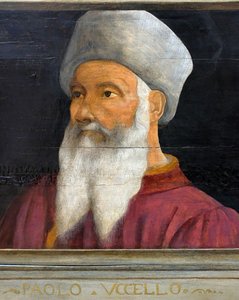
Paolo Uccello
1397 - 1475 , Italien
Hurtige fakta
- Artistic Movement Or Style: Renaissance tidlig
- Artists Or Movements Influenced By This Artist: ['Albrecht Dürer']
- Artists Who Influenced This Artist:
- Lorenzo Ghiberti
- Donatello
- Date Of Birth: 1397
- Date Of Death: 1475
- Full Name: Paolo di Dono
- Nationality: Italiensk
- Notable Artworks:
- Slaget ved San Romano
- Fødslen af Maria
- Place Of Birth: Pratovecchio, Italien
Relaterede artikler

OriginalUniqueArt.com F.A.Q.: Elevating Interiors with Bespoke Wall Murals & Masterpiece Frescoes
Discover the pinnacle of bespoke interior transformation with OriginalUniqueArt.com. Our master fresco artists create exquisite, hand-painted wall murals and ceiling masterpieces tailored to your estate. Elevate your architectural space with timeless, museum-quality artistry.


