

 Se i rummet
 Send
Send Del
Del
 Detaljer
 Studieguide til kunstværker

 Download
 Lignende værker
 Røntgenundersøgelse
 Se diasshow
 Statistik
Hope


 Læs mere
Håndlavet oliereproduktion
Håndmalet olie på lærred i din valgte størrelse og ramme, udført efter bestilling af vores kunstnere. ( Skift til printversion Skift til digitalt billede)




P118B Dkr10

P118H Dkr10

P118W Dkr10

P438Z Dkr10

P508JH Dkr12

P508YH Dkr12

P805H Dkr10

P805Z Dkr10

P919BZ Dkr10

P919G Dkr10

P919XJ Dkr10

P959ZH Dkr10

P968JZ Dkr12

W106C Dkr8

W218G Dkr10

W218JH Dkr8

W218Y Dkr10

W307PJ Dkr10

W316G Dkr10

W316PJ Dkr8

W316Y Dkr10

W398PJ Dkr8

W4111J Dkr10

W500HY Dkr15

W500JH Dkr15

W692G Dkr12

W849H Dkr8

W940BG Dkr15

W953PJ Dkr8




Vælg mellem vores forudindstillede størrelser, der matcher kunstværkets originale proportioner.

Indtast den bredde og højde, du har brug for, så det passer til din ramme eller din væg. Da dette er håndmalet, kan kunstneren ved en anden form på størrelsen male lidt mere rundt om billedet eller skære lidt væk — det er op til dig. Vi sender dig et digitalt mockup til godkendelse, før maleriet påbegyndes. Billedet, der vises på denne side, viser ikke det endelige resultat — det er kun mockuppet, der gør.
Efter bestilling vil OriginalUniqueArt.com team sende en e-mail til kunden for at indhente instruktioner og fremsende et udkast til gennemgang.
Levering i hele verden () på 3-4 uger i stedet for de standard 5 uger. (21 oktober). Ingen kompromiser med kvaliteten.

Gratis ekspresforsendelse til hele verden

Lærred af linned i høj kvalitet

Komplet transportforsikring

Garanti for refusion af told og importafgifter

Garanti for autentisk farvegengivelse

100 dages returret ved fabrikationsfejl

100% fuld returret

Mængderabat ved flere køb
 Glasmulighed er kun tilgængelig i størrelser under 110 cm

Hope
Reproduktionsmateriale
Reproduktionsstørrelse
-


Samlet pris
Dkr 1957
Paolo Uccello’s ‘Hope’: A Renaissance Vision of Faith and Ascent
Paolo Uccello's “Hope,” painted around 1435, is not merely a depiction of a woman reaching towards the heavens; it’s a profound exploration of faith, perspective, and the burgeoning humanist ideals of the Early Renaissance. This captivating work, housed within the Duomo di Firenze (Florence Cathedral), offers a glimpse into Uccello's unique artistic vision – one characterized by an obsessive pursuit of mathematical precision blended with a vibrant, almost theatrical use of color and movement.
Uccello’s background as a barber-surgeon, coupled with his family’s noble lineage, instilled in him both a practical eye for detail and an appreciation for refined aesthetics. He wasn't simply a painter; he was a meticulous investigator, fascinated by the mechanics of sight and how to translate three-dimensional space onto a two-dimensional surface. This intellectual curiosity is strikingly evident in “Hope,” where he masterfully employs linear perspective – a technique still relatively new at this time – to create an illusion of depth that draws the viewer into the scene.
The Figure and Her Gesture
At the heart of the painting stands a woman, her posture radiating both serenity and fervent aspiration. She’s draped in a simple yet elegant green gown, its color echoing the lush foliage surrounding her – a subtle nod to nature's enduring symbolism of hope and renewal. Her hands are raised towards the sky, not in supplication, but with an expression of confident expectation. The gesture is crucial; it isn’t passive waiting, but active reaching, suggesting a belief in a future filled with promise.
The figure's face remains partially obscured, adding to her enigmatic quality and allowing viewers to project their own hopes and desires onto the image. She appears to be gazing at an unseen celestial event – perhaps a radiant angel or a divine manifestation – further emphasizing the painting’s spiritual core. The composition is carefully balanced; the woman occupies the central space, while the surrounding figures—a man on the left and two others on the right—create a dynamic backdrop that reinforces her upward trajectory.
Technique and Color
Uccello's mastery of color is immediately apparent. He utilizes a rich palette – yellows, blues, reds, and whites – to create a luminous effect, particularly in the depiction of the sky. The use of layered glazing techniques gives the colors depth and vibrancy, while strategically placed highlights draw attention to key elements within the composition. Notice how he employs atmospheric perspective, with distant objects appearing paler and less distinct, further enhancing the illusion of space.
The painting’s surface is characterized by a smooth, polished finish, indicative of Uccello's meticulous preparation and application of paint. His attention to detail extends beyond color; he carefully renders the folds of the woman’s gown, the textures of the surrounding foliage, and even the subtle expressions on the faces of the supporting figures. This dedication to realism, combined with his innovative use of perspective, distinguishes “Hope” as a landmark achievement in Renaissance art.
Symbolism and Context
"Hope" was likely commissioned for the Chapel of Our Lady of the Assumption within Florence’s Duomo. The chapel's design reflects the broader artistic trends of the period, incorporating elements of Gothic and Early Renaissance styles. The painting’s theme—hope—resonates deeply with the religious context of the commission, aligning with the church’s desire to inspire faith and devotion among its congregation.
Beyond its immediate religious significance, “Hope” embodies the humanist ideals that were gaining momentum during the Early Renaissance. The focus on human experience, particularly the aspiration for a better future, reflects a shift away from purely theological concerns towards a more worldly perspective. Uccello’s innovative use of perspective and his masterful rendering of space demonstrate a desire to understand and represent the world in a more accurate and compelling way – a hallmark of Renaissance art.
Bringing ‘Hope’ Home: A High-Quality Reproduction
OriginalUniqueArt offers meticulously crafted, hand-painted reproductions of Paolo Uccello's “Hope,” allowing you to bring this iconic masterpiece into your home or office. Our skilled artists replicate Uccello’s distinctive style and techniques with the utmost care, ensuring that each reproduction captures the painting’s original beauty and emotional impact. Choose from a range of sizes and canvas materials to perfectly complement your décor. Experience the timeless allure of “Hope” – a testament to Renaissance artistry and enduring human aspiration.
Spørgsmål & svar
Hvilken følelsesmæssig tone ledsager Early Renaissance-stilen i "Hope"?
Den Hopeful følelse i "Hope" ledsager dens Early Renaissance stil.
Hvor harmoniske er farverne i "Hope" af Paolo Uccello?
"Hope" af Paolo Uccello fremviser en Strong Color Unity farveharmoni.
Hvor mange personer ser "Hope"?
Siden Statistikker for "Hope" af Paolo Uccello præsenterer statistikker over offentlige besøg: månedlige besøg af dette kunstværk, en sammenligning med kunstnerens mest sete værker og hvor de besøgende kommer fra.
Om kunstneren
A Florentine Visionær: Livet og Kunsten hos Paolo Uccello
Paolo Uccello, født Paolo di Dono i 1397 midt i de bølgende bakker nær Firenze, er en af de mest fængslende og gådefulde figurer i den tidlige renæssance. Hans egen kælenavn – “Uccello” – betyder “fugl”, hvilket antyder en legesyg natur og en kunstnerisk tilbøjelighed mod at forestille sig fugle, men det skjuler en tanke dybt engageret i de spirende intellektuelle strømme af sin tid. Han var ikke blot en maler; han var en pioner, en matematiker på lærredet, der stræbte efter at låse hemmelighederne bag visuel rum og oversætte dem til betagende kunstværker. Hans far, Dono di Paolo, udøvede både barber-surgeon og læge, mens hans mor, Antonia, kom fra en florentinsk adelsfamilie – en linje, der måske indgydede ham både praktisk sanselighed og værdsættelse af raffineret æstetik. Fra 1412 til 1416 blev Uccello’s formative år brugt under Lorenzo Ghibertis vejledning, hvis værksted var en smeltedigel af kunstnerisk innovation, fokuseret på at skabe de fantastiske bronzeporte til Firenze's Baptisterium. Denne tidlige eksponering dyppede ham i den herskende gotiske stil, med sit fokus på dekorativ elegance og fortælling klarhed, men det antændte også en længsel efter at gå ud over etablerede grænser.Den Jagt efter Perspektiv: En Matematisk Sindssomme i Spil
Uccello’s kunstneriske udvikling var ikke blot om at mestre teknik; den blev drevet af en uudholdelig nysgerrighed omkring de underliggende principper, der styrer perception. Han blev opslugt af matematik, især geometri og perspektiv, ikke som abstrakte discipliner, men som værktøjer til at låse op for en mere sandfærdig repræsentation af virkeligheden. Selvom Filippo Brunelleschi ofte krediteres for at have opdaget lineært perspektiv, var Uccello blandt de første til systematisk at anvende det på maleri, omhyggeligt beregnede vanishing points og ortogonale linjer for at skabe en illusion af dybde, der hidtil havde været stort set fraværende i kunsten. Mens Brunelleschi fokuserede på den geometriske struktur, var Uccello mere optaget af den visuelle oplevelse – hvordan øjet opfatter rummet og dets forhold. Han eksperimenterede med forskellige metoder for at skabe en illusion af dybde, der var både overbevisende og æstetisk tiltalende. Hans fascination var næsten besættende, som beskrevet af Giorgio Vasari, der beskrev Uccello som at tilbringe hele natten i sit studie, tabt i refleksioner over vanishing points og rumlige relationer. Denne dedikation, selvom den nogle gange blev opfattet som excentrisk, sikrede hans plads som en af de mest banebrydende kunstnere i sin tid.Mesterværker af Illusion: Nøgleværker og Stilistiske Træk
Uccello’s oeuvre, omend relativt lille, er præget af en distinkt stil, der blander gotisk elegance med renæssance innovation. The Battle of San Romano, en række af tre paneler bestilt for at fejre en florentinsk sejr, står som måske hans mest berømte præstation. Disse malerier er ikke blot forestillinger om krig; de er dynamiske kompositioner fyldt med roterende figurer, fragmenteret rustning og dramatisk skærende lanterner – alle gengivet i livlige farver og arrangeret ifølge omhyggeligt beregnede perspektiver. The Birth of the Virgin viser Uccello’s mesterskab i lineært perspektiv, hvilket skaber en overbevisende illusion af dybde inden for et begrænset rum, mens hans St George and the Dragon præsenterer en slående forestilling om den legendariske helgen, karakteriseret ved dristige farver og stilnede former. Selv i værker som *The Flood and the Ark*, en del af San Miniato al Monte freskene, er Uccello’s fascination med arkitektoniske detaljer og komplekse kompositioner tydelig. Hans stil afslører konstant:Arv og Indflydelse: En Varig Effekt på Kunsthistorien
Paolo Uccello’s bidrag til renæssancen strækker sig langt ud over hans individuelle malerier. Hans banebrydende udforskning af perspektiv ændrede fundamentalt kunsthistoriens forløb, hvilket inspirerede utallige kunstnere, der fulgte i hans spor. Albrecht Dürer, den berømte tyske træsnitter og maler, blev dybt påvirket af Uccello’s arbejde, og dedikerede sig til at studere perspektiv og integrere dets principper i sin egen kunstpraksis. Selvom Uccello’s stil forblev noget distinkt gennem hele hans karriere – en unik blanding af gotisk raffinement og renæssance innovation – sikrede hans banebrydende tilgang til rum og form hans plads som en af de mest centrale figurer i vestlig kunst. Han døde i Firenze i 1475, efterlod sig ikke kun smukke malerier, men også intellektuel nysgerrighed og kunstnerisk mod. Hans arbejde inspirerer stadig til beundring og beundring, minder os om, at ægte kunst ligger ikke kun i det, der ses, men i forståelsen af, hvordan vi ser det.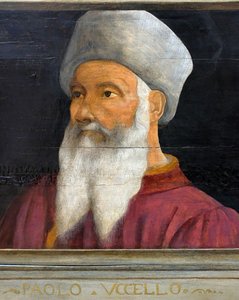
Paolo Uccello
1397 - 1475 , Italien
Hurtige fakta
- Artistic Movement Or Style: Renaissance tidlig
- Artists Or Movements Influenced By This Artist: ['Albrecht Dürer']
- Artists Who Influenced This Artist:
- Lorenzo Ghiberti
- Donatello
- Date Of Birth: 1397
- Date Of Death: 1475
- Full Name: Paolo di Dono
- Nationality: Italiensk
- Notable Artworks:
- Slaget ved San Romano
- Fødslen af Maria
- Place Of Birth: Pratovecchio, Italien
Relaterede artikler

OriginalUniqueArt.com F.A.Q.: Elevating Interiors with Bespoke Wall Murals & Masterpiece Frescoes
Discover the pinnacle of bespoke interior transformation with OriginalUniqueArt.com. Our master fresco artists create exquisite, hand-painted wall murals and ceiling masterpieces tailored to your estate. Elevate your architectural space with timeless, museum-quality artistry.


