

 Se i rummet
 Del som kort
 Del
Del
 Detaljer
 Guide
Guide

 Download
 Lignende værker
 Røntgenundersøgelse
 Diasshow
 Statistikker
Fortitude


 Vis mere
Giclée / Kunsttryk
Giclée- eller lærredstryk i museumskvalitet med hurtig produktion og fleksible muligheder for finish. ( Køb håndmalet maleri Skift til digitalt billede)




P118B Dkr10

P118H Dkr10

P118W Dkr10

P438Z Dkr10

P508JH Dkr12

P508YH Dkr12

P805H Dkr10

P805Z Dkr10

P919BZ Dkr10

P919G Dkr10

P919XJ Dkr10

P959ZH Dkr10

P968JZ Dkr12

W106C Dkr8

W218G Dkr10

W218JH Dkr8

W218Y Dkr10

W307PJ Dkr10

W316G Dkr10

W316PJ Dkr8

W316Y Dkr10

W398PJ Dkr8

W4111J Dkr10

W500HY Dkr15

W500JH Dkr15

W692G Dkr12

W849H Dkr8

W940BG Dkr15

W953PJ Dkr8




Vælg mellem vores forudindstillede størrelser, der matcher kunstværkets originale proportioner.

Indtast den bredde og højde, du har brug for, så det passer til din ramme eller din væg. Et print kan kun beskæres, aldrig gøres større end selve billedet, så en størrelse med et andet format vil medføre, at dele af motivet går tabt. Vi sender dig en digital mockup til godkendelse, før vi printer noget. Billedet vist på denne side viser ikke den faktiske beskæring — det er kun mockuppen, der gør.
Verdensomspændende levering () på 2 uger i stedet for de sædvanlige 4/5 uger. (27 oktober)

Gratis ekspresforsendelse til hele verden

Lærred af linned i høj kvalitet

Fuld transportforsikring

Garanti for refusion af told og importafgifter

Garanti for præcis farvegengivelse

100 dages returret ved fabrikationsfejl

100% fuld returret

Mængderabat ved flere køb
 Glasmulighed er kun tilgængelig i størrelser under 110 cm

Fortitude
Giclée / Kunsttryk
Størrelse på reproduktion
-


Samlet pris
Dkr 532
A Vision of Strength and Virtue: Exploring Paolo Uccello’s Fortitude
Paolo Uccello’s “Fortitude,” painted circa 1435, stands as a remarkable testament to the burgeoning Renaissance fascination with mathematical precision and idealized beauty. More than just a depiction of a woman holding aloft a shield—a symbol universally recognized for protection and resilience—the painting embodies a deeper philosophical inquiry into human virtue and its visual representation.
The artwork’s composition immediately draws attention to the central figure, positioned prominently against a muted backdrop that prioritizes clarity and spatial depth. Uccello meticulously employed linear perspective, a technique he championed as one of the foremost innovators of his time, demonstrating an unprecedented understanding of how light interacts with surfaces to create illusionistic space. This groundbreaking approach wasn’t merely stylistic; it reflected a broader humanist conviction that art could illuminate moral truths and elevate the human spirit.
- Subject Matter: The painting portrays a woman grasping a shield, representing courage and fortitude—a virtue considered paramount in Renaissance ideals of nobility and honor.
- Style: Uccello’s style aligns with the Florentine Proto-Renaissance, characterized by refined elegance and an emphasis on idealized forms. However, it diverges from earlier Gothic conventions through its deliberate manipulation of perspective.
- Technique: Uccello utilized tempera paint on wood panel—a favored medium for altarpieces and devotional art—allowing for luminous colors and meticulous detail. The artist’s careful layering of pigments contributes to the painting's atmospheric quality, conveying a sense of solemn contemplation.
Beyond its technical mastery, “Fortitude” resonates with profound symbolic significance. The shield itself serves as an emblem of defense against adversity—both physical and moral—while the woman’s gaze conveys unwavering determination. Complementing this central figure are two books positioned on the left side, subtly reinforcing the theme of knowledge and wisdom – virtues inextricably linked to courage and resilience.
Considered alongside other works by Uccello, notably his monumental frescoes adorning the Chapel of Our Lady of the Assumption in Prato Cathedral (where the attribution is debated), “Fortitude” exemplifies Uccello’s commitment to elevating art beyond mere ornamentation. It represents a pivotal moment in Renaissance artistic history—a conscious effort to harness mathematical principles and visual illusion to communicate enduring values of courage, virtue, and intellectual enlightenment.
This captivating artwork continues to inspire admiration for its masterful execution and profound philosophical underpinning. A high-quality reproduction offers an opportunity to appreciate the beauty and intellect of Paolo Uccello’s legacy—a testament to the transformative power of art as a vehicle for conveying moral truths and celebrating human potential.
Spørgsmål og svar
Kan "Fortitude" forhåndsvises i augmented reality?
Siden Se i AR for "Fortitude" af Paolo Uccello bruger augmented reality til at vise kunstværket i dit eget rum på en kompatibel enhed.
Hvor gammel var Paolo Uccello, da vedkommende skabte "Fortitude"?
Da "Fortitude" blev skabt i 1435, var Paolo Uccello – født i 1397 – 38 år gammel.
Hvor kan jeg finde statistik om "Fortitude" af Paolo Uccello?
Siden Besøgsstatistik for "Fortitude" af Paolo Uccello præsenterer statistikker over offentlige besøg: månedlige besøg af dette kunstværk, en sammenligning med kunstnerens mest sete værker og hvor de besøgende kommer fra.
Kunstnerbiografi
A Florentine Visionær: Livet og Kunsten hos Paolo Uccello
Paolo Uccello, født Paolo di Dono i 1397 midt i de bølgende bakker nær Firenze, er en af de mest fængslende og gådefulde figurer i den tidlige renæssance. Hans egen kælenavn – “Uccello” – betyder “fugl”, hvilket antyder en legesyg natur og en kunstnerisk tilbøjelighed mod at forestille sig fugle, men det skjuler en tanke dybt engageret i de spirende intellektuelle strømme af sin tid. Han var ikke blot en maler; han var en pioner, en matematiker på lærredet, der stræbte efter at låse hemmelighederne bag visuel rum og oversætte dem til betagende kunstværker. Hans far, Dono di Paolo, udøvede både barber-surgeon og læge, mens hans mor, Antonia, kom fra en florentinsk adelsfamilie – en linje, der måske indgydede ham både praktisk sanselighed og værdsættelse af raffineret æstetik. Fra 1412 til 1416 blev Uccello’s formative år brugt under Lorenzo Ghibertis vejledning, hvis værksted var en smeltedigel af kunstnerisk innovation, fokuseret på at skabe de fantastiske bronzeporte til Firenze's Baptisterium. Denne tidlige eksponering dyppede ham i den herskende gotiske stil, med sit fokus på dekorativ elegance og fortælling klarhed, men det antændte også en længsel efter at gå ud over etablerede grænser.Den Jagt efter Perspektiv: En Matematisk Sindssomme i Spil
Uccello’s kunstneriske udvikling var ikke blot om at mestre teknik; den blev drevet af en uudholdelig nysgerrighed omkring de underliggende principper, der styrer perception. Han blev opslugt af matematik, især geometri og perspektiv, ikke som abstrakte discipliner, men som værktøjer til at låse op for en mere sandfærdig repræsentation af virkeligheden. Selvom Filippo Brunelleschi ofte krediteres for at have opdaget lineært perspektiv, var Uccello blandt de første til systematisk at anvende det på maleri, omhyggeligt beregnede vanishing points og ortogonale linjer for at skabe en illusion af dybde, der hidtil havde været stort set fraværende i kunsten. Mens Brunelleschi fokuserede på den geometriske struktur, var Uccello mere optaget af den visuelle oplevelse – hvordan øjet opfatter rummet og dets forhold. Han eksperimenterede med forskellige metoder for at skabe en illusion af dybde, der var både overbevisende og æstetisk tiltalende. Hans fascination var næsten besættende, som beskrevet af Giorgio Vasari, der beskrev Uccello som at tilbringe hele natten i sit studie, tabt i refleksioner over vanishing points og rumlige relationer. Denne dedikation, selvom den nogle gange blev opfattet som excentrisk, sikrede hans plads som en af de mest banebrydende kunstnere i sin tid.Mesterværker af Illusion: Nøgleværker og Stilistiske Træk
Uccello’s oeuvre, omend relativt lille, er præget af en distinkt stil, der blander gotisk elegance med renæssance innovation. The Battle of San Romano, en række af tre paneler bestilt for at fejre en florentinsk sejr, står som måske hans mest berømte præstation. Disse malerier er ikke blot forestillinger om krig; de er dynamiske kompositioner fyldt med roterende figurer, fragmenteret rustning og dramatisk skærende lanterner – alle gengivet i livlige farver og arrangeret ifølge omhyggeligt beregnede perspektiver. The Birth of the Virgin viser Uccello’s mesterskab i lineært perspektiv, hvilket skaber en overbevisende illusion af dybde inden for et begrænset rum, mens hans St George and the Dragon præsenterer en slående forestilling om den legendariske helgen, karakteriseret ved dristige farver og stilnede former. Selv i værker som *The Flood and the Ark*, en del af San Miniato al Monte freskene, er Uccello’s fascination med arkitektoniske detaljer og komplekse kompositioner tydelig. Hans stil afslører konstant:Arv og Indflydelse: En Varig Effekt på Kunsthistorien
Paolo Uccello’s bidrag til renæssancen strækker sig langt ud over hans individuelle malerier. Hans banebrydende udforskning af perspektiv ændrede fundamentalt kunsthistoriens forløb, hvilket inspirerede utallige kunstnere, der fulgte i hans spor. Albrecht Dürer, den berømte tyske træsnitter og maler, blev dybt påvirket af Uccello’s arbejde, og dedikerede sig til at studere perspektiv og integrere dets principper i sin egen kunstpraksis. Selvom Uccello’s stil forblev noget distinkt gennem hele hans karriere – en unik blanding af gotisk raffinement og renæssance innovation – sikrede hans banebrydende tilgang til rum og form hans plads som en af de mest centrale figurer i vestlig kunst. Han døde i Firenze i 1475, efterlod sig ikke kun smukke malerier, men også intellektuel nysgerrighed og kunstnerisk mod. Hans arbejde inspirerer stadig til beundring og beundring, minder os om, at ægte kunst ligger ikke kun i det, der ses, men i forståelsen af, hvordan vi ser det.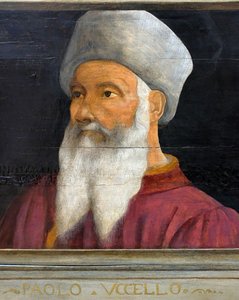
Paolo Uccello
1397 - 1475 , Italien
Kort om kunstneren
- Artistic Movement Or Style: Renaissance tidlig
- Artists Or Movements Influenced By This Artist: ['Albrecht Dürer']
- Artists Who Influenced This Artist:
- Lorenzo Ghiberti
- Donatello
- Date Of Birth: 1397
- Date Of Death: 1475
- Full Name: Paolo di Dono
- Nationality: Italiensk
- Notable Artworks:
- Slaget ved San Romano
- Fødslen af Maria
- Place Of Birth: Pratovecchio, Italien
Relaterede artikler
Paolo Uccello: Pioneering Perspective & the Renaissance Pursuit of Visual Truth
Explore the revolutionary art of Paolo Uccello, a Florentine Renaissance master who pioneered perspective. Discover his iconic paintings like 'St. George & The Dragon' and learn about his lasting influence on art history.
Epic Battles on Canvas: A Visual Journey Through Art History's Most Powerful War Paintings
Embark on a visual journey through history's most powerful war paintings. Explore the dramatic mastery of Romanticism and Realism through expert analysis of epic battle scenes on canvas, celebrating the profound emotion and artistry behind art history's greatest military masterpieces.
Galleria degli Uffizi: Top 25 Kunstværker – Renæssancens Mestre | OriginalUniqueArt.dk
Oplev Galleria degli Uffizi's 25 mest ikoniske kunstværker! Dyk ned i renæssancens mestre som Leonardo da Vinci, Michelangelo & Botticelli. Find inspiration til din indretning og køb museumskvalitets reproduktioner på OriginalUniqueArt.com.
Renæssancens 10 Mesterværker: Kunst der Definerede en Epoke | OriginalUniqueArt.dk
Oplev renæssancens 10 største mesterværker – fra Leonardo da Vinci til Michelangelo. Lær historierne bag ikoniske værker og find inspiration til din boligindretning med museumskvalitets kunsttryk på OriginalUniqueArt.dk. Udforsk samlingen online!
Paolo Veronese: A Renaissance Master of Color, Composition, and Venetian Splendor
Explore the vibrant world of Paolo Veronese, a Renaissance master renowned for his opulent compositions, masterful use of color, and dramatic Venetian scenes. Discover key artworks & legacy.


