- Hjem

- Tryk på lærred
- neri da rimini
- Antiphonal folio with historiated initial
 Preview
 Bestil maleri Køb højopløseligt billede
 Del
Del
 Del
Del
 Detaljer
 Tilføj til favoritter

 Download
 Lignende værker
 Røntgenundersøgelse
 Diasshow
Antiphonal folio with historiated initial
 Manuscript
- Gothic
 1338
1338- Late Medieval
 51.0 x 38.0 cm
 Chester Beatty Library
 Se mere
Giclée / Kunsttryk
Giclée- eller lærredstryk i museumskvalitet med hurtig produktion og fleksible muligheder for finish.




P118B $10

P118H $10

P118W $10

P438Z $10

P508JH $12

P508YH $12

P805H $10

P805Z $10

P919BZ $10

P919G $10

P919XJ $10

P959ZH $10

P968JZ $12

W106C $8

W218G $10

W218JH $8

W218Y $10

W307PJ $10

W316G $10

W316PJ $8

W316Y $10

W398PJ $8

W4111J $10

W500HY $15

W500JH $15

W692G $12

W849H $8

W940BG $15

W953PJ $8




Vælg mellem vores forudindstillede størrelser, der matcher kunstværkets originale proportioner.

Du kan indtaste dine egne mål for at passe til en specifik ramme eller et bestemt område. Hvis den valgte størrelse ikke stemmer overens med det originale billedes proportioner, vil vi enten beskære kunstværket eller udvide billedet med en spejlet eller ensfarvet kant. En digital mockup vil blive sendt til din godkendelse, før produktionen påbegyndes.
Bemærk venligst, at forhåndsvisningen på skærmen ikke afspejler den faktiske beskæring eller udvidelse. Kun mockuppen vil nøjagtigt vise den endelige komposition.
Selvom specialmål er tilgængelige, anbefaler vi at vælge et mål fra den foruddefinerede liste for at bevare de originale proportioner.
Verdensomspændende levering () på 2 uger i stedet for de sædvanlige 4/5 uger. (26 juli)

Gratis ekspresforsendelse til hele verden

Lærred af linned i høj kvalitet

Fuld transportforsikring

Garanti for refusion af told og importafgifter

Garanti for præcis farvegengivelse

60 dages returret (kun ved fabrikationsfejl)

100% Tilfredshedsgaranti

Mængderabat tilgængelig
 Glasmulighed er kun tilgængelig i størrelser under 110 cm

Antiphonal folio with historiated initial
Giclée / Kunsttryk
Størrelse på reproduktion
-


Samlet pris
-
Beskrivelse af samlerobjektet
A Whispering Echo from the Medieval Soul
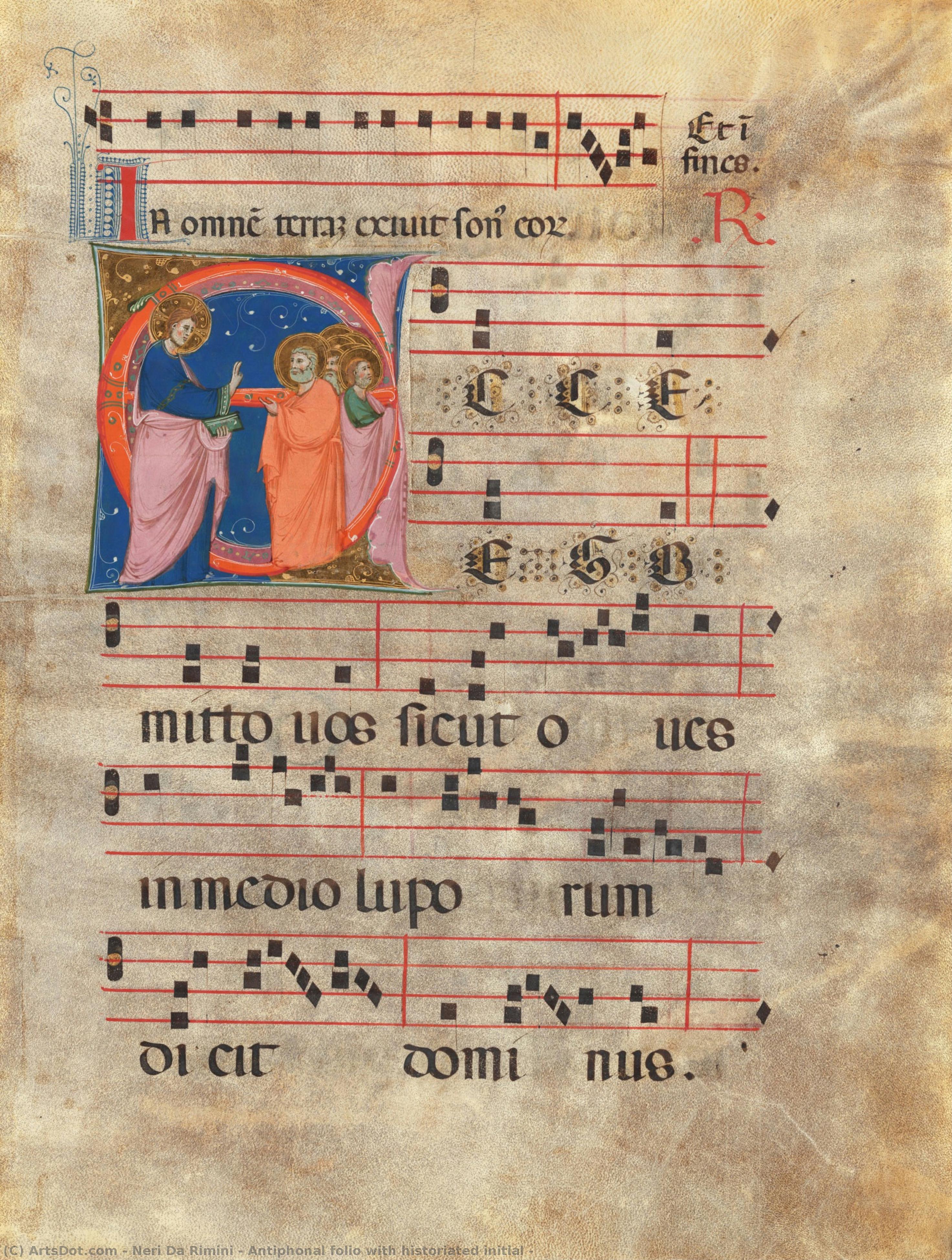
To gaze upon the Antiphonal folio with historiated initial is to step through a portal into the year 1338, where the boundaries between sacred music and visual devotion blur into a single, breathtaking experience. Created by the master of Italian Gothic miniature, Neri da Rimini, this exquisite parchment fragment serves as more than just a musical score; it is a living relic of a time when every stroke of the brush was an act of prayer. The folio captures a moment of profound stillness, presenting a delicate dance of liturgical notation and vibrant illumination that continues to captivate the modern eye with its ancient, weathered grace.
The composition is anchored by a magnificent historiated initial, a technique where the very letters of the text become stages for miniature dramas. Within this ornate frame, we encounter figures standing in quiet communion, their presence rendered with the refined elegance characteristic of the early 14th-century Gothic style. The artistry lies in the delicate interplay of line and color, where Neri da Rimini’s mastery of manuscript illumination breathes life into the parchment. The texture of the aged surface, reminiscent of sun-drenched stone or ancient vellum, adds a layer of tactile history that makes the piece feel deeply personal, as if one could almost hear the faint, rhythmic chanting of monks echoing from the pages.
The Mastery of Gothic Intimacy
Neri da Rimini was a pioneer who brought a new level of psychological depth to the miniature form. In this folio, his technique transcends mere decoration; he uses the medium to weave a narrative of spiritual significance. The musical notation, written in an ancient, rhythmic script, provides a structural skeleton upon which the visual elements rest, creating a harmonious balance between sound and sight. For the collector or the lover of historical aesthetics, this piece represents the pinnacle of the Italian Gothic movement—a period defined by its transition from rigid Byzantine icons to more fluid, humanistic expressions.
The emotional impact of such a work is found in its intimacy. Unlike the sweeping, monumental frescoes of the later Renaissance, this folio offers a private encounter with the divine. It invites the viewer into a contemplative state, making it an extraordinary centerpiece for any curated collection or a sophisticated focal point in a refined interior. Whether displayed in a study filled with leather-bound books or as a conversation piece in a contemporary gallery setting, the Antiphonal folio brings an aura of timelessness and intellectual depth to its surroundings.
A Timeless Inspiration for Modern Spaces
For interior designers and art enthusiasts seeking to infuse a space with character and historical weight, a high-quality reproduction of this masterpiece offers unparalleled inspiration. The warm, sepia tones and the intricate details of the illuminated figures provide a sense of organic luxury that complements both classical and modern decor. It is an invitation to celebrate the craftsmanship of the past, bringing the quiet majesty of the 14th century into the vibrant pulse of the present day.
Kunstnerens biografi
The Pioneering Gothic Vision of Neri da Rimini
Neri da Rimini, a name resonating softly through the annals of 14th-century Italian art, stands as a pivotal figure in the nascent development of Gothic miniature painting within Italy. Born around 1270 in the vibrant city of Rimini, he emerged not merely as an artist but as one of the first true protagonists of this delicate and refined art form on the peninsula. Unlike many of his contemporaries who dabbled across various artistic disciplines, Neri dedicated himself almost exclusively to manuscript illumination—a testament to his singular vision and mastery. What truly sets him apart is the remarkable documentation surrounding his work; a series of signed pieces bearing precise dates allows us to trace the evolution of his style with an unusual degree of clarity, offering invaluable insight into the artistic currents of the period.
Early Life and Artistic Formation
Details regarding Neri da Rimini’s early life remain somewhat elusive. We know he was active in Rimini from 1300 until well past 1322, a period marked by significant political and cultural shifts across Italy. The Romagna region, where Rimini is located, flourished as a center of artistic production, benefiting from its proximity to both the Byzantine East and the burgeoning Gothic styles emanating from France and Northern Europe. It’s likely Neri received his initial training within a local workshop, absorbing traditional techniques before forging his own distinctive path. While the precise nature of his early influences is debated, it's clear he possessed an innate talent for color, composition, and narrative detail—qualities that would become hallmarks of his mature style.
A Master of Miniature: Style and Technique
Neri da Rimini’s miniatures are characterized by a remarkable elegance and sophistication. He eschewed the more monumental forms favored in panel painting, instead embracing the intimacy and precision afforded by the smaller scale of manuscript illumination. His figures, though often stylized, possess a gentle grace and expressiveness. A key element of his technique was his masterful use of color—rich blues, vibrant reds, and shimmering golds dominate his palette, creating an atmosphere of otherworldly beauty. He skillfully employed layering techniques to achieve depth and luminosity, and his attention to detail is breathtaking; intricate patterns adorn garments, architectural elements are rendered with meticulous accuracy, and facial expressions convey a subtle range of emotions. His work often features elongated figures and delicate drapery, hallmarks of the International Gothic style that would soon sweep across Europe.
Religious Themes and Patronage
The vast majority of Neri da Rimini’s surviving works are religious in nature, reflecting the dominant artistic patronage of the era. He illuminated antiphonals, psalters, and other devotional texts for local churches and aristocratic families. These manuscripts were not merely objects of beauty but served as vital tools for worship and contemplation. His depictions of biblical scenes—the Nativity, the Annunciation, the Passion of Christ—are imbued with a deep sense of piety and reverence. The Antiphonal folio with historiated initial, for example, showcases his ability to convey complex narratives within a limited space, using symbolic imagery and carefully chosen details to enhance the spiritual impact of the scene. The patronage he received suggests a close relationship with the local religious community and the powerful families who commissioned these exquisite works.
Legacy and Historical Significance
Neri da Rimini’s influence on early Italian art cannot be overstated. He played a crucial role in establishing Gothic miniature painting as a significant artistic force within Italy, paving the way for subsequent generations of illuminators. His meticulous technique, refined style, and dedication to narrative detail set a new standard for manuscript production in the region. Artists like Francesco da Rimini and Pietro da Rimini, who worked alongside him or were directly influenced by his example, continued to develop and refine the Gothic aesthetic. Today, Neri da Rimini is recognized as a master of his craft—a pioneering artist whose exquisite miniatures offer a captivating glimpse into the artistic sensibilities and religious beliefs of 14th-century Italy. His work continues to inspire awe and admiration, serving as a testament to the enduring power of beauty and devotion.

neri da rimini
Italy
Kort om kunstneren
- Artistic Movement Or Style: Gothic miniature painting
- Date Of Birth: Around 1270
- Full Name: Neri da Rimini
- Nationality: Italian
- Notable Artworks:
- Antiphonal folio
- The Vision of Clare
- The Nativity
- Place Of Birth: Rimini, Italy
Relaterede artikler
Harmonies on Canvas: Exploring the Visual Representation of Music in Art History
Explore the fascinating history of music's visual representation in art! From ancient symbolism to modern abstraction, discover how artists have captured sound and emotion on canvas. Expert insights & stunning examples.
High Medieval Art: 10 Masterpieces That Shaped an Era | OriginalUniqueArt
Journey through High Medieval Art! Explore 10 iconic masterpieces – from Giotto's frescoes to stunning Gothic cathedrals. Discover the stories behind these timeless paintings, sculptures & illuminated manuscripts. Find museum-quality art reproductions at OriginalUniqueArt.com.
Gothic Art Unveiled: The Dark Beauty and Drama of a Timeless Era
Embark on a journey through the dramatic era of Gothic art. Discover the profound beauty of illuminated manuscripts, sacred gold leaf masterpieces, and the transition to naturalism in this expert-led exploration of medieval artistry and historical grandeur.
Illuminating Faith & Power: A Journey Through Medieval Art (c. 500 – c. 1500)
Explore the rich history of Medieval Art (c. 500 – c. 1500) with OriginalUniqueArt. Discover Byzantine mosaics, Gothic cathedrals & Renaissance masterpieces. Expert insights & museum-quality reproductions.

Whispers of History: Capturing the Timeless Beauty of Illuminated Manuscripts in Art
Embark on a journey through time with our deep dive into the exquisite beauty of illuminated manuscripts. Discover the sacred artistry, precious materials, and enduring legacy of medieval illumination in this cultural exploration for history lovers.

